Sunday marked the 16th anniversary of the opening of the "mini three links" across the Taiwan Strait, comprising air, sea, and postal services, which have significantly enhanced cross-Strait connectivity.
The Wutong Ferry Terminal in Xiamen City of east China's Fujian Province is a bustling hub offering a round-trip service between Xiamen and Kinmen of China's Taiwan region.
Initially launched in 2001, the route became part of the broader "mini three links" in 2008 and has since transported over 20 million passengers.
Its service was suspended for almost three years due to the COVID-19 pandemic, and was resumed in January last year. Since resumption, the round-trip operations have increased from two per day to 20, serving more than 1.15 million passenger trips in total.
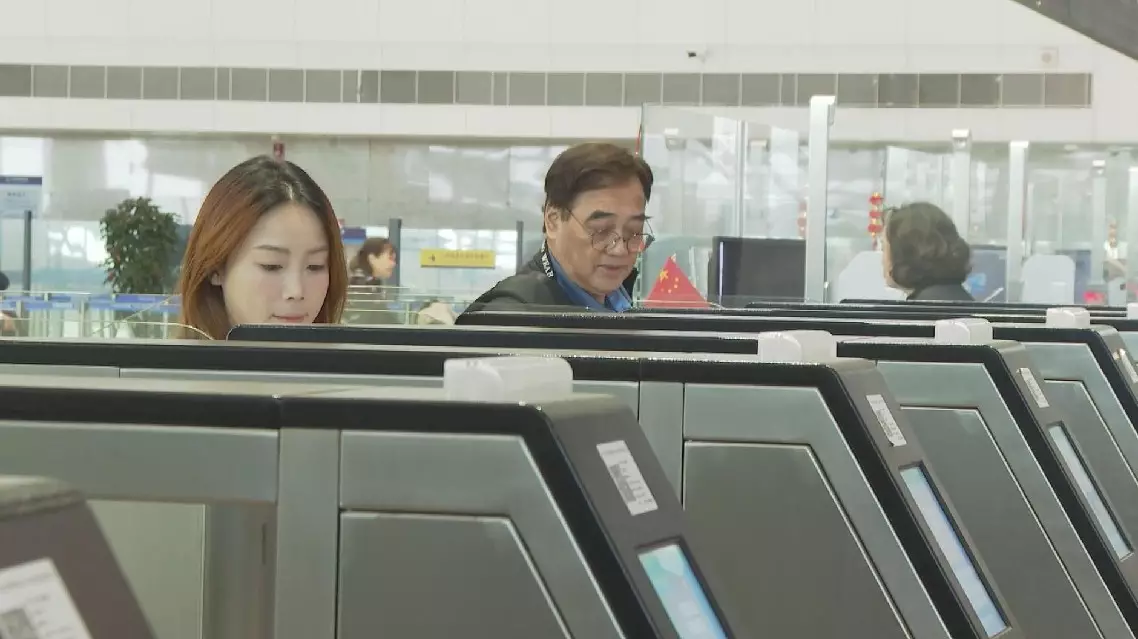
"For those regular commuters traveling back and forth frequently, their biggest need is to clear customs quickly as soon as they arrive. It has to be fast and efficient. Therefore, we have established the nation's largest quick customs clearance information collection point for compatriots in Taiwan at the ferry terminal," said Chen Jinlai, deputy chief of the Gaoqi Border Inspection Station of Xiamen Entry and Exit Border Inspection Station.
"The ferry is quite comfortable within the mini three links," said a passenger from Kinmen.
"I've been taking the ferry at the Wutong terminal for over a decade," said another passenger from Kaohsiung in Taiwan.
Many travelers from the mainland, especially those from Fujian to the islands of Kinmen and Matsu, can be seen after the resumption of travel.
"We will travel there (Kinmen) for two days. The customs clearance is basically self-service. There's the fast channel for senior people on wheelchairs. It's very convenient," said a passenger from the mainland.
"I traveled [to Kinmen] before. But this is my first time riding a bicycle there," said another passenger from the mainland.
In Xiamen, the cross-Strait postal service also plays an important role in communication across the Strait. At a mail processing center with the China Post, staff have been busy sorting packages sent between the mainland and the Taiwan region.
"Since our mail exchange center started operation in 2008, we have processed thousands of mails and parcels on a daily basis. On July 30 this year, we resumed the two-way mail route between Xiamen and Kinmen," said Cai Chunmei, head of the Xiamen-Taiwan Mail Exchange Center.
These services are an epitome of the "mini three links" across the Taiwan Strait. Since 2008 or even much before that, they have facilitated the flow of people, goods, and capital, playing a substantial role in enhancing common interests, especially for the people of the Taiwan region.
Cross-Strait direct links foster closer ties with growing connectivity