Skip to Content Facebook Feature Image

Shenzhou-19 crew installs protection devices to shield space station from debris

China

China

China

Shenzhou-19 crew installs protection devices to shield space station from debris

2024-12-18 11:13 Last Updated At:11:37

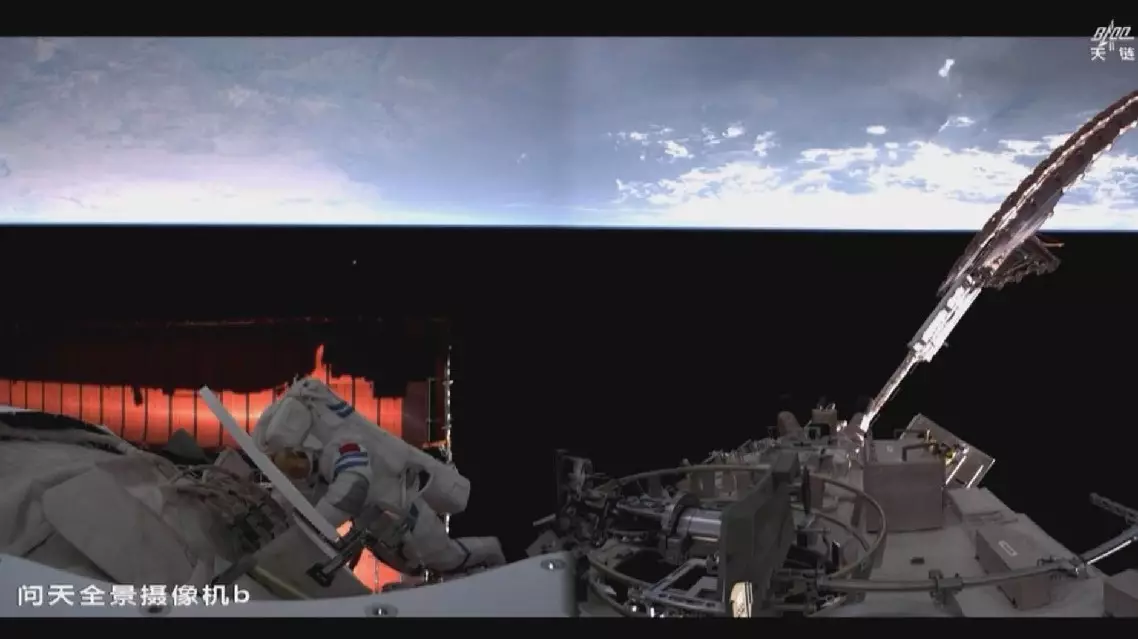
The Shenzhou-19 crew aboard China's orbiting space station successfully installed protection devices against space debris during their first extravehicular activities (EVAs) on Tuesday.

The protection devices will effectively shield the space station from the impact of tens of thousands of pieces of space debris in Earth's orbit, which could collide with the station and cause leaks.

Astronauts Cai Xuzhe and Song Lingdong were assigned with the EVA duties, while Wang Haoze provided support inside the space station throughout the mission.

With assistance from the ground team and the space station's robotic arm, Cai and Song successfully completed the tasks.

Given the dispersed installation locations of the protection devices, the two astronauts carried out the task with one using the robotic arm while the other climbed outside the station to assist.

"During the EVAs, the Shenzhou-19 crew successfully installed the protection devices against debris on the Tianhe core module. Throughout the process, they coordinated with the ground team multiple times for confirmation. They proceeded with the installation according to the commands from the ground. After finishing the installation, the ground and space teams reconfirmed to ensure the devices were properly installed and would effectively protect the space station’s cables and pipelines. After the reconfirmation, they then collected the tools and moved away from the installation location," said Wu Hao, a staffer with the China Astronaut Research and Training Center.

The protection devices were designed with a universal interface compatible with the space station, making it easier for astronauts to carry, transfer, and install them during the EVAs, significantly improving work efficiency.

"We focused on reusability when designing the tools, ensuring they could be used multiple times during EVAs. This approach not only helps reduce costs but also improves work efficiency," said Meng Lingzi, a staffer of the China Aerospace Science and Technology Corporation.

In addition to installing the protection devices, the Shenzhou-19 crew also performed other tasks, such as inspecting extravehicular equipment and facilities. The entire process lasted nine hours.

The Shenzhou-19 crew is set to carry out a slew of scheduled space-science experiments and technical tests, and they will also undertake additional extravehicular activities and install payloads outside the space station, according to the China Manned Space Agency (CMSA).
Shenzhou-19 crew installs protection devices to shield space station from debris

Shenzhou-19 crew installs protection devices to shield space station from debris

China's two major power grid operators -- the State Grid Corporation of China (State Grid) and China Southern Power Grid (CSG) -- reported a surge in investment in the first quarter of 2026, underscoring efforts to strengthen infrastructure construction and support high-quality socioeconomic development in China.

The State Grid said it completed fixed-asset investment worth 129 billion yuan (about 18.77 billion U.S. dollars) in the first three months of this year, up 37 percent the corresponding period of the previous year. The spending has driven more than 250 billion yuan (36 billion U.S. dollars) of investment across the wider industrial chain.

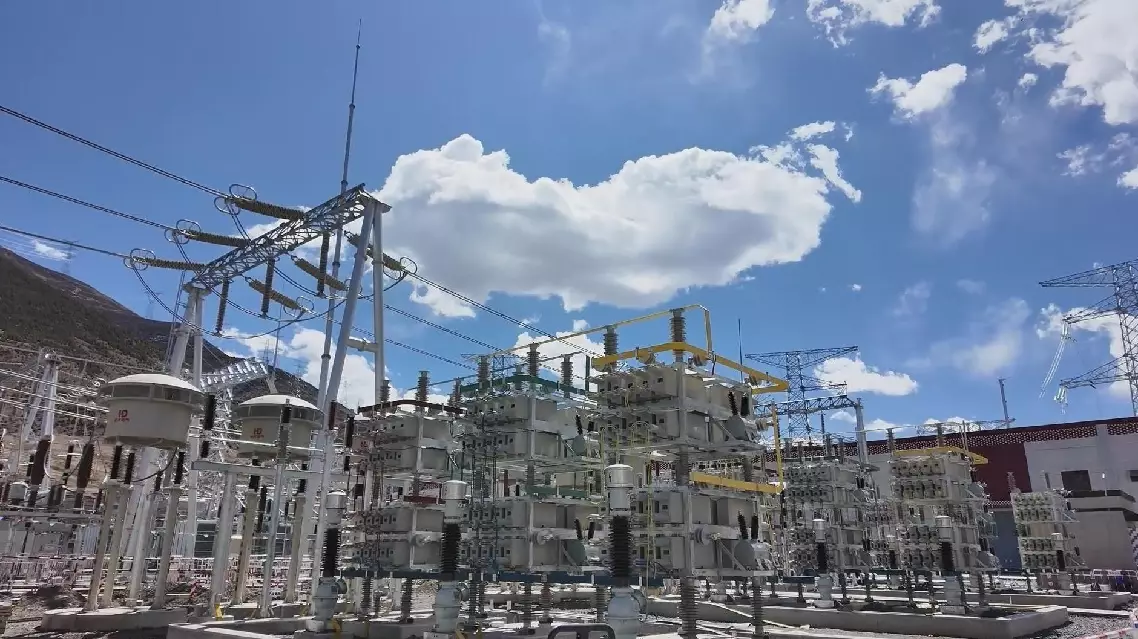
Key projects such as the Panxi ultra-high-voltage (UHV) alternating current (AC) line and the Anhui-Hubei back-to-back direct current (DC) project have seen ground broken for their construction, while several west-to-east power transmission projects have been upgraded.

Investment in connecting renewable energy generation to the grid was reported to have exceeded 10 billion yuan (1.45 billion U.S. dollars) from January to March, a year-on-year rise of more than 50 percent.

The CSG also reported robust growth in investment in the three-month period, with fixed-asset investment reaching 38.45 billion yuan (5.58 billion U.S. dollars), up about 50 percent from a year earlier.

Among its achievements, the company completed and commissioned 80 key projects, including the 220 kV cross-sea power grid interconnection project, which was officially put into operation on March 20. The project ended years of grid isolation on the Weizhou Island in south China by linking it to the main power system of the Guangxi Zhuang Autonomous Region.

The construction of 17 other major energy projects, including one linking the power grid of the Xizang Autonomous Region in southwest China with that of Guangdong Province in south China, is advancing rapidly. These projects are expected to bolster regional industries, the maritime economy, digital collaboration and the transition to green energy.

"By accelerating major project construction, investment during the 15th Five-Year Plan period (2026-2030) is expected to approach 1 trillion yuan (145 billion U.S. dollars), driving a further 2 trillion yuan (290 billion U.S. dollars) of investment across upstream and downstream industries," said Dong Yanle, deputy general manager of the Engineering Construction Department under the China Southern Power Grid.

China ramps up power grid investment in January-March to boost growth

China ramps up power grid investment in January-March to boost growth

Recommended Articles