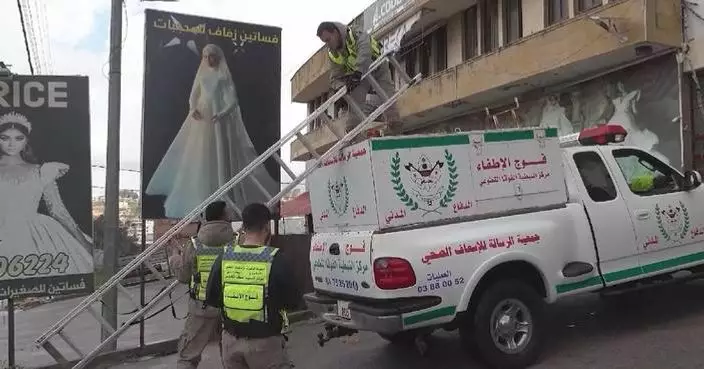
Milk tea shops and many other businesses in the Egyptian capital Cairo are struggling to survive as the U.S.-Israeli war with Iran drags on, raising costs of raw materials even as the local currency loses value.
Cash-strapped Cairo residents are spending less on luxuries like milk tea.
"Before the war, there were 300 to 400 customers coming to my store every day, but in the past few days, there were only 50 to 60 customers each day," said the owner of a milk tea shop in Cairo.
"Ships carrying oil and natural gas to Egypt were blocked due to the war, and the government had to demand stores to close at 21:00, which is normally our busiest working time. Prices of all goods are rising, while the shop is making less income," said the owner.
The Egyptian government started taking measures to save energy on March 28, including requiring shops and restaurants to close at 21:00 on workdays.
Previously, many shops, restaurants and cafes in Egypt usually stayed open until after 22:00.
"I come less because of the war. I hope the war will end soon," said a customer.

Cairo's milk tea shops struggle as U.S.-Israeli war with Iran drags on
Chinese Foreign Minister Wang Yi said on Thursday that the issue of navigation through the Strait of Hormuz is a spillover effect of the current conflicts, noting the Strait of Hormuz remains unstable if the war doesn't end.
Wang, also a member of the Political Bureau of the Communist Party of China Central Committee, made the remarks in a phone conversation with Saudi Arabian Foreign Minister Faisal bin Farhan Al Saud.
The Saudi Arabian foreign minister briefed Wang on the latest developments of the Middle East situation, saying the war in Iran has caused severe impacts on countries in the region and the world at large.
Saudi Arabia attaches importance to China's important role in international affairs, and values high-level strategic cooperation with China, he said, adding that the kingdom is ready to further enhance consultation and coordination with China on platforms including the United Nations, to jointly push for the de-escalation of the situation and an end to the conflict.
Wang noted that the prolonged war in Iran, which has lasted for over a month, has caused enormous casualties and losses, and undermined the security and stability of Saudi Arabia and other Gulf countries, over which China expressed concerns.
Wang said China and Pakistan recently jointly issued a five-point initiative for restoring peace and stability in the Gulf and Middle East region, which includes safeguarding the sovereignty and security of the Gulf states, stopping attacks on civilians and non-military targets, and ensuring the security of shipping lanes.
Wang said the top priority is to focus on cessation of hostilities. Actions by the UN Security Council should avoid escalating confrontations and should not legitimize unauthorized military operations; otherwise, it will lead to endless trouble, with small and medium-sized countries being the first to bear the brunt, he added.
Wang noted that China appreciates Saudi Arabia's commitment to promoting peace and ceasefire, and stands ready to work with Saudi Arabia to make efforts for the early restoration of regional peace.
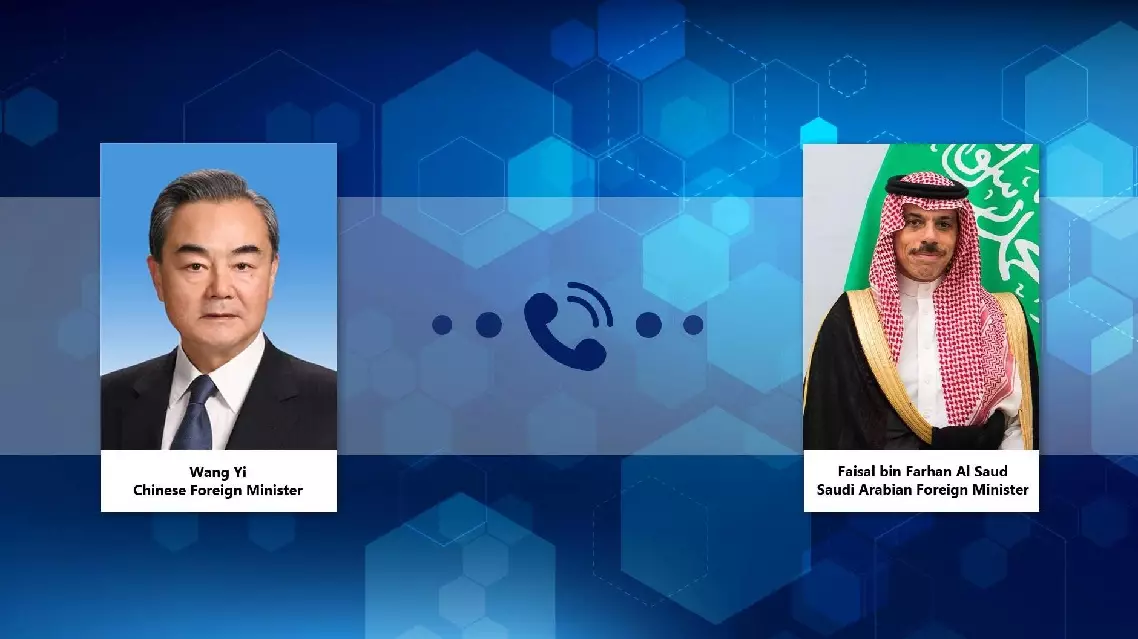
Chinese FM says Strait of Hormuz remains unstable if war doesn't end