India's manufacturing industry has been threatened by shortages in the global energy supply amid mounting tensions and escalating spillover effects spreading beyond the Middle Eastern battlefield.
Glass producers in the country are feeling the acute strain of natural gas shortages, which have forced many production lines to shut down. This, in turn, has impacted beverage companies that rely on glass containers.
"The glass is a critical part of the packaging and it accounts for nearly 45 percent of the cost of beer. Now, there is no gas supply coming. So, a lot of furnaces are unable to operate. Production lines are shutting down," said Vinod Giri, director general of the Brewers Association of India.
Fuel shortages are also hitting India’s metalworking sector, leading to price volatility for stainless-steel cookware. As these goods are essential to daily life, persistent supply instabilities are placing considerable strain on related businesses
"[Metal] prices continue to rise, making our business extremely difficult. We face raw material shortages, production halts, shutdowns in some areas, and worker exodus. Since the outbreak of the war, raw material prices have risen by 10 percent to 15 percent and continue to climb. We have no idea when the price hikes will stop," said Krishan Aggarwal, a stainless steel cookware trader.
Israel and the United States launched joint attacks on Tehran and several other Iranian cities on Feb. 28, killing Iran's then Supreme Leader Ali Khamenei, along with senior military commanders and civilians. Iran responded with waves of missile and drone strikes against Israel and U.S. assets in the Middle East, while tightening control over the Strait of Hormuz by restricting passage to vessels belonging to or affiliated with Israel and the United States.

Spillover effects of Middle East conflict threaten manufacturing industry in India
Premature babies evacuated from Gaza during the war have returned home to be reunited with their families after months of separation.
At Nasser Medical Complex in Khan Younis, families waited anxiously for their first chance to see their children again.
Ten premature babies have returned from Egypt, among those evacuated from Al-Shifa Hospital under life-threatening conditions.
In late 2023, as fighting intensified, neonatal units at Al-Shifa were pushed to the brink, facing severe shortages that forced the emergency evacuation of vulnerable newborns for urgent treatment abroad.
"My twin daughters were among the premature babies trapped inside Al-Shifa Hospital. They were besieged there for 10 days before being transferred to the Al-Arish hospital in Egypt for treatment. We spent 18 days there, and we moved to the Administrative Capital's hospital," said Ayat Al-Daour, a mother of premature twins.
For many families, the homecoming is a deeply emotional reunion, months of uncertainty giving way to relief. But for others, the outcome has been far more painful.
"The Al-Shifa hospital was besieged and then my children were evacuated to Egypt. They were four months old, and they were doing well at first, but later their condition worsened, and they passed away," said Mohammad Abu Amsha, a bereaved father.
After a long journey of treatment and transfers between hospitals in Egypt, these children are now back in Gaza, marking the end of one chapter and the start of another.
"They went to Egypt, and there were 14. Unfortunately, four of them passed away there, and they come back by 10. Today, there were a lot of moments of feeling, of hard feeling and a difficult feeling about connection of the mothers and these babies. It was really a sad history, but Alhamdulillah, thank God, it ended by this end," said Ahmed Al-Farra, head of paediatrics and maternity at Nasser Medical Complex.
As these children return home, their families are stepping into a new and uncertain chapter, navigating recovery within a healthcare system that remains under immense strain and faces persistent shortages, casting doubt over the specialized care these vulnerable infants will require in the months ahead.
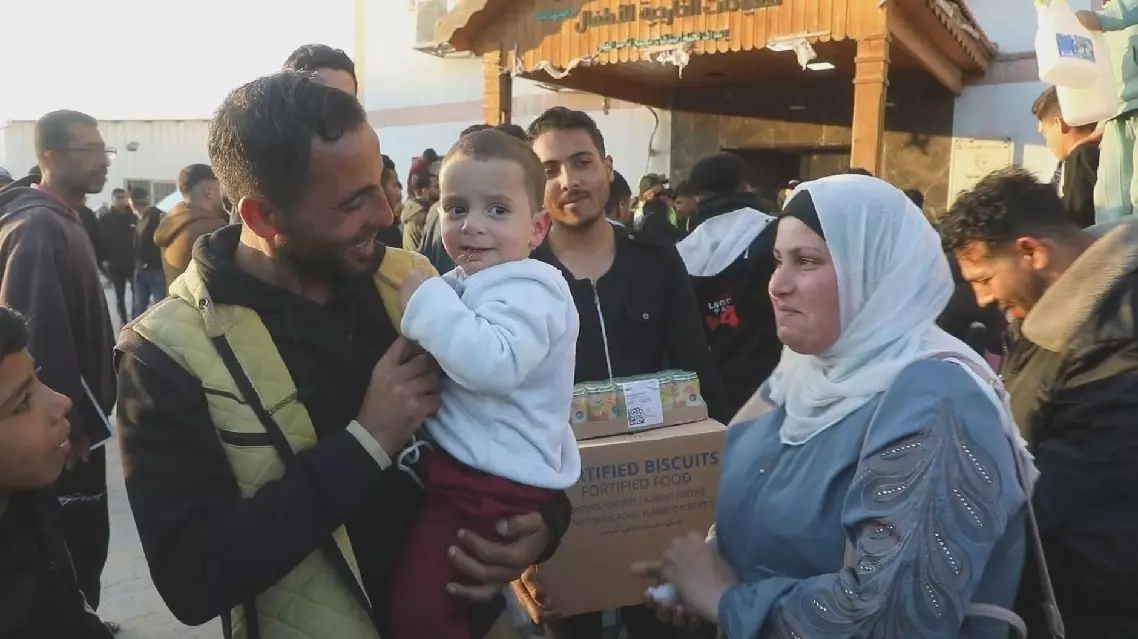
Premature infants return to Gaza after treatment in Egypt