Tech giants in the United States are cutting jobs to fund the massive AI boom, casting a shadow over a steady U.S. labor market and leaving students and professionals questioning their place in an increasingly automated future.
U.S. private sector employment increased by 62,000 jobs in March, with annual pay up 4.5 percent, according to the ADP National Employment Report. Officials said hiring remains steady, driven largely by continued growth in the health care sector. Meanwhile, tech giants are cutting jobs amid rising spending on artificial intelligence (AI).
According to Business Insider, Oracle sent layoff notices to employees earlier this week, just months after a previous round of job cuts. Meta and Amazon have also reduced their workforces this year as part of efforts to offset the financial impact of growing investments in AI infrastructure.
All of these companies are still expected to increase their investments in AI, spending billions on everything from autonomous AI agents to AI data centers.
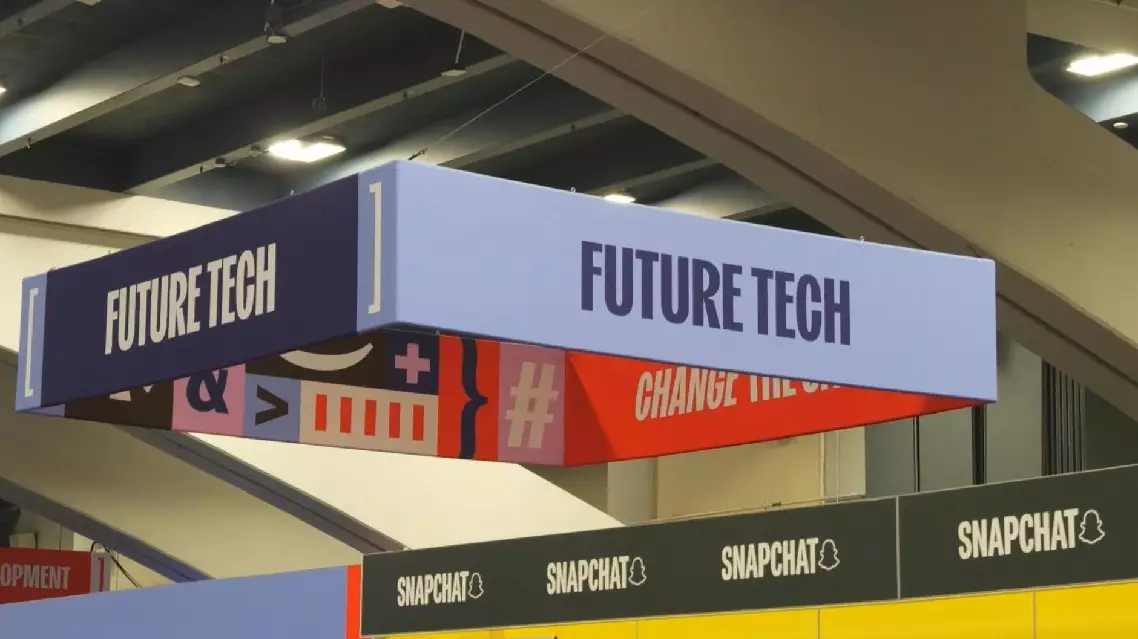
At a recent conference on gaming and technology, prospective graduates were worried about their futures as they prepare to enter the job market.
"All my friends who are either graduating this semester or already graduated, they're having a hard time. So, it's kind of putting a lot of pressure on me," said Sage Tesoro, a computer science student.
"With AI taking over a lot of things, I'm pretty worried about where I'm going to go," said Nicholas Empedocles, a digital media design student.
Concern was even heard from attendees who have firmly established themselves within the industry.
"Why wouldn't we be worried? Especially the concentration of power that AI is enabling, very few companies in control," said Henrique Olifiers, founder of Bossa Studios, a gaming developer and publisher.
Despite the uncertainty, Olifiers expressed confidence that employment will recover from AI's disruptive force, which he compared to the industrial revolution.
"Through every one of these revolutions, the economy grew, people found more jobs, and there hasn't been a reckoning," said Olifiers.
Similar sentiments were shared at Constellation Research's AI Forum held in Menlo Park, California, in mid-March, as business and tech leaders discussed how AI has been resetting the workforce.
"It's more about redesigning what work looks like and having people become the people who control AI to some extent. And of course, AI will go ahead and replace some roles. But you know, we don't have one-hour photoshops anymore either. And we're still alive," said Kenny Ahn, chief human resources officer at Wang Globalnet, a U.S.-based Asian food distributor.
Sandy Carter, who is the chief business officer of Unstoppable Domains, a startup focusing on managing domains, believes AI will allow more people to be self-employed.
"I think we're going to see the age of solopreneurs. I think there's going to be tons of solopreneurs. I just interviewed Michael [Nedoszytko]. He's a cardiologist in the Netherlands. He won third place at an Anthropic Hackathon. Third place! He's a cardiologist. He's never coded before," said Carter.
Yet, as AI evolves at an alarming pace, many worry they might not be able to keep up with the changes, leaving it an open question as to whether the technology will leave some people behind.
Tech job seekers fear being squeezed out as AI investment soars in US
Tech job seekers fear being squeezed out as AI investment soars in US