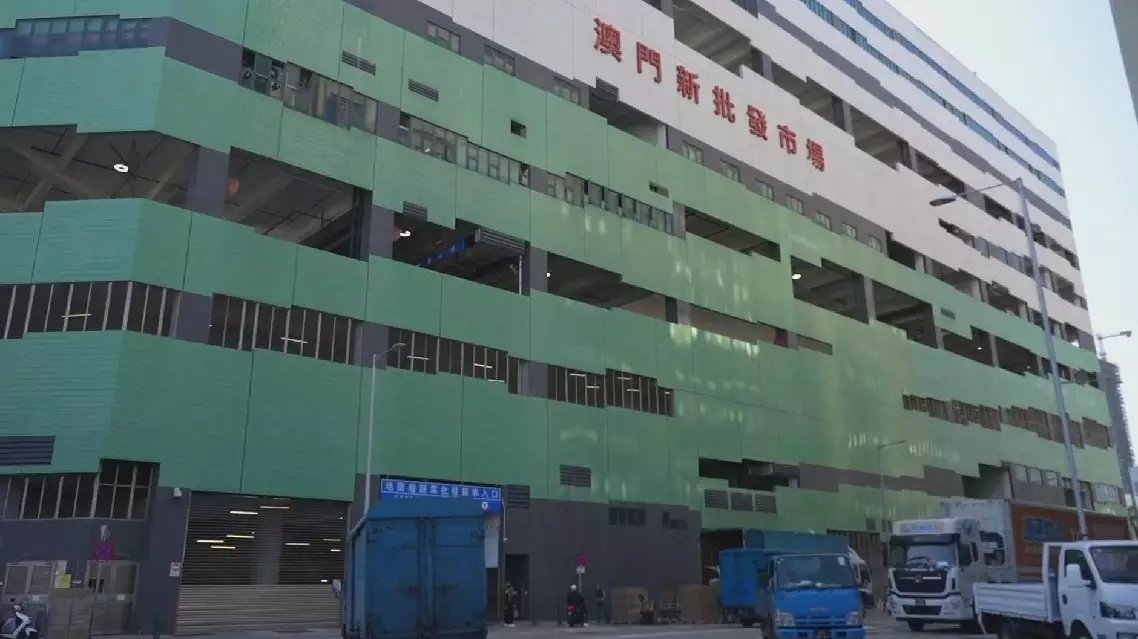
More than 90 percent of fruits and vegetables at the foremost wholesale market in China's Macao Special Administrative Region (SAR) come from the Chinese mainland, illustrating the deep interconnection between the regions.
Macao consumes about 250 tons of fruits and vegetables daily, and the New Wholesale Market in the SAR's northwest supplies nearly 95 percent of them.
The market, located very close to Zhuhai City in Guangdong Province, is the region's first distribution hub of fresh supplies from the mainland.
Operators closely monitor market data to ensure the flow of food into the region continues at a steady pace.
"The screen here shows vegetable sourcing, price monitoring, and daily quality inspections," said Tang Huafeng, manager of the market.
Though Tang oversees Macao's most important wholesale market by day, he lays his head in the mainland at night.
"I live in an apartment across the river in Zhuhai. I can walk to work in under 15 minutes," he said.
Lei Iong Fai, president of the Macao Vegetable Wholesalers Association, routinely arrives at the market at 7:00 sharp each morning and waits for the latest shipment of vegetables to begin unloading them.
"Because in the morning, we need to quickly unload the goods, then distribute them to different places. Once each vehicle is loaded, it's immediately driven away. We have at least 500 to 600 varieties here," he said.
Lei has kept up this daily habit for the past 25 years. In all that time, he said, vegetable supplies have never been delayed for even a single day, even during typhoons.
"Before a typhoon hits, the authorities will send us a text message to inform us of the expected landfall. We need to stock up in advance. We usually keep around 100 tons of goods in the market," Lei said.
Since Macao's return to China 25 years ago, local residents have been able to enjoy mainland fruits and vegetables more conveniently.
"Twenty years ago, about 20 percent of the produce came through Hong Kong SAR, and some items like potatoes and onions were imported from the U.S. For example, iceberg lettuce had to be shipped from the U.S., taking about a month to reach here," Lei said.
Since then, many farming bases in the Chinese mainland have introduced foreign planting techniques and seeds. As a result, fresh vegetables are delivered to local restaurants by around 8:00 every morning.
"All the ingredients are supplied by this wholesale market. We place our order for these fresh vegetables at 6:00 every day," said Kitty Hui, owner of Xinnanyue Chengji Cuisine, a restaurant at the market.
Hui founded the restaurant in 1999, the same year Macao returned to China.
"When the wholesale market first started, there were hardly any shops, and the location was pretty remote. Later, more and more people learned about this market, and things started picking up. Now, even stuff like grains and oils mostly come from the Chinese mainland," Hui said.
Since January 2023, Gongbei Customs, the key entry point for these vegetables into Macao, has implemented a new regulatory model, cutting the number of required import filings by 99 percent and greatly facilitating fresh supplies for the SAR.
Wholesale market supplies 90 pct of Macao's fruits, vegetables from mainland
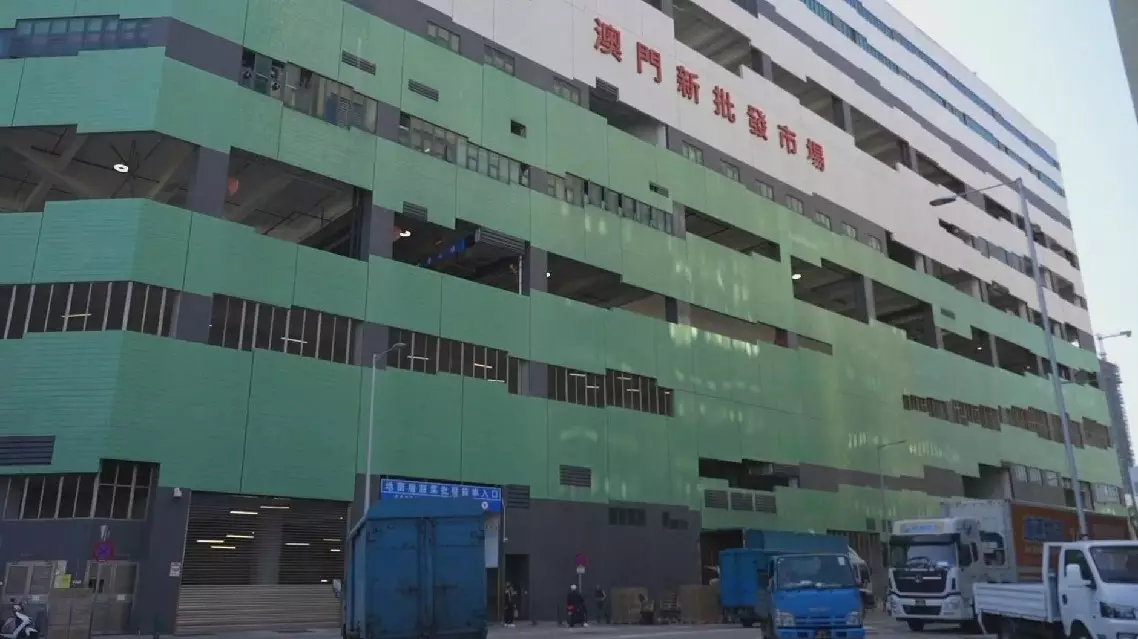
Wholesale market supplies 90 pct of Macao's fruits, vegetables from mainland