A China Global Television Network (CGTN) documentary series has shed light on the ordeal of hundreds of thousands of Korean laborers forcibly mobilized by Japan during World War II and sent to mines, factories and military sites across Japan and its occupied territories. Many never returned home.
The documentary series, titled “Unforgotten Scars: Lives Shattered by Japan's Wartime Atrocities," was released to mark Sunday's 80th anniversary of the Tokyo Trials.
Tucked into a corner of a train station plaza in Seoul stands a two-meter-tall statue, serving as a quiet reminder of a painful chapter in human history. During World War II, the station was one of the gathering points where Korean laborers were assembled before being sent to Japan and forced to work under harsh and dangerous conditions.
Historical records indicate that up to one million Koreans were mobilized under Japan's wartime policies. Many of those sent away never returned, while others came back home injured, sick, or permanently disabled.
Today, many of those stories are preserved at the National Memorial Museum of Forced Mobilization under Japanese Occupation in Busan, a southern coastal city in the Republic of Korea (ROK).
"It's heartbreaking every time I come here. I can't even imagine what it would have been like to live in that era and go through something like that. It really hurts to think about it, and it makes me feel that we need to make sure something like this never happens again," said Kim Mal Soon, a visitor to the museum.
For many of the survivors' family members, like Lee Cheol Gweon, the pain is deeply personal.
"My father worked deep underground in coal mines, going down hundreds of meters every day and coming back up. All of his wages were taken and deposited into a post office account there, but when he finally returned home, he came back with nothing -- no money at all, just his body," said Lee.
The damage wasn't limited to lost pay. Years of brutal labor left many survivors with chronic illnesses and injuries that followed them for the rest of their lives.
"My father passed away at the age of 51. He was never in a condition where he could live or work normally [after returning home]. My mother carried that burden alone and somehow raised all eight of us children. Thankfully, we managed to get by," said Lee.
To this day, questions of accountability and responsibility remain unresolved. Japan maintains that compensation claims by victims were settled under a 1965 treaty normalizing diplomatic ties with the ROK. However, the ROK's Supreme Court has ruled otherwise.
"Under the treaty that normalized relations, the state's right to diplomatic protection was settled. But individual claims were not extinguished. They remain valid. This applies not only to the ROK, but to China as well. Based on this principle, the Supreme Court has ruled that individual victims are entitled to compensation in the form of damages. However, the reality is that the Japanese government and Japanese companies (military contractors) have refused to comply with the ruling," said Yang Kee Ho, head of the Department of Japanese studies at Sungkonghoe University in Seoul.
Activists say the issue isn't simply about compensation, but also about how history is remembered.
"If Japan truly wants to move forward as a peaceful nation, it must confront and reflect deeply on its past and resolve this issue. The biggest problem is that history continues to be distorted, and the reality of Japan's war of aggression is still being denied," said Kim Young Hwan, director of external cooperation at the Center for Historical Truth and Justice, an independent nonprofit organization.
More than eight decades later, the issue goes beyond compensation for victims and their families. It has become a question of dignity, accountability and whether the truth of history will be fully confronted.
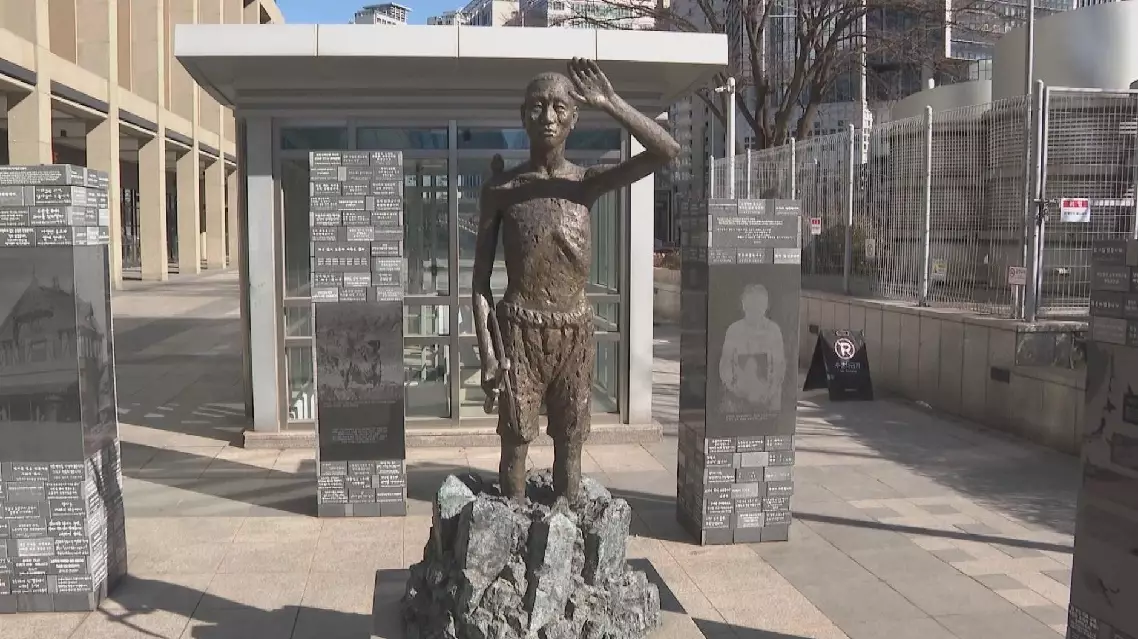
CGTN documentary reveals ordeal of Korean laborers forcibly mobilized by Japan during WWII