As fears about artificial intelligence taking away human jobs mount across the world, AI is creating new jobs in China as a group of young people are working to become nationally certified AI training specialists.
AI training specialist is one of China's newest occupations, and a critical one as the country accelerates its push to develop the AI sector. In 2021, the Ministry of Human Resources and Social Security officially issued the National Occupational Skill Standards for Artificial Intelligence Trainers.
Xu Shan from Lingyang Intelligent Technology, a tech firm based in east China's Hangzhou, recently earned a Level 3 certificate. She works as a coordinator for a team developing AI-powered software for business data analysis.
"I hope the software will help me to generate a strategic advice. It can break it down into multiple steps -- like a real and seasoned analyst with years of industry experience -- and help you with your task," she explained how to use the software.
Ultimately a data report that used to be accessible only to senior management, even CEOs, would be generated, she said.
Data accuracy is the lifeline of AI-generated reports. Xu said she works closely with a team of programmers to train the underlying models. She does not write the code herself, but studying for the AI Trainer certification has changed how she approaches the job, Xu noted.
"When you're building a product like this, you have to understand AI yourself. Earning the certificate gives us a clearer understanding of AI," she said.
It has also allowed her to bridge the gap with technical teams, which significantly cuts down on communication friction.
But in AI, changes come quick. After the generative AI boom of late 2022, the industry’s requirements have shifted swiftly. A new trend called 'Vibe Coding' is taking over -- where developers use natural language to tell an AI system what they want, and it generates the code to make it happen. This means non-programmers like Xu Shan can dive a bit deeper into product development.
"In the past, a product iteration might take us three months or even a year. But using generative AI or this 'Vibe Coding' approach, we've been able to build out entire pages like this in just two weeks. The difference is that I used to just have an idea -- but now, I have an idea and I can put it online in two weeks. As you can see, the results are quite impressive," she said.
The company she works for, Lingyang, is among the enterprises that helped draft the national standards for AI training specialists. It says the certification curriculum is continuously updated to keep pace with industry needs.
"We are introducing new modules like Prompt Engineering to teach users how to write high-quality instructions for AI. We are also moving away from just focusing on 'algorithm tuning' toward 'problem-solving'-- specifically by teaching students how to build and deploy AI Agents," said Lin Li, general manager of the Digital Intelligence Talent Center under Lingyang Intelligent Technology.
It remains to be seen how the broader market will value the new certification in the long run. But for now, this emerging profession reflects China's vision of the future, one where the AI industry is powered by a new breed of specialized talents.
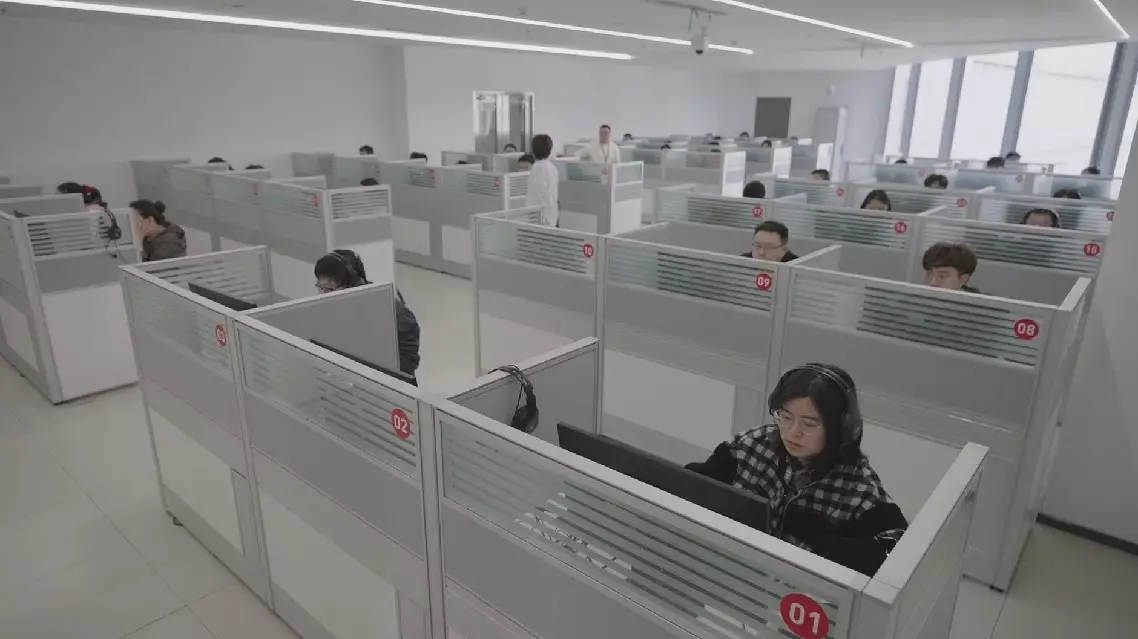
Young professionals work to become certified AI training specialists
Eighteen sets of precious archival materials related to David Nelson Sutton, a U.S. assistant prosecutor at the Tokyo Trials and one of the earliest international prosecutors to investigate the Nanjing Massacre, were officially donated on Wednesday to the Memorial Hall of the Victims in Nanjing Massacre by Japanese Invaders.
Sunday marks the 80th anniversary of the opening of the International Military Tribunal for the Far East (IMTFE, also known as the Tokyo Trials). To commemorate the milestone, six diaries written by Sutton between 1946 and 1948, when he was conducting investigations for the tribunal, were donated together with a series of reports titled Reports from China.
"It is necessary to let more Chinese, even people all over the world, to see these archival materials. Let all the world know why the Tokyo Trials 80 years ago were described as a trial of justice, and how the Nanjing Massacre nearly 90 years ago was unprecedentedly brutal and tragic beyond compare," said Zou Dehuai, the donor.
From May 3, 1946 to Nov 12, 1948, the International Military Tribunal for the Far East was held in Tokyo by 11 countries, including the United States, China, Britain and the Soviet Union, to try Japan's Class-A war criminals after World War II.
"Why do we say the Tokyo Trials were a trial of justice? It was a trial witnessed by the world, with judges from 11 countries. Major war criminals, such as Iwane Matsui, a crime culprit for the Nanjing Massacre, and Hideki Tojo, all ultimately received the punishment they deserved. That is why the Tokyo Trials are called a trial of justice. These archives are of immense importance," Zou said.
Sutton came to China with the International Prosecution Section in 1946 and was tasked with investigating Japanese war crimes in China, with a particular focus on collecting evidence related to the Nanjing Massacre.
The six diaries recorded many details of Sutton's work during the Tokyo Trials. In one entry, dated March 9, he wrote that he had received formal orders to go to Shanghai, Nanking (Nanjing), Peiping (Beijing) and other sites in the China theater to investigate war crimes and gather evidence. Another entry recorded his arrival in Nanjing at 11:20 on April 2. On May 3, the day the trial opened, he described the defendants as looking like "insignificant beaten men."
The donated materials also include Sutton's "Reports from China," which further exposed Japanese wartime atrocities in China, including mass killings, violence against civilians, germ warfare and the coercion of Chinese people into opium cultivation.
Zou is a collector born in the 1990s who has long searched for wartime historical evidence. He first found the Sutton materials in November 2025 on a U.S.-based auction website specialized in military artifacts. After confirming Sutton's identity and reviewing preview images that indicated the items were original archival materials, Zou placed a bid for the collection and later, ultimately paying a price nearly 100,000 U.S. dollars, far more than his original budget. And he arranged for its return to China, with assistance from others.
At the donation ceremony, Zou received a donation certificate. He said the Sutton archives were the most expensive items he had acquired in a decade of collecting. "These archives, these ironclad evidences, expose the crimes committed by the invading Japanese army in China and serve as a warning to all humanity. When you look at these documents, you cannot imagine that a human army could commit such massive and horrible atrocities. I believe that any Japanese person with conscience, after reading the Sutton archives, would firmly recognize what kind of a massacre took place in Nanjing. For the young people of future China, Japan and the United States, we must tell them the truth of history, and why we must cherish the hard-won peace, and how heavy the cost of peace truly was," Zou said.
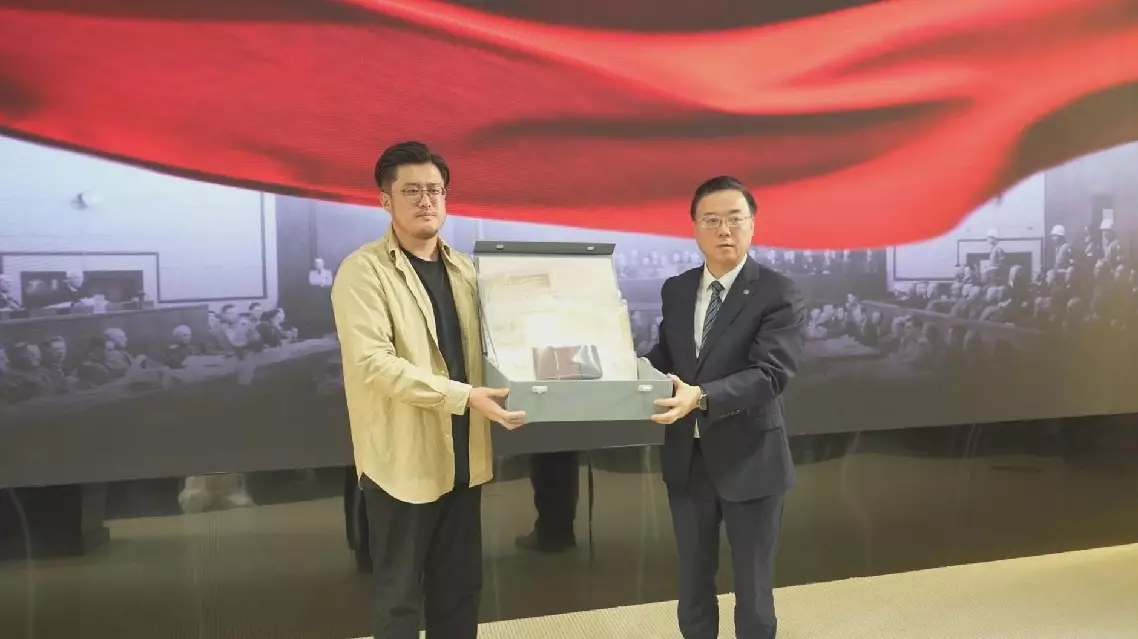
Tokyo Trials prosecutor's diaries donated to Nanjing Massacre memorial hall