NEW YORK (AP) — Only recently given stewardship over his late father's work, Sean Ono Lennon is on a remarkable run.
The only child of John Lennon and Yoko Ono won an Academy Award this year for a short film based on his parents' 1971 song "Happy Christmas (War is Over")" and, a few months later, was nominated for his first-ever Grammy, for producing a box set on the album “Mind Games,” originally released in 1973.
Click to Gallery
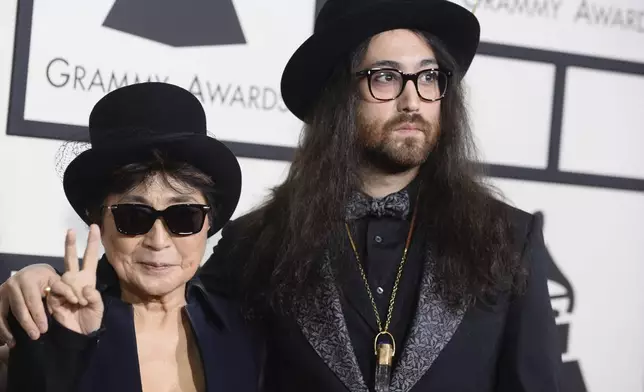
FILE - Yoko Ono, wife of the late John Lennon, left, and their son Sean Lennon arrive at the 56th annual Grammy Awards in Los Angeles on Jan. 26, 2014. (Photo by Jordan Strauss/Invision/AP, File)
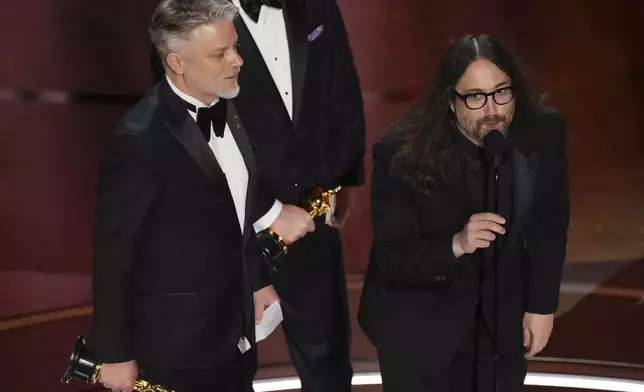
FILE - Dave Mullins, left, and Sean Ono Lennon accept the award for best animated short for "War Is Over! Inspired by the Music of John & Yoko" during the Oscars on March 10, 2024, in Los Angeles. (AP Photo/Chris Pizzello, File)
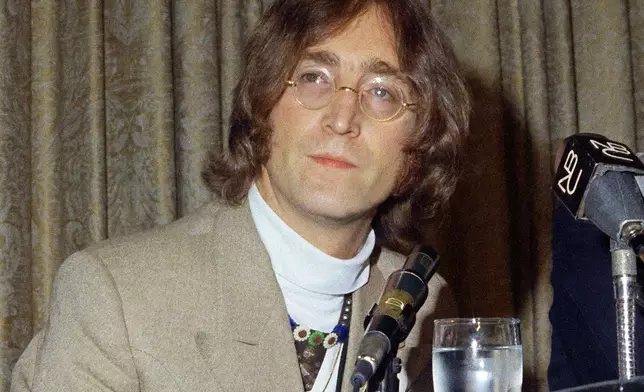
FILE - Singer John Lennon appears during a press conference at the Hotel Americana on May 13, 1968, in New York. (AP Photo, File)
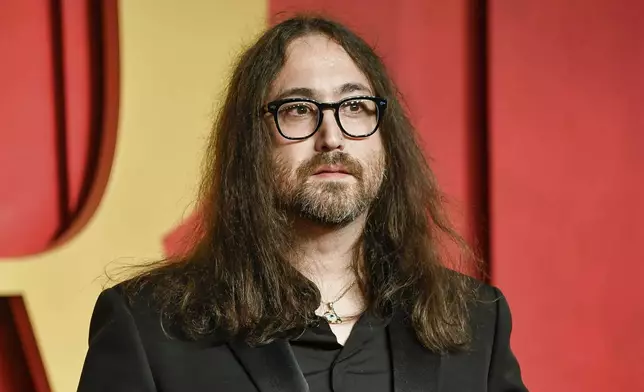
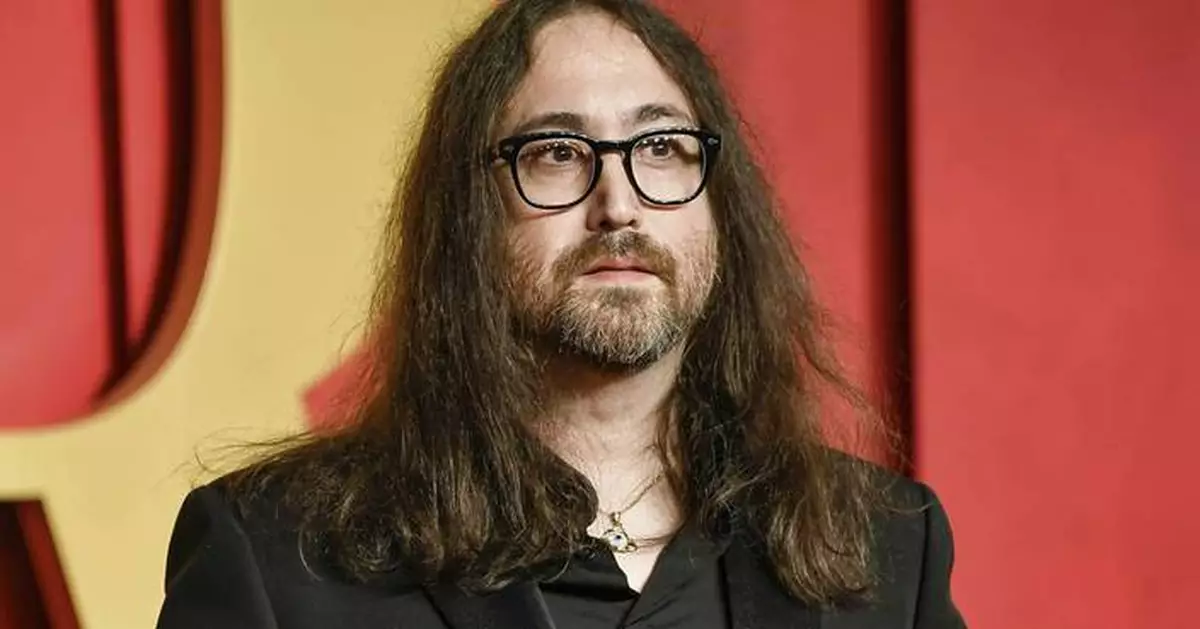
FILE - Sean Lennon appears at the Vanity Fair Oscar Party in Beverly Hills, Calif., on March 10, 2024. (Photo by Evan Agostini/Invision/AP, File)
“It feels overwhelming and surreal,” said Lennon, who also recently shared a Webby Award with his mother for Ono's interactive art project “Wish Tree.”
For Lennon, who was 5 when the former Beatle was murdered in 1980, the work is a way to connect with his father. It's more than a preservation mission: On “Mind Games,” he takes artistic license, pulling apart the recordings of John Lennon's music to create something entirely new.
Lennon was inspired, in part, by another Beatle offspring, Dhani Harrison, who helped repackage his own father's “All Things Must Pass.” Dhani Harrison is also behind this fall's reissue of his dad's “Living in the Material World,” but that experience is nothing like what Lennon did with “Mind Games.”
Besides the music, the innovative box is modeled after one of his mother's art pieces and filled with art reproductions, hidden music, video, messages and puzzles, some only visible through an ultraviolet light that is included — “mind games,” remember? The deluxe box retails for $1,350, but there are less expensive options.
Lennon, 49, knew his father was a musician before he died; the boy tagged along to the studio for some “Double Fantasy” sessions. But truly understanding his impact came later, like when he'd hear fans singing his father's music outside their New York apartment on the Oct. 9 birthday they shared. “It was pretty clear to me that wasn't happening with my friends,” he said.
His father's music played constantly around the house, and learning to play those songs launched his own journey to become a musician.
“I think I would have rebelled more against my dad's — and my mom's — music if I had grown up with my dad in the house and I had been angry at him or rebelled against him,” he told The Associated Press. “Because he wasn't around, I've always really cherished the music as sort of a living part of him.”
He inherited the job of keeping his father's music alive for new generations when his mom, now 91, retired.
In liner notes for “Mind Games,” Lennon explains that “the only meaningful way that I can show my love to him” is to work hard on his music and keep it in the culture's consciousness. That's poignant, and maybe a little sad. Does Lennon really have to prove to anyone that he loves his father?
“What else can I do in this Earth to express my love and reverence for my father than to do an incredibly meticulous job of taking care of his music?” he said. “I can't actually think of anything else, other than taking care of my mother, which I try to do as well.”
That reverence for his elders came from his mother, he believes. When his Japanese grandparents came over to the U.S. “it was like the president was visiting,” he recalled.
Only after he began the “Mind Games” project did Lennon learn that the album wasn't particularly well-regarded when it was released. He found an interview where even John Lennon considered it a transition from a period of political activism to being a musician again. The title song was its only hit.
That attitude lingers, judging by an online site called “Brutally Honest Rock Album Reviews.” In an unsigned review, the author said the “Mind Games” reissue defines overkill. “You can now own and forever cherish six different versions of songs that were unmemorable at best and a complete waste of time at worst.”
That only motivated Lennon to work harder, and led to a bold artistic decision. Part of the reason the album didn't really connect was because it wasn't promoted well or supported by concerts, he said. But he also described the original album mix as thin and not doing justice to the music.
Using the original recordings, he constructed new versions of the songs, sometimes emphasizing different instruments. He sought a warmer, more direct sound reminiscent of Lennon's “Plastic Ono Band” album — most visibly on “Aisumasen (I'm Sorry),” one of a handful of compositions reflecting marital turmoil that presaged Lennon's notorious “lost weekend” separation from Ono.
Different versions of the title cut also show Sean's approach. There's the original “Mind Games,” with a distinctive chiming sound that drives the melody. That's stripped away in a new mix where a reggae guitar lick becomes audible. An organ-dominated instrumental sounds like a church hymn. There are other outtakes, some with alternate lyrics and one with a snippet of “Make Love, Not War,” a song fragment dating back to the Beatles that the author repurposed.
He didn't have a trove of unheard material to mine, other than Lennon's demo of “I'm the Greatest,” a song he gave to Beatle mate Ringo Starr.
In some of the new versions, Sean goes beyond remixing or revealing outtakes to imposing his own artistic vision over his father's.
“There are some people who feel that it's taking liberties, and I guess it technically is,” Lennon said. “The way I look at it is, if I'm going to do the best job I can, the only way I can do that is to follow my heart and make it sound the best that it can sound. If that means maybe turning down an instrument a lot in a certain section because I don't think it's helping, then I'm going to do that.”
For anyone who wants the original versions, they're readily available.
“It's very forensic work,” he said. “I'm not worried about what someone else is going to think. I'm just in there trying to do good by my dad, and I really feel that I know how to do good by him, because I know his music better than I know anybody else's music.”
As a musician, he relates to moments where his father expresses vulnerability, like an interview where John described “Intuition” as a good song where he didn't nail the lyrics. The “Get Back” film of recording sessions for the “Let it Be” album showed the Beatles as humans who didn't hand songs down from Mount Olympus.
Next on the docket is a film resurrection of the “One to One” concerts involving his father and a reissue of the “Walls and Bridges” album. Sean, who lives and works in New York and is involved in a longtime relationship with musician and model Kemp Muhl, released his own album, “Asterisms,” this year.
Told he sounded like his father when singing forcefully, Lennon practically whispered lyrics on his early albums. He hated the way he sounded, but didn't want to deal with the comparisons. He doesn't hold back anymore. “Now I'm too old to care,” he said.
“I didn't get into music because I had some great talent or something,” he said. “I got into it because my dad was this famous musician and playing his songs and learning his music made me feel closer to him.”
David Bauder writes about the intersection of media and entertainment for the AP. Follow him at http://x.com/dbauder and https://bsky.app/profile/dbauder.bsky.social.
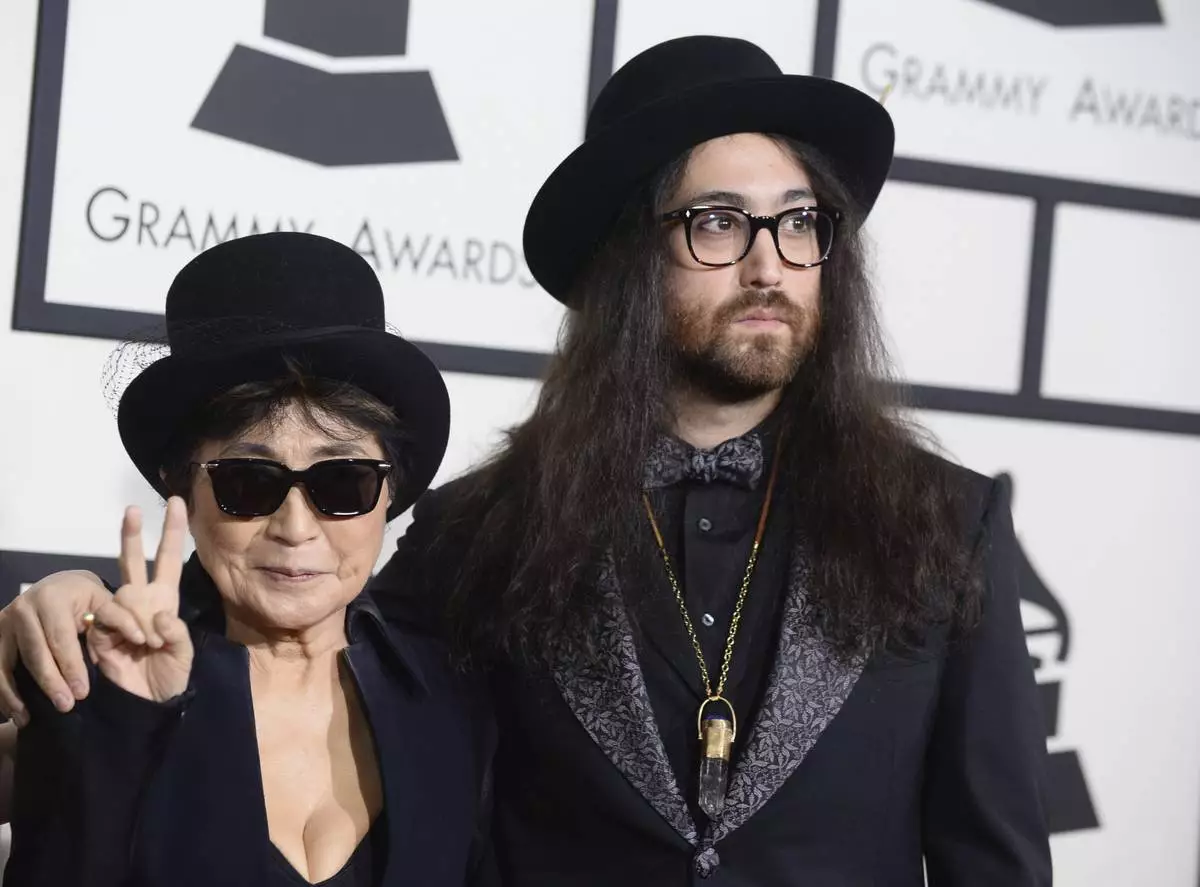
FILE - Yoko Ono, wife of the late John Lennon, left, and their son Sean Lennon arrive at the 56th annual Grammy Awards in Los Angeles on Jan. 26, 2014. (Photo by Jordan Strauss/Invision/AP, File)
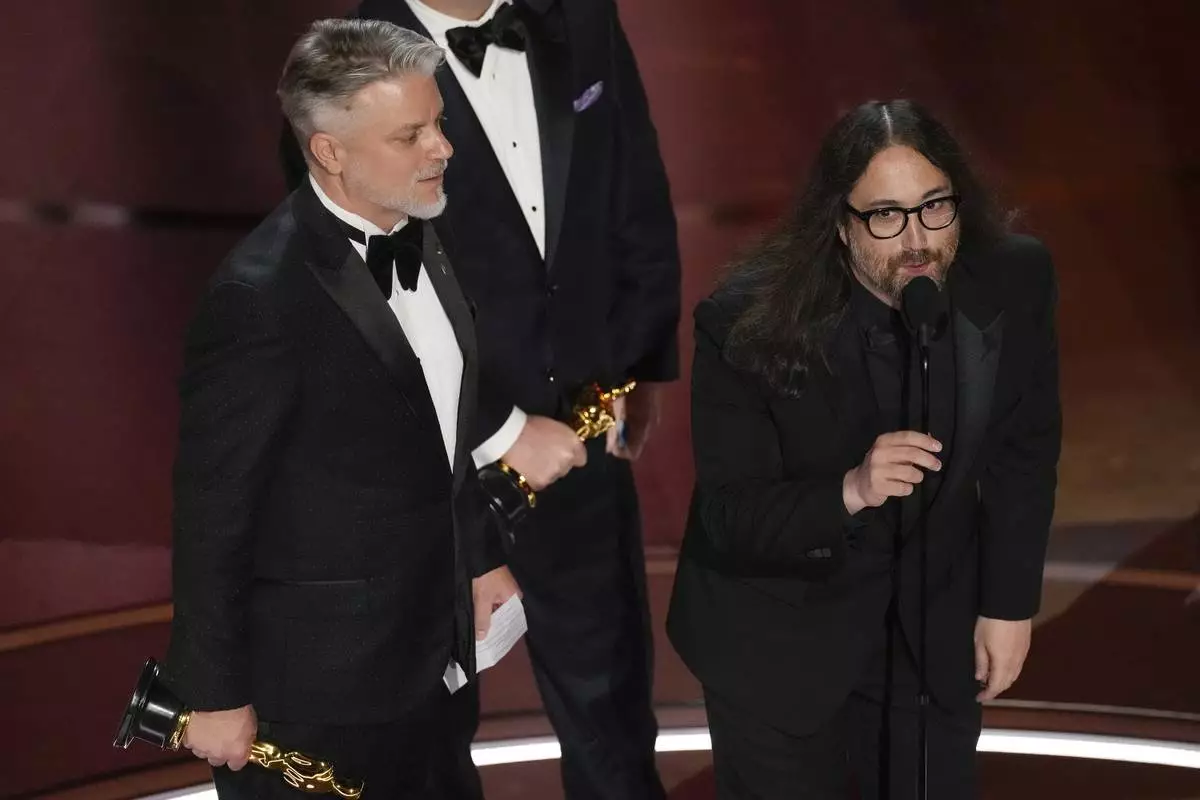
FILE - Dave Mullins, left, and Sean Ono Lennon accept the award for best animated short for "War Is Over! Inspired by the Music of John & Yoko" during the Oscars on March 10, 2024, in Los Angeles. (AP Photo/Chris Pizzello, File)
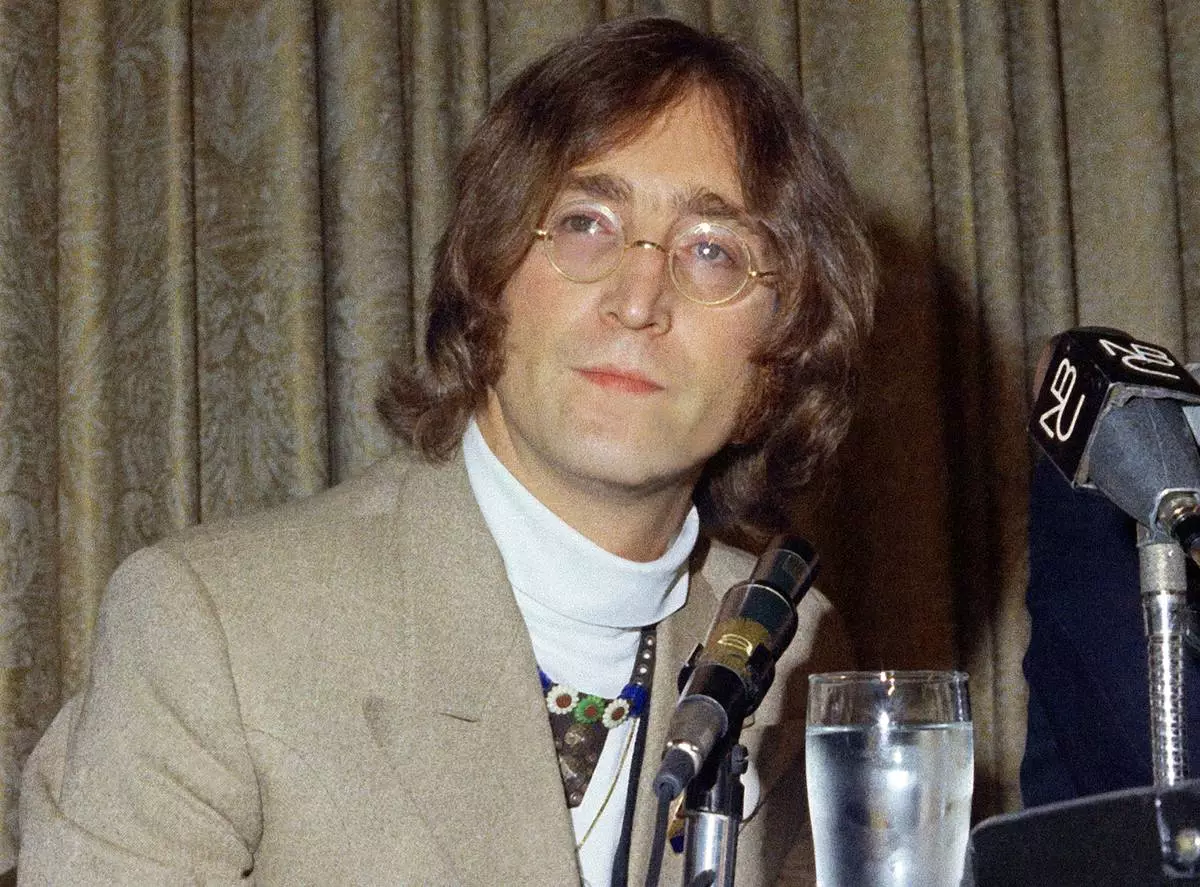
FILE - Singer John Lennon appears during a press conference at the Hotel Americana on May 13, 1968, in New York. (AP Photo, File)
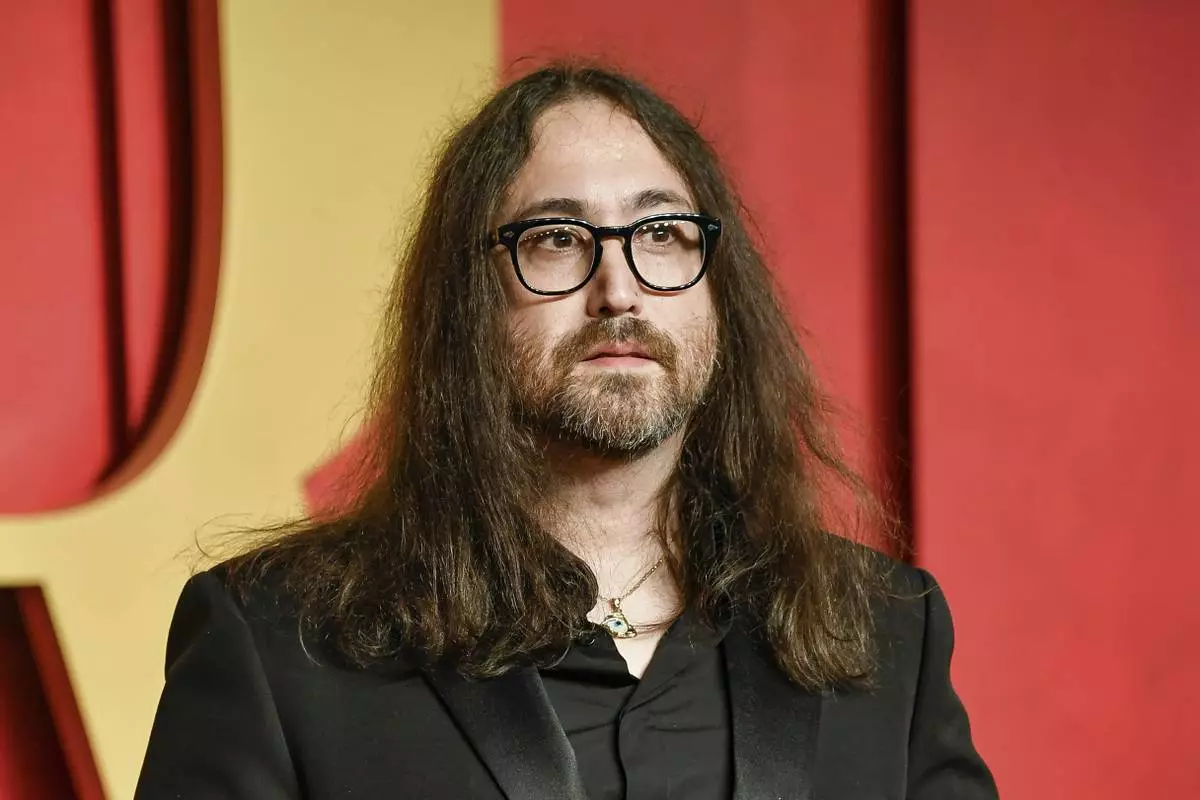
FILE - Sean Lennon appears at the Vanity Fair Oscar Party in Beverly Hills, Calif., on March 10, 2024. (Photo by Evan Agostini/Invision/AP, File)