LYONS, Ga. (AP) — Twisted equipment and snapped tree limbs still litter Chris Hopkins’ Georgia farm more than two months after Hurricane Helene made its deadly march across the South.
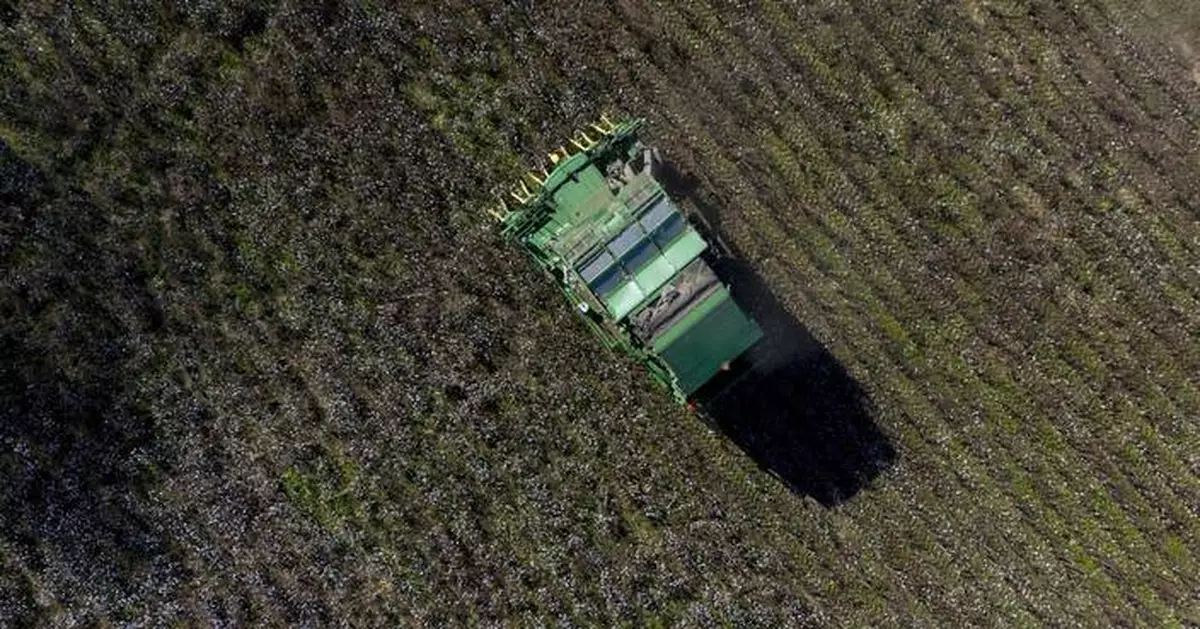
An irrigation sprinkler system about 300 feet (92 meters) long lay overturned in a field, its steel pipes bent and welded joints broken. The mangled remains of a grain bin sat crumpled by a road. On a Friday in early December, Hopkins dragged burly limbs from the path of the tractor-like machine that picks his cotton crop six rows at a time.
Click to Gallery
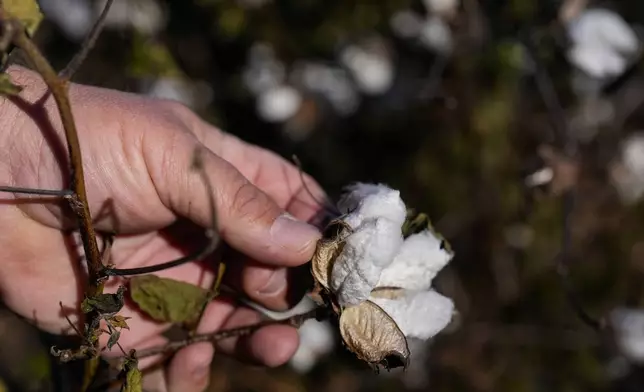
Farmer Chris Hopkins observes cotton bolls before being harvested in a field he owns, Friday, Dec. 6, 2024, near Lyons, Ga. (AP Photo/Mike Stewart)
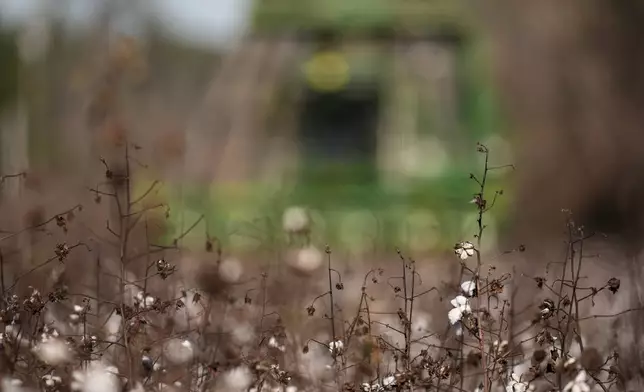
A cotton picker moves through Chris Hopkins' cotton field, Friday, Dec. 6, 2024, near Lyons, Ga. (AP Photo/Mike Stewart)
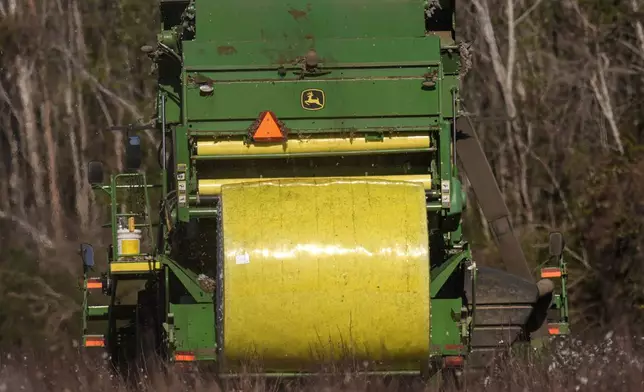
The cotton picker produced a large round bale of picked cotton, Friday, Dec. 6, 2024, near Lyons, Ga. (AP Photo/Mike Stewart)
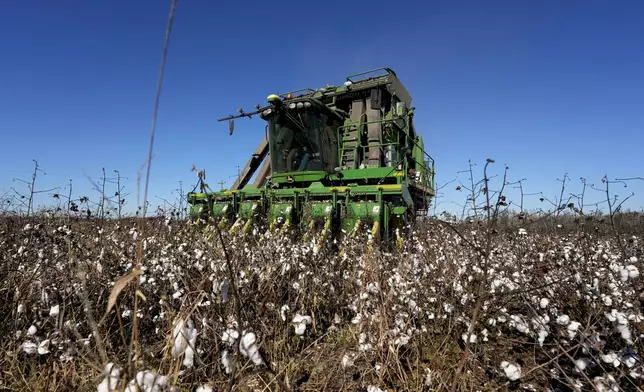
A cotton picker moves through Chris Hopkins' cotton field, Friday, Dec. 6, 2024, near Lyons, Ga. (AP Photo/Mike Stewart)
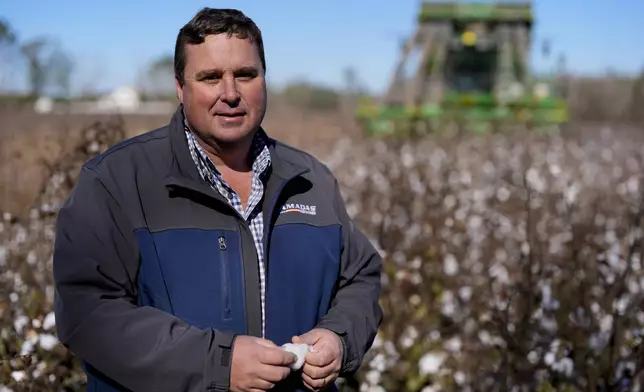
Farmer Chris Hopkins stands in one of his cotton fields before being harvested, Friday, Dec. 6, 2024, near Lyons, Ga. (AP Photo/Mike Stewart)
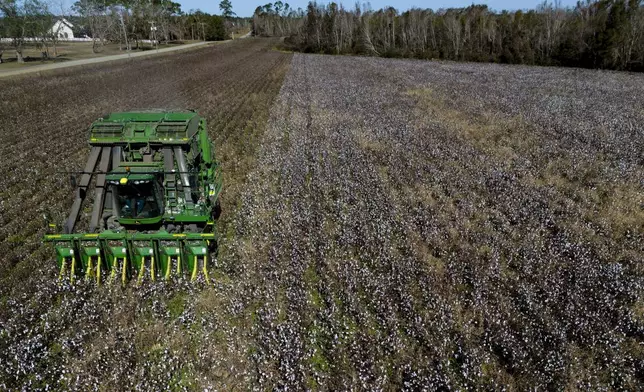
A cotton picker works in a field of cotton, Friday, Dec. 6, 2024, near Lyons, Ga. (AP Photo/Mike Stewart)
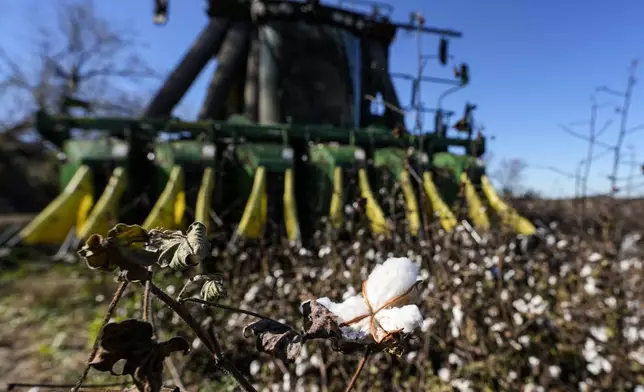
A cotton picker moves through Chris Hopkins' cotton field, Friday, Dec. 6, 2024, near Lyons, Ga. (AP Photo/Mike Stewart)
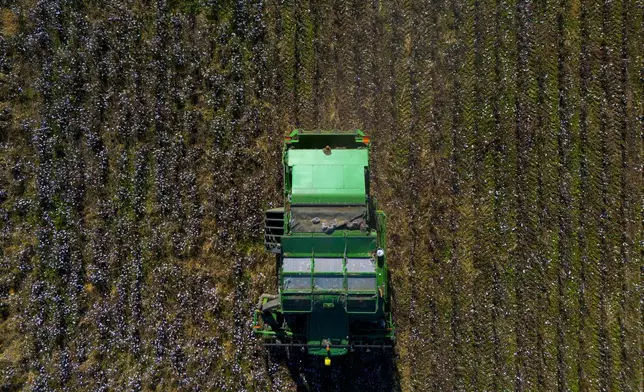
A cotton picker works in a field of cotton, Friday, Dec. 6, 2024, near Lyons, Ga. (AP Photo/Mike Stewart)
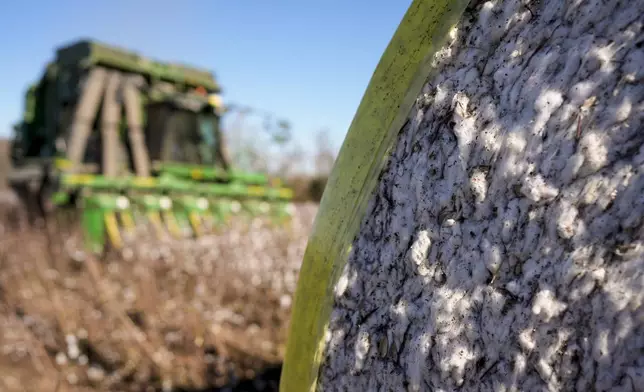
A cotton picker moves through Chris Hopkins' cotton field as a round bale sits, Friday, Dec. 6, 2024, near Lyons, Ga. (AP Photo/Mike Stewart)
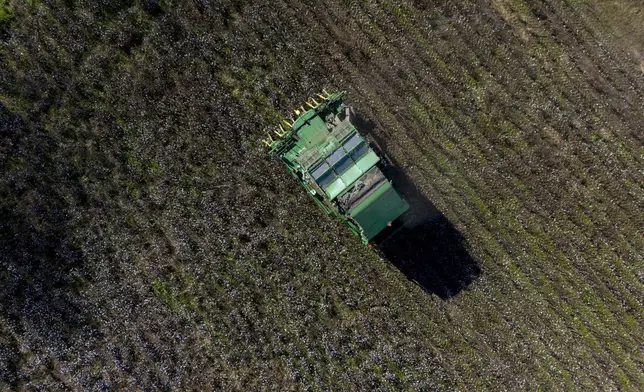
A cotton picker works in a field of cotton, Friday, Dec. 6, 2024, near Lyons, Ga. (AP Photo/Mike Stewart)
“I have wrestled with lots of emotions the past two months,” said Hopkins, who also grows corn and peanuts in rural Toombs County, about 75 miles (120 kilometers) west of Savannah. “Do we just get through this one and quit? Do we build back? It is emotionally draining.”
Hopkins is among farmers across the South who are still reeling from Helene’s devastation. The storm made landfall in Florida on Sept. 26 as a major Category 4 storm and then raced north across Georgia and neighboring states.
Experts estimate the cost to farmers, timber growers and other agribusinesses from Florida to Virginia will reach more than $10 billion. The toll includes ravaged crops, uprooted timber, wrecked farm equipment and mangled chicken houses, as well as indirect costs such as lost productivity at cotton gins and poultry processing plants.
For cotton growers like Hopkins, Helene hit just as the fall harvest was starting. Many put most cleanup on hold to try to salvage what remained of their crops.
Georgia farmers suffered storm losses of at least $5.5 billion, according to an analysis by the University of Georgia. In North Carolina, a state agency calculated farmers suffered $3.1 billion in crop losses and recovery costs after Helene brought record rainfall and flooding. Separate economic analyses of farm damage tallied losses of up to $630 million in Virginia, $452 million in South Carolina and $162 million in Florida.
Hopkins figures he lost half the cotton on his 1,400 acres (560 hectares).
“We were at the most vulnerable stage we could be,” he said. “The lint was open and fluffy and hanging there, waiting to be defoliated or picked. About 50% of the harvestable lint ended up on the ground.”
Even with insurance, Hopkins said, he won't recoup an estimated $430,000 in losses from his cotton crop alone. That doesn't include the cost of debris removal, repairing or replacing damaged machinery and the loss of two small pecan orchards uprooted by the storm.
The storm ripped through blooming cotton fields, pecan orchards laden with nuts and fields where fall vegetables like cucumbers and squash awaited picking. Hundreds of large poultry houses used to raise thousands of chickens at a time got destroyed.
Farmers far from Helene's center weren't spared, as tropical-storm force winds reached outward up to 310 miles (499 kilometers).
“It was staggering,” said Timothy Coolong, a University of Georgia horticulture professor. “This may be just too much for some folks."
Helene was one of the deadliest U.S. hurricanes in nearly two decades, killing more than 200 people. It left more than 100,000 homes damaged or destroyed across the South.
Georgia's government in November diverted $100 million that had been set aside for construction projects or paying off existing debt to fund emergency loans to farmers and cleanup in Helene's aftermath. Republican Gov. Brian Kemp has made additional storm relief a priority for the upcoming legislative session.
But Georgia's constitution prohibits using state funds to give direct disaster aid to individuals and private businesses.
In Congress, a spending bill passed early Saturday to avoid a government shutdown included $21 billion in disaster aid to U.S. farmers.
“We need help, but we need it quick," said Jeffrey Pridgen, a fifth-generation farmer who raises chickens in south Georgia’s Coffee County.
Pridgen operated a dozen poultry houses, each large enough to raise up to 20,000 chickens at a time. Helene destroyed four of them, along with thousands of chickens. Only one of Pridgen's houses remains in working condition, the others having been badly damaged.
Pridgen said new chicken houses will cost about $450,000 apiece. Because most of his were decades old, he expects insurance to cover just half the cost.
“I was looking at retirement, but I lost my retirement and my income in one day,” said Pridgen, 62. "It’ll be two years before we get fully operational again. I’m basically starting over.”
Georgia’s poultry industry took an estimated $683 million hit, with farmers having to rebuild about 300 chicken houses and repair hundreds more.
The poultry processing plant that relies on Pridgen and other storm-impacted farmers for chickens is now operating just four days per week, he said.
“Now for at least a year, perhaps a little bit longer, we’re in rebuilding mode," said Mike Giles, president of the Georgia Poultry Federation. "That affects production in an area for an extended period of time.”
Helene's devastation shouldn't have much impact on consumer prices because crops grown elsewhere can make up for most shortages, said Michael Adjemian, a University of Georgia professor of agricultural economics. Pecans are one possible exception. Georgia is responsible for roughly one-third of U.S. production.
“In most cases, even a terrible storm like this is going to have a relatively small impact,” Adjemian said. "And maybe it's not even noticeable, depending on the product.”
Helene cost Georgia cotton farmers roughly one-third of their crop, with direct and indirect losses valued at $560 million. Some were still recovering from Hurricane Michael in 2018.
Cotton growers also were facing low prices this harvest season of around 70 cents per pound (per 0.45 kilograms), said Taylor Sills, executive director of the Georgia Cotton Commission. That meant they needed a big yield to turn any profit.
“Times were awful, and then they got hit by a hurricane,” Sills said. "There are people who lost everything and there are people who didn’t. But everybody lost something."
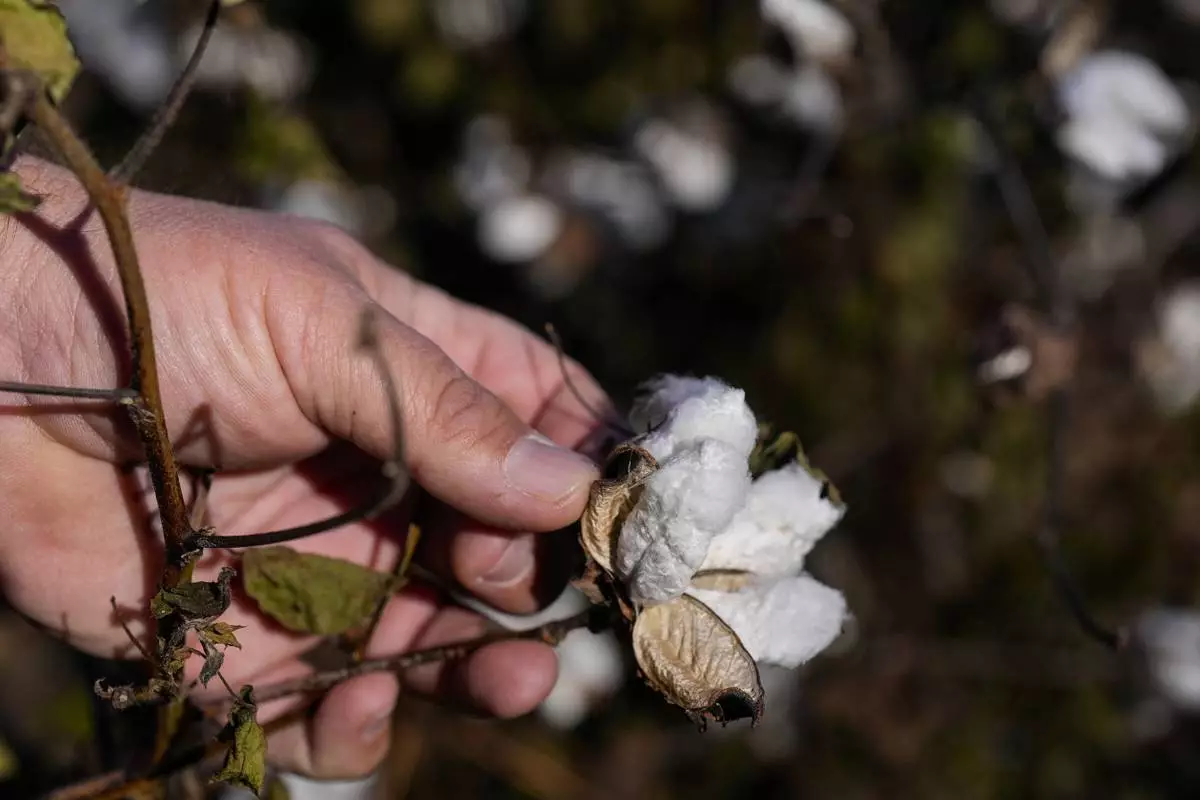
Farmer Chris Hopkins observes cotton bolls before being harvested in a field he owns, Friday, Dec. 6, 2024, near Lyons, Ga. (AP Photo/Mike Stewart)
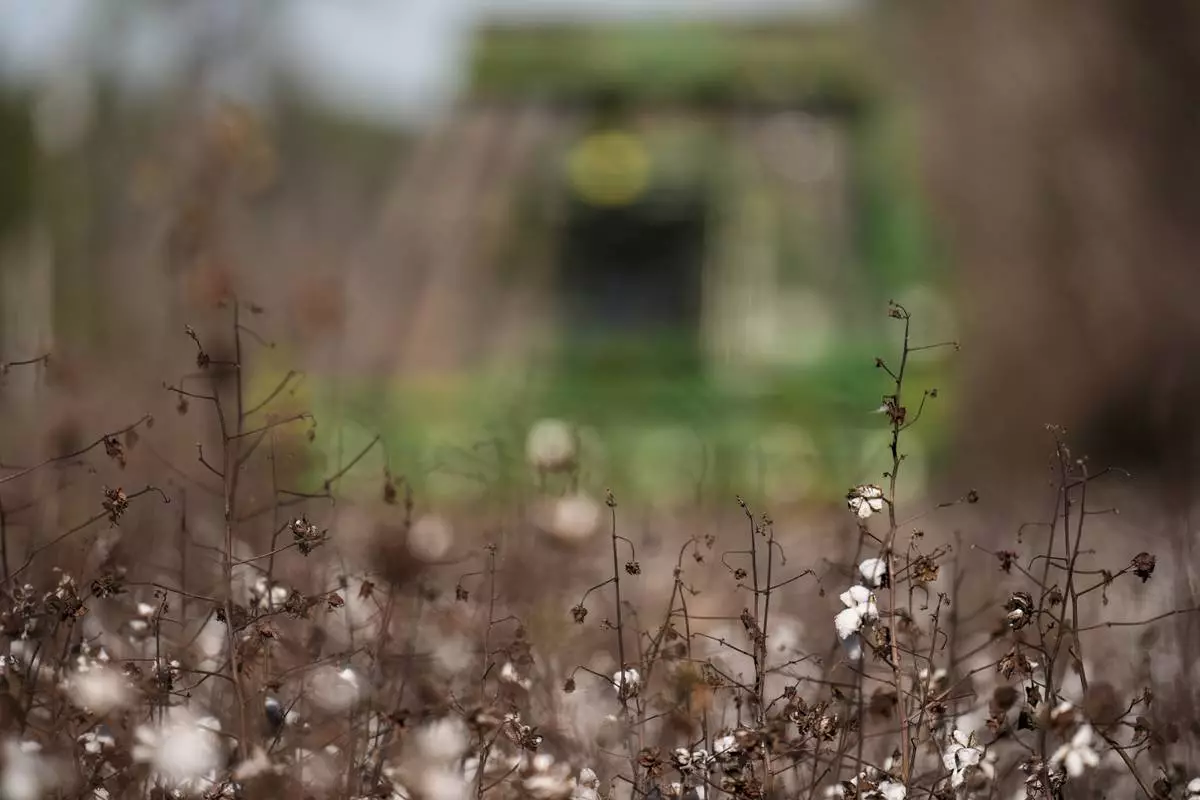
A cotton picker moves through Chris Hopkins' cotton field, Friday, Dec. 6, 2024, near Lyons, Ga. (AP Photo/Mike Stewart)
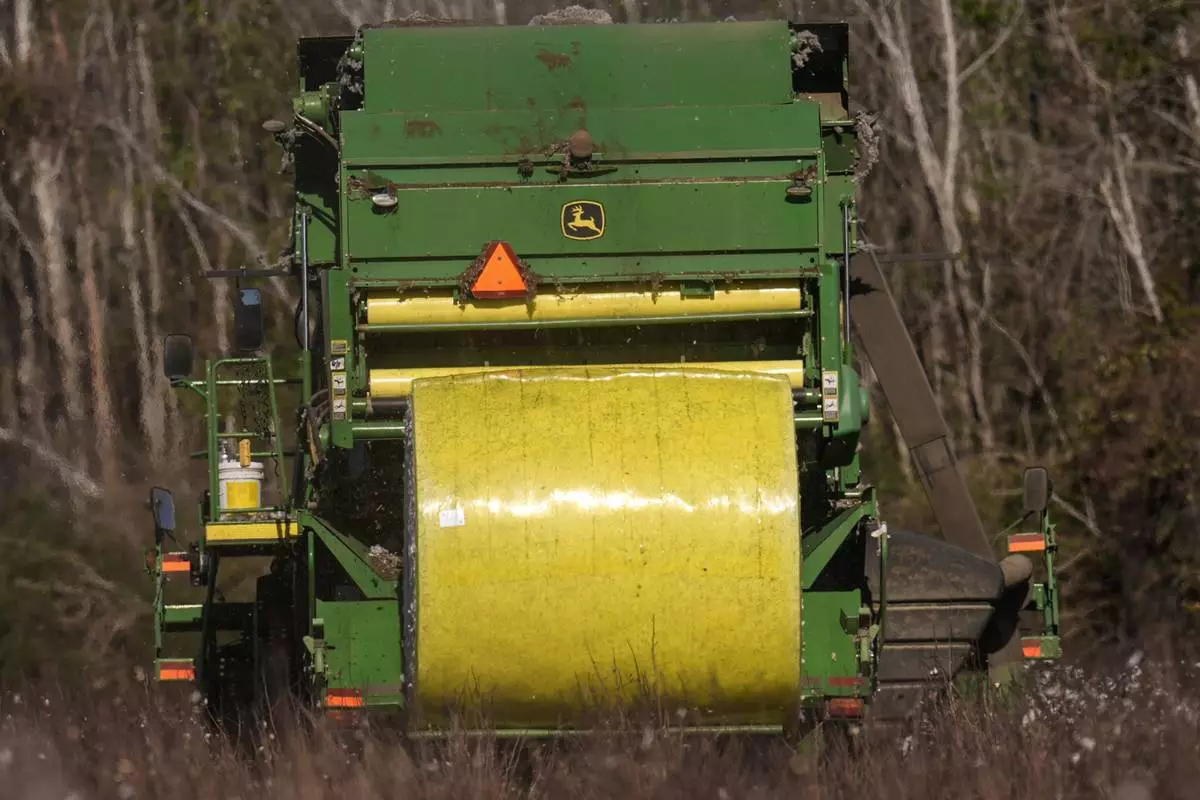
The cotton picker produced a large round bale of picked cotton, Friday, Dec. 6, 2024, near Lyons, Ga. (AP Photo/Mike Stewart)
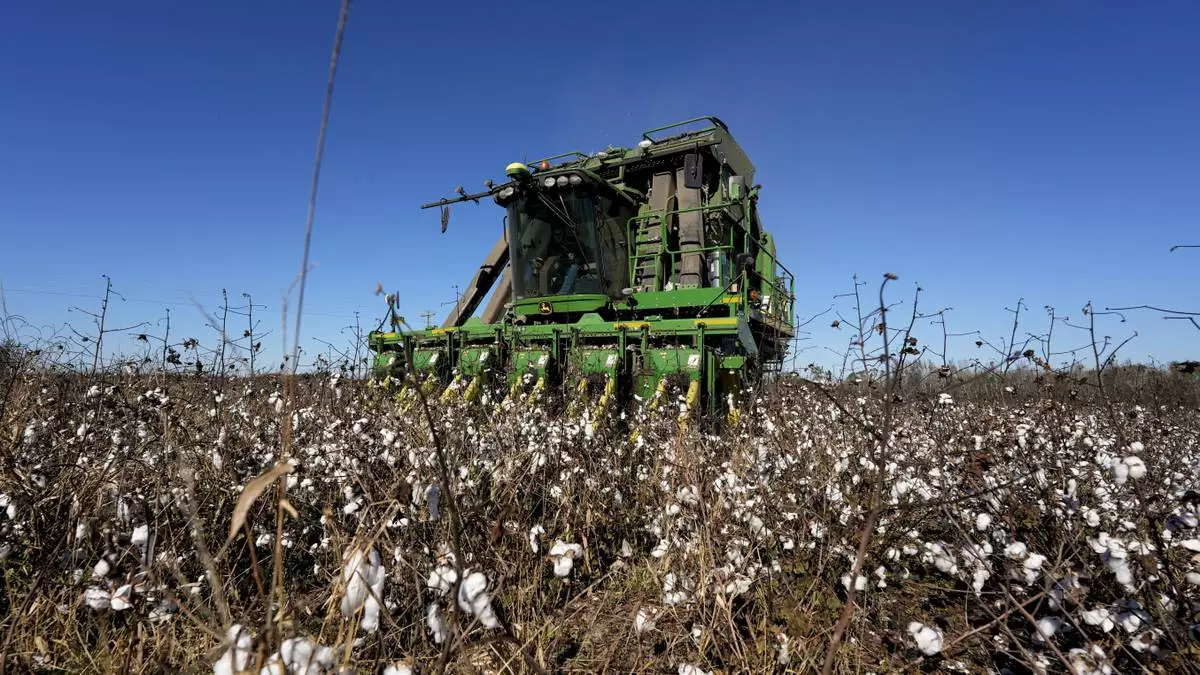
A cotton picker moves through Chris Hopkins' cotton field, Friday, Dec. 6, 2024, near Lyons, Ga. (AP Photo/Mike Stewart)
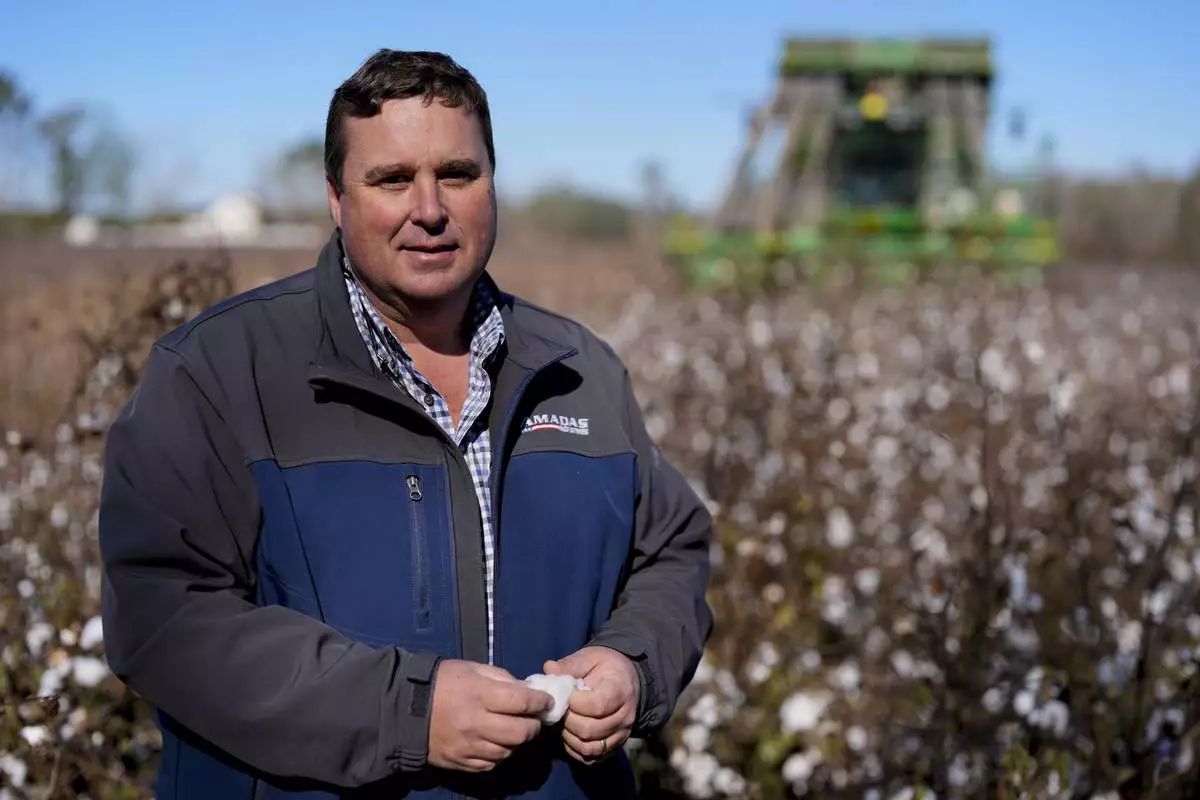
Farmer Chris Hopkins stands in one of his cotton fields before being harvested, Friday, Dec. 6, 2024, near Lyons, Ga. (AP Photo/Mike Stewart)
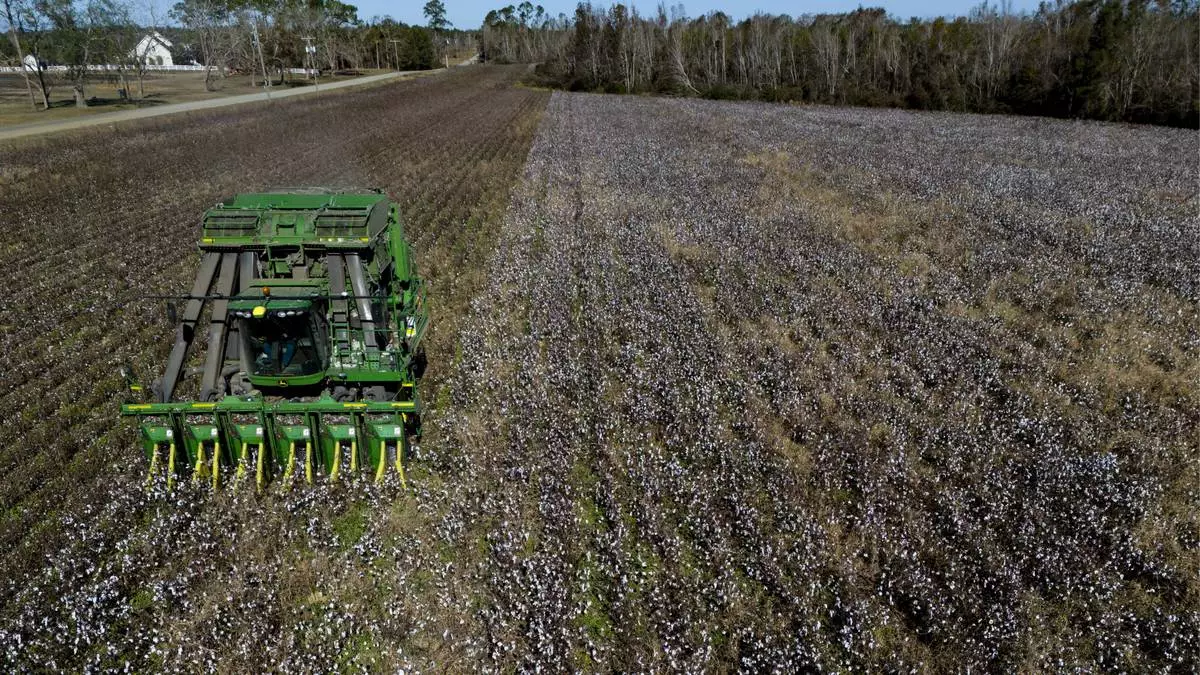
A cotton picker works in a field of cotton, Friday, Dec. 6, 2024, near Lyons, Ga. (AP Photo/Mike Stewart)
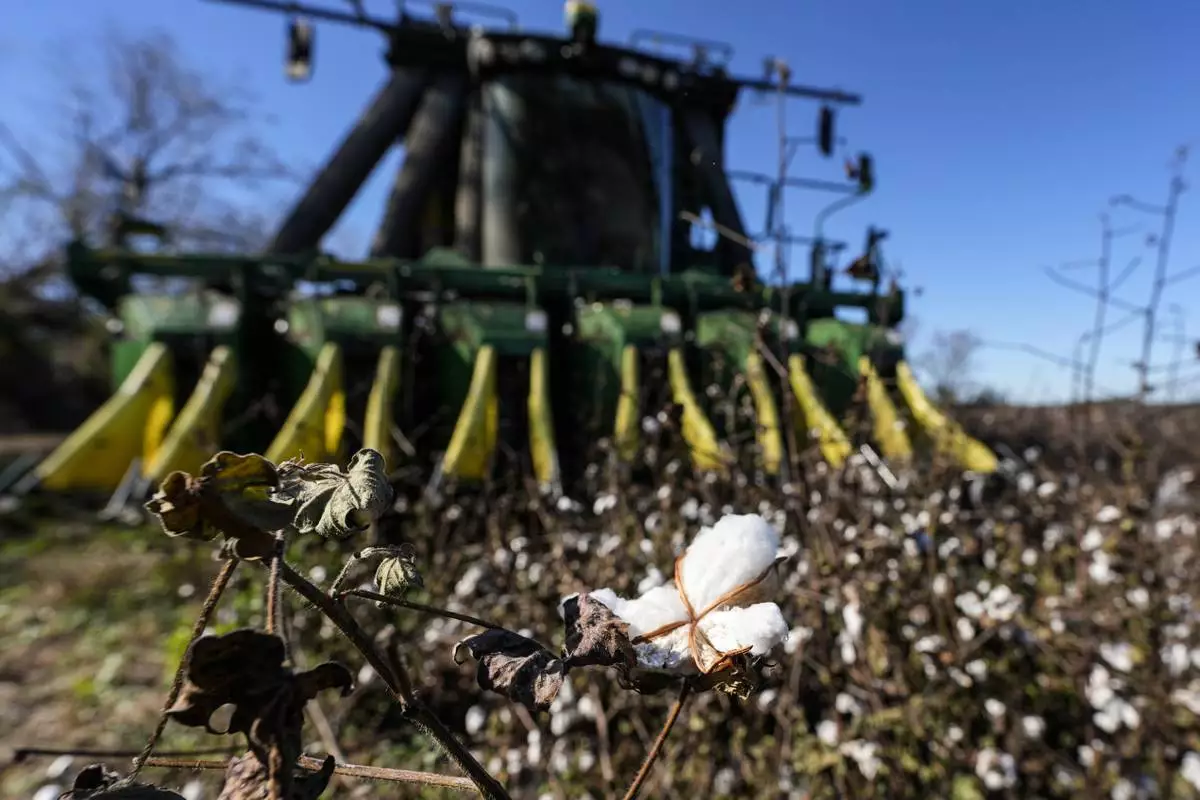
A cotton picker moves through Chris Hopkins' cotton field, Friday, Dec. 6, 2024, near Lyons, Ga. (AP Photo/Mike Stewart)
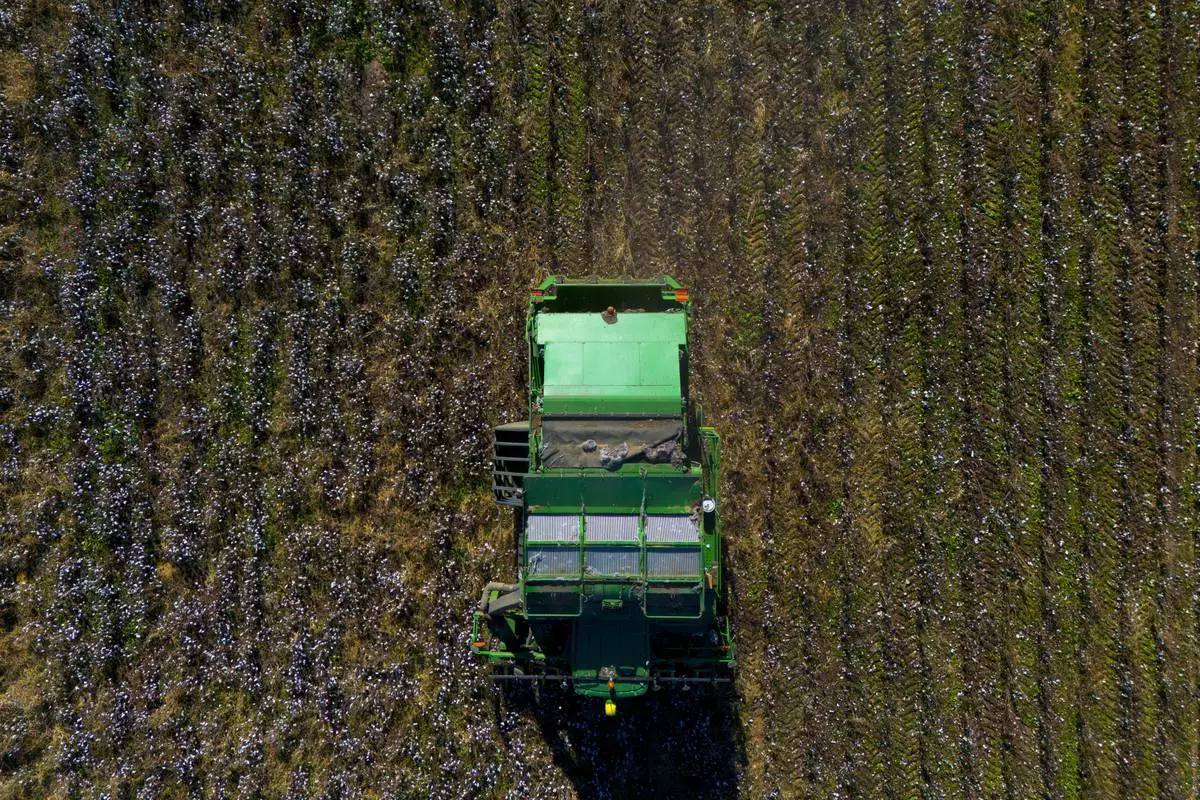
A cotton picker works in a field of cotton, Friday, Dec. 6, 2024, near Lyons, Ga. (AP Photo/Mike Stewart)
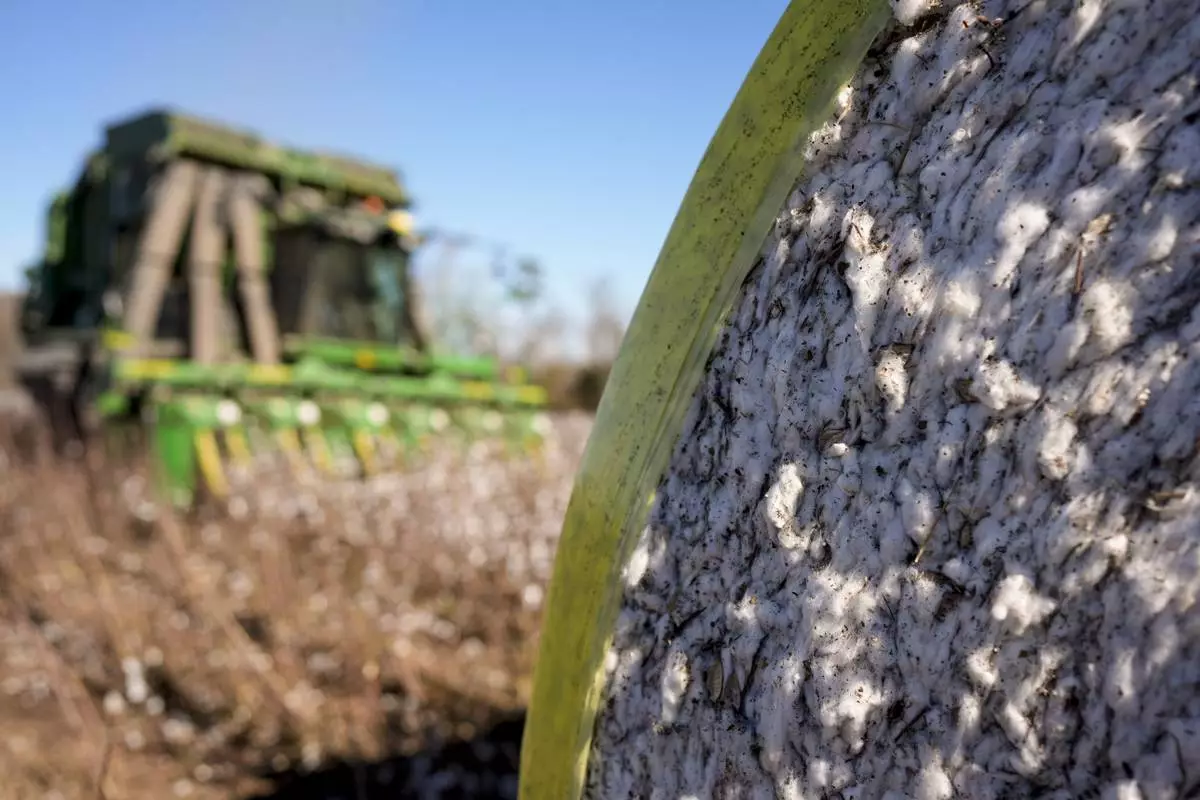
A cotton picker moves through Chris Hopkins' cotton field as a round bale sits, Friday, Dec. 6, 2024, near Lyons, Ga. (AP Photo/Mike Stewart)
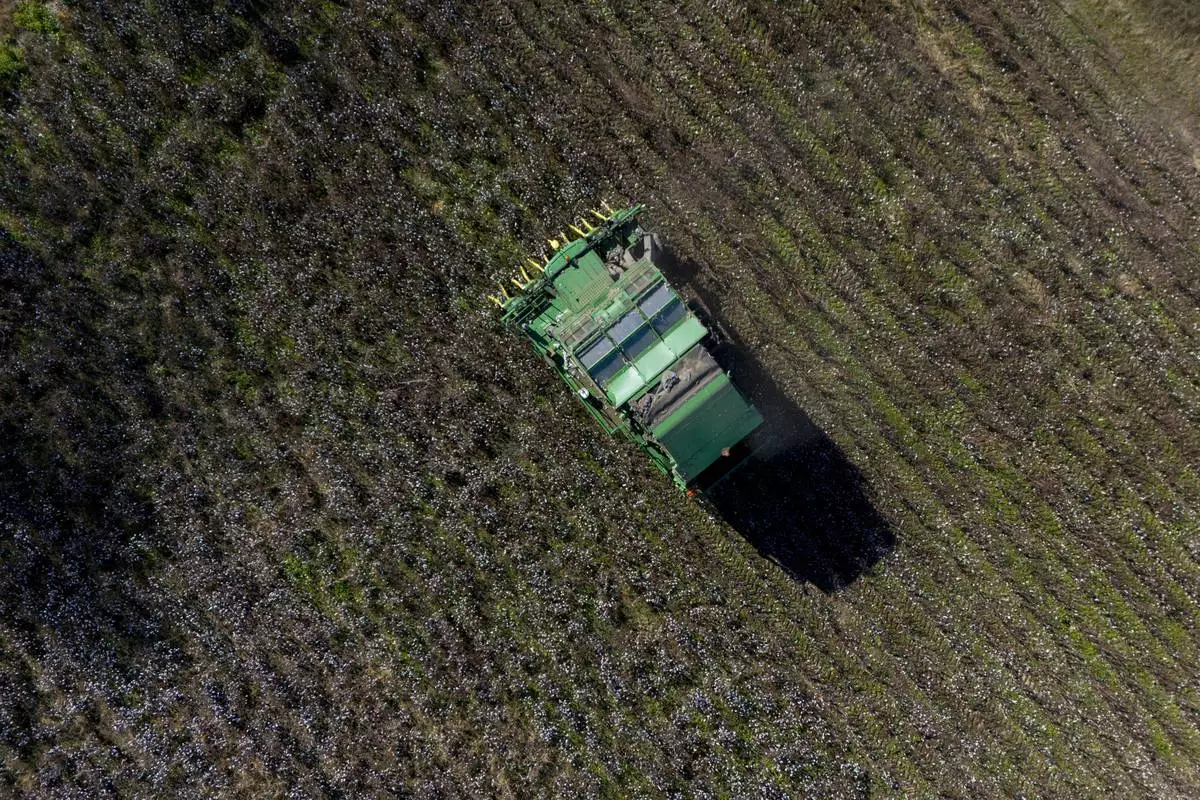
A cotton picker works in a field of cotton, Friday, Dec. 6, 2024, near Lyons, Ga. (AP Photo/Mike Stewart)