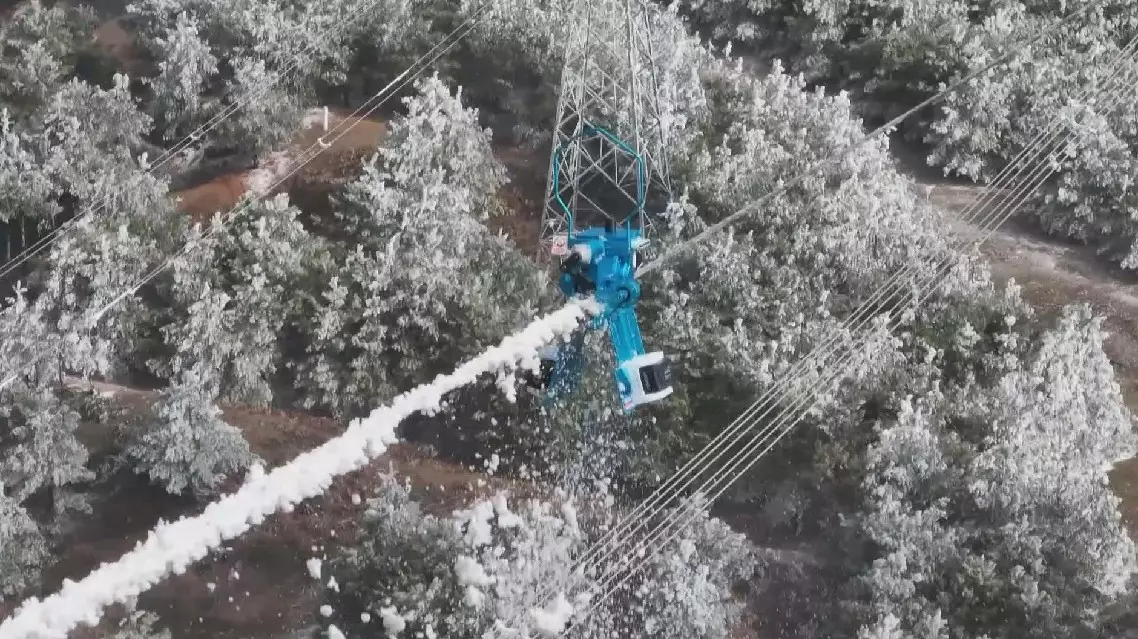
Robots have been deployed for the first time to clear ice from power transmission lines in Xichang City of southwest China's Sichuan Province, significantly improving the safety and efficiency of de-icing operations.
Due to a cold wave, the thickness of ice on the power lines of a ±800 kV UHVDC power transmission project in Xichang once exceeded 12 millimeters, posing challenges to grid operations.
Click to Gallery
Robots deployed for de-icing on power lines in southwest China’s Sichuan
Robots deployed for de-icing on power lines in southwest China’s Sichuan
Robots deployed for de-icing on power lines in southwest China’s Sichuan
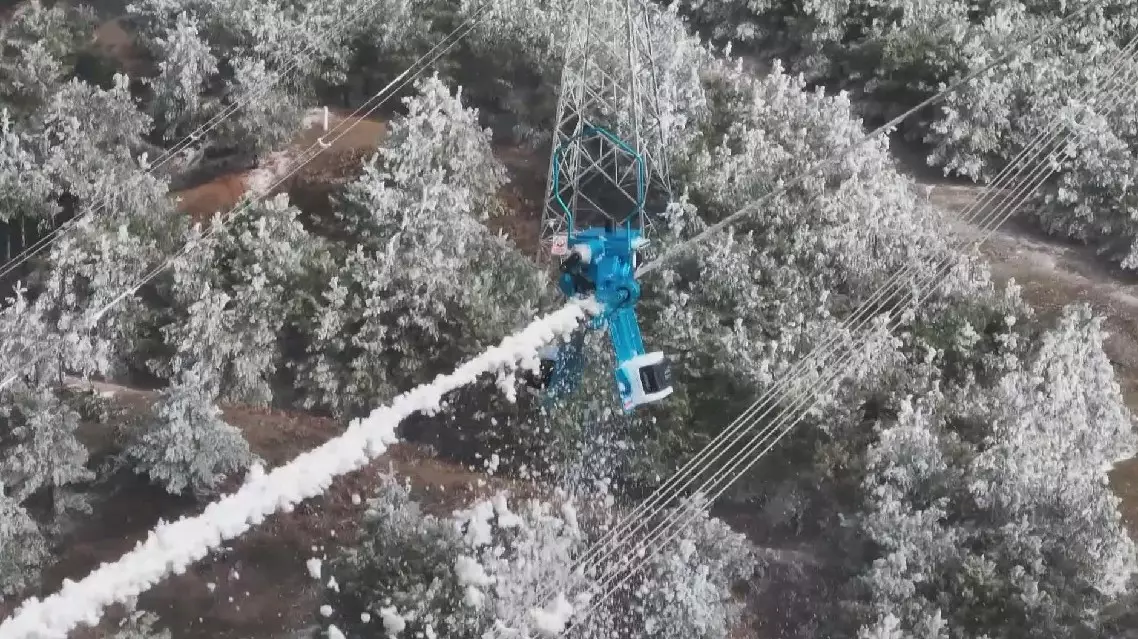
Robots deployed for de-icing on power lines in southwest China’s Sichuan
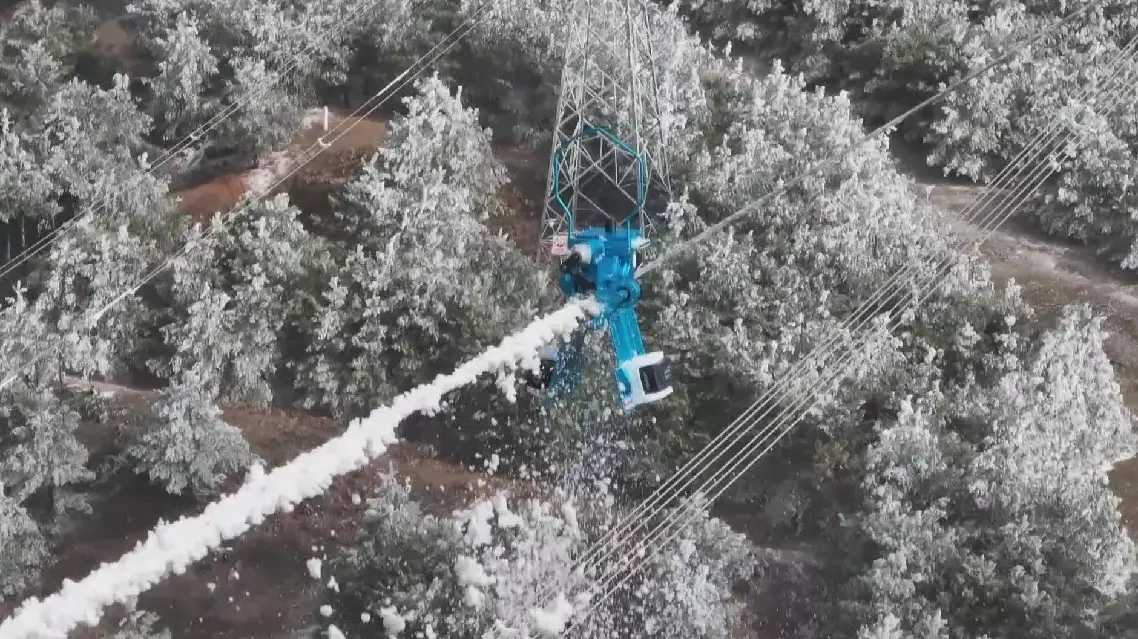
Robots deployed for de-icing on power lines in southwest China’s Sichuan
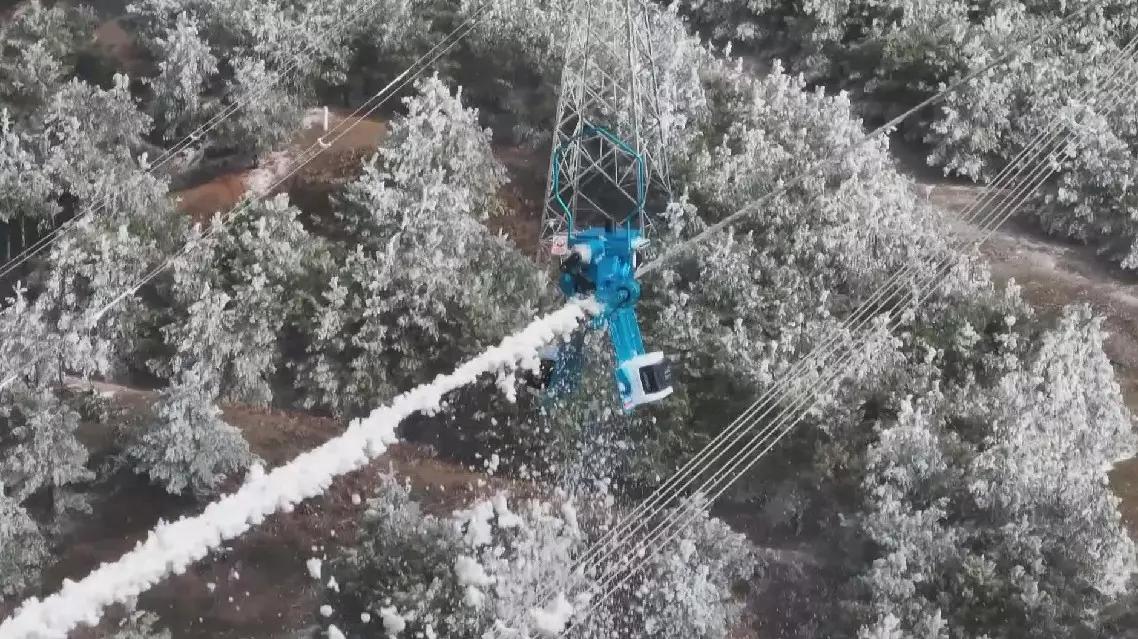
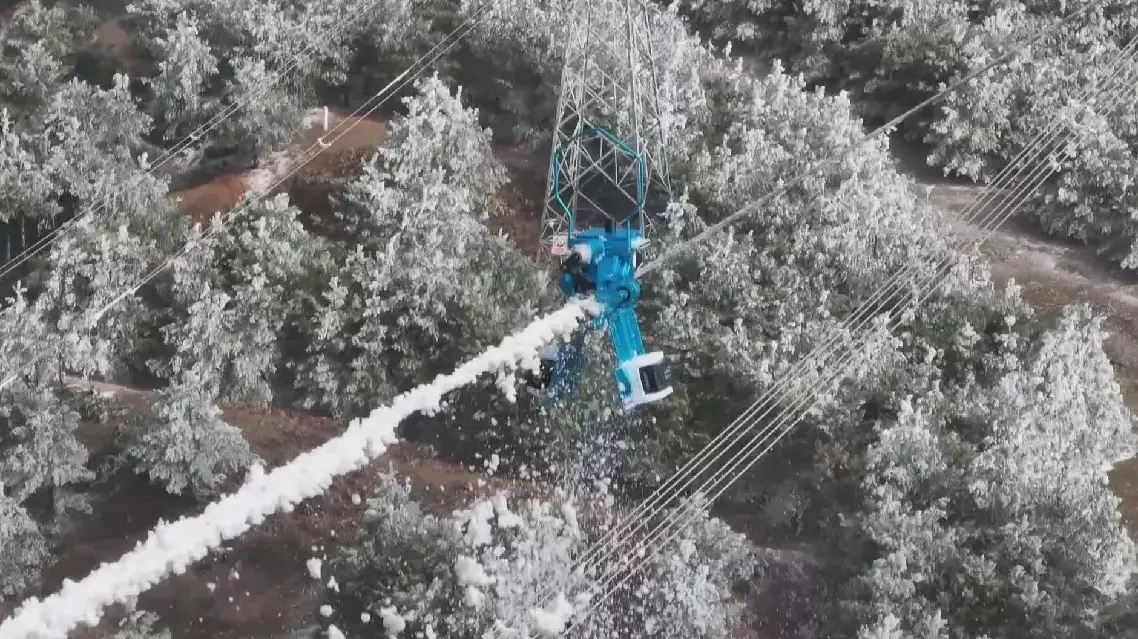
In a recent mission, a robot, deployed by a large drone onto the power line 120 meters above the ground, successfully removed ice from a 500-meter-long section within 15 minutes.
So far, the ultra-high-voltage branch of State Grid Sichuan Electric Power Company has set up 340 ice monitoring devices on power lines, with five large drones and five de-icing robots on standby to ensure the timely removal of hazards caused by extreme weather.
Robots deployed for de-icing on power lines in southwest China’s Sichuan
Robots deployed for de-icing on power lines in southwest China’s Sichuan
Robots deployed for de-icing on power lines in southwest China’s Sichuan
Robots deployed for de-icing on power lines in southwest China’s Sichuan
Robots deployed for de-icing on power lines in southwest China’s Sichuan