"Macau 2049," a large-scale futuristic stage show directed by renowned Chinese director Zhang Yimou, integrates Chinese traditions with advanced technology to inject new impetus into the development of Macao Special Administrative Region (SAR) as a "City of Performing Arts."
The 80-minute show was premiered in Macao on December 15. Marking the 25th anniversary of Macao's return to the motherland, it features live performances, highlighting China's intangible cultural heritage in eight parts, with the application of modern technology from 20 countries and regions around the world.
"In 2049, coinciding with the 100th anniversary of the founding of the People's Republic of China and the 50th anniversary of Macao's return to China, a performance like this, unparalleled globally, stands out for its distinctive feature — a dialogue between a 5,000-year-old culture and the advancement of technology and the future. Through our eight segments, it's as if we were embarking on a 12,000-kilometer journey, traversing various cultures from the East, West, South, North and Center, showcasing the brilliant artistic heritage passed down by our ancestors. With the rise of AI and technological advancement, questions arise about whether AI can replace humans. Amidst such debates, we reflect on the choice between reflection and integration, and how to embrace a new era," Zhang said.
"2049 is a great example of celebrating new technology and Chinese tradition," said Sam Renwick, who is responsible for the visual creativity and production of the show.
An ethnic minority Miao folk song was sung in the show. The lighting system, consisting of 108 dynamic mirrors and 72 laser lights, can adjust in real-time according to the on-site environment. The melodious ancient song resonated in perfect harmony with the splendid light show.
"We went to Guizhou several times to study and learn about the unique music of the local musicians, including the enchanting ethnic minority Miao people's folk songs. It is a singing of humanity, which is brave and daring," said Wu Tong, music director of the show.
A popular Yangge folk dance from northern China was showcased to the audience, featuring a distinctive twist from traditional performances. Humanoid robot actors, dressed with red scarves, performed the folk dance with other performers, showing people's love for life as well as sparking people's thoughts about artificial intelligence.
The audience was shocked by the immersive experience created by the art, technology, lighting and sound effects on the stage.
"It is very impressive because you can get to know many ethnic minorities in China, with different dances and songs," said Wong Sok Hei, a local resident.
"It is really impressive to tell Chinese stories with the help of technology," said audience member Sun Liheng from the Chinese mainland.
The show aims to inject new impetus into the development of Macao as a "City of Performing Arts." In Macao, where Eastern and Western cultures blend, it also serves as a platform for showcasing China's intangible cultural heritage to the outside world.
"Macao has always been a trading hub [between the East and the West], not only for goods but also for the exchange of culture, technology and others. It serves as a platform where Eastern and Western cultures converge and spread. We hope to use this platform effectively to promote our excellent Chinese culture," said Leong Wai Man, president of the Cultural Affairs Bureau of the Macao SAR.
Pansy Ho Chiu-king, producer of the show, expressed the hope that traditional Chinese stories could be passed on through Macao.
"We are very proud. We hope that this will be a very golden card to allow us to tell these traditional Chinese stories. The transformation and changes over the past 25 years are, one might say, unparalleled in the world. Without the support of a powerful motherland, we could not have accomplished this. As this year marks the 25th anniversary of our return, and as we enter a new era, we must bring new developments to Macao," Ho said.
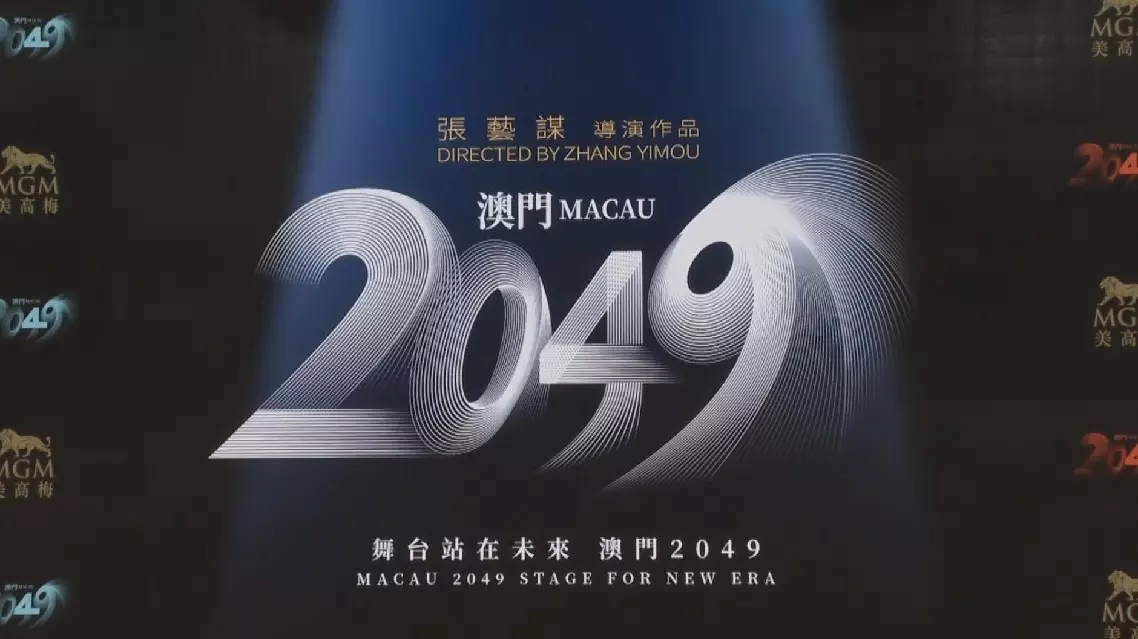
Futuristic stage show "Macau 2049" integrates Chinese traditions with advanced technology