TEHRAN, Iran (AP) — Iran's government on Tuesday said it had lifted a ban on access to WhatsApp and Google Play after more than two years, the official IRNA news agency reported.
The report said the country’s Supreme Council of Cyber Space made the decision in a meeting led by reformist President Masoud Pezeshkian, who has vowed to remove restrictions on social media.
Click to Gallery
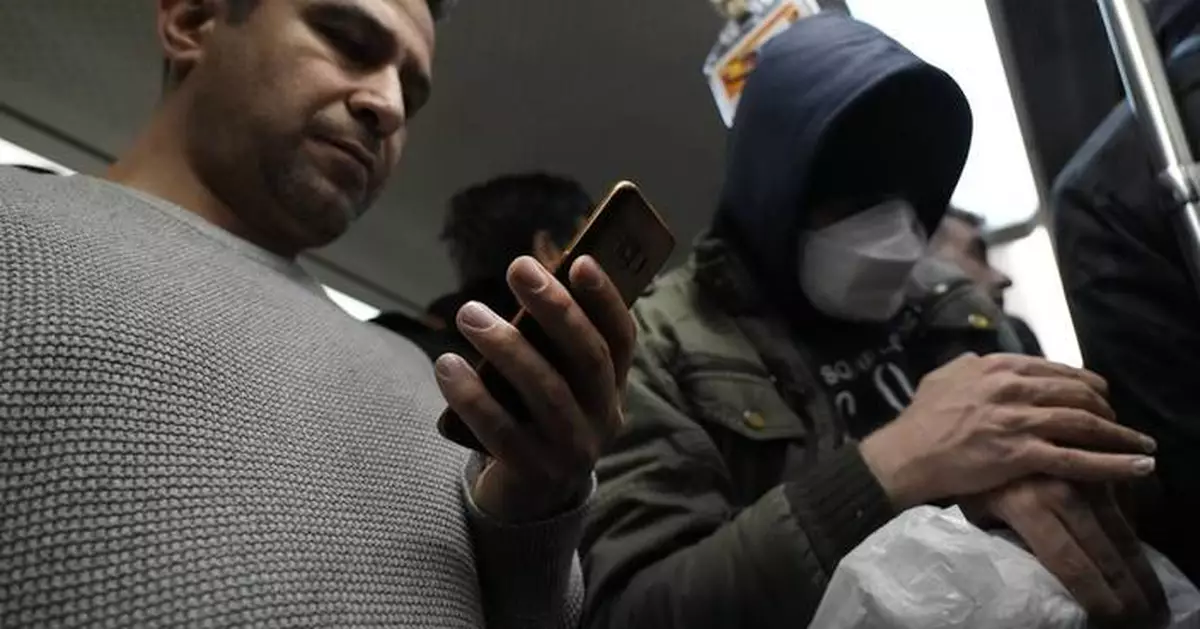
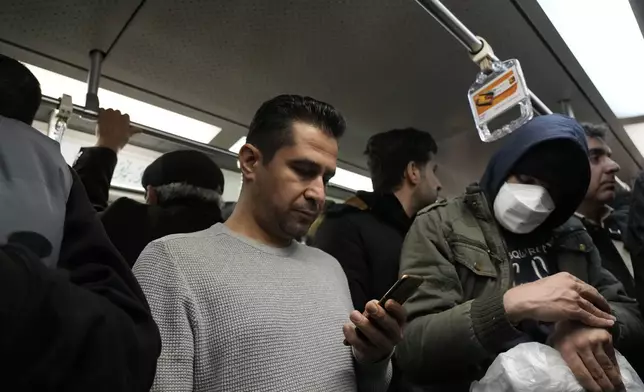
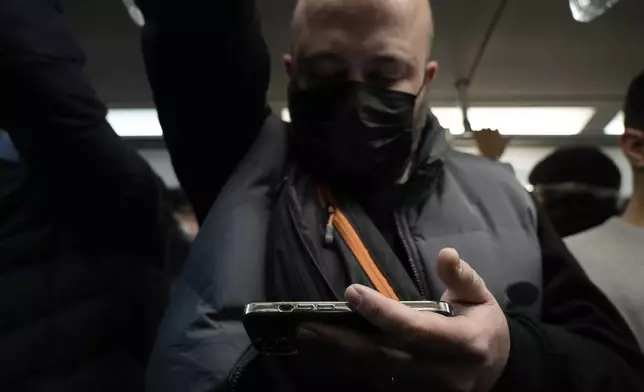
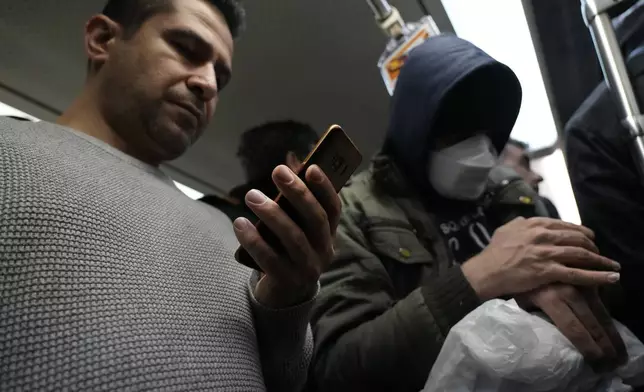
A man uses his smartphone while riding the subway in Tehran, Iran, Tuesday, Dec. 24, 2024. (AP Photo/Vahid Salemi)
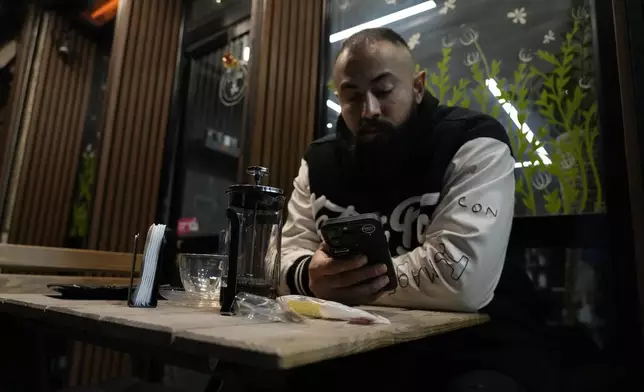
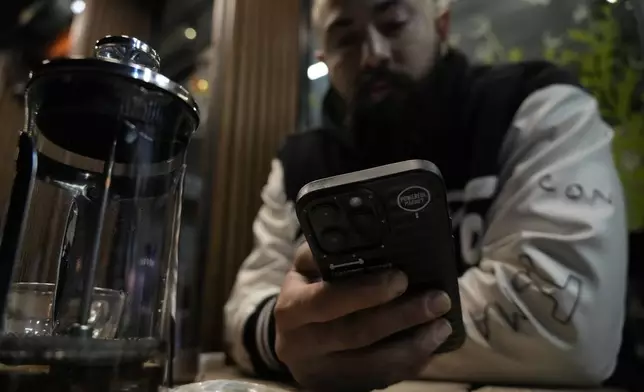
A man uses his smartphone as he sits in the alfresco dining area of a cafe in Tehran, Iran, Tuesday, Dec. 24, 2024. (AP Photo/Vahid Salemi)
A man uses his smartphone as he sits in the alfresco dining area of a cafe in Tehran, Iran, Tuesday, Dec. 24, 2024. (AP Photo/Vahid Salemi)
A man uses his smartphone while riding the subway in Tehran, Iran, Tuesday, Dec. 24, 2024. (AP Photo/Vahid Salemi)
A man uses his smartphone while riding the subway in Tehran, Iran, Tuesday, Dec. 24, 2024. (AP Photo/Vahid Salemi)
Iran’s telecommunication minister Sattar Heshemi in a post on X called the decision a “first step” in removing restrictions and said “the path will continue" — indicating the possibility of unblocking other services.
Many people reached by The Associated Press across the capital, Tehran, and other cities said they had access to the services on computers but not yet on mobile phones.
WhatsApp has been the third most popular messaging platform in Iran after Instagram and Telegram.
The ban on WhatsApp and Google Play was put in place in 2022 during mass protests against the government over the death of a woman held by the country’s morality police for allegedly violating the strictly enforced dress code. The protests calmed in 2023 after a crackdown by police and security forces that led to the death of hundreds of people and the imprisonment of thousands.
Iran has blocked access to various social media platforms over the years but many people in the country use proxies and VPNs to access them.
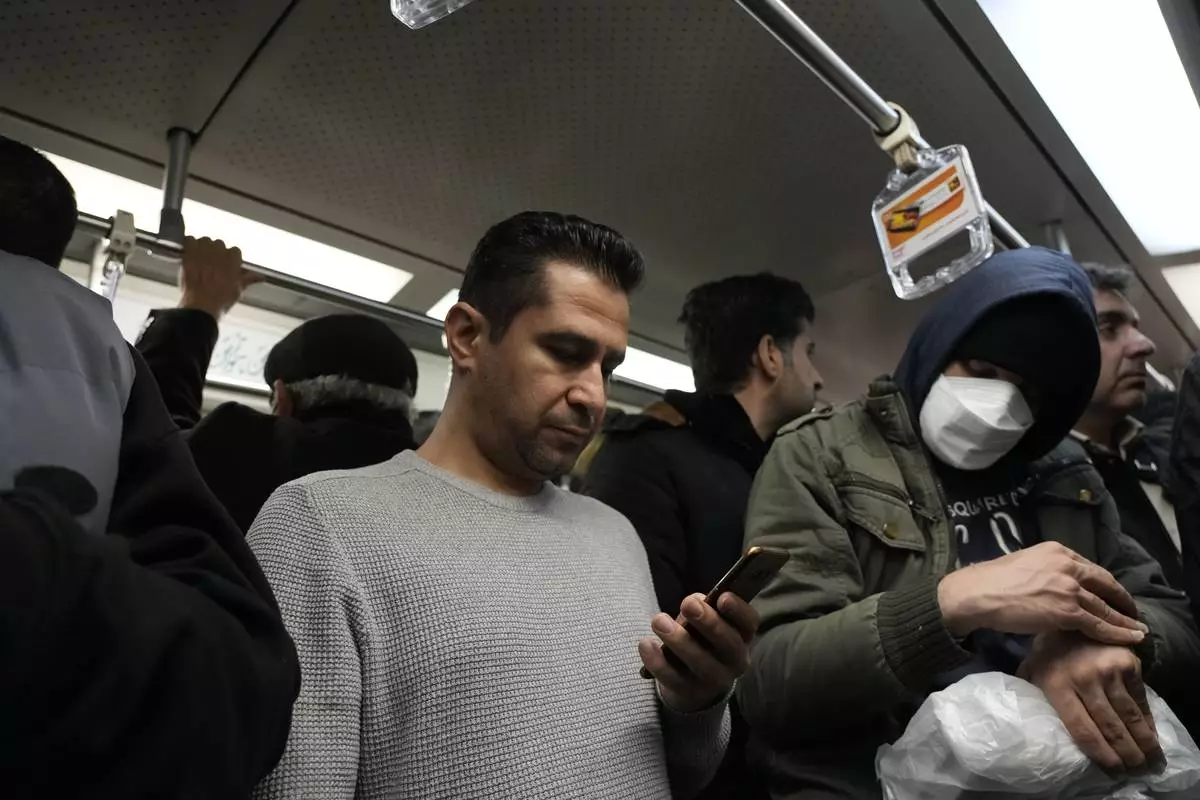
A man uses his smartphone while riding the subway in Tehran, Iran, Tuesday, Dec. 24, 2024. (AP Photo/Vahid Salemi)
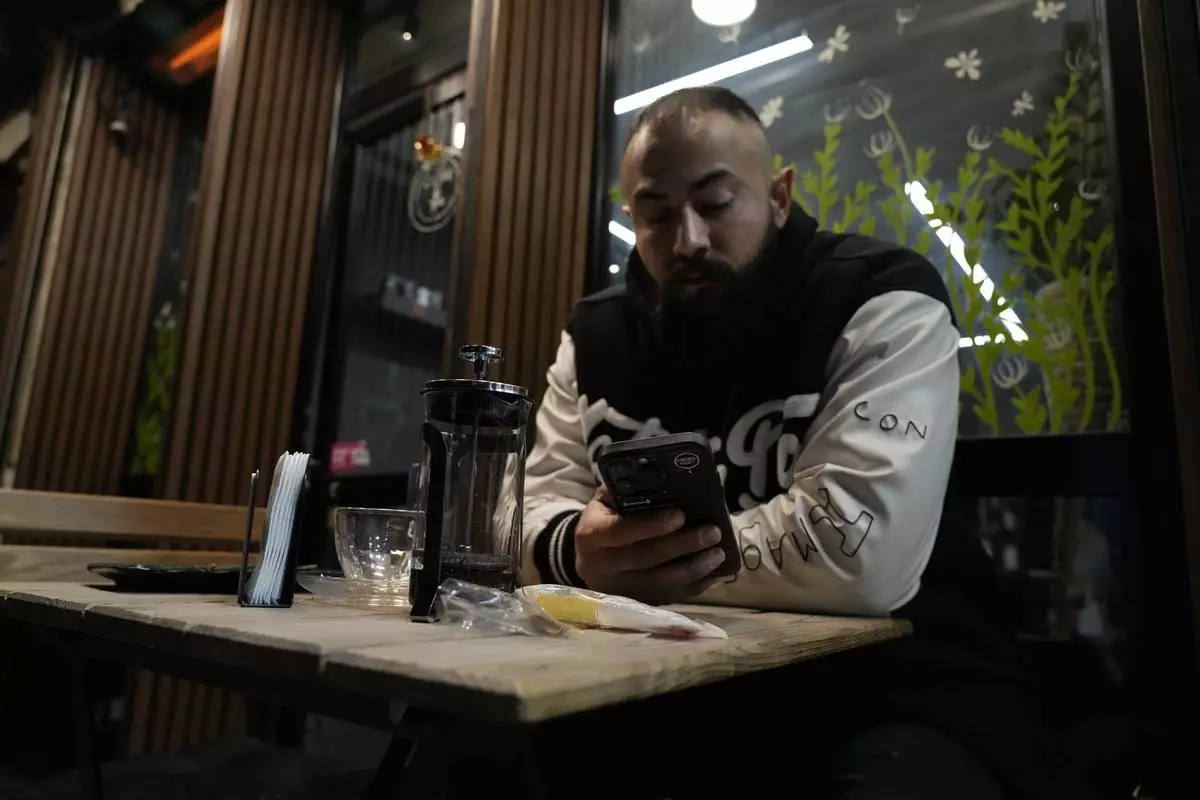
A man uses his smartphone as he sits in the alfresco dining area of a cafe in Tehran, Iran, Tuesday, Dec. 24, 2024. (AP Photo/Vahid Salemi)
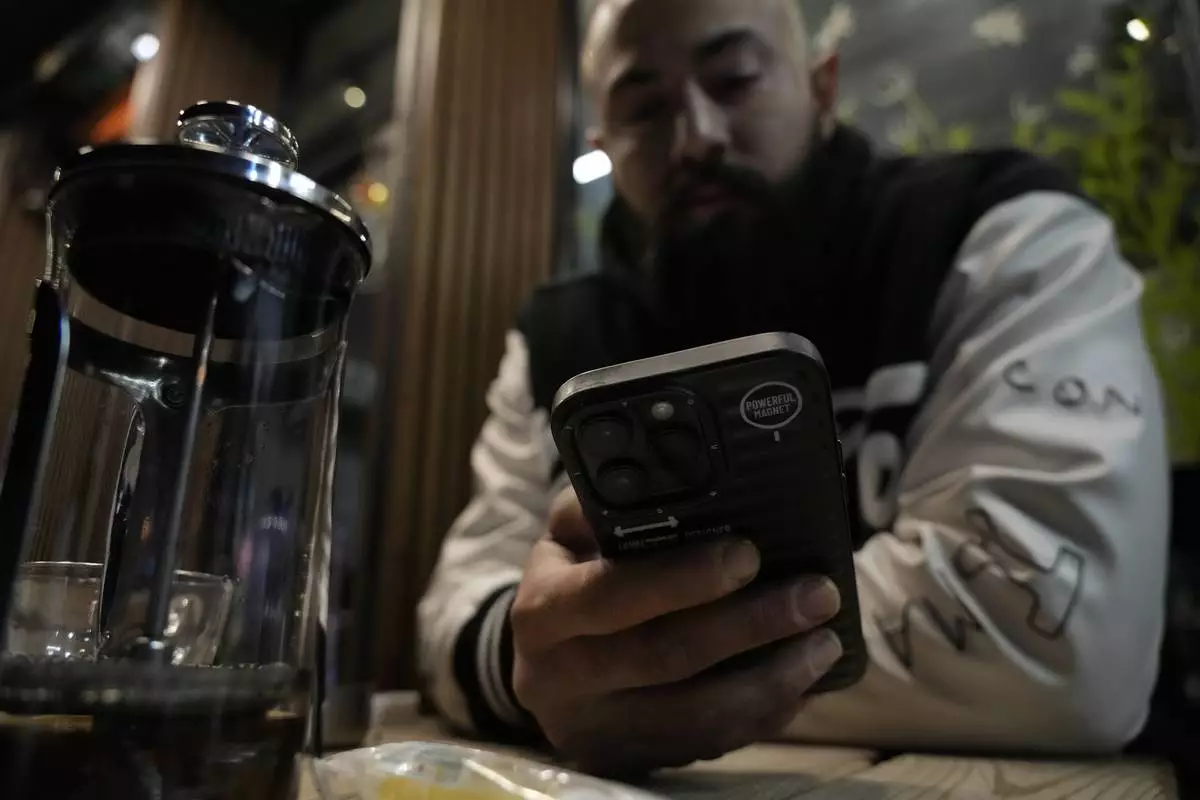
A man uses his smartphone as he sits in the alfresco dining area of a cafe in Tehran, Iran, Tuesday, Dec. 24, 2024. (AP Photo/Vahid Salemi)
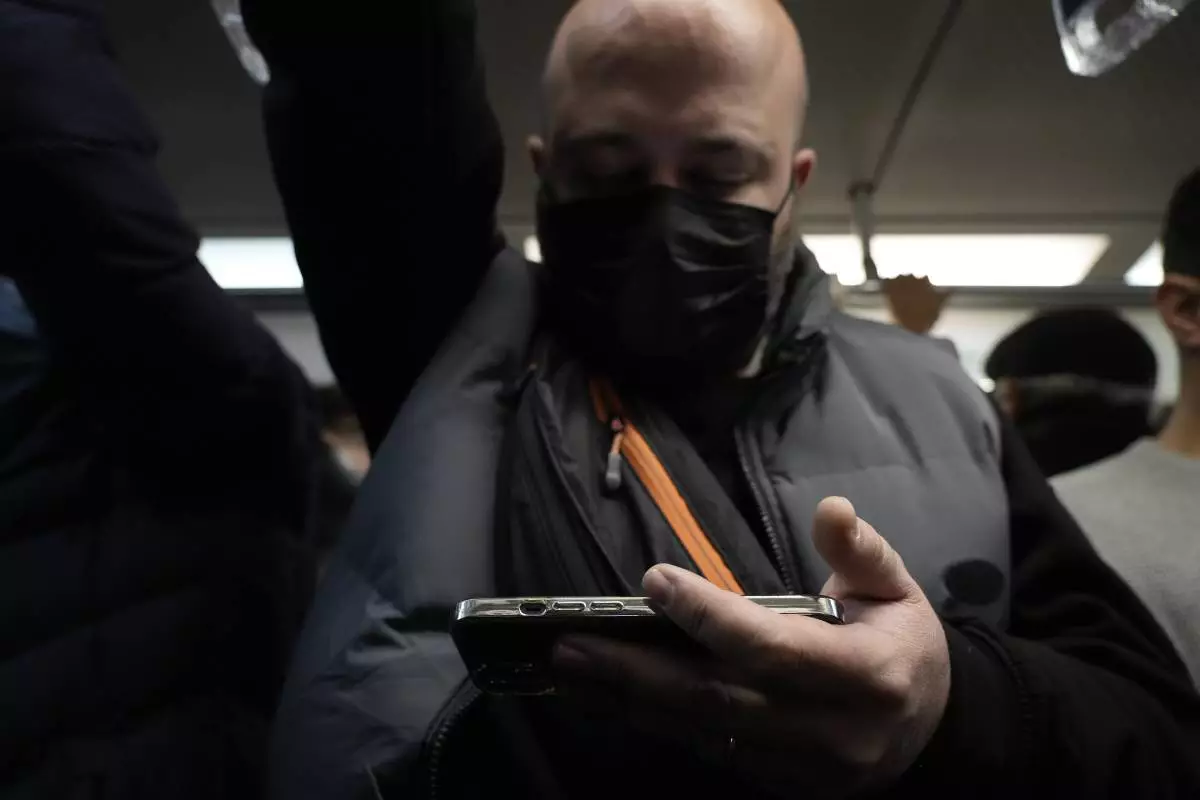
A man uses his smartphone while riding the subway in Tehran, Iran, Tuesday, Dec. 24, 2024. (AP Photo/Vahid Salemi)
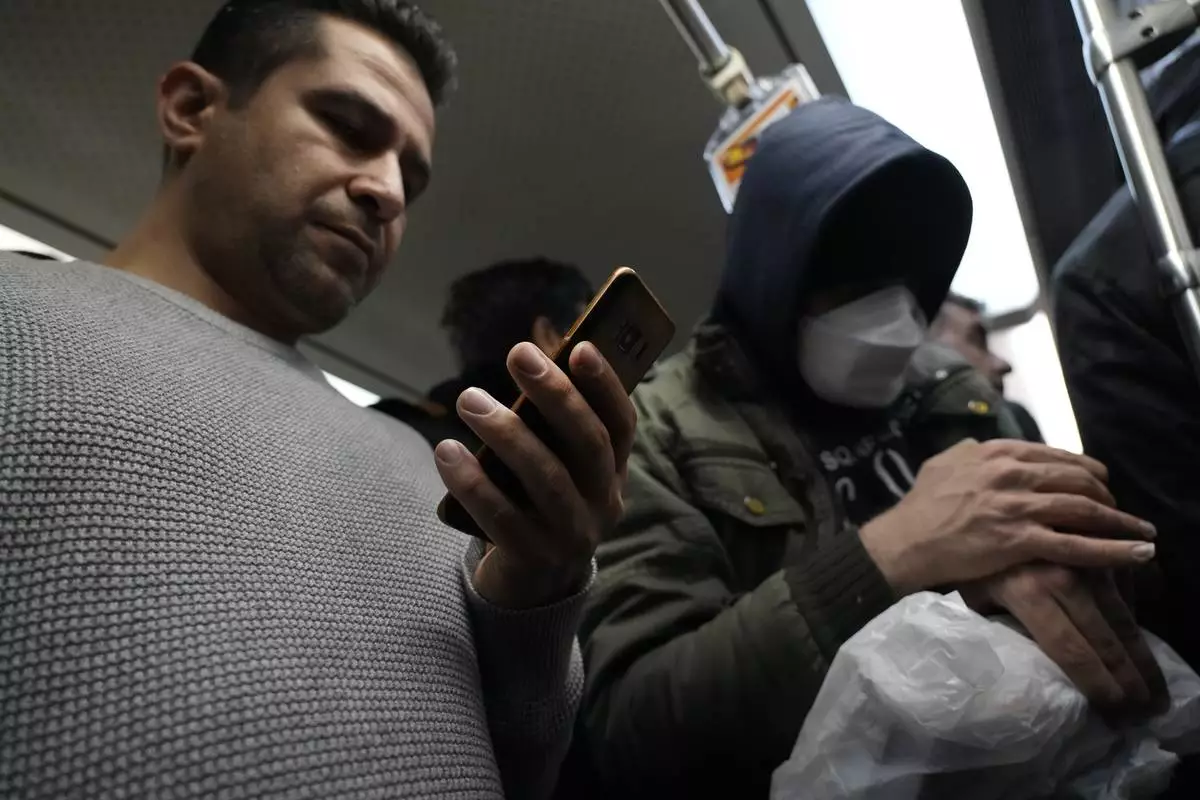
A man uses his smartphone while riding the subway in Tehran, Iran, Tuesday, Dec. 24, 2024. (AP Photo/Vahid Salemi)
WASHINGTON (AP) — Venezuelan opposition leader María Corina Machado was at the White House on Thursday discussing her country's future with President Donald Trump even after he publicly dismissed her credibility to take over after an audacious U.S. military raid captured then-President Nicolás Maduro.
Trump has raised doubts about his stated commitment to backing democratic rule in Venezuela. His administration has signaled its willingness to work with acting President Delcy Rodríguez, who was Maduro’s vice president and, along with others in the deposed leader’s inner circle, remains in charge of day-to-day governmental operations.
In endorsing Rodríguez so far, Trump has sidelined Machado, who has long been a face of resistance in Venezuela and sought to cultivate relationships with Trump and key administration voices like Secretary of State Marco Rubio among the American right wing in a gamble to ally herself with the U.S. government.
White House press secretary Karoline Leavitt said Trump was expecting a positive discussion during the lunchtime meeting and called Machado “a remarkable and brave voice” for the people of Venezuela.
The White House said Machado sought the face-to-face meeting without setting expectations for what would occur. Her party is widely believed to have won 2024 elections rejected by Maduro. Machado previously offered to share with Trump the Nobel Peace Prize she won last year, an honor he has coveted.
Leavitt said Trump is committed to seeing Venezuela hold elections “one day,” but wouldn’t say when that might happen.
Machado plans to have a meeting at the Senate later Thursday. Trump has called her “a nice woman” while indicating they might not touch on major issues in their talks Thursday.
Her Washington swing began after U.S. forces in the Caribbean Sea seized another sanctioned oil tanker that the Trump administration says had ties to Venezuela. It is part of a broader U.S. effort to take control of the South American country’s oil after U.S. forces seized Maduro and his wife at a heavily guarded compound in the Venezuelan capital of Caracas and brought them to New York to stand trial on drug trafficking charges.
The White House says Venezuela has been fully cooperating with the Trump administration since Maduro’s ouster.
Rodríguez, the acting president, herself has adopted a less strident position toward Trump and his “America First” policies toward the Western Hemisphere, saying she plans to continue releasing prisoners detained under Maduro — a move thought to have been made at the behest of the Trump administration. Venezuela released several Americans this week.
Trump, a Republican, said Wednesday that he had a “great conversation” with Rodríguez, their first since Maduro was ousted.
“We had a call, a long call. We discussed a lot of things,” Trump said during an Oval Office bill signing. “And I think we’re getting along very well with Venezuela.”
Even before indicating the willingness to work with Venezuela's interim government, Trump was quick to snub Machado. Just hours after Maduro's capture, Trump said of Machado that “it would be very tough for her to be the leader. She doesn’t have the support within or the respect within the country.”
Machado has steered a careful course to avoid offending Trump, notably after winning last year’s Nobel Peace Prize, which Trump wanted to win himself. She has since thanked Trump. Her offer to share the peace prize with him was rejected by the Nobel Institute.
Machado’s whereabouts have been largely unknown since she went into hiding early last year after being briefly detained in Caracas. She briefly reappeared in Oslo, Norway, in December after her daughter received the Nobel Peace Prize on her behalf.
The industrial engineer and daughter of a steel magnate began challenging the ruling party in 2004, when the nongovernmental organization she co-founded, Súmate, promoted a referendum to recall then-President Hugo Chávez. The initiative failed, and Machado and other Súmate executives were charged with conspiracy.
A year later, she drew the anger of Chávez and his allies again for traveling to Washington to meet President George W. Bush. A photo showing her shaking hands with Bush in the Oval Office lives in the collective memory. Chávez considered Bush an adversary.
Almost two decades later, she marshaled millions of Venezuelans to reject Chávez’s successor, Maduro, for another term in the 2024 election. But ruling party-loyal electoral authorities declared him the winner despite ample credible evidence to the contrary. Ensuing anti-government protests ended in a brutal crackdown by state security forces.
Garcia Cano reported from Caracas, Venezuela, and Janetsky from Mexico City. AP Diplomatic Writer Matthew Lee in Washington contributed to this report.
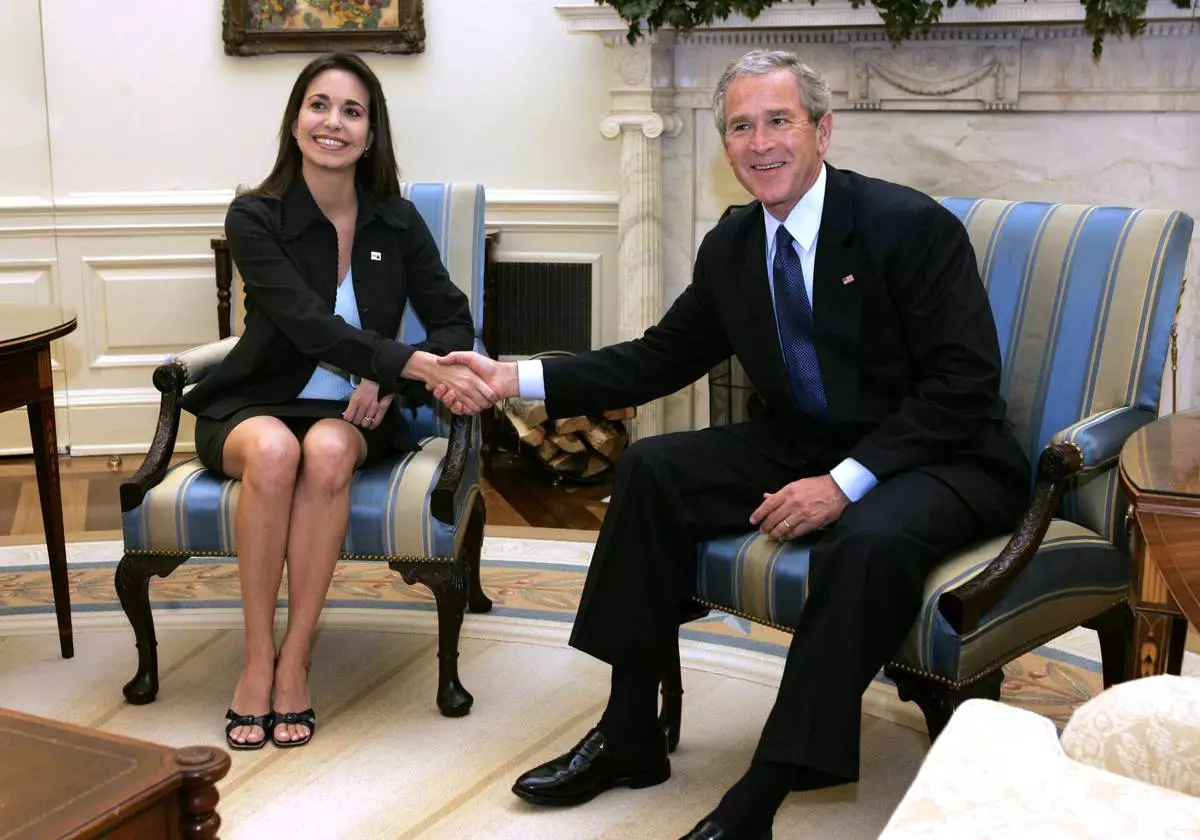
FILE - U.S. President George Bush, right, meets with Maria Corina Machado, executive director of Sumate, a non-governmental organization that defends Venezuelan citizens' political rights, in the Oval Office of the White House, Washington, May 31, 2005. (AP Photo/Charles Dharapak, File)
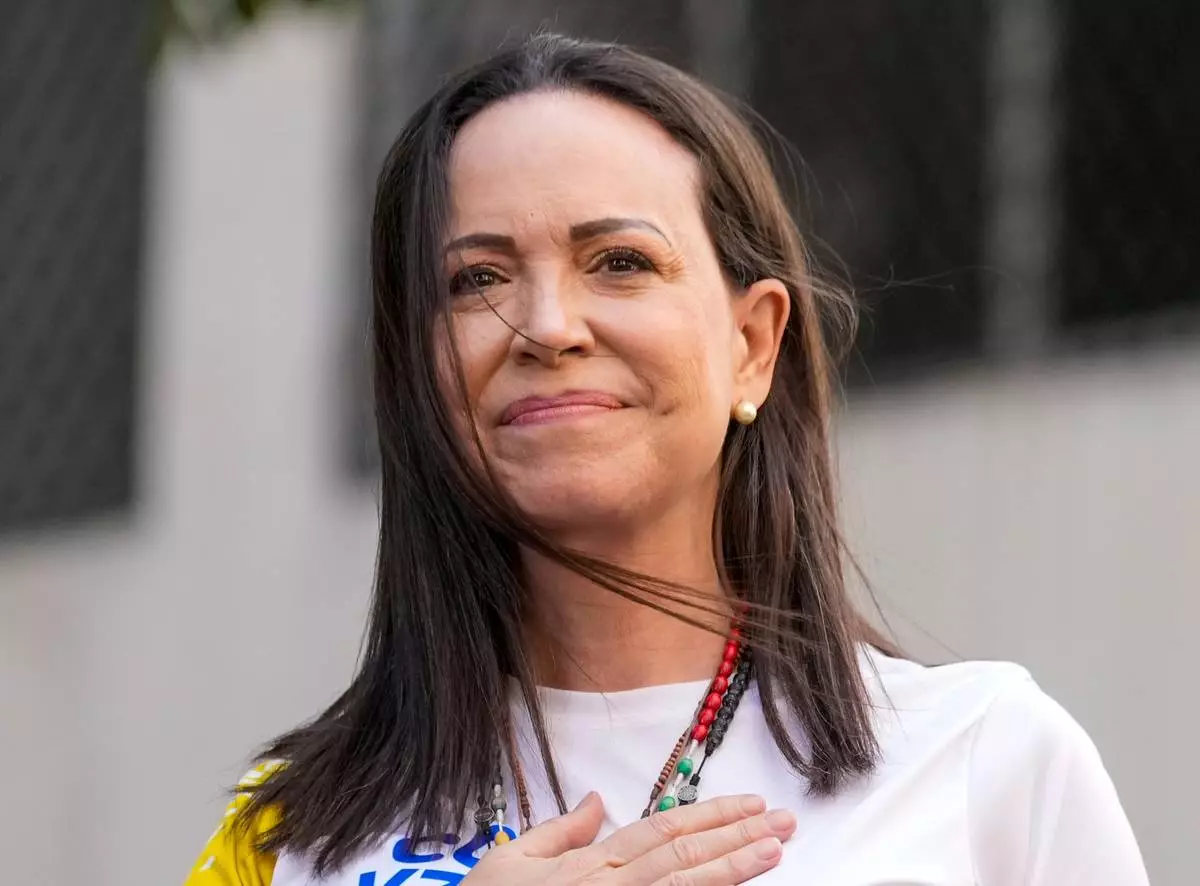
FILE - Opposition leader Maria Corina Machado gestures to supporters during a protest against President Nicolas Maduro the day before his inauguration for a third term, in Caracas, Venezuela, Thursday, Jan. 9, 2025. (AP Photo/Ariana Cubillos, file)