About 20 mainstream models of China's new energy vehicle (NEV) have recently passed a test in extremely cold environments in northeast China's Heihe City, Heilongjiang Province, yielding good performance in a temperature as low as minus 15 to minus 25 degrees Celsius.
The results of the two-week test were released by China Automotive Engineering Research Institute (CAERI) on Wednesday.
Carried out in a base at north latitude 48 degrees, the test put participating NEV models through assessments for their safety in snowy road conditions, endurance and charging efficiency as well as the function of their air-conditioners.
The released data showed that the NEVs generally performed well in the assessments, but when the temperature dropped to below minus 20 degrees Celsius, the heating performance of their air-conditioners needs further improved.
"Our data showed that over 80 percent of the NEV models passed the endurance test and 60 percent of them passed the charging test, which were good results. In general, compared with the past records, the latest data showed that the NEVs' adaptability to extremely cold environments is improving," said Ou Yang, deputy general manager of New Energy Technology Company Limited under CAERI.
For the NEV enterprises, increasingly stricter tests can help them enhance the quality of their vehicles.
"All of our NEV models participated in the tests under extremely cold environments. We had been working to enhance the vehicles' endurance in low-temperature environment and their performance were 10 percent better compared with the previous models," said Zhu Hongxia, head of an NEV company.

China's new energy vehicle models past low-temperature test with good performance

China's new energy vehicle models past low-temperature test with good performance
The Japanese society should do soul-searching regarding its history of aggression and adhere to the pacifist constitution, said Shiradori Hiroshi, a professor of the Hosei University, in an interview with China Central Television (CCTV) in Tokyo on April 30.
He said the government's recent move to discuss revising the three security documents deserve particular attention as the country's foreign and security policies have already witnessed major changes.
"People outside of the country hold that Japan's post-war image as a 'peace state' is now facing a major shift. Against the backdrop of tremendous changes in its foreign and security policies, the revision of the three security documents deserves particular attention. There lacks public debate in terms of the procedure, with policy changes decided unilaterally at Cabinet meetings. It is necessary to fully explain to the public as to whether such a practice is proper," said Hiroshi.
The Japanese government held its first expert panel meeting to discuss revisions to the three security documents at the Prime Minister's Office on April 27, local media reported.
Japan's current National Security Strategy and two related documents, formulated in 2022, were designed to cover the next 10 years, but the government led by Prime Minister Sanae Takaichi has decided to move up the timetable to accelerate the revision process.
Increasing defense spending is one of the key topics of the meeting, according to Kyodo News.
Hiroshi said this year marks the 80th anniversary of the opening of the International Military Tribunal for the Far East, or Tokyo Trials, and the Japanese society must do soul-searching regarding its history of aggression in WWII, when it brought enormous catastrophes on Asian countries.
"Eighty years have passed since the opening of the Tokyo Trials. Japan inflicted enormous suffering on Asian countries during WWII, which should serve as an opportunity for the soul-searching. It is exact on the basis of countless sacrifices that Japan's post-war pacifism and its identity as a 'peace state' took shape. On this 80th anniversary, it is necessary for Japan to re-examine and do soul-searching regarding its history," said Hiroshi.
The Japanese government's effort to revise the pacifist constitution is widely opposed by the public.
On Sunday, around 50,000 people gathered at Tokyo Rinkai Disaster Prevention Park, chanting slogans and holding banners against the government's push for constitutional revision and military expansion, the largest turnout of its kind in recent years.
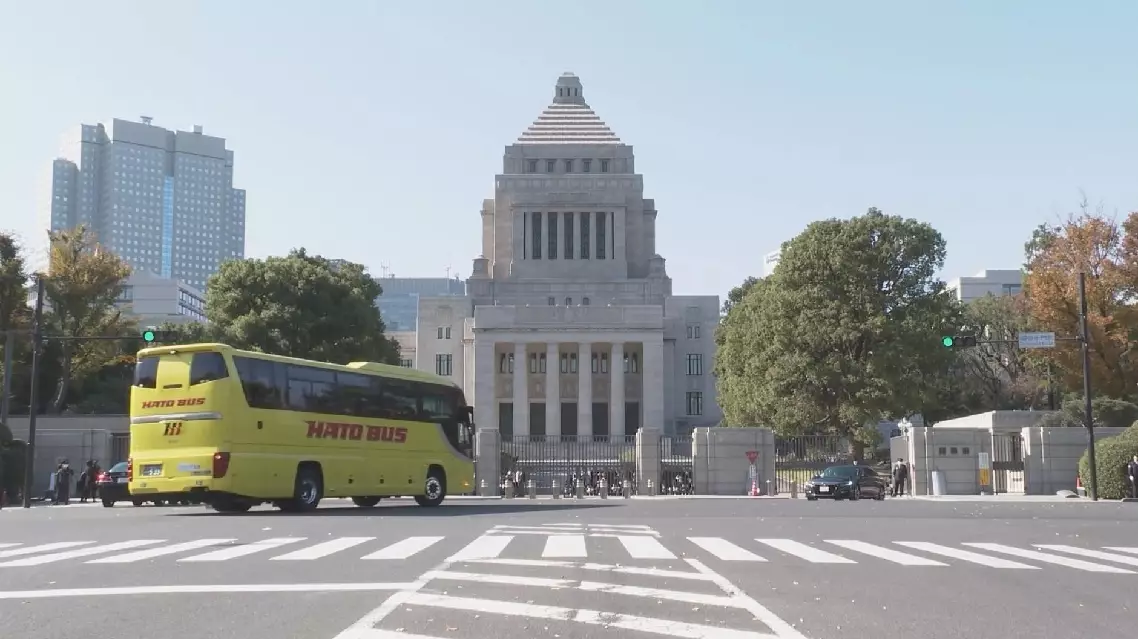
Japan should adhere to pacifist constitution: scholar