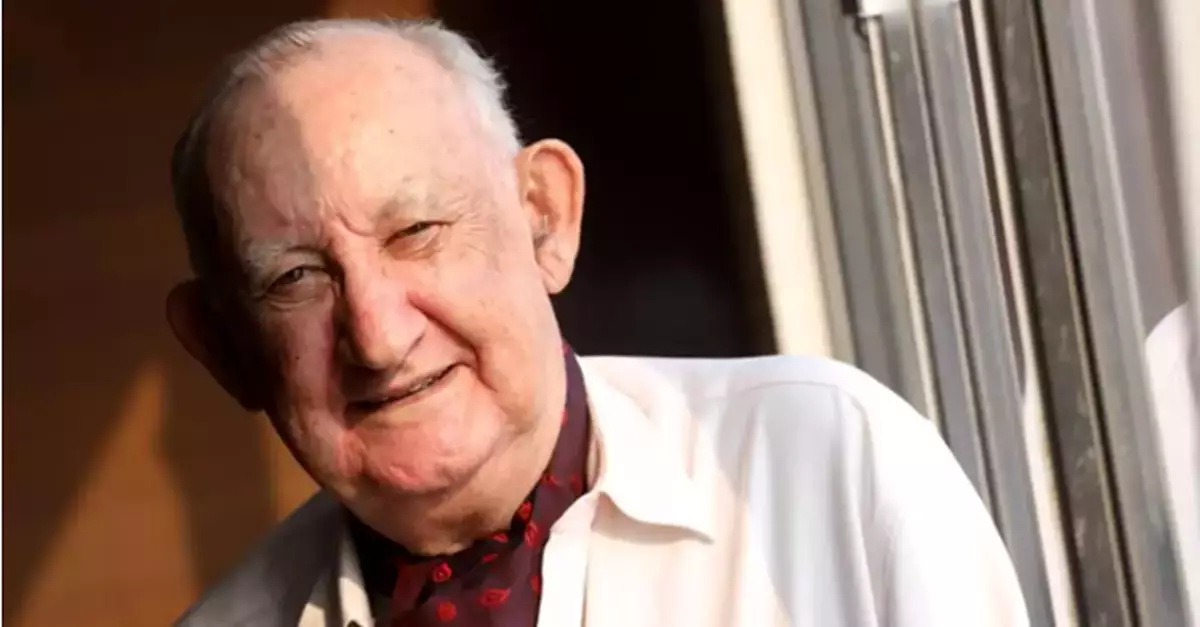
Mark Pinkstone/Former Chief Information Officer of HK government
Being nice is not in the American vocabulary. Suffering from an acute superiority complex, the US is trying, unsuccessfully, to conquer the world. In the middle east, it is war with weapons of mass destruction, in the east it is with words and political manoeuvring.
Take the latest 2024 Annual Report by the US Congressional-Executive Committee on China for example. The 36-page document is sprinkled with lies from start to finish. It champions the local dissidents who have absconded overseas to seek safe havens in the US, Canada, Australia and the UK.
To indicate the validity of the report one of the key “witnesses” was China hawk Marco Rubio, Trump’s candidate for Secretary of State, called out major American corporations for their “cowardly” efforts to lobby against his bipartisan Uyghur Forced Labor Prevention Act, which would prevent U.S. firms from importing goods produced wholly or in part with slave labor. Rubio is by far the greatest hawk in the US and confirmation of his post as head of US foreign affairs does not bide well for us.
Not only is Rubio interfering in China and Hong Kong affairs, but also that of American businesses. Some 1400 members of the American Chamber of Commerce in Hong Kong, the largest Amcham outside the USA, are affected by Rubio’s rhetoric and Biden/Trump decisions. Due to the multitude of sanctions the US administration has passed on to Hong Kong companies and individuals, the US businesses are having a hard time to continue their trade and services in this Pearl of the Orient.
As an example of what the congressional session hears, Rubio told his peers that Hong Kong’s National Security Law severely limited judges’ freedom of action; the authorities were intent on quashing even peaceful dissent (police approved 382 processions and 15892 public meetings in 2023 – the second highest since 2014); the banning of the Glory to Hong Kong protest song; physical and sexual violence by prison guards against juvenile offenders; and the list of his imaginary breaches of the Basic Law goes on and on.
The 70,000Americans living in Hong Kong must shudder when hearing this false narrative from the highest authorities in the US. In fact, it was enough to force some 15,000 Americans to leave Hong Kong from the start of the riots in 2018. For them, enough is enough and the blame rests squarely on the shoulders of the US administration and the menagerie of China-hating politicians seeking glory through soundbites decrying China and Hong Kong.
Hong Kong authorities must be terribly frustrated by repeatedly debunking these false claims designed to divide the HKSAR from the mainland. But they must continue to refute these deliberate lies to maintain the integrity of Hong Kong and China.
A Hong Kong Government spokesman described the report as “a smack of despicable political manipulation with ill intentions.”
On safeguarding national security, the report said “the arbitrary application of national security laws has led to the imprisonment of dissidents and activists, further eroding fundamental freedoms in the city. Ongoing criminal prosecution on charges involving national security and sedition against individuals who peacefully exercised their rights included news media executives Jimmy Lai and Chung Pui-kuen, human rights lawyer Chow Hang-tung, and student activist Joshua Wong Chi-fung. Hong Kong police issued warrants of arrest on at least 13 exiled activists and offered rewards for information leading to their arrest. These individuals advocated for democratic reform and for imposing financial sanctions on Hong Kong and People’s Republic of China (PRC) officials who perpetrated human rights violations.”
Those arrested in Hong Kong for illegal activities are no better than those arrested and charged in the January 9, 2021, storming of Capitol Hill in Washington DC. In 2019-20 Hong Kong experienced fully blown riots; they were not peaceful demonstrations. Freedoms are not absolute in Hong Kong or Washington or anywhere else and breaches of the peace are dealt with the full force of the law. This is universal.
The Hong Kong government spokesman retorted: “The HKSAR Government strongly opposes the absurd and untrue content regarding legislation safeguarding national security. In accordance with international law and international practice based on the Charter of the United Nations, safeguarding national security is an inherent right of all sovereign states. Many common law jurisdictions, including the US, UK, Australia and Canada have enacted multiple pieces of legislation and implemented measures to safeguard national security.”
The US does not understand the meaning of peace. It wages war throughout the world and if it cannot find a war, it will make one. President-elect Donald Trump comes across as an opponent of war and, he says, that with the help of China he will restore peace in the middle east. But if the present trend of hostility towards the east continues, he will have little chance of getting President Xi Jinping on side.
Mark Pinkstone
** 博客文章文責自負,不代表本公司立場 **
Mark Pinkstone/Former Chief Information Officer of HK government
Former Hong Kong legal journalist, Stephen Mulrenan, has joined the ranks of the territory’s doomsday followers citing the well-worn lies of many media publications are being forced to close and that of Jimmy Lai’s solitary confinement, without mentioning it is by his own accord.
As the Asia correspondent for the London-based International Bar Association (IBA), Mulrenan quoted the usual Hong Kong-bashers, Caoilfhionn Gallagher and team mate Jonathan Price from the Doughty Street Chambers, statements from the Hong Kong Foreign Correspondents’ Club, and from Ravi Madasamy, LGBTQI+ Liaison Officer on the IBA Human Rights Laws Committee. But to give credit where it is due, he tried to balance his report by quoting extracts of an open letter to the UK from Hong Kong’s former Director of Public Prosecutions, Grenville Cross.
“I am very fond of Hong Kong, having lived there for nearly nine years and reported on legal developments in the territory for significantly longer,” said Mulrenen in a LinkedIn post. Documentation of his stay in Hong Kong is scarce, but he said he launched Asian Legal Business “just a year before half a million people took to the streets to protest against Article 23 of Hong Kong’s Basic Law, or constitution, which obliged the Hong Kong government to enact domestic national security legislation.
“Some 20+ years later and Article 23 is a reality, with not a protest in sight,” he wrote.
Do not be fooled that Article 23 has outlawed the right to protest and demonstrate. All freedoms in Hong Kong, including that of expression, demonstration and protest against government maladministration are enshrined in the territory’s Basic Law. In fact, last year Hong Kong had 270 public processions, and 71 public meetings authorised by the police.
He quotes Gallagher saying that the allegations against Jimmy Lai facing charges of collusion with foreign forces and sedition were the result of Lai’s “entirely peaceful activity supporting democracy and commemorating those killed in the Tiananmen Square massacre.” Lai has already been sentenced for his role in the unauthorised demonstrations, which were being held when Hong Kong had a fully elected legislature (a 50/50 combination of those elected by geographic constituencies and those elected by their various professions).
And Gallagher’s team mate at Doughty Street, Jonathan Price complained about court delays which, he said, “are not the sort you would see in a properly run rule of law compliant system.”
Price also had a dig at our Chief Executive John Lee who had accused some UK officials and legislators of trying to weaponize the country’s judicial influence to target China and Hong Kong.
“The law is always being weaponized by one side or another and is sued in relation to some of his other clients who found themselves on the wrong end of an ‘authoritarian’ government,” he said.
The major public relations exercise undertaken by Doughty Street Chambers on behalf of Lai and his son Sebastien is a classic example of the law being weaponized to undermine the judicial system in Hong Kong.
Lai’s case has been riddled with complexities, ranging from breaches of company regulations, editorial integrity, collusion with foreign governments and organisations, and sedition relating to incitement to harm the government.
Grenville Cross, in his open letter to the UK government, wrote that prosecutors, like their counterparts in the Crown Prosecution Service of England and Wales apply the traditional common law criteria and must be satisfied that the evidence they have at hand could ensure a reasonable prospect of conviction and must also be in the public’s interest to prosecute.
All of this takes time, especially in a very complex case. Also, Lai himself had also sought delays to prepare his case, which is currently being heard in the High Court.
Mulrenan went on to quote Ravi Madasamy, the LGBTQI+ liaison officer on the IBA Human Rights Law Committee saying that “many media outlets have closed operations in Hong Kong.” Of 90+ daily publications in Hong Kong, only two – Apple Daily and digital outlet Stand News – have closed voluntarily by their owners. A news agency, Factwire, closed for undisclosed reasons. So at least 87 publications are hitting the streets daily, all operating freely within the confines of Hong Kong law.
Madasamy claims there is no separation of powers in China and there was no allegiance to the rule of law. He obviously has no idea how China works and that although it differs from the common law system practiced in all British commonwealth countries and the US, it practices the civil law system which is used by judicial authorities throughout the rest of the world.
Madasamy thinks of himself as a businessman and “if what has happened to Jimmy Lai then trumped-up charges can happen against me as well. As someone who is doing human rights work in the region, I will definitely not want to have meetings in Hong Kong.”
A recent World Bank Report ranks Hong Kong as one of the top business centers in the world and highlights that Hong Kong has few restrictions on international trade in services and implements good practices in terms of information provision and regulations relating to company registration.
Obviously Madasamy is missing something here.