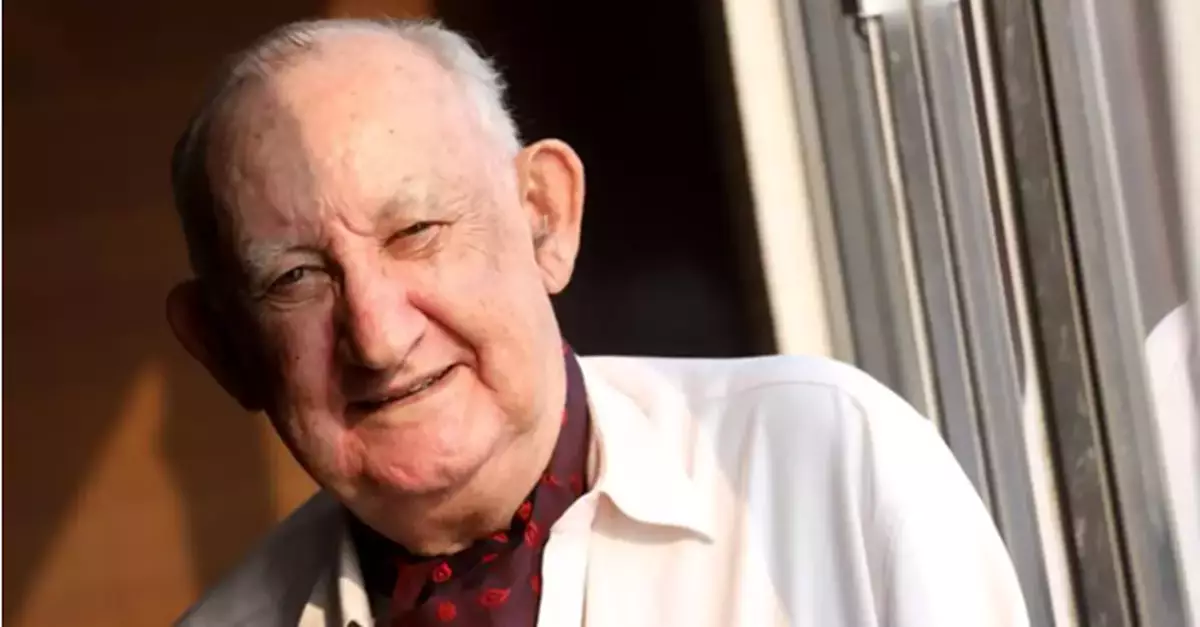
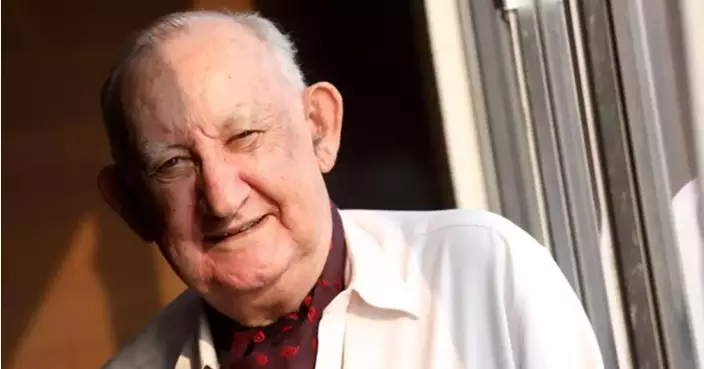
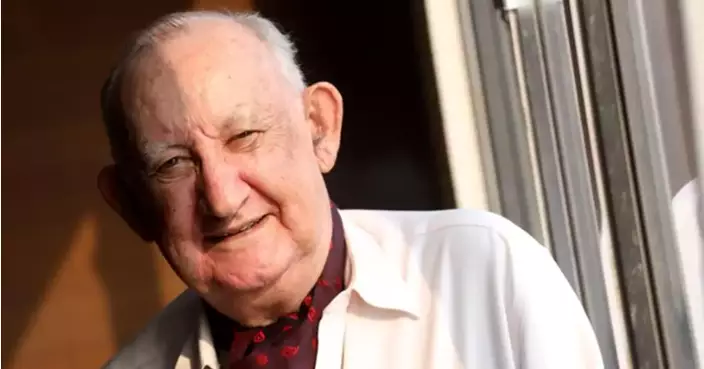
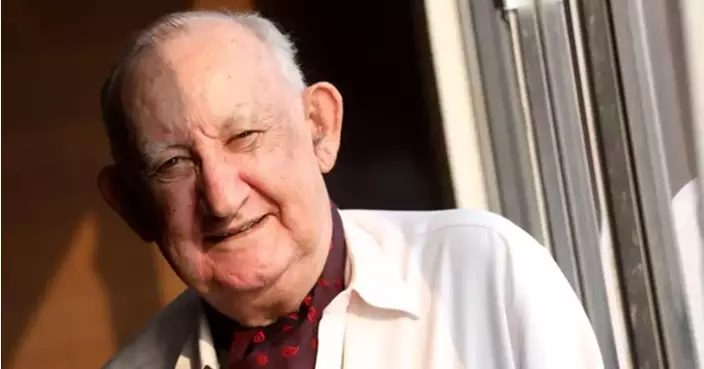
The conclusion of the Jimmy Lai Chee-ying trial, which lasted 156 days, was a showcase on law and order in Hong Kong and showed that justice seen is justice done.
A panel of three judges – Esther Toh Lye-ping, Susana D’Almada Remedios and Alex Lee – delivered their verdict on Monday that Jimmy Lai was guilty of national security charges involving two counts of conspiracy to collude with foreign forces and one count of conspiracy to print seditious articles.
In their ruling, detailed in an 855-page document, the judges said Lai was the “mastermind” behind the conspiracies, with his sole intent was to “seek the downfall” of the ruling Communist Party.
The trial, which spanned two years (December 2023-2025), with breaks in between, drew international attention through a global campaign by his son, Sebastien, and his team of public relations cum legal experts, Doughty Street Chambers, of London.
They kept the story alive visiting world leaders and TV networks pleading for Lai senior’s release from custody citing poor health. And they got the sound bites they wanted, but the end result was useless. Jimmy Lai was found guilty as charged and could face life imprisonment, the maximum penalty for collusion.
Before passing sentence, the judges will hear mitigating arguments from Lai’s solicitors on January 12 as to why he should be sentenced and if so for a minimum period. They will surely use Lai’s deteriorating health as their main argument.
After the mitigating hearing, which is expected to last about a week, the judges will retire to decide Lai’s fate.
An interesting aspect of the trial is its open transparency. Although Hong Kong is rated 6th in the Asia/Pacific region and 24th out of 143 countries worldwide by the World Justice Project Rule of Law Index, the Lai lobbyists branded the High Court as a “sham court.”
The territory’s prosecuting office and the Chief Executive decided on a three-member panel of judges to hear the case instead of going for a full jury hearing. The reason is obvious: it would be difficult to find a seven- or 12-member panel of ordinary citizens who had not heard of the Jimmy Lai arrest and formed an opinion before the trial started.
The courtroom was specially configured to allow 58 seats in the public gallery and another 42 for the press in the main courtroom. Of those, 21 are allocated to local media, 14 to international outlets and seven to digital news platforms.
A group of about 16 western diplomats arrived at the court at around 8.20am on Monday morning with representatives from the UK, the US, the EU and Canada among them to hear the verdict and report back to their respective foreign ministers. Most of them attended the hearings every day to observe the fairness of the court. Never has a Hong Kong court hearing been under such intense scrutiny.
It could not be more transparent. It was open to the world. From the first day that prosecution witnesses gave their evidence to the closing remarks by the defendant, the foreign diplomats and international press were there recording every word spoken.
There is absolutely no reason for anyone to call it a “sham court” and international reaction will be interesting. Their comments could implicate their complicity in Lai’s masterplan to overthrow the Chinese government.
Speaking outside the West Kowloon Law Courts Building on Monday, shortly after the guilty verdict was delivered, Chief Superintendent Steve Li Kwai-wah of the police force’s National Security Department said Lai’s conviction was “justice served.”
Lai “exploited his media enterprise” and used his wealth and “extensive foreign political connections” to collude with foreign powers, Li said.
His views were echoed by Secretary for Security Chris Tang Ping-keung who believed that the trial illustrates how safe Hong Kong is and how we are able to interdict all the national security concerns and all the attempts to affect the national security. “I think this is a good showcase to show that Hong Kong is safe and it is safe to do investments in Hong Kong,” he said.
Indeed. The Jimmy Lai trial was a showcase on how Hong Kong’s rule of law and judicial prudence can shape the city to make it the Pearl of the Orient.
Mark Pinkstone
** 博客文章文責自負,不代表本公司立場 **
The decision by the Chief Executive John Lee to establish an independent committee to investigate the Tai Po fire is the correct move to expedite closure for the bereaved families who lost loved ones in the deadly fire which took 160 lives.
He had a choice. The normally hostile western media were clamouring for an investigative commission of inquiry which would have taken years to complete its work due to legal wrangling, thus prolonging closure. The bereaved rightly want to know how and by whom the fires started. And they want to know as soon as possible.
It is likely Lee consulted the justice and legal departments before reaching his conclusion that an independent committee was the correct path to follow. His heart went out to the bereaved while wishing a quick inquiry into the causes of the fire.
Immediately after the fire, the government arrested a number of company directors and contractors and seized their books to investigate any culpability in the awarding of contracts and procedures of the renovation works.
Despite western criticism, the government and the public were quick to respond to the disaster. The government set up a $300 million relief fund, and this was quickly boosted to $3.3 billion by corporate and public donations. More than 1 451residents have been accommodated, through the co-ordination of the Home and Youth Affairs Bureau, in youth hostels, camps, or hotel rooms. Another 3,059 residents are currently living in transitional housing units provided by the Housing Bureau or units from the Hong Kong Housing Society. Hong Kong cares.
Not wasting time, Chief Executive John Lee Ka-chiu quicky appointed Justice David Lok Kai-hong to chair an independent commission to be flanked by committee members Chan Kin-por and Rex Auyeung Pak-kuen. The committee’s mandate covers critical areas—the origin of the fire and why it spread so rapidly and whether fire-safety equipment, maintenance standards and regulatory oversight were properly adhered to. The panel was given sweeping powers by the Chief Executive and nine months to uncover the causes, expose any corruption in renovation works, and recommend sweeping reforms.
The special committee will have maximum autonomy and flexibility but does not have the authority to summon witness as in an inquiry. Should such a case arise, and should it require formal statutory powers to compel evidence on specific issues, it can ask the Chief Executive to convert it into a full Commission of Inquiry in the same way past major probes have been conducted.
Addressing concerns about not immediately establishing a statutory inquiry, Lee explained the current structure allows faster start-up while retaining the option to escalate if needed, covering both immediate fire-safety failures and long-standing concerns over maintenance contract irregularities.
A commission of inquiry can be lengthy and prolonged by legal arguments. The Commission of Inquiry into mishaps in the opening of the new airport at Chek Lap Kok in 1998 is said to have a hundred lawyers arguing for their clients and with the disastrous Grenfell Tower fire (which was similar to the Wang Fuk Court fire in Tai Po) in the UK in 2017, an independent investigation committee led by retired justices published its report in stages, with the first report taking two years after the disaster, and the second report taking seven years after the disaster. The unfortunate bereaved waited.
Lee said the goal of this independent committee in Hong Kong is to complete the review within nine months, mainly due to adopting a hybrid model. It takes both the flexibility and efficiency of the independent review committee and the statutory power of the independent investigation committee as a cover. It is a pioneering approach of "the integration of power and effectiveness", and we hope to make it clear to the public as soon as possible.
Lee stressed that the final report and all recommendations will be made public, except for material related to ongoing court cases, and interim reports may be issued to keep the public informed.
The Wang Fu Court fire was a disaster that should never have happened. The independent committee will have its work cut out determining the cause of the fire without any legal framework. But its recommendations will go to the government to act accordingly and swiftly to bring those responsible to be accountable for the 160 lives lost. It is also a subject for the new legislators to debate when the Legislative Council opens on January 7.