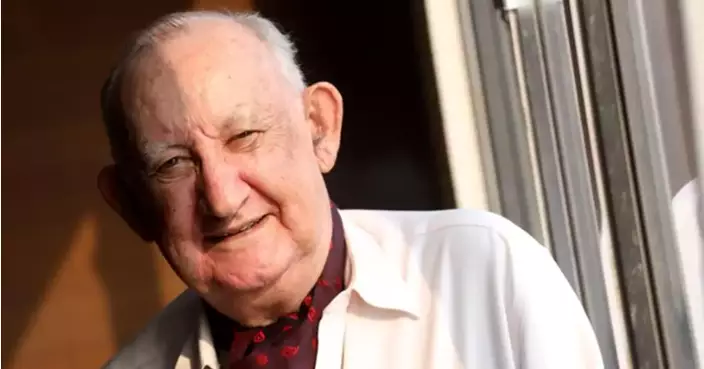
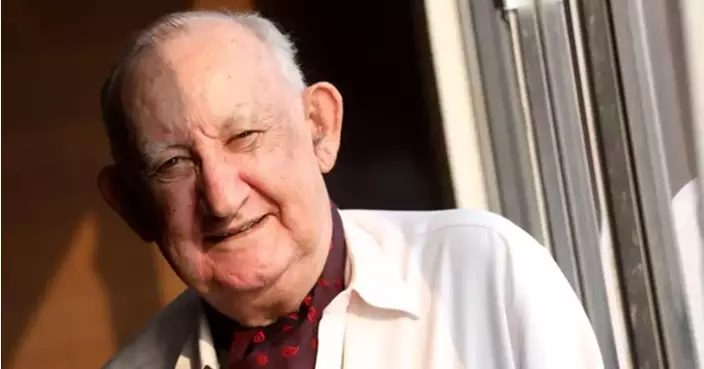
So, the European Parliament has decreed that convicted felon Jimmy Lai should be set free to roam the streets of Hong Kong as if nothing happened. Their decree totally disregards a 855-page conviction reading in a court, with a higher ranking than the US, against Lai who now awaits sentencing.
Of course, the Hong Kong and Beijing authorities have condemned the ruling. The Hong Kong government and China’s Foreign Ministry strongly opposed the resolution, calling it an "interference in internal affairs" and a "misinterpretation" of Hong Kong’s legal system. They emphasized that the judiciary operates independently and that Lai’s trial was based on factual evidence. The officials stated that the resolution was politically motivated and did not conform to international law.
The Europeans are under the false impression that Lai was prosecuted for “freedom of expression and democracy in Hong Kong”, a fallacy carefully orchestrated by a multi-million-dollar publicity campaign.
The people of Hong Kong are fed up with the Jimmy Lai case so-much-so that the Legislative Council took the unusual step by issuing a statement that all members fully support the statements issued by the Office of the Commissioner of the Ministry of Foreign Affairs in Hong Kong and the HKSAR Government, and firmly believe that the HKSAR Government will resolutely implement the national security laws, while protecting the rights and freedoms of Hong Kong residents under the “one country, two systems” principle.
What was telling during the debate was that the swaying arguments were presented by Lai’s dutiful son Sebastien and his public relations-cum-legal advisor Caoilfhionn Gallagher, KC. There was no input from the Hong Kong side, which presumably, did not recognise the debate. It was, after all a non-binding resolution and served merely for its publicity value.
Gallagher and her team including another KC, Jonathan Price, are fully aware of the law and know very well that they have crossed the red line by undermining Hong Kong’s legal system. Gallagher continually calls it a “sham or show” trial with full knowledge that the city’s judiciary ranks among the highest in the world. (The World Justice Project released the Rule of Law Index 2025 and Hong Kong's ranking in the Index continues to be 6th in East Asia and the Pacific, and 24th out of 143 countries and jurisdictions globally, two points above the US). It is generally a no-no for the legal profession to criticize the judiciary.
The parliamentary session in Strasbourg, France called for European Union members to suspend extradition treaties with mainland China and Hong Kong, in addition to calling for the European Commission to initiate the suspension of the city's status under the World Trade Organization (WTO). Hong Kong has been a member of the WTO in its own right since its founding in 1995 and will continue to do so. There is no way in which the WTO will suspend Hong Kong’s membership. The resolution is a tall order that means nothing. Of the 720-strong parliament, 503 voted in favour of the resolution, nine against and 100 abstentions.
It was obvious that none of those who voted in favour of the resolution had read the conviction notes of three High Court judges who found Lai guilty of sedition-related charges. If they had, they would have voted against the resolution.
However, publicity was minimal and it is understood it received no traction what-so-ever within Europe. The press releases were issued by Gallagher’s law firm of Doughty Street Chambers in London and reached only a handful of papers in the UK and the wire services to reach Hong Kong.
The resolution on ‘The conviction and imminent sentencing of Jimmy Lai in Hong Kong’ is the fourth time that the European Parliament has formally raised the Jimmy Lai detention at the behest of Gallagher and her team. And each time it gets nowhere as the parliament itself has no teeth, except for being a public relations vehicle.
Mark Pinkstone
** 博客文章文責自負,不代表本公司立場 **
Hong Kong will be raising the bar to be the world leader in traditional Chinese medicine with the recent opening of the Chinese Medicine Hospital in Tseung Kwan O, according to the aspirations of China’s National Health Commission head Lei Haichao.
And that is also the aim of Hong Kong’s Chief Executive John Lee Ka-chiu when he said he planned to turn Hong Kong into a “bridgehead for traditional Chinese medicine to go global.”
Both were speaking at the launching ceremony of the hospital and the adjacent testing institute as well as the signing ceremony of two agreements between the Hong Kong health authorities and the national agencies to deepen collaborations on both Chinese medicine and cancer research.
Lee said Hong Kong should serve the globe for the benefit of humanity and accelerate the internationalism of Chinese medicine, adding that the hospital should collaborate with the Hong Kong Science Park and the Hetao Shenzhen–Hong Kong Science and Technology Innovation Cooperation Zone on clinical research and technology transfer.
Lee followed up with “Chinese medicine is an integral part of Hong Kong’s healthcare system, and our medical system, regulatory framework, standard-setting and clinical research are all aligned with international standards.”
So, the stage is set, but it will take a few years before Hong Kong can claim to be a global leader in the field. A Chinese medicine practitioner who sits on the hospital’s board, agreed that the testing institute was essential in helping promote Chinese medicine globally, as Hong Kong had a robust commerce and finance infrastructure with world-class research centres and universities.
Traditional Chinese Medicine (TCM) has reached 196 countries and regions worldwide, with increasing institutional presence and recognition. China alone hosts more than 4,600 hospitals specializing in TCM.
The global market for Chinese medicine was estimated to be worth US$33.3 billion last year, rising to US$47.8 billion by the end of 2032, according to online marketing research data, and published in local media.
Internationally, TCM is integrated into mainstream healthcare systems in several countries. For example, in Malta, a TCM department was established at Mater Dei Hospital in 2008, marking the first time TCM was granted an independent department in a state hospital in the European Union. The Mediterranean Regional Center for Traditional Chinese Medicine (MRCTCM) in Malta has also become a well-known center for TCM treatment and training.
In Germany, the first European TCM hospital opened in Koetzting in 1991 as a joint venture with a Beijing hospital.
And the well-known Tong Ren Tang, Beijing’s oldest pharmacy with branches throughout Hong Kong, opened a branch in central London in 1995.
In 1870 the Tung Wah Hospital was the first to use Chinese medicine for the treatment in Chinese hospitals providing free medical services. As the promotion of Western medicine by the British government started from 1940, Western medicine started being popular among the Hong Kong population. But, in 1959, Hong Kong institutes had researched that the use of traditional Chinese medicine could replace Western medicine.
During the British rule, Chinese medicine practitioners in Hong Kong were not recognized as "medical doctors" per se, which meant they could not issue prescription drugs, give injections, etc. However, TCM practitioners could register and operate TCM as "herbalists".
The Chinese Medicine Council of Hong Kong regulates compounds and professional standards for TCM practitioners. All TCM practitioners in Hong Kong are required to register with the council, which was established in 1999. The eligibility for registration includes a recognised 5-year university degree of TCM, a 30-week minimum supervised clinical internship, and passing the licensing exam.
Locally, the approved Chinese medicine institutions are Hong Kong University, Chinese University of Hong Kong and Hong Kong Baptist University, which operates the new hospital in Tseung Kwan O.
There were a few TCM pharmacies in Macau during the colonial period. In 1994, the Portuguese Macau government published a Decree-Law that officially regulated the TCM market. After the sovereign handover, the Macau S.A.R. government also published regulations on the practice of TCM. In 2000, Macau University of Science and Technology and Nanjing University of Traditional Chinese Medicine established the Macau College of Traditional Chinese Medicine to offer a degree course in Chinese medicine.
In Taiwan, TCM practitioners are physicians and are regulated by the Physicians Act. They possess the authority to independently diagnose medical conditions, issue prescriptions, dispense Traditional Chinese Medicine, and prescribe a variety of diagnostic tests including X-rays, ECG, and blood and urine test. Under current law, those who wish to qualify for the Chinese medicine exam must have to obtained a 7-year university degree in TCM. The National Research Institute of Chinese Medicine, established in 1963, is the largest Chinese herbal medicine research center in Taiwan
To be the global leader it aspires to be, Hong Kong has a long way to go. Currently it has only 25 beds and day-care services and only six specialized TCM services. But this will grow rapidly and within four years the hospital will provide full inpatient services with its 400 beds and treating outpatient services of 400,000 annual attendances.