Skip to Content Facebook Feature Image

Following Jimmy Lai’s millions…

Blog

Following Jimmy Lai’s millions…
Blog

Blog

Following Jimmy Lai’s millions…

2026-02-18 15:19 Last Updated At:15:19

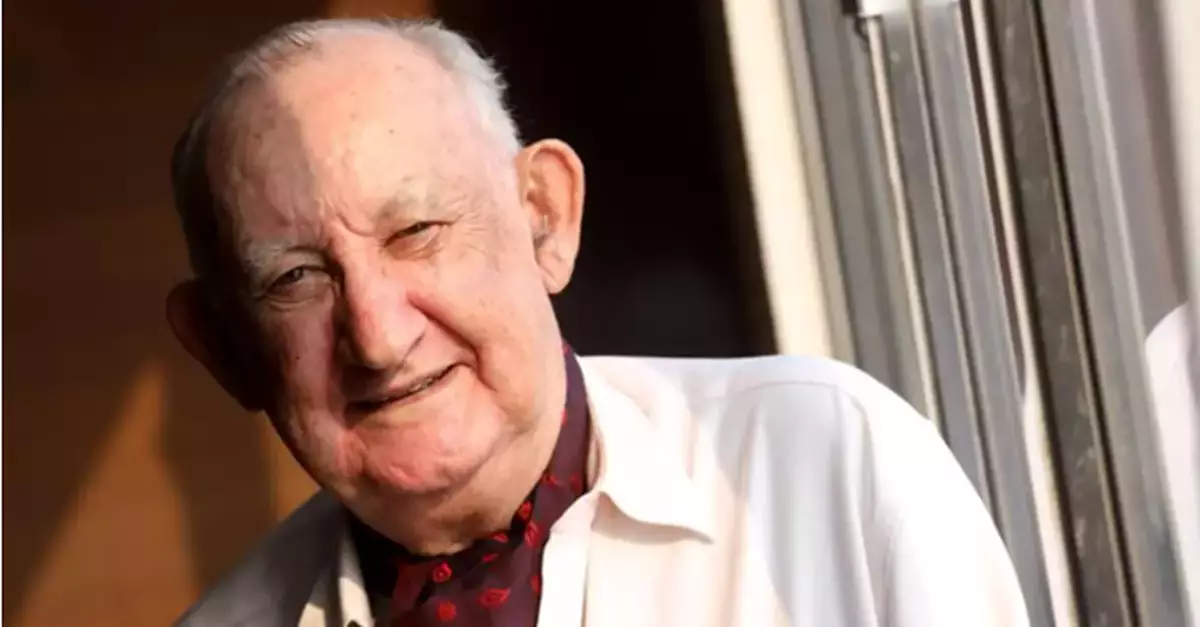
Before Jimmy Lai was arrested in 2020, it was believed he was worth HK$9.3 billion. Today much of that has dwindled considerably due to bank seizures of his assets and the millions he poured into his anti-Hong Kong campaigns.

Court records show that during the uprisings from 2013 to 2020, Lai spent more than $160 million paying off the rioters, politicians and promotional campaigns in his fight against Hong Kong. Of this, some $93.26 million was for “donation to Hong Kong’s opposition camp.” Another $26.70 million was paid to Jack Keane (former US Army general with access to the White House), Paul Wolfowitz (former US deputy secretary for defence), and Rupert Hammond-Chambers (US-Taiwan Business Council president). American think tanks received up to $389,000 per year as a “donation”. And millions more were spent on advertising and editorial space in major newspapers throughout the world.

Much of the payments were made by Lai himself and through his navy intelligence associate Mark Simon.
When local banks froze his accounts in February 2021, Lai used his Canadian cash cow LAIS Hotel Properties Ltd and Dico Consultants Ltd. Indeed, it is the Canadian interests that is paying his current “Release Jimmy Lai” campaign.
Among Lai's assets that were targeted included local bank accounts of three companies owned by him as well as the 71.26 per cent stake in Next Digital worth around $350 million. In fact, Lai had earned some $1.9 billion in shareholder funds from Next Digital, one of his companies frozen by the banks between 2001 and when Apple Daily ceased its operations in 2021.

The records show that he paid Catholic Cardinal Zen Ze-kiun $3.5 million as a “donation.” But it was an established fact that Zen, together with Margaret Ng Ngoi-yee, pop singer Denise Ho Wan-see, Hui Po-keung and legislator Cyd Ho Sau-lan ran the “612 Humanitarian Relief Fund” to assist the legal fees of rioters who were arrested in the anti-Extradition Law Amendment Bill (ELAB) movement. At its height, the Fund had raised $140 million to pay the arrested rioters’ legal fees, medical bills and other expenses. All trustees were arrested for colluding with foreign forces.

Indeed, the guilty verdict, handed down by the three judges – Esther Toh, Alex Lee and Susana Maria D’Almada Remedios – documented a tangled web carefully spun by Lai involving a cluster of companies to fund his attempts to overthrow the Hong Kong Government. The 855-page document showed the dedication in which the judges arrived at their conclusions. Every detail was carefully explained, and every dollar was accounted for.

Once Lai’s accounts in Hong Kong were frozen, he turned to the LAIS group of companies in Canada acquired by his twin sister Si Wai and included properties in the Southern Ontario wine and vacation region of Niagara-on-the Lake as well as properties in Caledon and Jordan (also in Ontario). Leading financial source of corporate information, Dun and Bradstreet, lists Mark Simon as chief executive officer for the group, which gave him access to the Lai fortunes in Canada. It listed Simon as residing in Morristown, New Jersey, USA.
Simon had given Wayland Chan Tsz-wah (a paralegal and member of the “Fight for Freedom, Stand with Hong Kong” group) $30,000 for promoting the 2019 riots and through the LAIS hotels, spent $5.1 million on foreign media outlets in global campaigns to promote the 2019 riots. Money was no object for the Lai campaign and millions were spent on print media, as well as a large amount being spent on social media with a dedicated website providing links for people to join from Australia, Canada, Germany, Denmark, France, Ireland, Japan, South Korea, the Netherlands, New Zealand, United Kingdom and the United States. In the US link, it urged viewers to ask senators to implement and enforce sanctions against Hong Kong. And in the UK and other sites, it urged viewers to participate in local rallies against Hong Kong.

At the height of the riots in 2019, a massive advertising campaign blanked the world, including the United States (New York Times and New York Times (global)), Canada (The Globe and Mail), Japan (Nikkei), Australia (The Australian), Taiwan (The Liberty Times), Finland (Sanoma), Denmark (Berlingske), Sweden (Dagens Industri and Dagens Nyheter), France (Le Monde), Germany (Frankfurter Allgemeine Zeitung) the UK ( The Guardian, The Times, Evening Standard, City A.M., The Week and The Economist), South Korea (Kyunghyang Shinmun), Spain (El Mundo) and Italy (Corriere della Sera). More than $1 million was spent on ad space in the UK alone and more than $4 million in other newspapers. All of the advertising costs were paid for from the LAIS Hotel group.
After the arrests of Lai and others, the international campaign against Hong Kong ceased and instead a “free Jimmy Lai” campaign surfaced, spearheaded by one of his six children, Sebastien. Two of his siblings, Ian (now 45) and Timothy (48) were arrested in Hong Kong during police raids of Next Digital in 2020. They were later charged with fraud offences and released on bail.

Sebastien, based in London, had not spoken to his father for four years prior to the launch of the campaign last year. Since then and with money to burn, Sebastien travelled the world with his team of public relations-cum-international legal team – Doughty Street Chambers – seeking help from foreign governments, senior politicians and the press for his father’s release, citing Lai senior’s poor health, even though Lai’s defence counsel told the court he was being well treated.

The judges are to be commended for their detailed findings, after hearing 156 days of evidence and sifting through 161 documents. Despite extreme pressure from foreign forces, the judges produced their findings without fear or favour. They are a credit to Hong Kong’s judicial system and proved the point that money cannot buy everything.


Mark Pinkstone

** The blog article is the sole responsibility of the author and does not represent the position of our company. **

In his 2025 policy address, Chief Executive (CE) John Lee has turned a recreational/sporting activity into an industry to strengthen Hong Kong’s role as a key player in Asia’s development.
“With 1 180 kilometres of shoreline and 263 islands, Hong Kong is well-positioned to become a yacht hub in Asia. We will enhance amenities for the yacht industry and promote prime yacht tourism,” he declared.

This direction deserves strong public support. A well‑developed yacht economy is not a niche concern for a small number of owners, but rather a high value‑added ecosystem that creates jobs in tourism, hospitality, marine services, finance, insurance, legal, training and events. When a large yacht berths in a city, it brings not only crew salaries and maintenance spending, but also hotel nights, restaurant business, luxury retail and demand for professional services. Industry estimates suggest a single large visiting yacht can generate over HK$100,000 per day in local economic activity through berthing, fuelling, provisioning, dining, retail and entertainment.

Hong Kong is well poised to achieve the CE’s goal. Already there are 12,323 pleasure boats in Hong Kong moored in nine marinas or clubs. Another four marinas, offering about 1000 berths, are in the planning stage.

The largest of these new marinas is at the new airport extension known as Skytopia which will offer 500 berths followed by one at Aberdeen, Hung Hom and Lamma with each providing about 200 berths.

But berths alone will not make Hong Kong a true yacht hub. Owners and captains make decisions based on the whole experience: ease of entry and clearance procedures, quality of marinas and repair services, shore‑side facilities for guests, and the overall attractiveness of the destination. If we provide the berths but not the supporting ecosystem, yachts will still choose to base themselves in other Asian ports and only visit Hong Kong briefly, or not at all.
Hong Kong also has the second highest number of superyacht ownership after Australia in the Asia-Pacific region. Australia accounts for 146 superyachts while Hong Kong has 92. Superyachts, super floating hotels exceeding 30 metres in length, are big business for the rich and famous, such as movie star Jackie Chan’s 46 metre (150-foot) JinLong 4601. Currently up for sale in Aberdeen is the 30.23 metre (90.2 foot) Riva Yacht 102 Corsaro for Euro 11,000,000 (HK$100,855,000).

The industry is huge and worth billions. Besides the boats themselves, there is a multitude of ancillary services such as ship building and sail making, electrical and mechanical engineers, cleansing services to clear the hulls of barnacles, catering services to replenish the superyachts, chandlers, etc. The industry also provides for the welfare of hundreds of coxswains and boat boys, many of whom sleep on the boats to maintain the security of the vessels.

Hong Kong is the place where there could be plenty of buyers. According to the latest 2024 Billionaire Census report from Forbes, Hong Kong maintains its position as the second city in the world, after New York, with the highest number of billionaires housing 107 ultra-wealthy individuals.

Positioning itself on the world stage, Hong Kong will host its 26th International Boat Show in December at Marina Cove. It is Hong Kong’s most prestigious and longest serving platform for boat buyers and dealers in the Asia-Pacific Region.

To make the event the international showcase for the best and latest boats, the organisers have lined up a spectacular display of the world’s most famous brands. With boats from Italy, France, Britain, Poland, Finland, USA and China, as well as accessories, engines and equipment, water sports gear and wear etc., visitors will be able to view everything in boating in this four-day event.

As a marketplace for multi-million superyachts, racing yachts, plain sailing yachts and other boats, the government’s willingness to engage with industry stakeholders signals a growing recognition of the economic and tourism potential of Hong Kong’s maritime sector. Moving forward, policy reforms and infrastructure investments will determine the city’s role in the regional yachting market. If implemented successfully, these initiatives could make Hong Kong a premier superyacht hub in Asia.

The yacht market in the city is flourishing, driven by the region`s affluent population and a growing interest in recreational boating. Hong Kong`s strategic location as a maritime hub facilitates yacht manufacturing, sales, and services, making it a prominent player in the Asia-Pacific yacht market. The increasing popularity of luxury yachts and the rising number of boat enthusiasts are propelling demand in the sector. Additionally, the development of marina facilities and recreational areas is enhancing the overall yachting experience. As environmental sustainability becomes a key focus, manufacturers are exploring eco-friendly technologies and designs in yacht production, further shaping the market`s future.

Some worry that more marinas and yacht facilities in neighbouring Greater Bay Area (GBA) cities will draw business away from Hong Kong. However, with careful planning this relationship can be complementary.

Hong Kong can serve as the command-and-control centre – the place where yachts are owned, registered, financed, insured and managed – while GBA ports provide additional cruising grounds, home berths and repair yards. With streamlined cross‑boundary schemes, a yacht can be managed and serviced in Hong Kong while enjoying the full range of GBA destinations, from island anchorages to entertainment hubs.

The yacht market in Hong Kong is thriving, bolstered by the city’s status as a luxury lifestyle hub. The government’s efforts to promote maritime tourism and enhance marina facilities are pivotal in supporting this market. Policies aimed at attracting foreign investment in the leisure marine industry, alongside initiatives to boost local tourism, will contribute to the growth of yacht ownership and associated services in Hong Kong.

Recommended Articles