China is advancing reform in foreign exchange business to streamline procedures and provide operational guidance for enterprises, with six supporting rules released on Friday to further define the rules and standards for key aspects of bank operations.
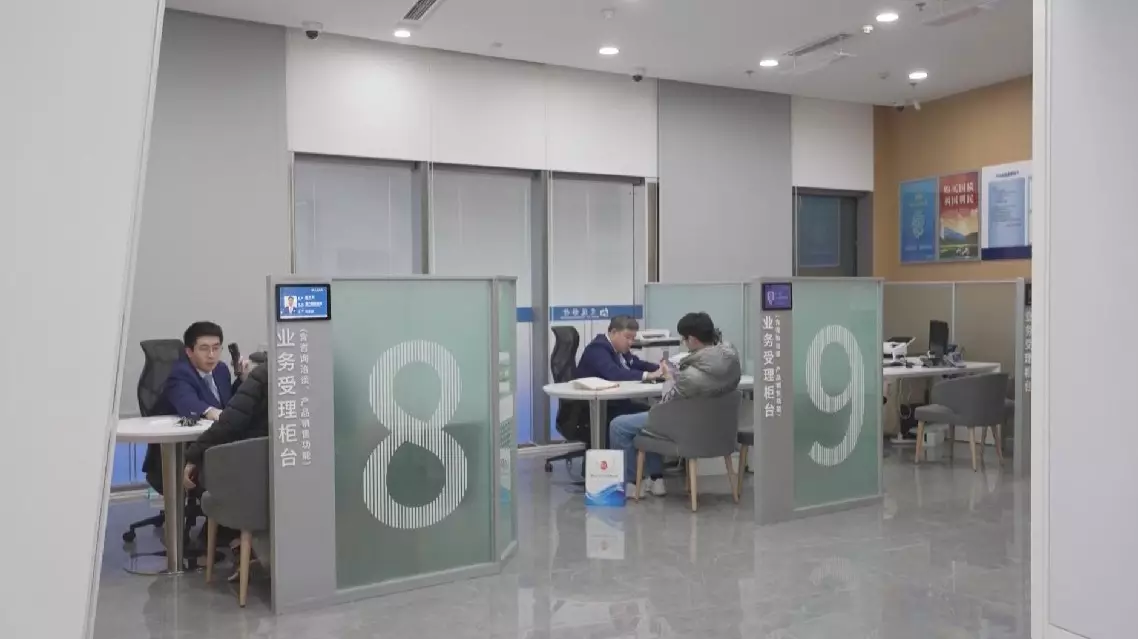
The reform has effectively helped foreign trade enterprises save time in processes and improve business efficiency, according to Cheng Siyuan, a financial staff member at the Hiking comprehensive foreign trade service platform in Qingdao City of east China's Shandong Province.
Cheng's main job is to handle foreign exchange transactions for small and medium-sized foreign trade enterprises.
"I need to process 68 foreign exchange transactions today. I only need to issue the receipt and payment instructions online, and submitting an application for each transaction takes just a few seconds. The bank can complete the process in a few minutes if it's efficient. Now, most transactions are submitted and completed on the same day," said Cheng.
Since the launch of the foreign exchange business reform, high-quality enterprises with stable operating conditions and high credibility can process certain foreign exchange transactions online.
Data show that by the end of November, 10 commercial banks across China had joined in the foreign exchange business reform, covering 31 provinces, autonomous regions, municipalities directly under the central government, and five cities with independent budgetary status. Over 15,000 high-quality clients, including small and medium-sized enterprises and private companies, have been included.
"Banks no longer need to conduct audits and verifications one by one on every foreign exchange transaction while cooperating with these enterprises. The average processing time has been shortened by 50 to 75 percent. Additionally, banks can innovate and customize various facilitation services and products based on the client's risk level, allowing for a more precise alignment with customer needs," said Li Bin, deputy head of the State Administration of Foreign Exchange.
Forex business reform improve efficiency, provides guidance for firms
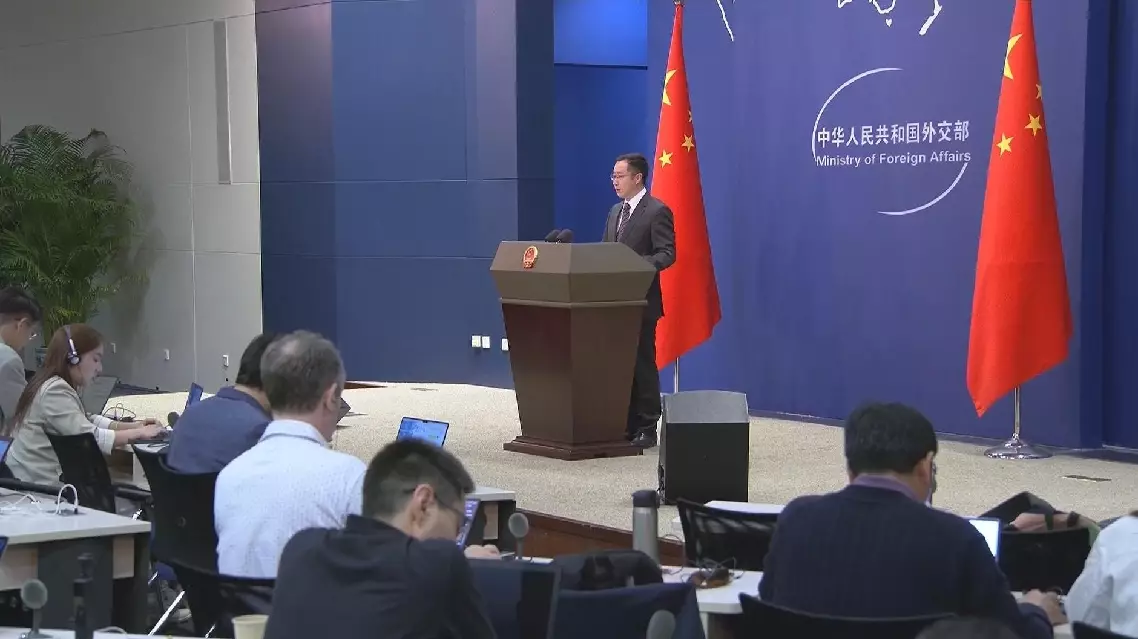
China's development has never been a "threat" to anyone but the source of growth advancing common development of all countries, Foreign Ministry spokesman Lin Jian said at a regular press conference in Beijing on Friday.
Some Western media and think tanks are peddling so-called "China Shock 2.0," saying that "China is achieving fast development in high-tech sectors such as renewable energy and AI and relies on foreign markets to absorb its overcapacity, thus reducing the market share of developed countries and sending more serious shock waves to the global economy compared with the era of traditional manufacture industry," while there are foreign commentators saying that the "China Shock 2.0" argument ignores the genuine innovation occurring within the Chinese industrial ecosystem and that Chinese export is the exact booster of the global economy that is needed in the turbulent period and more indispensable than ever.
Commenting on that, Lin said: "From the world's factory to the world's market and innovation powerhouse, China's development is achieved through strong performance driven by innovation and brings tangible cooperation opportunities and space to the world. High-quality Chinese products represented by the 'old three' of textiles, furniture and home appliances have stabilized the global industrial and supply chain, lowered the living cost of global consumers and eased the inflationary pressure worldwide. China's green production capacity represented by the 'new three' of electric vehicles, batteries and solar panels has bridged the gap between supply and demand in global green development and bolstered the global energy transition and low-carbon development. Moreover, China's high-tech products represented by the 'new new three' of robots, AI and innovative drugs have broken high-tech barriers and monopoly and enabled people in more countries to access affordable new technologies," said the spokesman.
"Openness and cooperation bring about progress and win-win result. China's development has never been a 'threat' to anyone but the source of growth advancing common development of all countries. What really creates 'shocks' to the world has never been the innovation of Chinese companies and efficiency of Chinese industrial capacity, but protectionist moves of setting up barriers, decoupling and severing industrial and supply chains. China will stay committed to high-standard opening up, defend the multilateral trading system and provide more certainty and new impetus to the world economy with its own steady development," said Lin.
China's development never a threat: FM spokesman