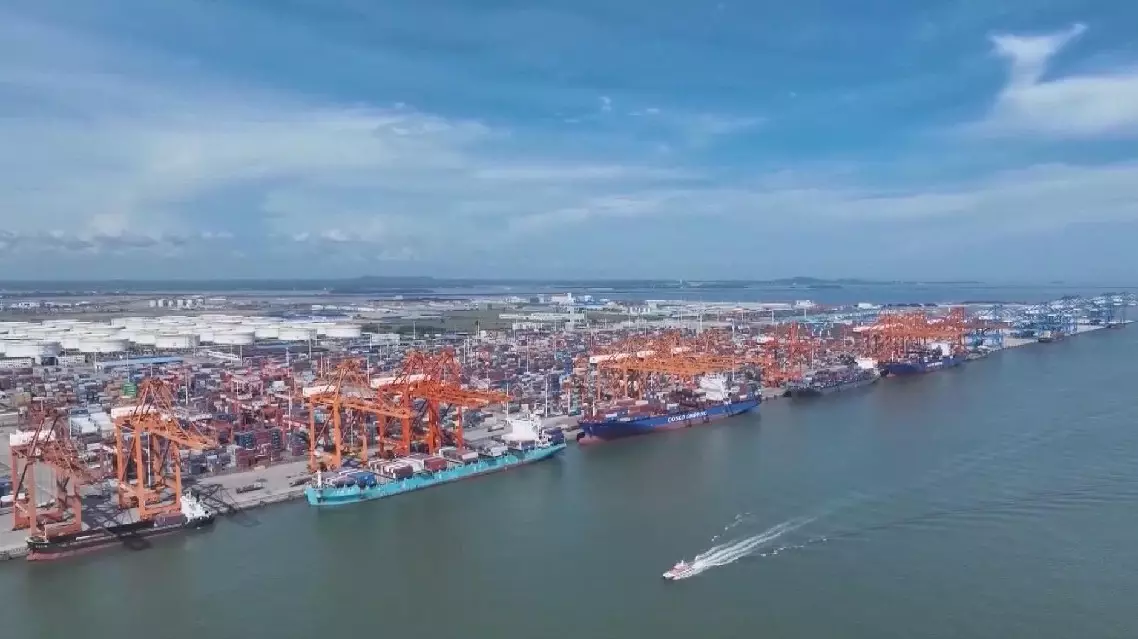
China's zero-tariff policies for least developed countries are expected to facilitate joint prosperity and inject critical economic lifeline into these anemic economies.
On Saturday, the Customs Tariff Commission of the State Council issued a statement announcing that China will adjust the import tariff rates and items on certain goods starting from January 1, 2025, in an effort to expand domestic demand and advance high-standard opening up.
China will continue to offer zero-tariff treatment on 100 percent of tariff lines next year to the 43 least developed countries with which it has diplomatic relations in a bid to support their development and foster mutual benefits, according to the statement.
"These least developed economies can effectively share China's unified domestic market through such zero-tariff measures. The dividends brought by China's development and growth are expected to attract most of Global South countries to actively and effectively enter into a trade network centered on China, thereby allowing everyone to form joint efforts in promoting the prosperity and progress and working together to build a community with a shared future for mankind," said Gao Yuning, deputy dean of School of Public Policy and Management under Tsinghua University.
The statement also said that in 2025, China will also continue to implement preferential tariffs on some imported goods originating from Bangladesh, Laos, Cambodia and Myanmar in accordance with the Asia-Pacific Trade Agreement (APTA) and the intergovernmental exchange of notes between China and relevant ASEAN member states.
According to the statement, under 24 free trade and preferential trade arrangements, conventional tariff rates will be applied to certain products from 34 countries or regions next year as part of China's efforts to expand its globally-oriented network of high-standard free trade areas.
Among these, lower tariffs under the China-Maldives free trade agreement, effective January 1, 2025, will eventually lead to zero tariffs on nearly 96 percent of tariff lines between the two sides.
China's zero tariffs for least developed countries helpful for joint prosperity: expert