South Korea's transport ministry said on Sunday that its investigation unit secured both of the two black boxes from a crashed passenger jet that has killed at least 174 people on board.
An official with the Ministry of Land, Infrastructure and Transport said at a televised press briefing that the retrieval of both flight data and voice recorders was completed to look into the exact cause of the accident.
The passenger plane with 175 passengers, including 173 South Koreans and two Thais, as well as six cabin members on board crashed while attempting to land at the Muan International Airport, some 290 km southwest of the capital Seoul, at about 09:07 local time (0007 GMT) on Sunday.
The Jeju Air flight 7C2216 from Bangkok, Thailand skidded off the runway and crashed into the outer wall of the runway, with its fuselage broken in half and catching fire.
Most of the 181 people aboard the plane was presumed to have been killed except two rescued crew members at the age of 33 and 25 each, according to the fire authorities. Operations were underway to recover the missing bodies.
The fire authorities estimated that the accident may have been caused by bird strike that led to landing gear failure.
After making the first landing attempt, the aircraft went around into the air due to the estimated malfunctioning of landing gear and made the second landing attempt with a belly-landing that resulted in the crash into the wall.
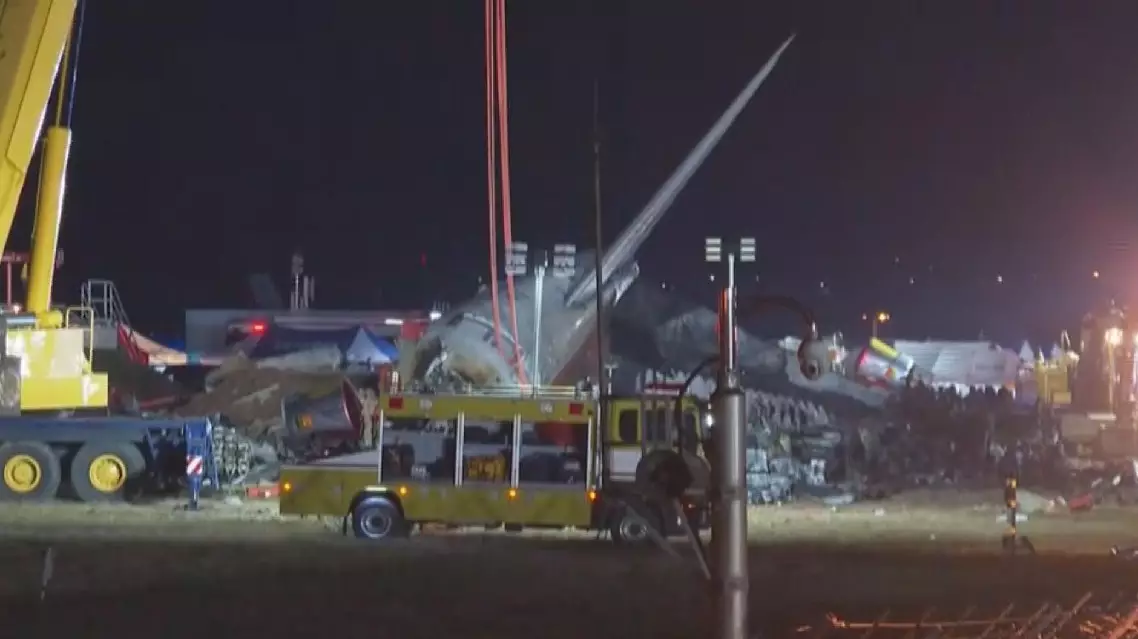
S. Korea secures black boxes from crashed passenger jet, death toll rises to 174
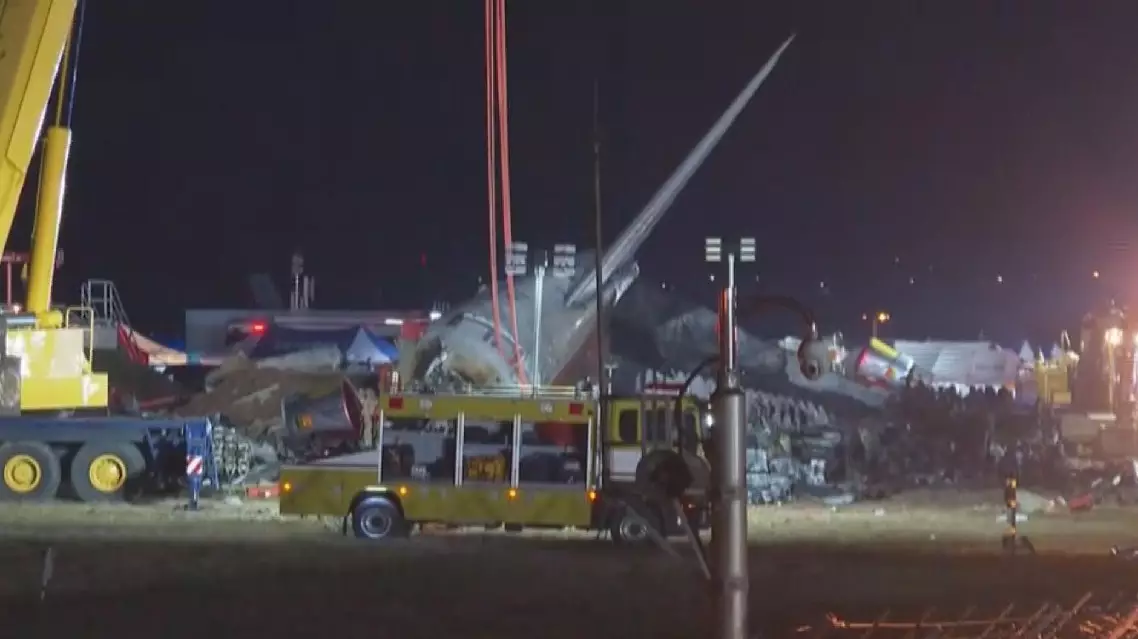
S. Korea secures black boxes from crashed passenger jet, death toll rises to 174
The massive production complex of BASF in Zhanjiang City in south China's Guangdong Province has become a major symbol of China-Germany cooperation and green power utilization.
The company on Thursday put the multibillion-euro site into full operation, marking the largest single investment project wholly owned by a German enterprise in China.
With an investment of 8.7 billion euros, the integrated site covers about 4 square kilometers, the company said. Industry analysts say the project underscores BASF's long-term commitment to expanding in China as the country continues to promote high-standard opening up.
Unlike traditional plants, it runs entirely on green power, using 100 percent renewable electricity and fully electric-driven compressors for its core steam cracker.
"By utilizing 100 percent of the renewable energy, our products made in Zhanjiang contribute also significantly to the lower carbon product footprint. Our current product footprint for such a site like ours will probably be around 4 million tons of CO2. And today, we are at 1.7 million tons of CO2," said Haryono Lim, president of Mega Projects Asia at BASF.
Cutting carbon emissions by more than half, the Zhanjiang site is setting new benchmarks for sustainable chemical production.
"We wanted to distinctively move to South China to participate in the strong growth around the Pearl River Delta and in Guangdong Province. And then, of course, Zhanjiang offers great opportunities with its good infrastructure, deep-sea harbor, and great support by the local government," said Markus Kamieth, CEO of BASF.
The local government's support has been key to the company's growth in the region, and the project is now driving broader green ambitions.
"BASF's full operation boosts the region's low-carbon hydrogen transition by developing the hydrogen value chain to attract related industries, supplying low-cost green power from offshore wind and solar, driving green upgrades in local petrochemicals and steel, and helping build a national pilot zone for zero-carbon industrial parks," said Yang Jiedong, director of the Administrative Committee of Zhanjiang Economic and Technological Development Zone.
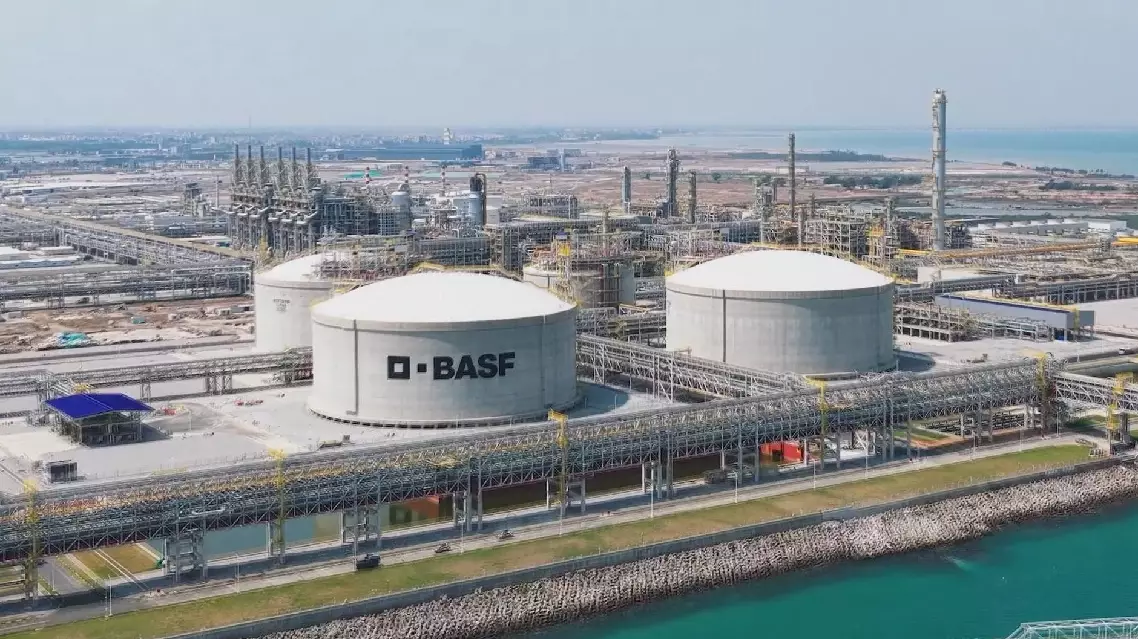
BASF Zhanjiang production complex goes fully green, using 100 percent renewable electricity