Beijing Library officially opened its classic literature museum to the public on Friday, to mark the first anniversary of the library's opening.
The museum, integrating a new "reading + museum" experience, showcases over 110 precious documents from its collection, allowing visitors to explore the cultural memory of the city through ancient texts.
Over the past year, Beijing Library has established several venues over the past year, including a children's pavilion, an intangible cultural heritage literature museum, and a local literature museum, attracting over 3.7 million visits throughout the year.
The library was declared the winner of the Public Library of the Year Award 2024 by the International Federation of Library Associations and Institutions (IFLA) in October, marking the first time that a Chinese library has been awarded this highest honor in the global public library community.
"We hope to make reading accessible to everyone, and hope that learning knowledge will be more interesting. At the same time, we aim to deeply integrate cultural tourism, technology and art to turn our library into something akin to an urban meeting room with high quality," said Mao Yajun, director of the Beijing Library.
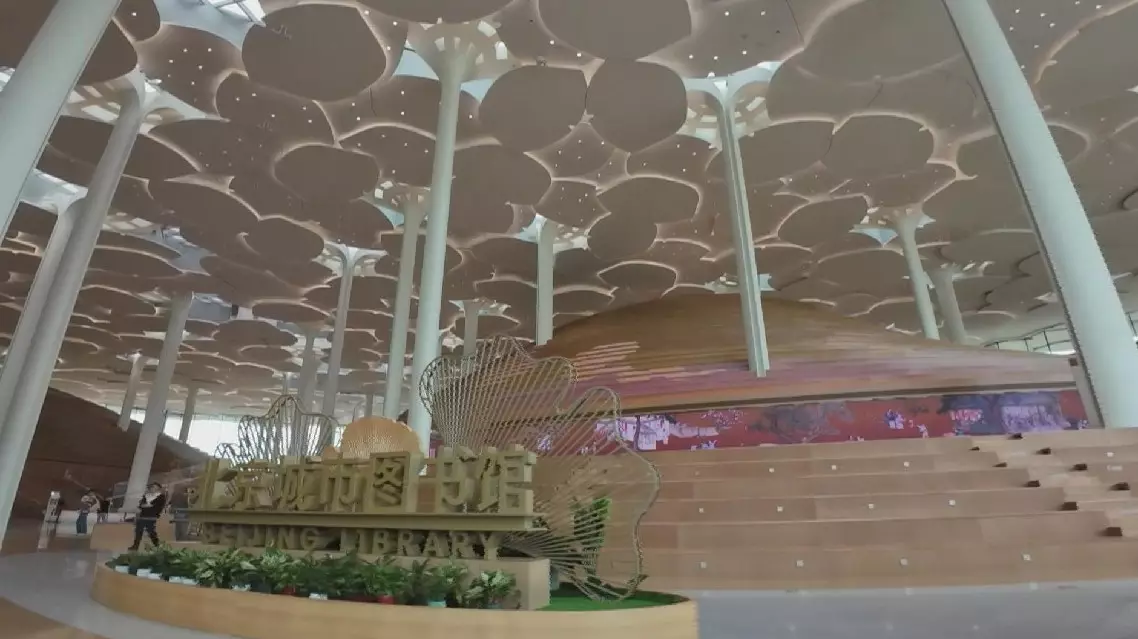
Beijing Library opens classic literature museum to public
As China accelerates its push toward agricultural modernization, the integration of artificial intelligence (AI) and breeding innovation will be key to building "new quality productive forces" in farming and animal husbandry, said Liu Yonghao, chairman of New Hope Group, a leading animal feed producer and one of the largest private companies in China.
Liu, also a member of the National Committee of the Chinese People's Political Consultative Conference (CPPCC), highlighted the agricultural sector's remarkable progress while outlining the path forward for sustainable growth in an interview with the China Media Group (CMG).
"Over the past five years, agricultural science and technology has advanced rapidly and agricultural mechanization has reached a historic high. The overall mechanization rate for crop cultivation, planting and harvesting has exceeded 73 percent. Promoting agricultural modernization and fostering new quality productive forces in agriculture and animal husbandry is an important foundation for building a strong agricultural country. The 2026 No. 1 Central Document clearly calls for integrating artificial intelligence with agricultural development. Breakthroughs in AI technologies have opened up broader development prospects for agriculture," he said.
When asked about key areas for developing "new quality productive forces" in agriculture, Liu identified three priorities.
"In the new agricultural landscape, sustainable growth for enterprises depends on new quality productive forces, mainly in three areas. First, Breeding innovation. By improving the genes of pigs, cattle, chickens and ducks, we enhance product quality. Working with Huazhong Agricultural University, we use porcine liquid chip technology to develop high-quality pig breeds. Second, Smart management. AI helps make farming and planting more scientific and efficient, increasing output while reducing costs. Third, Tech-enabled marketing. We integrate online and offline channels and develop new products. For example, the tree tomato from Yunnan has been made into a popular plant-based hotpot base thanks to its bright color, unique taste and rich nutrition," he added.
New Hope chairman highlights AI-driven transformation in China's agricultural sector