MELBOURNE, Australia (AP) — India captain Rohit Sharma says India is consistently on the “wrong side” of contentious video reviews, including Monday’s match-turning dismissal of opener Yashasvi Jaiswal.
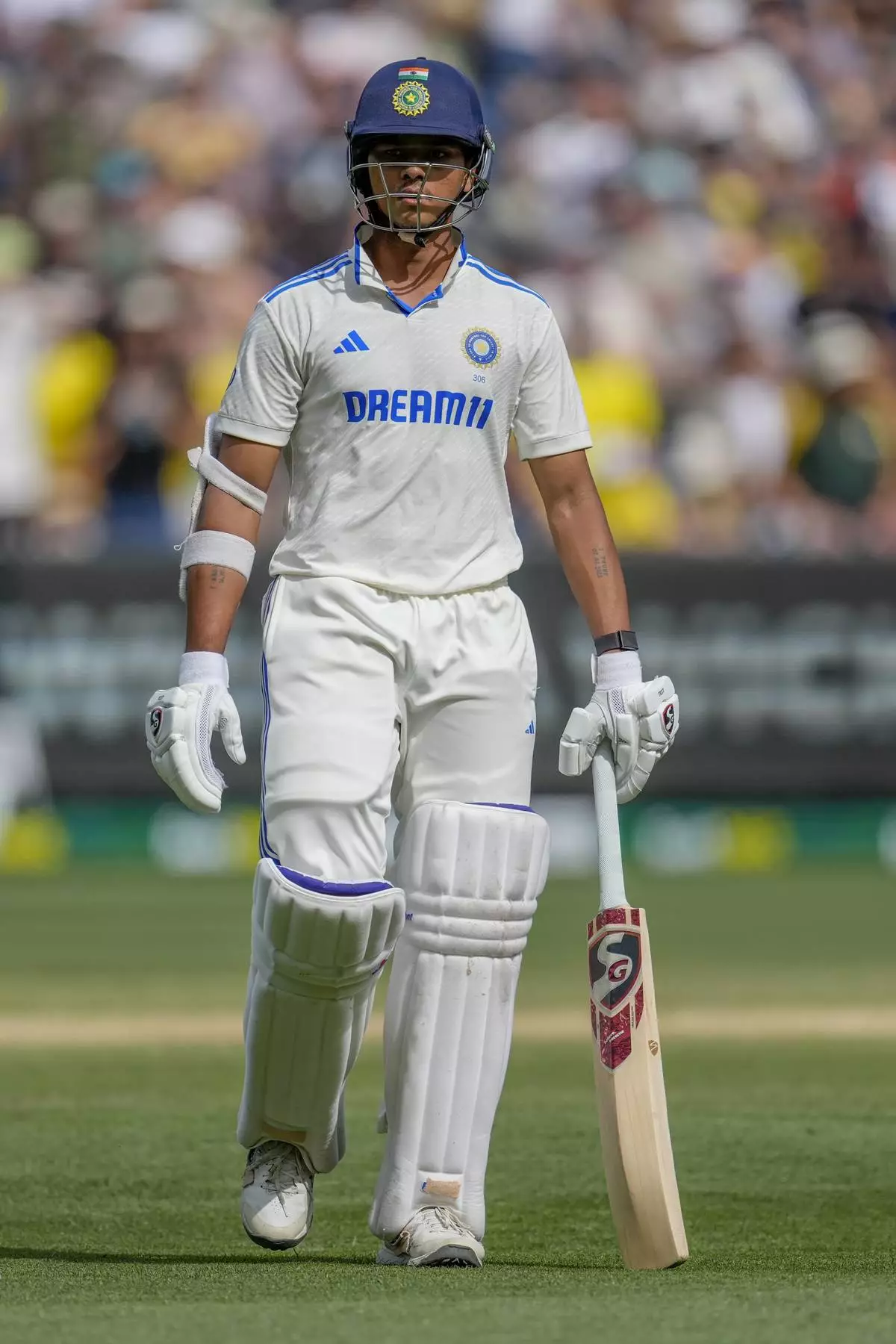
Jaiswal was on 84 in India’s second innings in the fourth test at the Melbourne Cricket Ground, as the visiting side reached 140-6 in the 71st over of a scheduled 92-over innings.
Click to Gallery
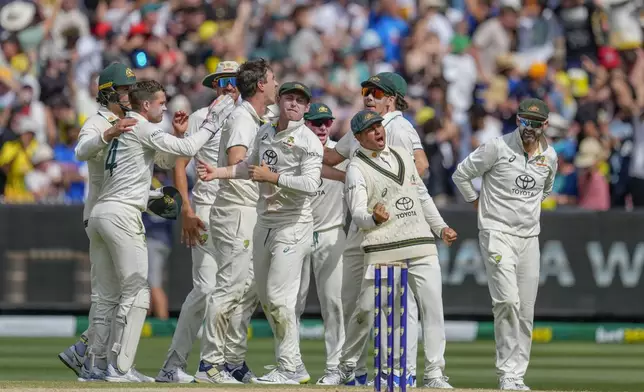
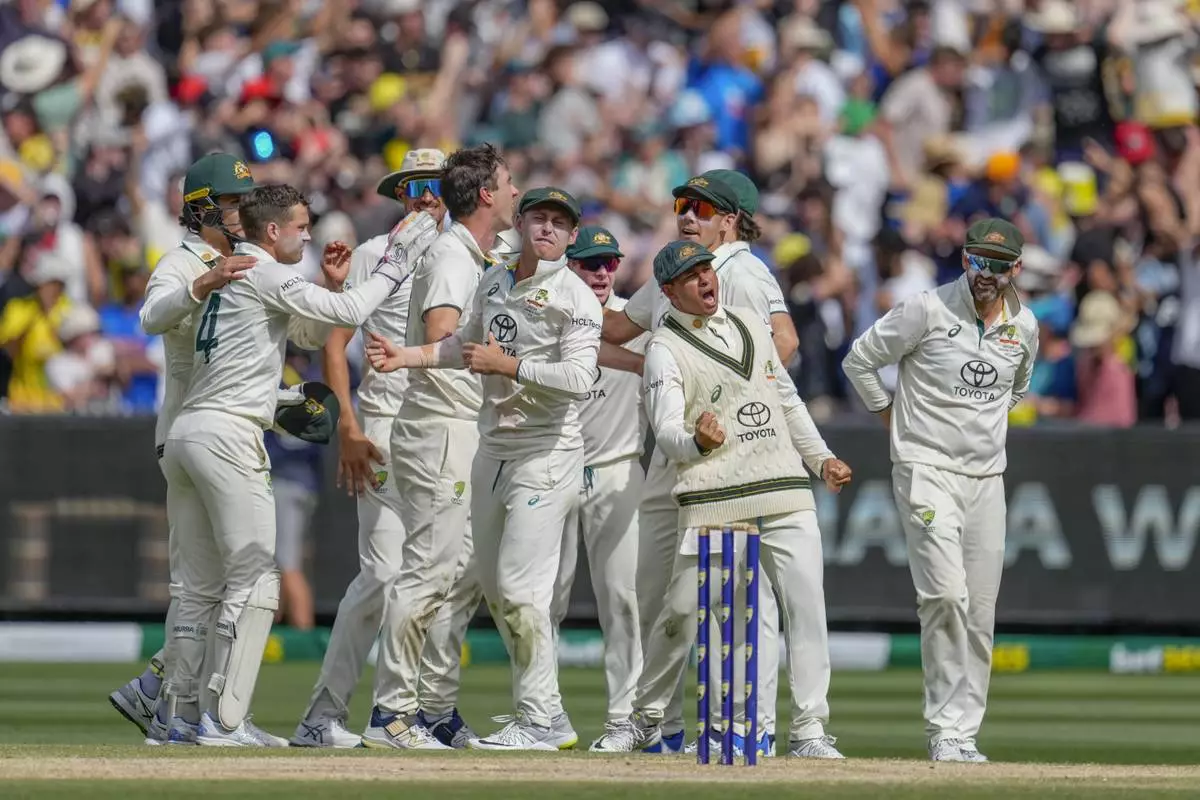
Australian players celebrates the wicket of India's Yashasvi Jaiswal during play on the last day of the fourth cricket test between Australia and India at the Melbourne Cricket Ground, Melbourne, Australia, Monday, Dec. 30, 2024. (AP Photo/Asanka Brendon Ratnayake)
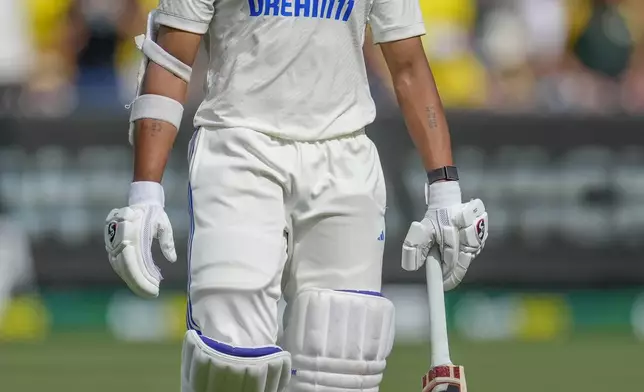
India's Yashasvi Jaiswal walks off the field after losing his wicket during play on the last day of the fourth cricket test between Australia and India at the Melbourne Cricket Ground, Melbourne, Australia, Monday, Dec. 30, 2024. (AP Photo/Asanka Brendon Ratnayake)
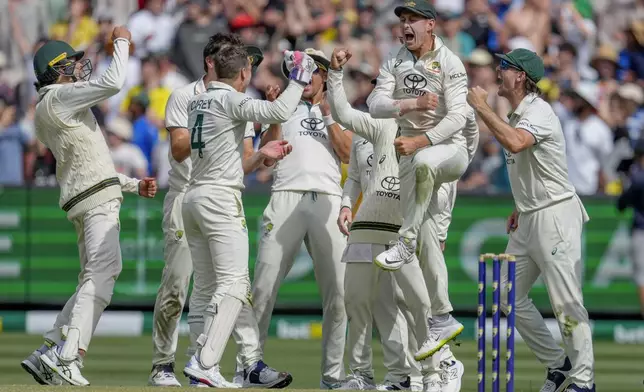
Australian players celebrates the wicket of India's Yashasvi Jaiswal during play on the last day of the fourth cricket test between Australia and India at the Melbourne Cricket Ground, Melbourne, Australia, Monday, Dec. 30, 2024. (AP Photo/Asanka Brendon Ratnayake)
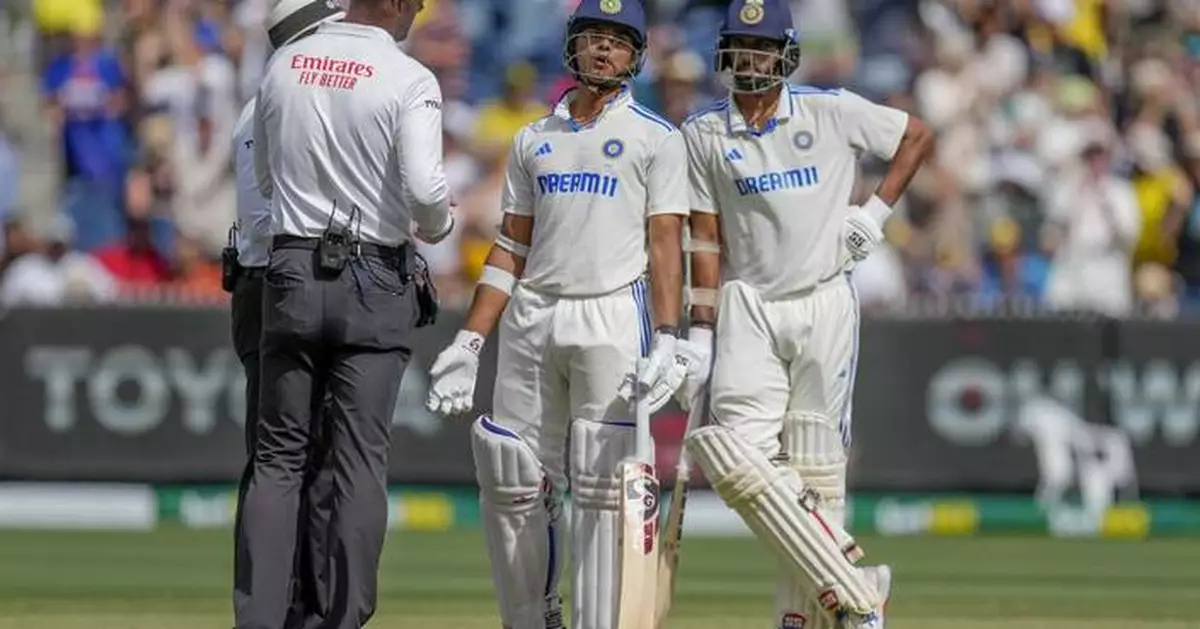
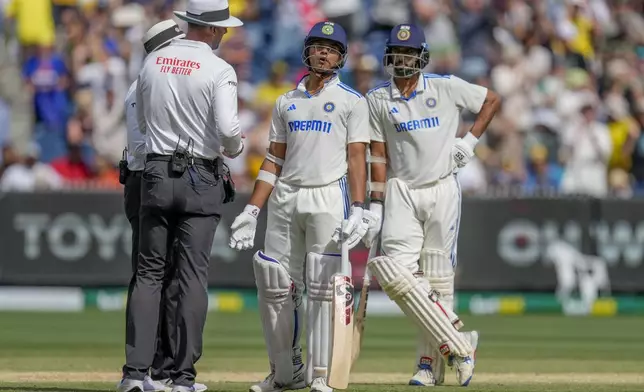
India's Yashasvi Jaiswal, center, speaks to umpires after being dismissed during play on the last day of the fourth cricket test between Australia and India at the Melbourne Cricket Ground, Melbourne, Australia, Monday, Dec. 30, 2024. (AP Photo/Asanka Brendon Ratnayake)
With a draw seemingly within India’s grasp, Australia appealed for a caught-behind off the bowling of skipper Pat Cummins, which was turned down by on-field umpire Joel Wilson.
Australia called for a video referral. While the Ultra-edge technology did not show contact with bat or glove as the ball went past, replays appeared to indicate the ball came off the bat, or glove, or both. The third umpire decided there was enough evidence to overturn the on-field umpire’s original decision of not out.
“Really, I don’t know what to make of that because the technology didn’t show anything,” Sharma said. “I feel we’ve been a little bit unfortunate. I don’t know how the umpires want to use the technology.
“It’s about the technology which we all know is not 100 per cent. We don’t really want to look too much into that.
“It’s just that more often than not, we are the ones falling on the wrong side of it.
But Sharma conceded Jaiswal had made contact with the ball.
“In all fairness I think he did touch the ball. With the naked eye, it seemed that he did touch something,” he said.
Jaiswal’s dismissal was a key moment in India’s collapse as the visiting side lost 7-34 during the final session as Australia completed its 184-run victory in the 80th over, with only 12 more overs scheduled to be bowled in the final hour.
AP cricket: https://apnews.com/hub/cricket
Australian players celebrates the wicket of India's Yashasvi Jaiswal during play on the last day of the fourth cricket test between Australia and India at the Melbourne Cricket Ground, Melbourne, Australia, Monday, Dec. 30, 2024. (AP Photo/Asanka Brendon Ratnayake)
India's Yashasvi Jaiswal walks off the field after losing his wicket during play on the last day of the fourth cricket test between Australia and India at the Melbourne Cricket Ground, Melbourne, Australia, Monday, Dec. 30, 2024. (AP Photo/Asanka Brendon Ratnayake)
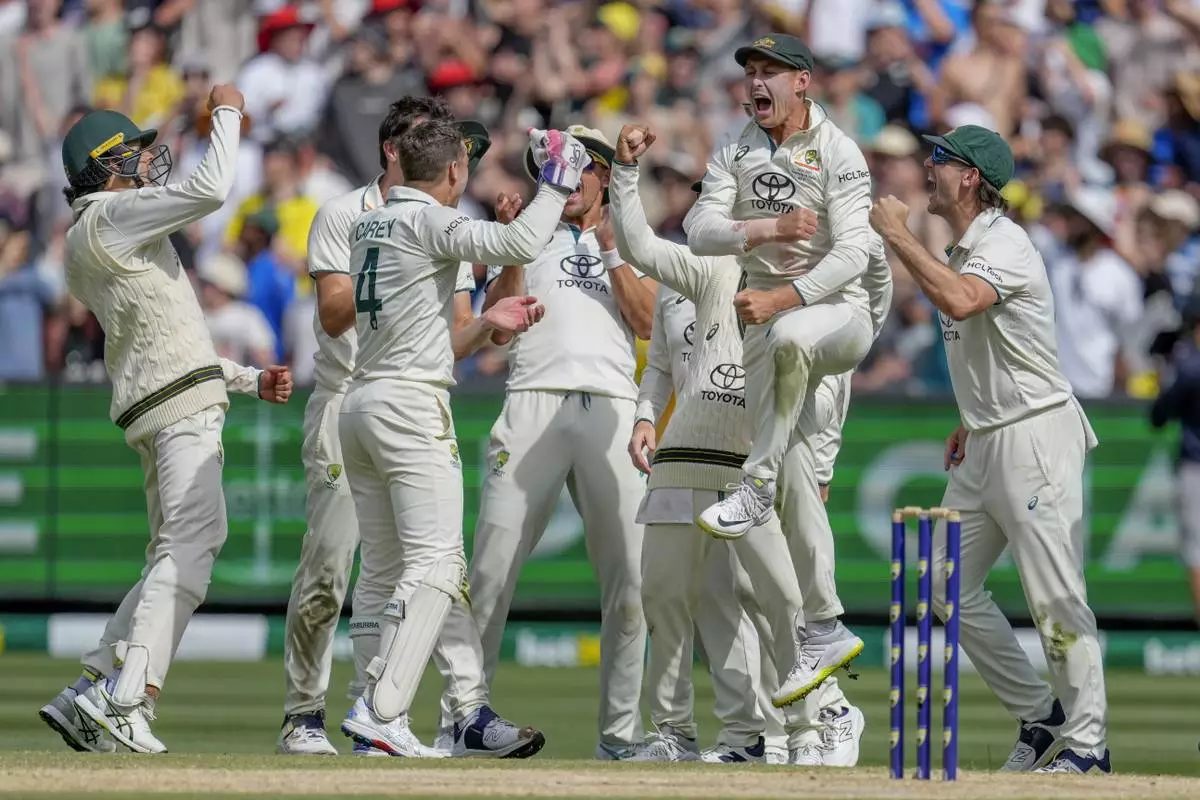
Australian players celebrates the wicket of India's Yashasvi Jaiswal during play on the last day of the fourth cricket test between Australia and India at the Melbourne Cricket Ground, Melbourne, Australia, Monday, Dec. 30, 2024. (AP Photo/Asanka Brendon Ratnayake)
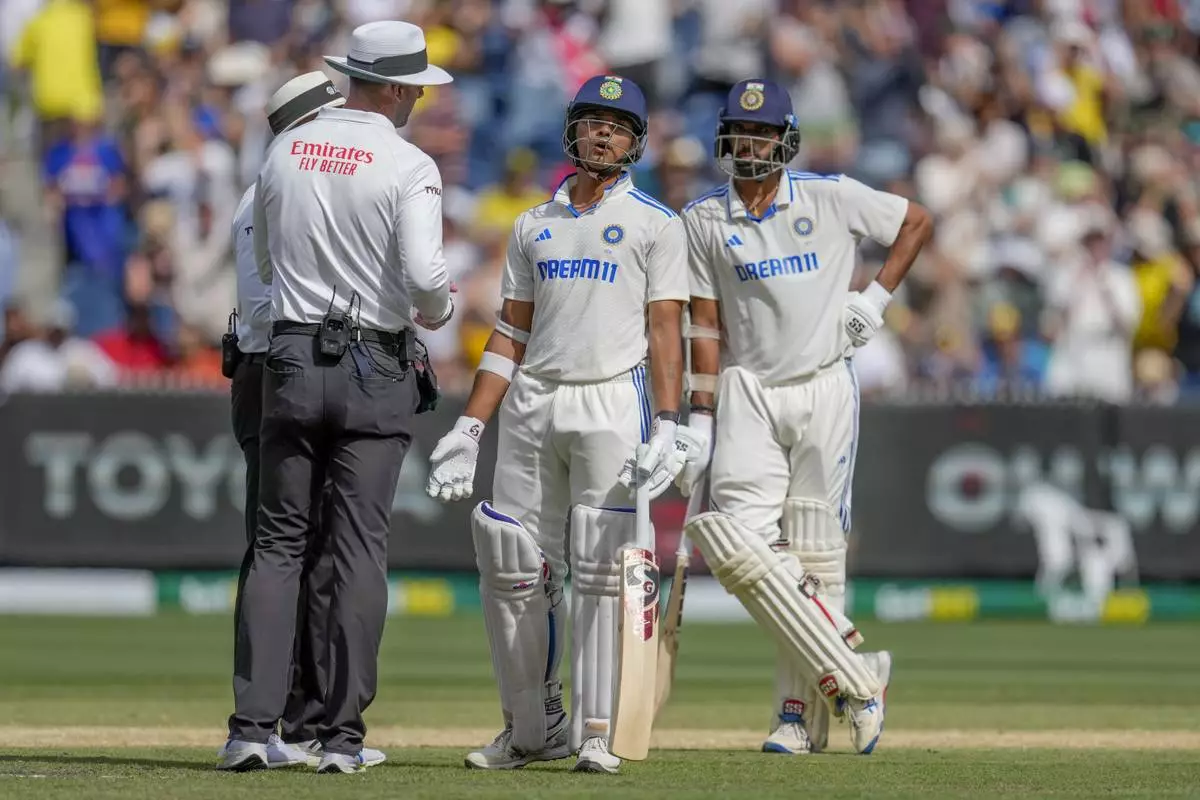
India's Yashasvi Jaiswal, center, speaks to umpires after being dismissed during play on the last day of the fourth cricket test between Australia and India at the Melbourne Cricket Ground, Melbourne, Australia, Monday, Dec. 30, 2024. (AP Photo/Asanka Brendon Ratnayake)
LONDON (AP) — King Charles III has been “deeply touched” by the response to his update on his cancer treatment, Buckingham Palace said Saturday, adding that the monarch is pleased to have highlighted the value of screening programs for the disease.
Medics and health charities have praised the king for his openness, saying his statement on Friday had already prompted people to seek information about cancer.
In a strikingly personal video statement, the British monarch acknowledged that a cancer diagnosis can feel “overwhelming,” but said catching the disease early brings “the precious gift of hope.”
Here’s what to know about the king's condition and his message.
The 77-year-old king said in a statement broadcast Friday that his treatment schedule will be reduced in the new year, “thanks to early diagnosis, effective intervention and adherence to ‘doctors’ orders.’”
He encouraged others to take advantage of screening programs such as those for breast, bowel and cervical cancer offered by Britain’s public health service.
“Early diagnosis quite simply saves lives,” the king said in the statement aired during a “Stand Up to Cancer” telethon on TV station Channel 4. He said catching the disease early had allowed him “to continue leading a full and active life even while undergoing treatment.”
Charles has received outpatient treatment for almost two years. Buckingham Palace did not say the king is in remission, but that his treatment is moving to a “precautionary phase” and his condition will be monitored to ensure his continued recovery.
“I know from my own experience that a cancer diagnosis can feel overwhelming,” the king said in his video statement. “Yet I also know that early detection is the key that can transform treatment journeys, giving invaluable time to medical teams – and, to their patients, the precious gift of hope.”
Charles announced in February 2024 that he had been diagnosed with cancer, and, in a break from centuries of secrecy about royal health, he has since spoken about the illness, using his story to promote cancer awareness and treatment.
The openness has limits, though. The king has not disclosed what type of cancer he has or what kind of treatment he is receiving. The palace said it was an intentional decision designed to ensure his message reaches the widest possible audience.
The king’s cancer was discovered after treatment for an enlarged prostate. While doctors ruled out prostate cancer, tests revealed “a separate issue of concern,” palace officials said last year.
Charles suspended his public appearances for about two months after his diagnosis. Since returning to the public eye, he has visited cancer treatment centers across the country and shared stories with fellow patients.
Buckingham Palace said Charles “will be greatly encouraged and deeply touched by the very positive reaction" his message has generated. “He will be particularly pleased at the way it has helped to shine a light on the benefits of cancer screening programs,” it added.
British cancer charities said the number of people seeking information about cancer jumped after the king revealed he was undergoing treatment last year.
Cancer Research U.K. said about 100,000 people have visited its Screening Checker website since it was launched on Dec. 5, most of them since the king’s statement on Friday.
The charity's Chief Executive Michelle Mitchell said: “When public figures speak openly about their cancer diagnosis, it can prompt others to check in on their health.”
Broadcaster Jonathan Dimbleby, the king’s authorized biographer, said the statement was “a remarkable thing for a monarch to do.”
“It takes guts, and the fact that he came out and did that will save lives,’” Dimbleby said.
The Princess of Wales, who announced her own cancer diagnosis six weeks after her father-in-law, has also given updates on her treatment. Kate announced in January that her cancer is in remission.
Find more of AP’s coverage at https://apnews.com/hub/royalty
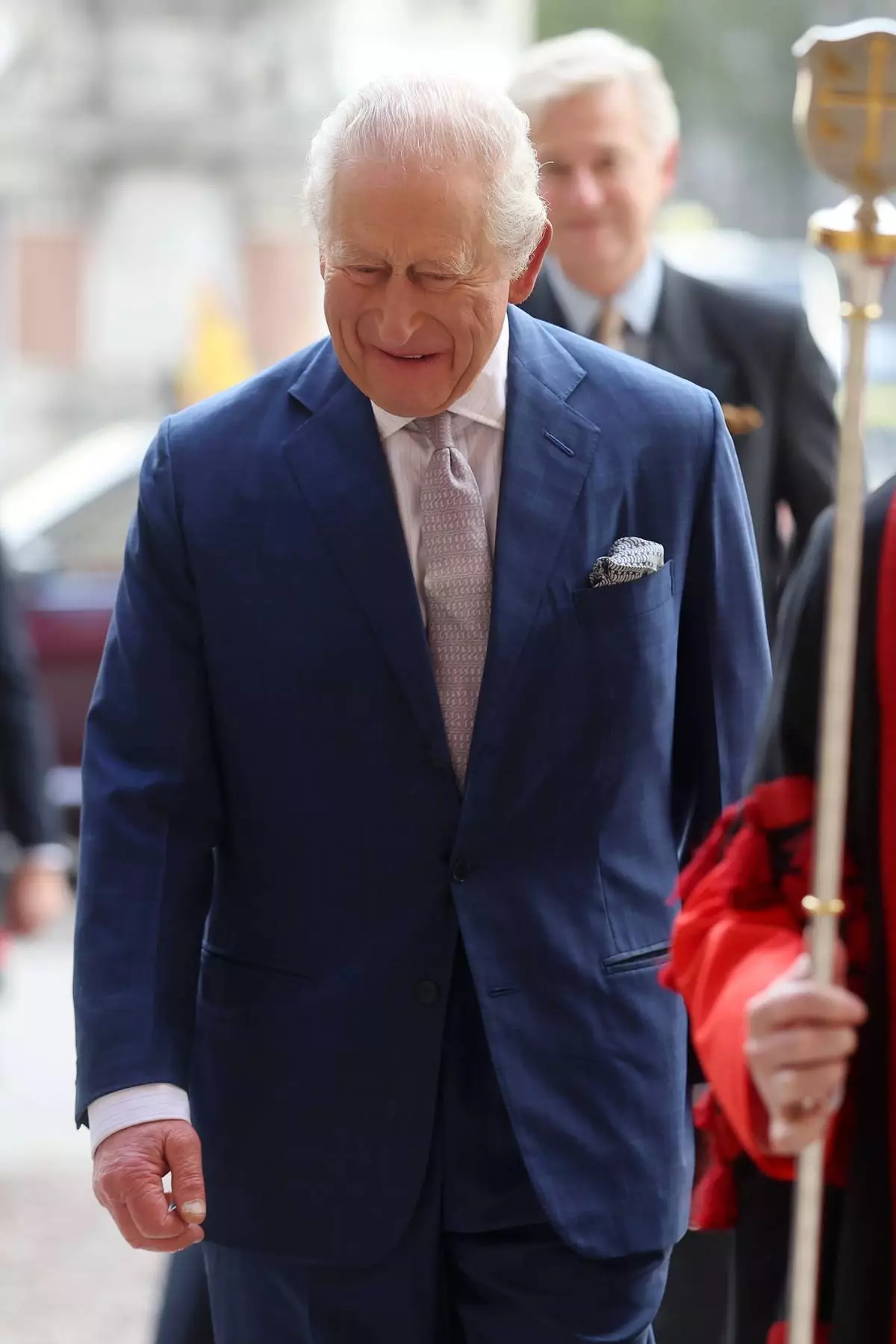
Britain's King Charles III attends an Advent Service at Westminster Abbey, in London, Wednesday, Dec. 10, 2025. (Chris Jackson/Pool Photo via AP)
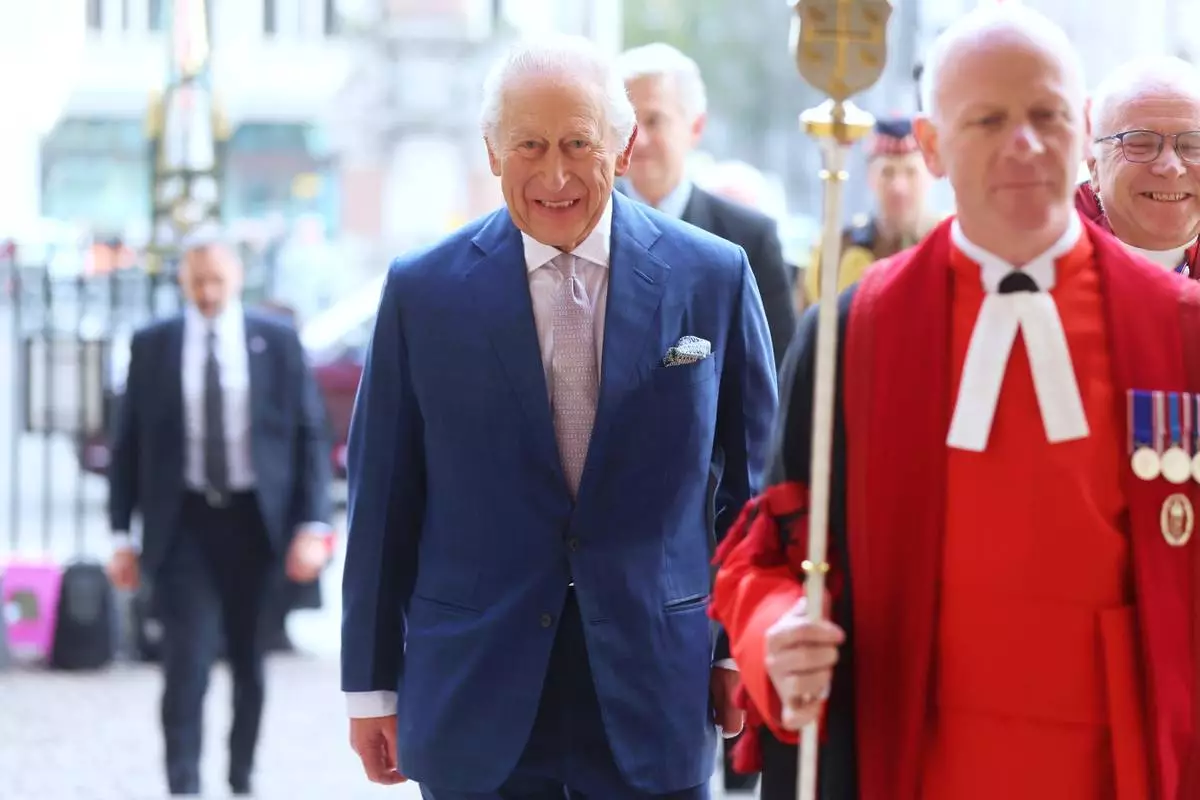
Britain's King Charles III attends an Advent Service at Westminster Abbey, in London, Wednesday, Dec. 10, 2025. (Chris Jackson/Pool Photo via AP)