PLAINS, Ga. (AP) — Jimmy Carter already had drawn months of media scrutiny as a devout Southern Baptist running for president. Then the 1976 Democratic nominee brought up sex and sin as he explained his religious faith to Playboy magazine.
Carter was not misquoted. But he was certainly misunderstood, as his thoughts in the wide-ranging interview were reduced in the popular imagination to utterances about “lust” and “adultery.”
Click to Gallery
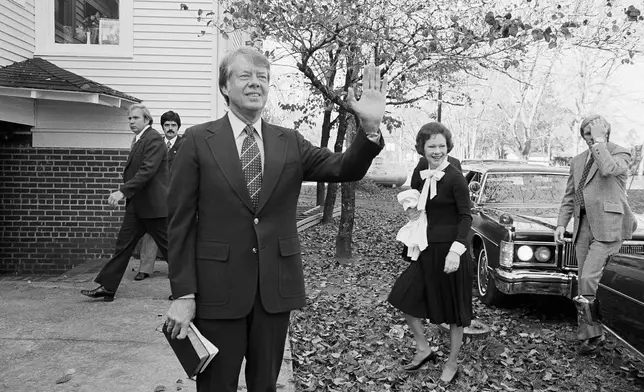
FILE - Then President-elect Jimmy Carter waves to the crowd as he and his wife Rosalynn arrive at the Plains Baptist Church to attend services in Plains, Ga., on Nov. 22, 1976. (AP Photo, File)
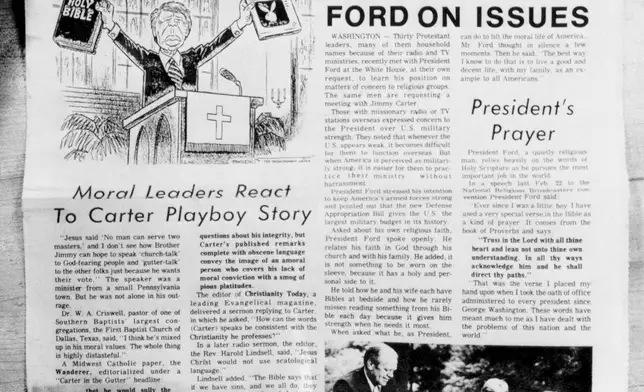
FILE - The front page of a publication mailed to rural Iowans by then-President Gerald Ford's campaign committee is seen on Oct. 26, 1976, in Des Moines, Iowa. The cartoon shows Carter in the pulpit waving the Bible and copy of Playboy magazine. (AP Photo, File)
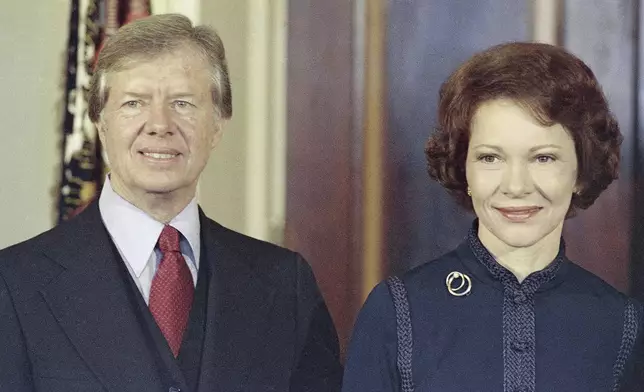
FILE - President-elect Jimmy Carter, left, with his wife Rosalynn Carter on Dec. 3, 1976. (AP Photo/Charles Harrity, File)
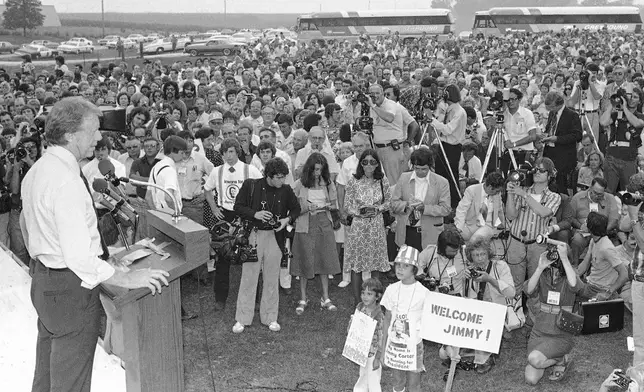
FILE - Jimmy Carter speaks to a crowd of supporters during his presidential campaign on the Van Ryswyk farm in Des Moines, Iowa, Aug. 24, 1976. (AP Photo, File)
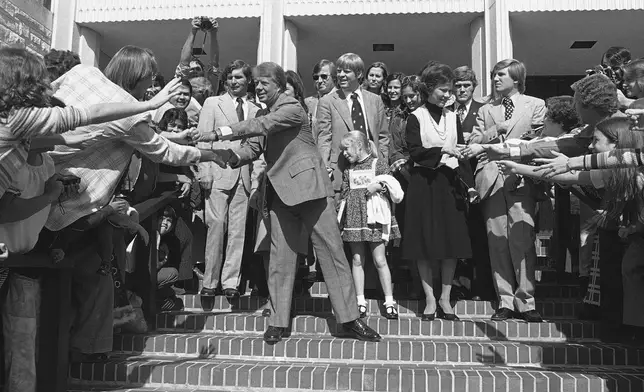
FILE - Democratic Presidential candidate Jimmy Carter and his wife Rosalynn Carter greet people after attending church services at the University Baptist Church near the end of his presidential election campaign on Oct. 31, 1976, in Fort Worth, Texas. (AP Photo/John Duricka, File)
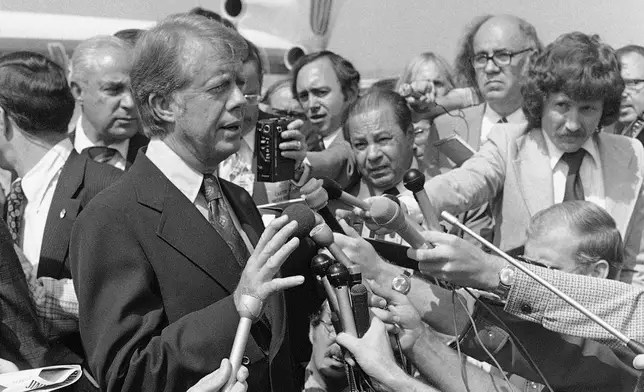
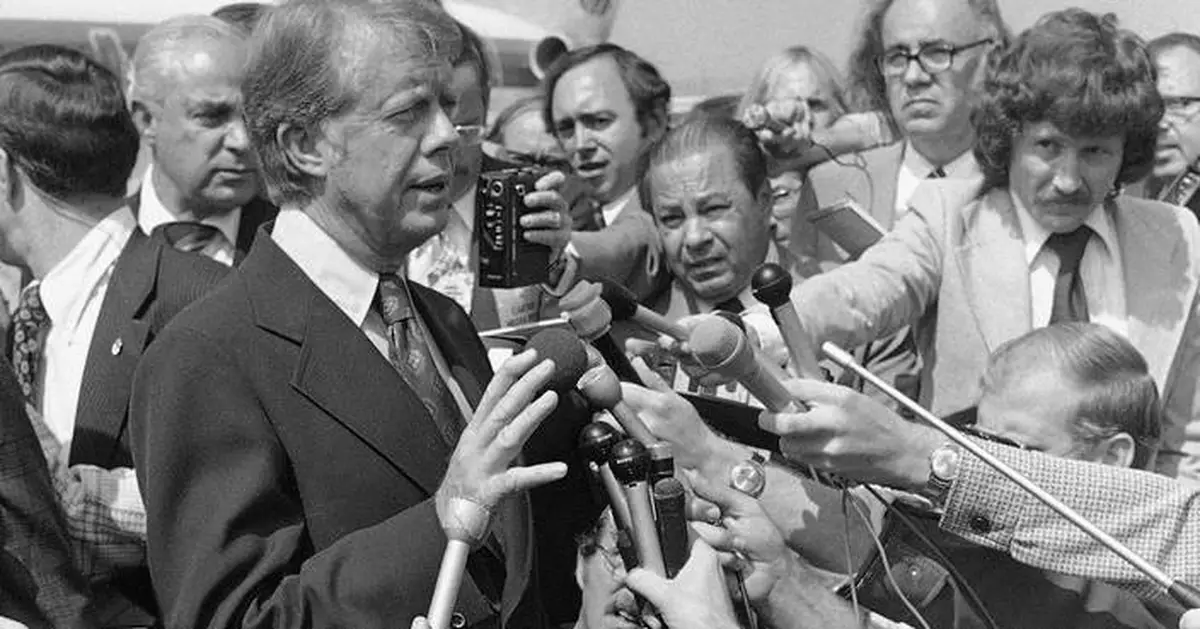
FILE - Then Democratic presidential nominee Jimmy Carter speaks to reporters on his arrival at Hobby International Airport in Houston on Sept. 24, 1976. (AP Photo/Jack Thornell, File)
Nearly a half-century later, as Carter was receiving hospice care in the same south Georgia home where he once spoke with Playboy journalists, his interviewer Robert Scheer still believed Carter was treated unfairly. He recalled the former president as a “real” and “serious” figure whose intent was smothered by the intensity of a campaign’s closing stretch.
Carter died Sunday at age 100.
“Jimmy Carter was a thoughtful guy,” Scheer told The Associated Press. “But that got lost here. I’ve never seen a story like it. It was worldwide. ... It just never went away.”
Political disaster ensued. Rosalynn Carter was suddenly being asked whether she trusted her husband. The fallout, in Carter’s words, “nearly cost me the election.”
Carter spent five-plus hours with Playboy across several months — “more time with you than with Time, Newsweek and all the others combined,” he told Scheer and Playboy editor Barry Golson.
The resulting Q&A spanned 12,000 words, and Scheer added thousands more in an accompanying story. Carter discussed military and foreign policy, racism and civil rights, political journalism and his reputation as a “vague” candidate.
“They weren’t interested in sensationalized stuff,” Scheer said of Playboy.
Hugh Hefner’s publication reached an estimated 20 million-plus readers each month with its pictorials of nude women. But the magazine chronicled American culture as well, with its branded “Playboy Interview” featuring such power players as the Rev. Martin Luther King Jr., John Lennon, Malcom X and leading newsman Walter Cronkite.
Carter, unafraid of nuance, proved he belonged among them, Scheer said.
Carter’s most-remembered comments came at the end of their final session. Standing outside Carter’s front door, Golson pressed Carter on whether his piety would make him a “rigid, unbending president” unable to represent all Americans.
The Baptist deacon responded with an 823-word soliloquy on human imperfection, pride and God’s forgiveness. He said he believed in “absolute and total separation of church and state” and explained his faith as rooted in humility, not judgment of others.
Quoting Matthew 5:27-28, Carter explained that Jesus Christ considered an offending thought equivalent to consummated adultery, and by that standard, he was in no position to judge a man who “shacks up” and “screws lots of women,” because he had “looked on many women with lust” and, thus, “committed adultery many times in my heart.”
Scheer called it a “sensible statement,” reflecting Carter’s Baptist tradition: “He was saying, ‘Look, I’m not going to be some fanatic. ... I’m not this perfect guy.’”
Playboy realized Carter provided explosive material — and not just about sex. Citing President Lyndon Johnson’s handling of Vietnam, Carter included the last Democratic president alongside disgraced Republican Richard Nixon as guilty of “lying, cheating and distorting the truth.”
The magazine decided to send the full Q&A text to about 1,000 media outlets in late September, before the usual October publication date for the November edition.
The idea, Scheer explained, was to allow time for fair coverage rather than drop bombshells days before the election.
Headline writers, satirists and late-night television pounced anyway, labeling it Carter’s “lust in my heart” interview. “Saturday Night Live,” then a fledgling NBC sketch comedy show, had a field day. One political cartoonist depicted Carter lusting after the Statue of Liberty.
He lamented to NPR in 1993 that the Playboy interview morphed into “the No. 1 story of the entire 1976 campaign.”
“I was explaining Jesus’ Sermon on the Mount,” Carter wrote wistfully in a 2015 memoir.
Carter’s faith had endeared him to many fellow white evangelicals and cultural conservatives. That made him a difficult foil for Republicans, who wanted to cast Democrats as out of step with most of America. The flip side, Scheer noted, was that many young voters and urban liberals — key Democratic constituencies — “wondered if he was this Southern square.”
“Hamilton Jordan (Carter’s campaign manager) had always called Carter’s faith ‘the weirdo factor,’” said Amber Roessner, a University of Tennessee media historian who has written extensively on Carter. “Talking to Playboy was their way to prove he wasn’t some kind of prude.”
Scheer, who was with Carter as part of his traveling press corps, said Playboy’s early text release sparked a frenzy.
“Reporters were scrambling, asking me, ’Bob, what is this?” he recalled.
The press traveling with Carter focused initially on Carter’s criticism of Johnson, who died in 1973. It was a juicy detail because Carter was headed Texas to campaign with LBJ's widow.
Carter initially told reporters his criticisms of LBJ were taken out of context. Scheer “ran back to the plane to get the tapes,” and effectively caught the nominee violating his pledge never to make a “misleading statement.”
Lady Bird Johnson skipped Carter’s Texas events, Scheer said. Carter apologized to her by telephone.
When his commentary on adultery ballooned, Carter insisted the exchange had been off-the-record, throwaway banter as Scheer and Golson prepared to leave.
“He was still wearing the mic!” Scheer told AP.
The way the story morphed “ended up making Carter seem like a creep,” Roessner said.
Rosalynn Carter fashioned a pat response: “Jimmy talks too much, but at least people know he’s honest and doesn’t mind answering questions.” And, no, she never worried about his fidelity.
“The only lust I worried about was that of the press,” she wrote in 1984, recounting how her discipline finally cracked when a reporter asked whether she ever committed adultery.
“If I had,” she replied, “I wouldn’t tell you.”
President Gerald Ford, who had been gaining on Carter but still trailed badly, leveraged the story. The Republican president was an Episcopalian, soft-spoken about religion, but he invited leading evangelical pastors to the White House the day after the interview’s release, including the Rev. W.S. Criswell of Dallas First Baptist Church.
Criswell later declared from his pulpit that he had asked Ford: “Mr. President, if Playboy magazine were to ask you for an interview, what would you do?” Ford’s reply, according to Criswell: “I was asked by Playboy magazine for an interview — and I declined with an emphatic ‘No’!”
Thousands of his parishioners roared.
The Rev. Billy Graham, then the nation’s top evangelist, and the Rev. Jerry Falwell, the rising leader of the so-called Religious Right, also blitzed Carter. National media, including The AP, highlighted criticism from Christian pastors from around the country.
Roessner, the daughter of a Protestant pastor, said Carter’s Playboy comments were clumsy, “but if anyone should have understood the context ... it should have been the ministers.”
She recalled Carter’s resentment during a 2014 interview she conducted with him. Decades of global humanitarian work had by that time afforded the former president a profile above politics, yet “almost 40 years later, it was clearly something he held on to,” she said. He was “still incredibly frustrated by what he felt was unfair coverage and response.”
The 1976 campaign was the first after Richard Nixon’s resignation, driven by reporting from The Washington Post, and many journalists were demonstrating a new level of distrust of politicians, especially one Scheer described as “wearing his religion on his sleeve.”
Those same news organizations largely ignored what the soon-to-be president said about them, Roessner noted.
“The traveling press have zero interest in any issue unless it’s a matter of making a mistake,” Carter told Playboy. “There’s nobody in the back of this plane who would ask an issue question unless he thought he could trick me into some crazy statement.”
Scheer, at least, asked plenty of policy questions, and, looking back, he pointed to Carter’s narrow victory just weeks later.
“Whatever they said, I think it did exactly what they wanted to accomplish,” Scheer said. “That doesn’t mean they weren’t nervous.”
This story was first published April 16, 2023, and has been updated with news of Carter's death.
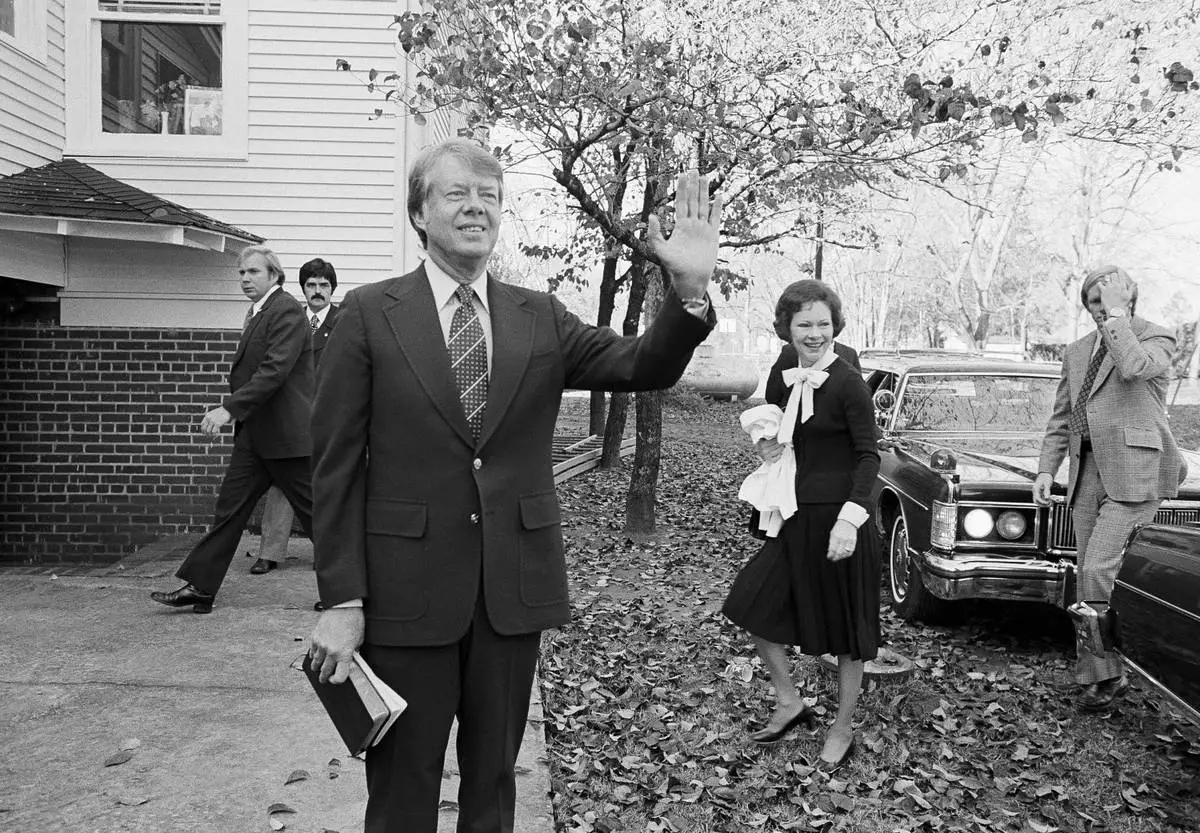
FILE - Then President-elect Jimmy Carter waves to the crowd as he and his wife Rosalynn arrive at the Plains Baptist Church to attend services in Plains, Ga., on Nov. 22, 1976. (AP Photo, File)
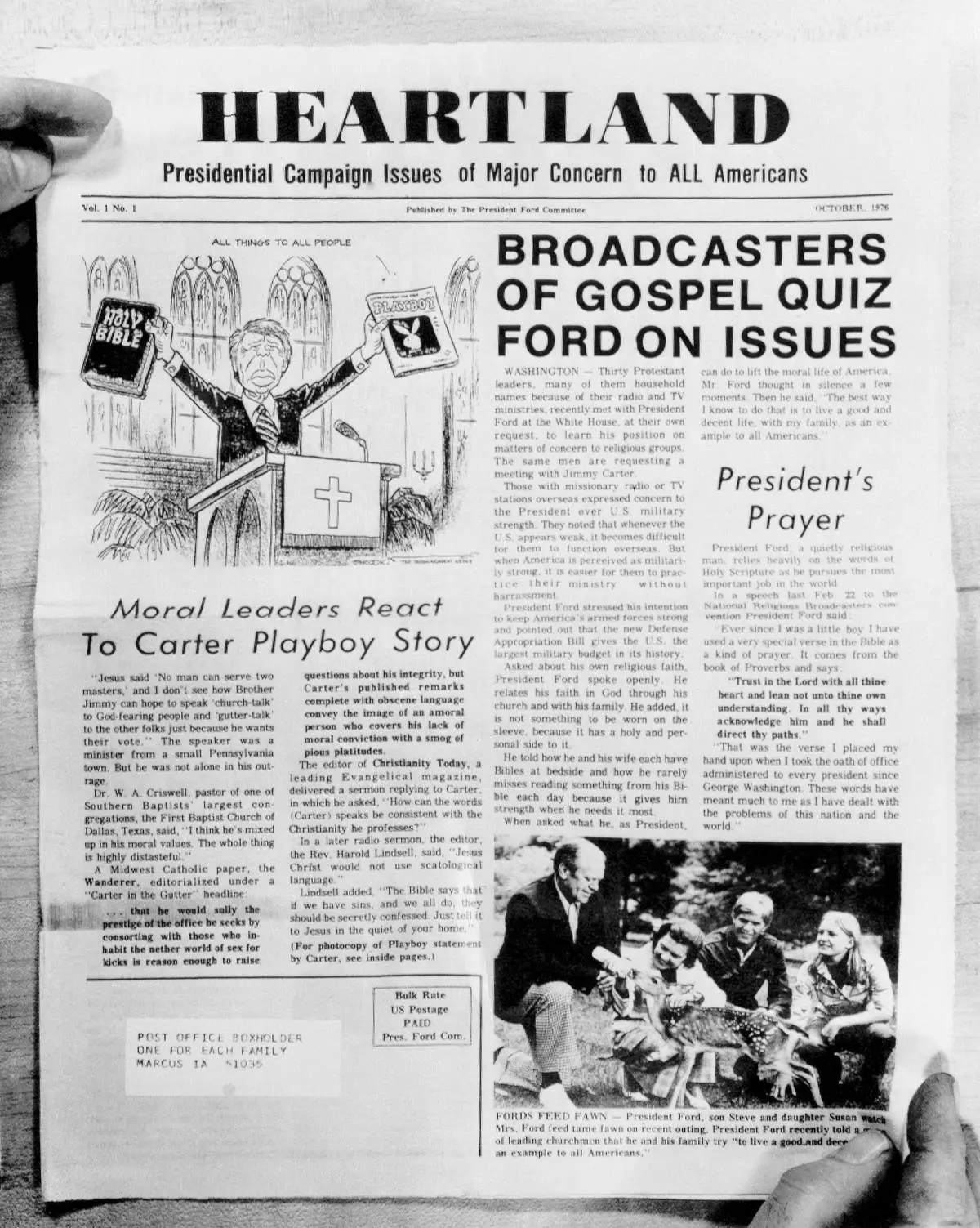
FILE - The front page of a publication mailed to rural Iowans by then-President Gerald Ford's campaign committee is seen on Oct. 26, 1976, in Des Moines, Iowa. The cartoon shows Carter in the pulpit waving the Bible and copy of Playboy magazine. (AP Photo, File)
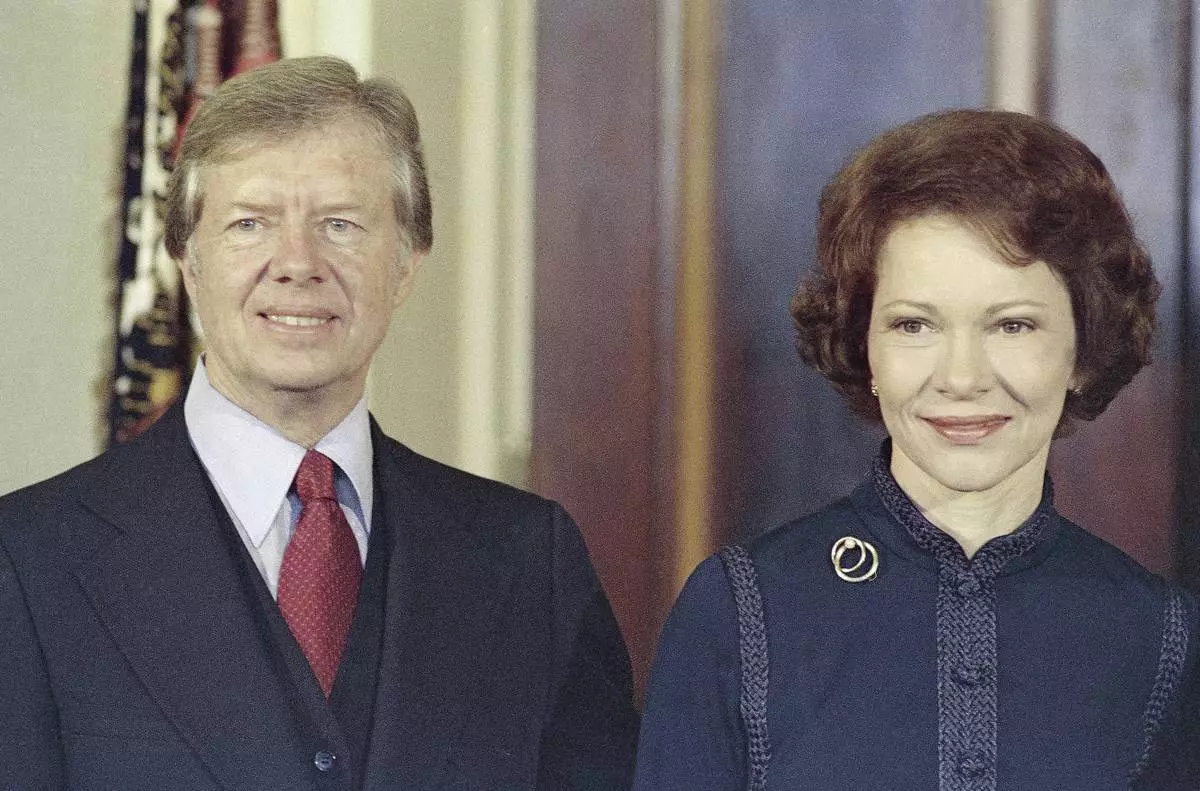
FILE - President-elect Jimmy Carter, left, with his wife Rosalynn Carter on Dec. 3, 1976. (AP Photo/Charles Harrity, File)
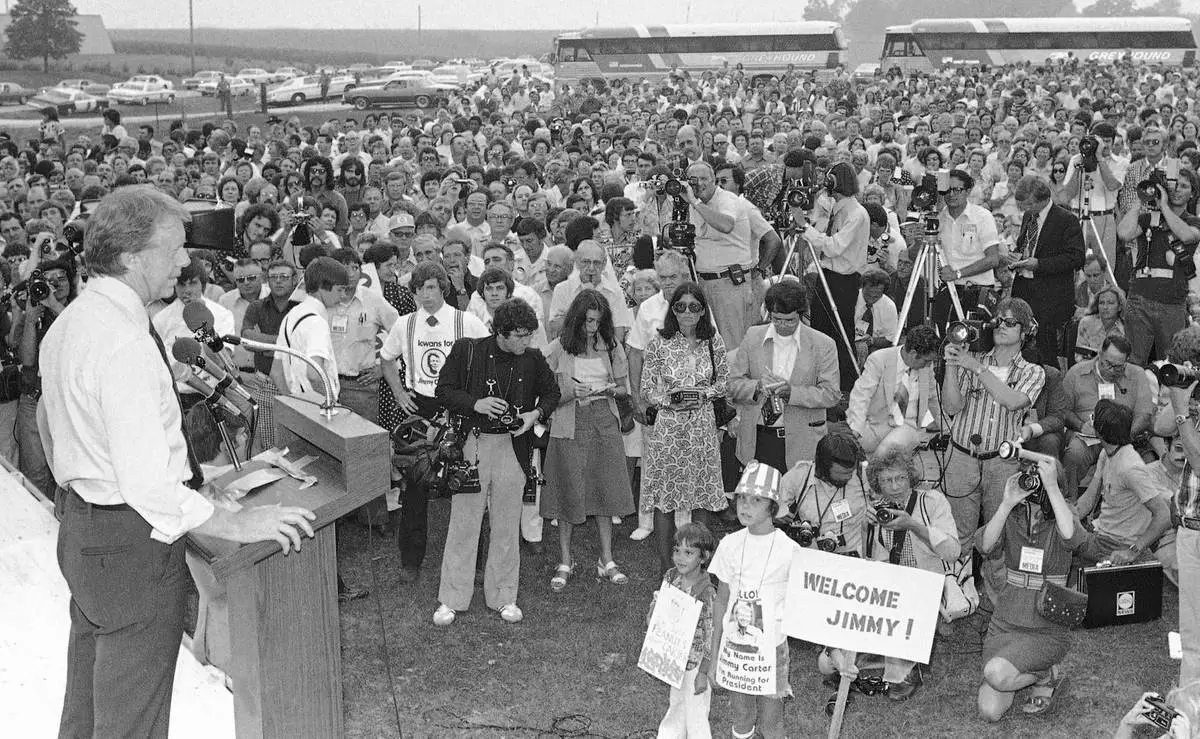
FILE - Jimmy Carter speaks to a crowd of supporters during his presidential campaign on the Van Ryswyk farm in Des Moines, Iowa, Aug. 24, 1976. (AP Photo, File)
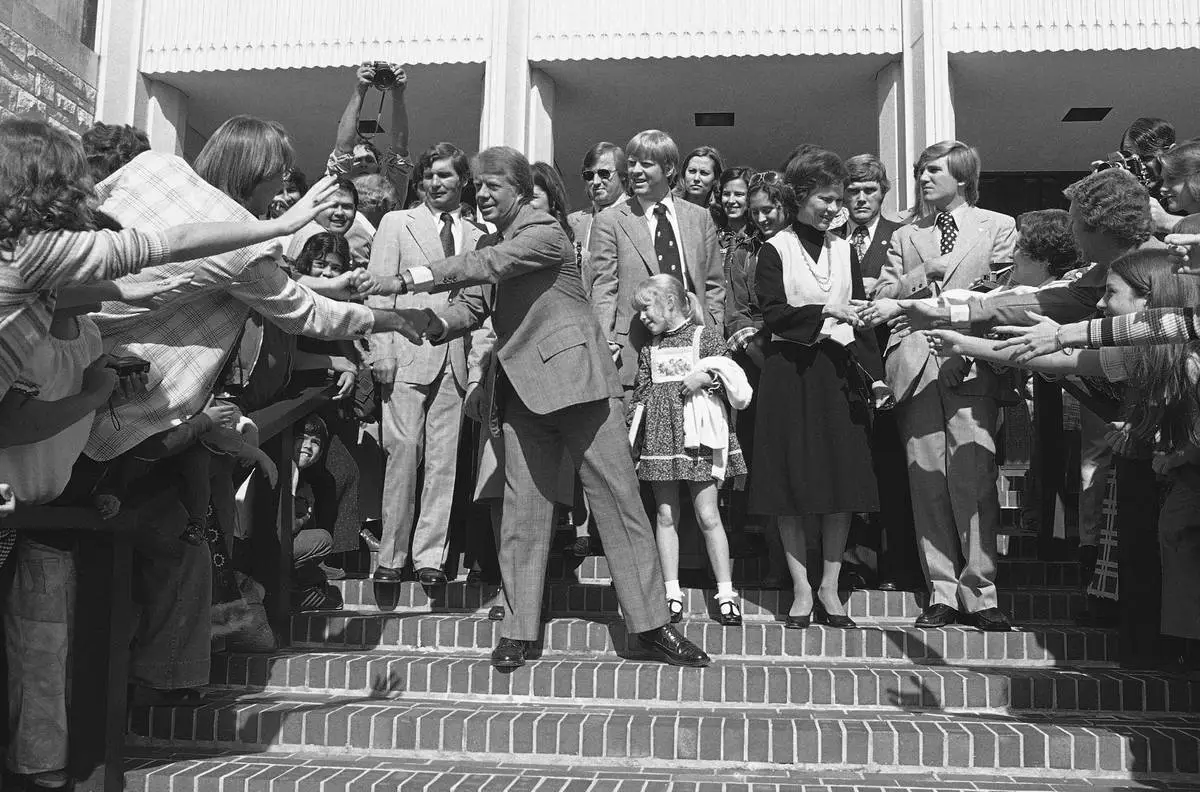
FILE - Democratic Presidential candidate Jimmy Carter and his wife Rosalynn Carter greet people after attending church services at the University Baptist Church near the end of his presidential election campaign on Oct. 31, 1976, in Fort Worth, Texas. (AP Photo/John Duricka, File)
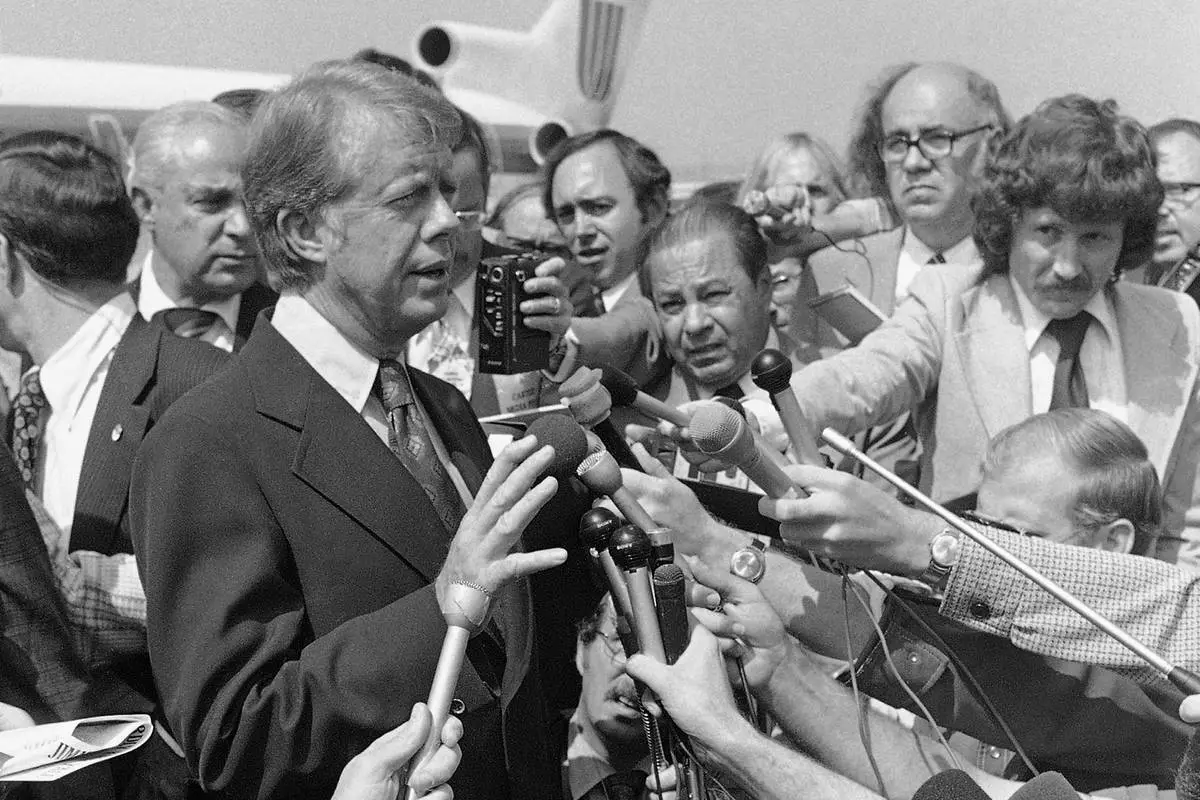
FILE - Then Democratic presidential nominee Jimmy Carter speaks to reporters on his arrival at Hobby International Airport in Houston on Sept. 24, 1976. (AP Photo/Jack Thornell, File)