Skip to Content Facebook Feature Image

Iran's rial currency plummets to new low, sparking fears of higher food prices

News

Iran's rial currency plummets to new low, sparking fears of higher food prices
News

News

Iran's rial currency plummets to new low, sparking fears of higher food prices

2025-12-15 20:38 Last Updated At:12-16 14:58

TEHRAN, Iran (AP) — Iran’s rial slid further Monday to a new record low of more than 1.3 million to the U.S. dollar, deepening the currency’s collapse less than two weeks after it first breached the 1.2-million mark amid sanctions pressure and regional tensions.

Currency traders in Tehran quoted the dollar above 1.3 million rials, underscoring the speed of the decline since Dec. 3, when the rial hit what was then a historic low.

The rapid depreciation is compounding inflationary pressures, pushing up prices for food and other daily necessities and further straining household budgets, a trend that could be intensified by a gasoline price change introduced in recent days.

Iran on Saturday added a third gasoline price tier, raising the cost of full bought beyond monthly quotes at 50,000 rials (4 U.S. cents). It is the first major adjustment to fuel pricing since a price hike in 2019 that sparked nationwide protests and a crackdown that reportedly killed over 300 people.

Under the revised system, motorists continue to receive 60 liters a month at the subsidized rate of 15,000 rials per liter and another 100 liters at 30,000 rials, but any additional purchases now cost more than three times the original subsidized price. While gasoline in Iran remains among the cheapest in the world, economists warn the change could feed inflation at a time when the rapidly weakening rial is already pushing up the cost of food and other basic goods.

The fall comes as efforts to revive negotiations between Washington and Tehran over Iran’s nuclear program appear stalled, while uncertainty persists over the risk of renewed conflict following June’s 12-day war involving Iran and Israel. Many Iranians also fear the possibility of a broader confrontation that could draw in the United States, adding to market anxiety.

Iran’s economy has been battered for years by international sanctions, particularly after Donald Trump unilaterally withdrew the United States from Tehran’s nuclear deal with world powers in 2018. At the time the 2015 accord was implemented — which sharply curtailed Iran’s uranium enrichment and stockpiles in exchange for sanctions relief — the rial traded at about 32,000 to the dollar.

After Trump returned to the White House for a second term in January, his administration revived a “maximum pressure” campaign, expanding sanctions that target Iran’s financial sector and energy exports. Washington has again pursued firms involved in trading Iranian crude oil, including discounted sales to buyers in China, according to U.S. statements.

Further pressure followed in late September, when the United Nations reimposed nuclear-related sanctions on Iran through what diplomats described as the “snapback” mechanism. Those measures once again froze Iranian assets abroad, halted arms transactions with Tehran and imposed penalties tied to Iran’s ballistic missile program.

Economists warn that the rial’s accelerating decline risks feeding a vicious cycle of higher prices and reduced purchasing power, particularly for staples such as meat and rice that are central to Iranian diets. For many Iranians, the latest record low reinforces concerns that relief remains distant as diplomacy falters and sanctions tighten.
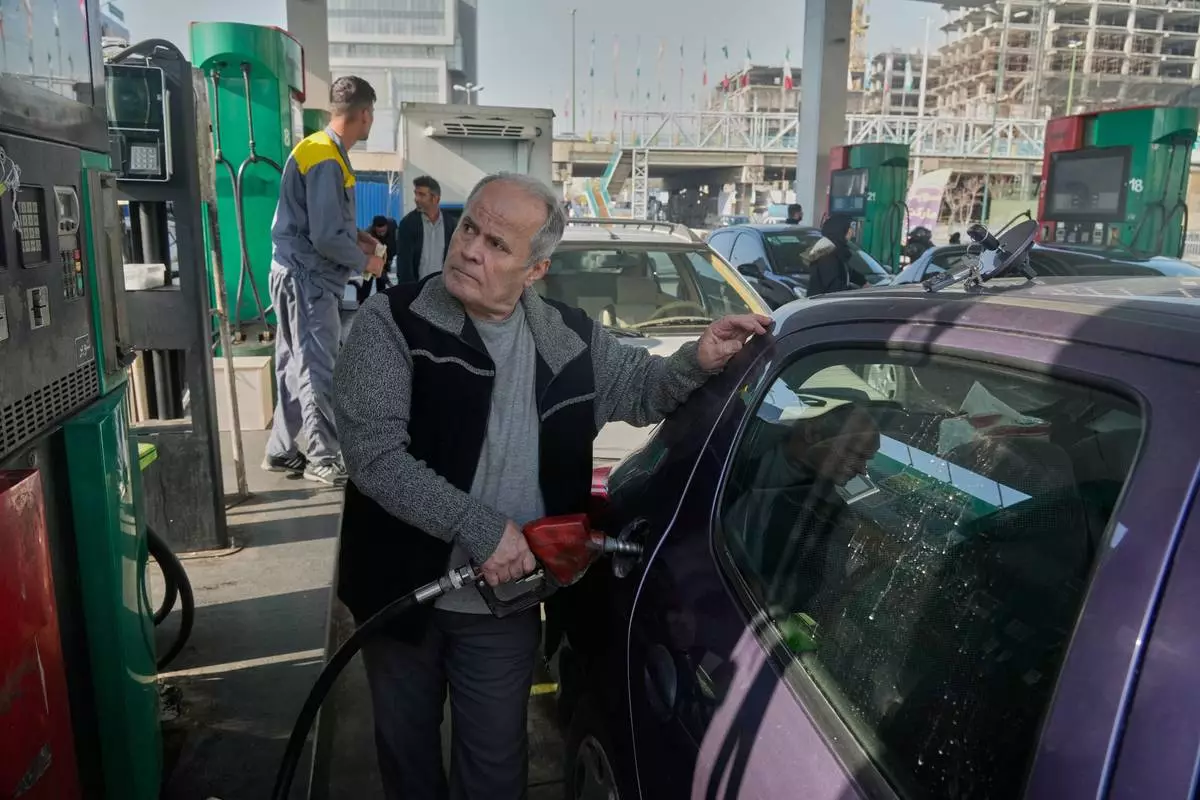
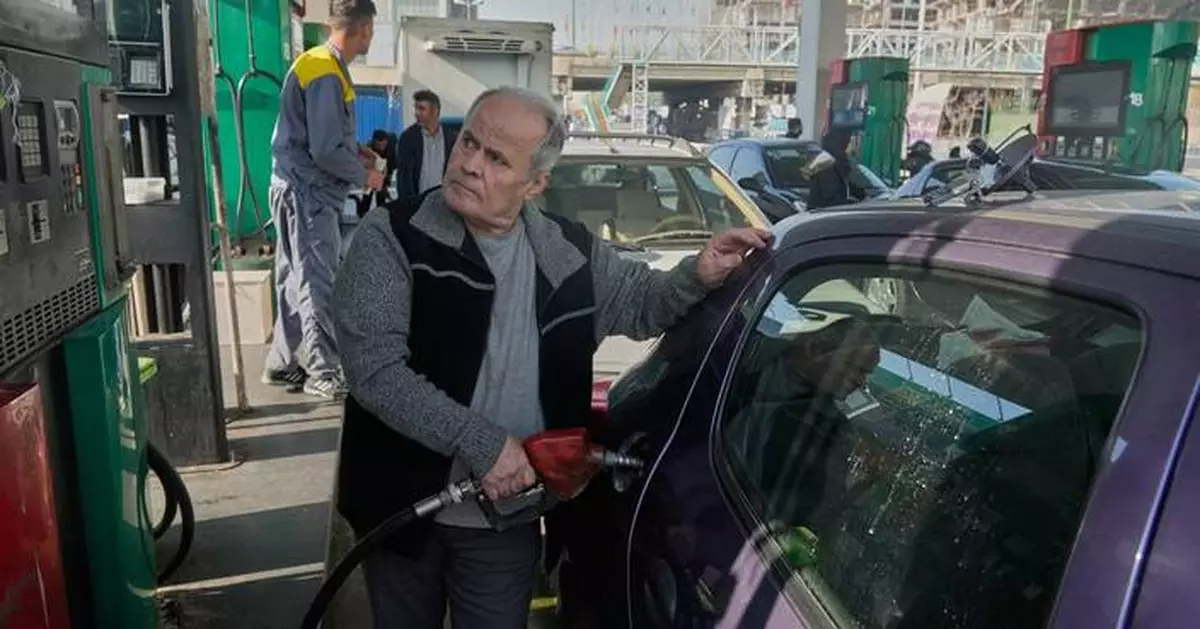
A man fills his car at a gas station in Tehran, Iran, Saturday, Dec. 13, 2025. (AP Photo/Vahid Salemi)

A man fills his car at a gas station in Tehran, Iran, Saturday, Dec. 13, 2025. (AP Photo/Vahid Salemi)

VATICAN CITY (AP) — In 2018, German artist Michael Triegel asked a homeless man in Rome to pose for a drawing, thinking that he would make an ideal model for St. Peter if he ever needed to paint the first pope.

Seven years on, the man’s likeness has gone on display in the Vatican, a reunion of sorts that came about by improbable chance.

This is a story both big and small, of art and faith and a human tragedy that caught the attention of Pope Francis: homeless German man Burkhard Scheffler died from the cold in 2022 on the edge of St. Peter’s Square.

The saga began in Germany, where Triegel in 2019 won a commission from the Protestant cathedral in the city of Naumburg to create a new central panel for its altar by Renaissance master Lucas Cranach the Elder. The panel would replace an original that was destroyed in 1541 during the Reformation, the upheavals that convulsed parts of Europe as Protestantism emerged in the 16th century.

Cranach’s two side panels survived. Triegel, a Catholic convert, leapt at the prospect of a “collaboration with Cranach.”

“They had the idea of completing this altar again, in what I find a beautiful gesture — not to undo these wounds from the 16th century but to mitigate them, to heal them,” he said in an interview in his studio in Leipzig.

Triegel planned out his painting and drew on that encounter he had in 2018 with the homeless man in Rome.

The man took his place as St. Peter among the saints gathered around Mary and the infant Jesus. Triegel said it was important that his subjects not be idealized archetypes but figures the viewer would feel were people “who could have something to do with me in the here and now, who are not just historic.”

St. Paul was based on a rabbi Triegel drew in Jerusalem, while Mary was modeled on the artist’s daughter. In the back was Protestant pastor and theologian Dietrich Bonhoeffer, an opponent of the Nazis who was executed in 1945.

Triegel’s St. Peter is bearded, wears a red baseball cap and holds a small key — a reference to the biblical keys of heaven that are often associated with the saint.

The artist found his saint sitting at the entrance of a Roman church begging. As he was about to give the man money, Triegel recalled, “he looked at me and at that moment I had the feeling, if you ever need a Peter for a picture, he would be your Peter — that flowing beard and those alert eyes.”

Triegel asked the man in Italian whether he could draw and photograph him, and the man just nodded — “so I had no idea what nation he was from.”

Unbeknown to Triegel, his St. Peter had a rough time after their 2018 encounter.

The man, Burkhard Scheffler, had suffered during the COVID-19 pandemic. Under Italy's harsh lockdowns, fewer and fewer people ventured out to provide handouts and food to those in need.

Scheffler was arrested in May 2020 after he apparently threatened someone with a knife for refusing to give him change. He was sentenced to three years in prison and released in late 2022.

Known to many in the Vatican, Scheffler had grown weak in prison. “His hands, which were always warm, had grown cold,” a Vatican journalist, Gudrun Sailer, would later recall.

On the night of Nov. 25, 2022, Scheffler died from the cold.

His death caught the attention of Francis, who had made a priority of caring for the homeless people around the Vatican. Under Francis' watch, the Vatican installed showers, a barber shop and clinic in the colonnade of St. Peter’s. Francis' almsgiver went out on cold nights to distribute sleeping bags.

Hours after Scheffler died, the Vatican spokesperson issued a statement saying he had been cared for by the Vatican’s charity office but “unfortunately, the rain and cold last night contributed to aggravate his fragile condition.” The spokesperson said Francis remembered in his prayer that day “Burkhard and all those who are forced to live without a home, in Rome and the world.”

Shortly after, Francis said in his weekly Sunday prayer: “I remember Burkhard Scheffler, who died three days ago under the colonnade of St. Peter’s Square: died of cold.”

And the pope returned to the theme in his Palm Sunday homily in April 2023. “I think of the German so-called street person, who died under the colonnade, alone and abandoned. He is Jesus for each of us. So many need our closeness, so many are abandoned.”

Francis asked that Scheffler be buried at the Teutonic cemetery on the grounds of the Vatican, alongside many German-speaking priests, pilgrims and notables. His simple tomb is in the small pilgrim section, in the shadow of St. Peter's Basilica and just a few yards from the tomb of the real St. Peter.

Back in Germany, Triegel spent three years working on the altar for the Naumburg Cathedral, but a problem arose.

There were concerns that the Triegel-Cranach altar could cost the building its place on the UNESCO World Heritage List. UNESCO experts felt that it hindered the overall view of the west chapel, including famous statues. In July, regional authorities said the verdict was that the altar could stay — but would have to be shown elsewhere in the cathedral.

While that discussion played out, the idea arose of lending the altar to the Catholic chapel of the Teutonic pontifical college at the Vatican, a residence for German-speaking priests adjacent to the cemetery. The chapel has an altar of its own from the period of Cranach’s original.

And it was then in the Teutonic chapel that a Vatican-affiliated art expert recognized Triegel's St. Peter as none other than Scheffler.

“Someone said, 'This guy with the red cap, we know him because he was living here at St. Peter’s Square,” said Monsignor Peter Klasvogt, rector of the Campo Santo Teutonico, as the complex is known. “That was a moment you never forget.”

The altar is now on a two-year loan to the chapel, a stone's throw from Scheffler's grave, itself just steps from the tomb of St. Peter.

When Triegel learned that his altar might end up next to Scheffler's grave, he recalled thinking, “there can't be so many coincidences.”

With the arrival of the painting, “the story gets another outcome and another exit, and this is so wonderful to see,” Klasvogt said. “We honor him with the altar, we honor him with his grave and we pray here in the church for him.”

After the argument about the altar’s placement in Germany, the coincidence also appeals to the artist.

“If this whole dispute was necessary for this picture to go to Rome and for this man to be seen again, for him to get a name, for ... people to take notice of him and remember him, then this whole Naumburg project was really worth it for me,” Triegel said.

Geir Moulson and Kerstin Sopke reported from Leipzig, Germany. Pietro De Cristofaro contributed from Leipzig.

Associated Press religion coverage receives support through the AP’s collaboration with The Conversation US, with funding from Lilly Endowment Inc. The AP is solely responsible for this content.

Painter Michael Triegel poses for photos during an interview with The Associated Press at his studio in Leipzig, Germany, Tuesday, Dec. 2, 2025. (AP Photo/Pietro De Cristofaro)

Painter Michael Triegel poses for photos during an interview with The Associated Press at his studio in Leipzig, Germany, Tuesday, Dec. 2, 2025. (AP Photo/Pietro De Cristofaro)

A photo shows the tomb of Burkhard Scheffler, a homeless man who died from the cold in 2022 and portrayed in 2018 as St. Peter by German artist Michael Triegel, in the Teutonic cemetery at the Vatican, Wednesday, Dec. 10, 2025. (AP Photo/Alessandra Tarantino)

A photo shows the tomb of Burkhard Scheffler, a homeless man who died from the cold in 2022 and portrayed in 2018 as St. Peter by German artist Michael Triegel, in the Teutonic cemetery at the Vatican, Wednesday, Dec. 10, 2025. (AP Photo/Alessandra Tarantino)

Mons. Peter Klasvogt, the rector of the Teutonic College talks during an interview with the Associated Press next to a painting exposed in the chapel of the Teutonic College by German artist Michael Triegel, who portrayed as St. Peter Burkhard Scheffler, a homeless man who died from the cold in 2022 on the edge of St. Peter's Square, at the Vatican, Wednesday, Dec. 10, 2025. (AP Photo/Alessandra Tarantino)

Mons. Peter Klasvogt, the rector of the Teutonic College talks during an interview with the Associated Press next to a painting exposed in the chapel of the Teutonic College by German artist Michael Triegel, who portrayed as St. Peter Burkhard Scheffler, a homeless man who died from the cold in 2022 on the edge of St. Peter's Square, at the Vatican, Wednesday, Dec. 10, 2025. (AP Photo/Alessandra Tarantino)

Mons. Peter Klasvogt, the rector of the Teutonic College, talks during an interview with the Associated Press next to a painting exposed in the chapel of the Teutonic College by German artist Michael Triegel, who portrayed as St. Peter Burkhard Scheffler, a homeless man who died from the cold in 2022 on the edge of St. Peter's Square, at the Vatican, Wednesday, Dec. 10, 2025. (AP Photo/Alessandra Tarantino)

Mons. Peter Klasvogt, the rector of the Teutonic College, talks during an interview with the Associated Press next to a painting exposed in the chapel of the Teutonic College by German artist Michael Triegel, who portrayed as St. Peter Burkhard Scheffler, a homeless man who died from the cold in 2022 on the edge of St. Peter's Square, at the Vatican, Wednesday, Dec. 10, 2025. (AP Photo/Alessandra Tarantino)

Mons. Peter Klasvogt, the rector of the Teutonic College poses for a photo next to the tomb of Burkhard Scheffler, a homeless man who died from the cold in 2022 on the edge of St. Peter's Square, and portrayed as St. Peter in a painting by German artist Michael Triegel, exposed in the chapel of the Teutonic College at the Vatican, Wednesday, Dec. 10, 2025. (AP Photo/Alessandra Tarantino)

Mons. Peter Klasvogt, the rector of the Teutonic College poses for a photo next to the tomb of Burkhard Scheffler, a homeless man who died from the cold in 2022 on the edge of St. Peter's Square, and portrayed as St. Peter in a painting by German artist Michael Triegel, exposed in the chapel of the Teutonic College at the Vatican, Wednesday, Dec. 10, 2025. (AP Photo/Alessandra Tarantino)

Mons. Peter Klasvogt, the rector of the Teutonic College poses for a photo next to the tomb of Burkhard Scheffler, a homeless man who died from the cold in 2022 on the edge of St. Peter's Square, and portrayed as St. Peter in a painting by German artist Michael Triegel, exposed in the chapel of the Teutonic College at the Vatican, Wednesday, Dec. 10, 2025. (AP Photo/Alessandra Tarantino)

Mons. Peter Klasvogt, the rector of the Teutonic College poses for a photo next to the tomb of Burkhard Scheffler, a homeless man who died from the cold in 2022 on the edge of St. Peter's Square, and portrayed as St. Peter in a painting by German artist Michael Triegel, exposed in the chapel of the Teutonic College at the Vatican, Wednesday, Dec. 10, 2025. (AP Photo/Alessandra Tarantino)

A painting, the central of the triptych, by German artist Michael Triegel who portrayed in 2018 as St. Peter Burkhard Scheffler, a homeless man who died from the cold in 2022, is displayed in the chapel of the Teutonic College at the Vatican, Wednesday, Dec. 10, 2025. (AP Photo/Alessandra Tarantino)

A painting, the central of the triptych, by German artist Michael Triegel who portrayed in 2018 as St. Peter Burkhard Scheffler, a homeless man who died from the cold in 2022, is displayed in the chapel of the Teutonic College at the Vatican, Wednesday, Dec. 10, 2025. (AP Photo/Alessandra Tarantino)

Burkhard Scheffler, second from right, a homeless man who died from the cold in 2022 on the edge of St. Peter's Square, is portrayed as St. Peter in a painting, the central of the triptych, by German artist Michael Triegel and exposed in the chapel of the Teutonic College at the Vatican, Wednesday, Dec. 10, 2025. (AP Photo/Alessandra Tarantino)

Burkhard Scheffler, second from right, a homeless man who died from the cold in 2022 on the edge of St. Peter's Square, is portrayed as St. Peter in a painting, the central of the triptych, by German artist Michael Triegel and exposed in the chapel of the Teutonic College at the Vatican, Wednesday, Dec. 10, 2025. (AP Photo/Alessandra Tarantino)

Burkhard Scheffler, second from right, a homeless man who died from the cold in 2022 on the edge of St. Peter's Square, is portrayed as St. Peter in a painting by German artist Michael Triegel and exposed in the chapel of the Teutonic College at the Vatican, Wednesday, Dec. 10, 2025. (AP Photo/Alessandra Tarantino)

Burkhard Scheffler, second from right, a homeless man who died from the cold in 2022 on the edge of St. Peter's Square, is portrayed as St. Peter in a painting by German artist Michael Triegel and exposed in the chapel of the Teutonic College at the Vatican, Wednesday, Dec. 10, 2025. (AP Photo/Alessandra Tarantino)

Burkhard Scheffler, second from right, a homeless man who died from the cold in 2022 on the edge of St. Peter's Square, is portrayed as St. Peter in a painting by German artist Michael Triegel and exposed in the chapel of the Teutonic College at the Vatican, Wednesday, Dec. 10, 2025. (AP Photo/Alessandra Tarantino)

Burkhard Scheffler, second from right, a homeless man who died from the cold in 2022 on the edge of St. Peter's Square, is portrayed as St. Peter in a painting by German artist Michael Triegel and exposed in the chapel of the Teutonic College at the Vatican, Wednesday, Dec. 10, 2025. (AP Photo/Alessandra Tarantino)

Recommended Articles