WASHINGTON (AP) — A 34-year-old soldier serving with the Indiana National Guard in Iraq has died in a non-combat incident, the Army said Monday.
Capt. Eric Richard Hart, 34, of Indianapolis, Indiana, died Saturday in Iraq, the Army National Guard said in a statement. Hart was assigned to the Headquarters and Headquarters Battalion of Indiana’s 38th Infantry Division in Iraq. His death is under investigation.
While all combat operations have ceased for U.S. forces in Iraq, the U.S. maintains a presence of 2,500 troops to assist the Iraqi military in counter-Islamic State operations and training. Those forces have repeatedly come under attack in the 14 months since Hamas attacked Israel, spurring a wider, deadly response from Tel Aviv.
During the last year, Iranian-backed forces have launched one-way attack drones, rockets and missiles at U.S. facilities in Iraq in response to Israel's military operations in Gaza and Lebanon.
In September, the U.S. announced an agreement with the Iraqi government to wrap up the American-led coalition's military mission against the Islamic State group in Iraq by 2025. U.S. troops have departed some bases that they have long occupied during a two-decade-long military presence in the country.
Washington has had a continuous presence in Iraq since its 2003 invasion. Although all U.S. combat forces left in 2011, thousands of troops returned in 2014 to help the Iraqi government defeat IS.
Since the extremist group lost its hold on the territory it once seized, Iraqi officials have periodically called for a withdrawal of coalition forces, particularly in the wake of a U.S. airstrike in January 2020 that killed Iranian Gen. Qassem Soleimani and Iraqi militia leader Abu Mahdi al-Muhandis outside the Baghdad airport.
Before Monday's announcement, a total of 4,419 troops had died in Iraq since the beginning of the 2003 Operation Iraqi Freedom military campaign, including 3,482 combat deaths and 937 non-combat deaths, according to the latest Defense Department data. A total of 31,993 troops were wounded in action in Iraq.
The Defense Department's summary does not include all of the forces who returned from war with wounds that surfaced later, such as post-traumatic stress disorder or toxic exposure.
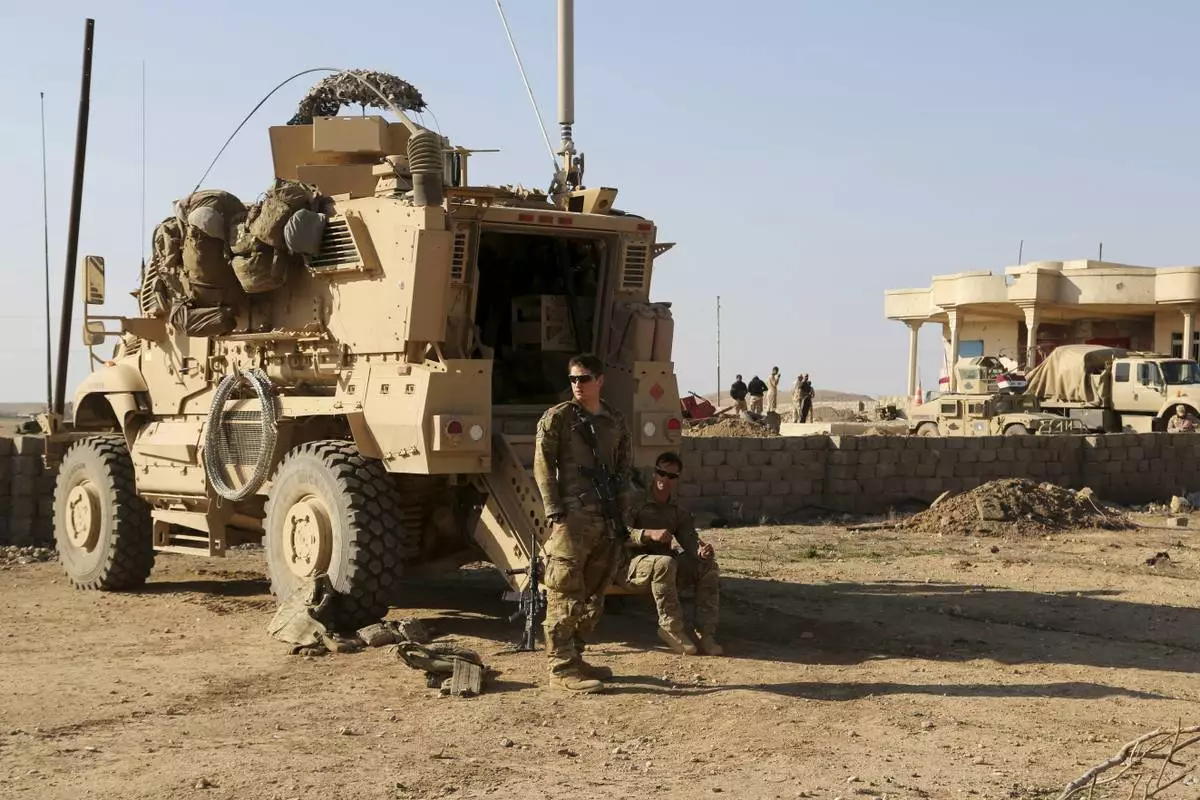
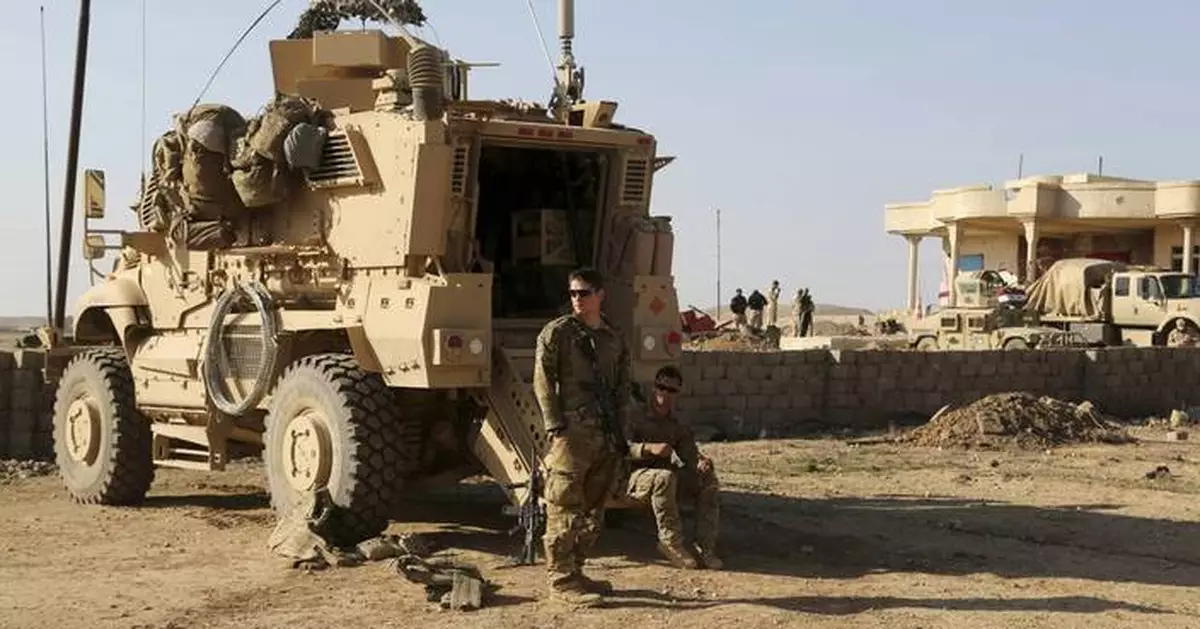
FILE - U.S. Army soldiers stand outside their armored vehicle on a joint base with the Iraqi army, south of Mosul, Iraq, Feb. 23, 2017. (AP Photo/ Khalid Mohammed, File)
SEOUL, South Korea (AP) — An independent counsel on Tuesday demanded a death sentence for former South Korean President Yoon Suk Yeol on rebellion charges in connection with his short-lived imposition of martial law in December 2024.
Removed from office last April, Yoon faces eight trials over various criminal charges related to his martial law debacle and other scandals related to his time in office. Charges that he directed a rebellion are the most significant ones.
Independent counsel Cho Eun-suk’s team requested the Seoul Central District Court to sentence Yoon to death, according to the court.
The Seoul court is expected to deliver a verdict on Yoon in February. Experts say the court likely will sentence him to life in prison. South Korea hasn't executed anyone since 1997.
Yoon was scheduled to make remarks at Tuesday's hearing. He has maintained that his decree was a desperate yet peaceful attempt to raise public awareness about what he considered the danger of the liberal opposition Democratic Party, which used its legislative majority to obstruct his agenda. He called the opposition-controlled parliament “a den of criminals” and “anti-state forces.”
Yoon’s decree, the first of its kind in more than 40 years in South Korea, brought armed troops into Seoul streets to encircle the assembly and enter election offices. That evoked traumatic memories of dictatorships in the 1970s and 1980s, when military-backed rulers used martial law and other emergency decrees to station soldiers and armored vehicles in public places to suppress pro-democracy protests.
On the night of Yoon's martial law declaration, thousands of people rushed to the National Assembly to object to the decree and demand his resignation in dramatic scenes. Enough lawmakers, including even those in Yoon’s ruling party, managed to enter an assembly hall to vote down the decree.
Observers described Yoon’s action as political suicide. Parliament impeached him and sent the case to the Constitutional Court, which ruled to dismiss him as president.
It was a spectacular downfall for Yoon, a former star prosecutor who won South Korea’s presidency in 2022, a year after entering politics.
Lee Jae Myung, a former Democratic Party leader who led Yoon's impeachment bid, became president by winning a snap election last June. After taking office, Lee appointed three independent counsels to delve into allegations involving Yoon, his wife and associates.
There had been speculation that Yoon resorted to martial law to protect his wife, Kim Keon Hee, from potential corruption investigations. But in wrapping up a six-month investigation last month, independent counsel Cho’s team concluded that Yoon plotted for over a year to impose martial law to eliminate his political rivals and monopolize power.
Yoon’s decree and ensuing power vacuum plunged South Korea into political turmoil, halted the country’s high-level diplomacy and rattled its financial markets.
Yoon’s earlier vows to fight attempts to impeach and arrest him deepened the country’s political divide. In January last year, he became the country’s first sitting president to be detained.
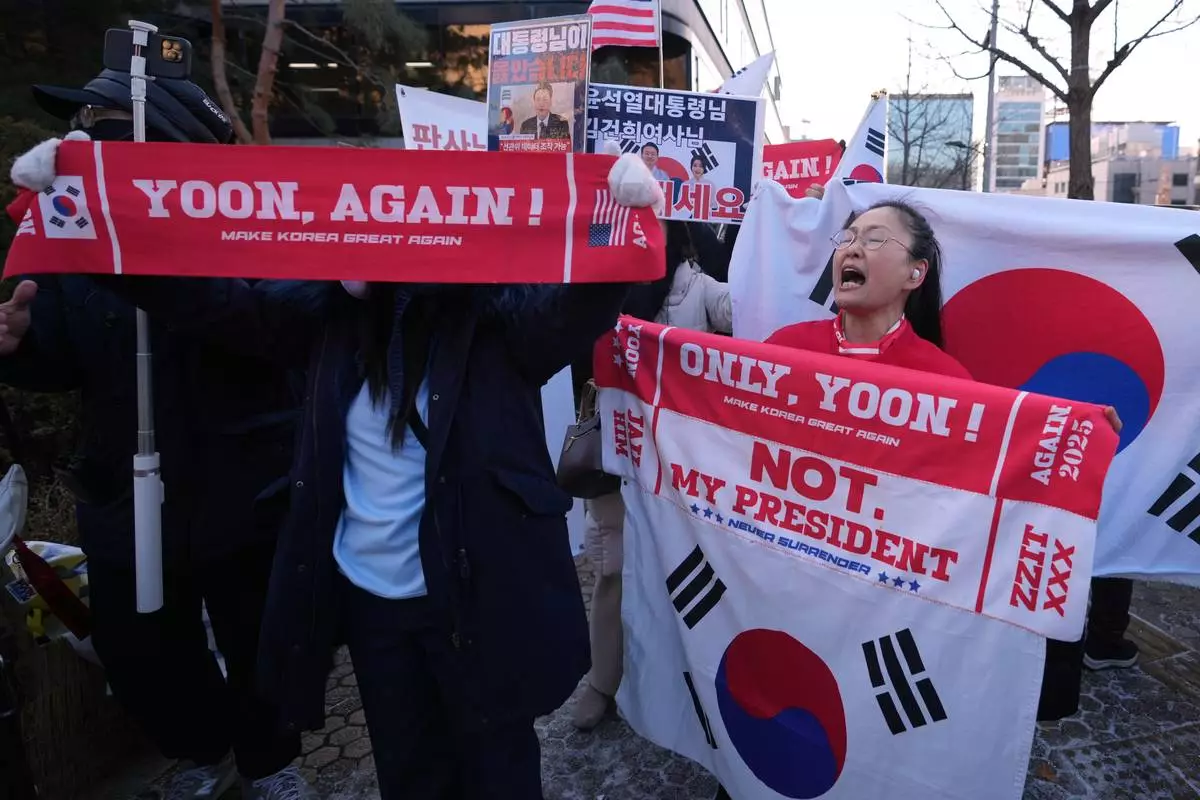
Supporters of former South Korean President Yoon Suk Yeol hold signs outside of Seoul Central District Court, in Seoul, South Korea, Tuesday, Jan. 13, 2026. (AP Photo/Lee Jin-man)
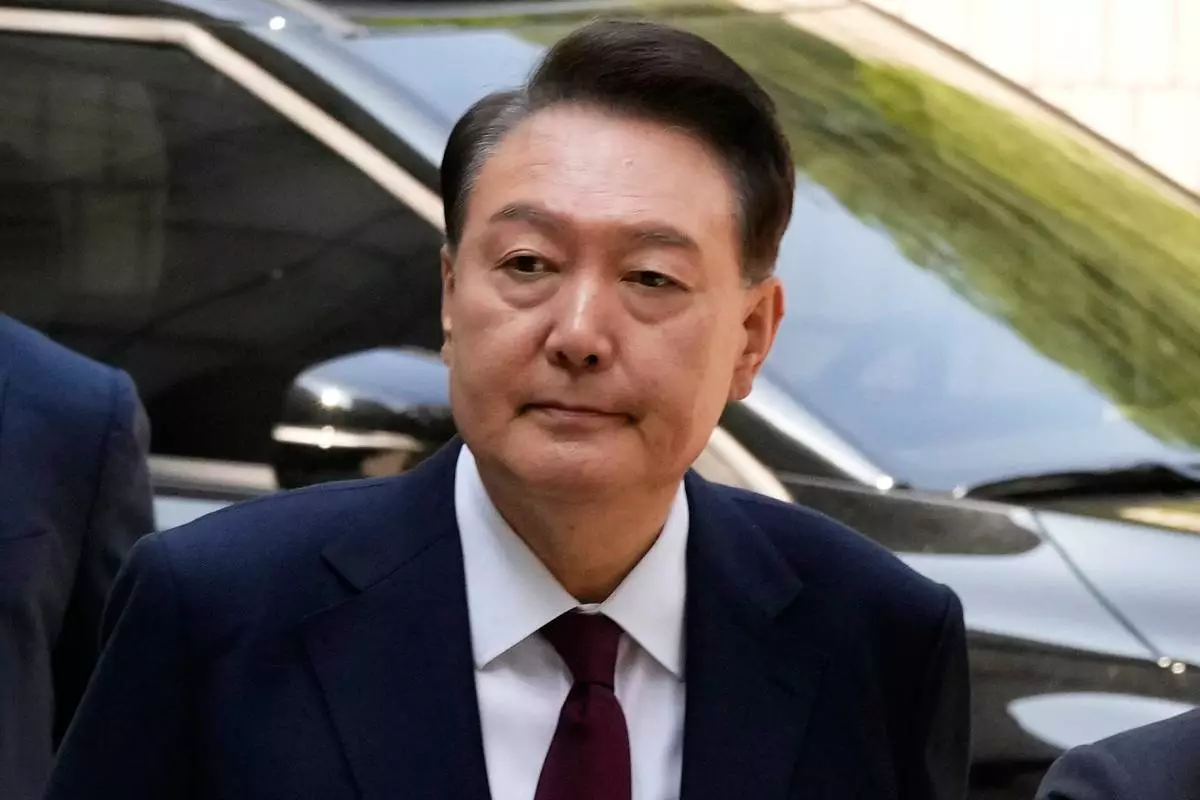
FILE - Then South Korea's ousted former President Yoon Suk Yeol who is facing charges of orchestrating a rebellion when he declared martial law on Dec. 3, arrives to attend his trial at the Seoul Central District Court in Seoul, South Korea, Monday, May 12, 2025. (AP Photo/Ahn Young-joon, Pool, File)