China's first energy law came into effect on Wednesday, strengthening the legal basis for the energy sector, playing a role in ensuring national energy security, and promoting green and low-carbon transformation for the world's largest energy producer and consumer.
The Energy Law provides that China will continue to advance clean and low-carbon energy sector development by prioritizing the development and utilization of renewable energy, promoting clean and efficient utilization of fossil fuels, and improving the energy utilization efficiency.
The overarching national statute formally integrates hydrogen, previously classified as hazardous chemicals, into the energy management system.
"The Energy Law is the first Chinese national law to provide for hydrogen as a type of energy, clarifying its energy attribute and opening up chances to promote the development of the hydrogen energy business. The law also defines the legal significance of the Green Electricity Certificates and supports increased green electricity use throughout society," said Wan Jinsong, deputy head of the National Energy Administration.
The Green Electricity Certificates or GECs were piloted in 2017 to build a renewable electricity market-based mechanism in China.
GECs are the sole way to validate renewable energy production and consumption.
According to official figures, China had issued 3.55 billion GECs by October, 2024.
Wan said the Energy Law will promote the transformation of energy security.
"The Energy Law sets the order of importance for developing and using fossil fuels and renewable energy. It makes it clear that priority should be given to the development and utilization of renewable energy, and the ability to switch to non-fossil energy in a safe, reliable and orderly way should be improved," Wan said.
Experts said as the core and regulating law in the energy industry, the Energy Law has constructed the institutional system for green and low-carbon energy development.
"The enactment of the Energy Law signifies that China has a basically sound system for regulating energy. It already includes the Electricity Law, the Coal Law, the Renewable Energy Law, and the Energy Conservation Law, among other laws, rules, and administrative regulations," said Wang Peng, president of the National Institute of Energy Development Strategy, North China Electric Power University.
According to the experts, the Energy Law is more comprehensive than those separate laws, spelling out how different types of energy should be used and giving basic rules for making sure that the growth of all types of energy is coordinated.

China's first energy law takes effect, highlighting green, low-carbon development
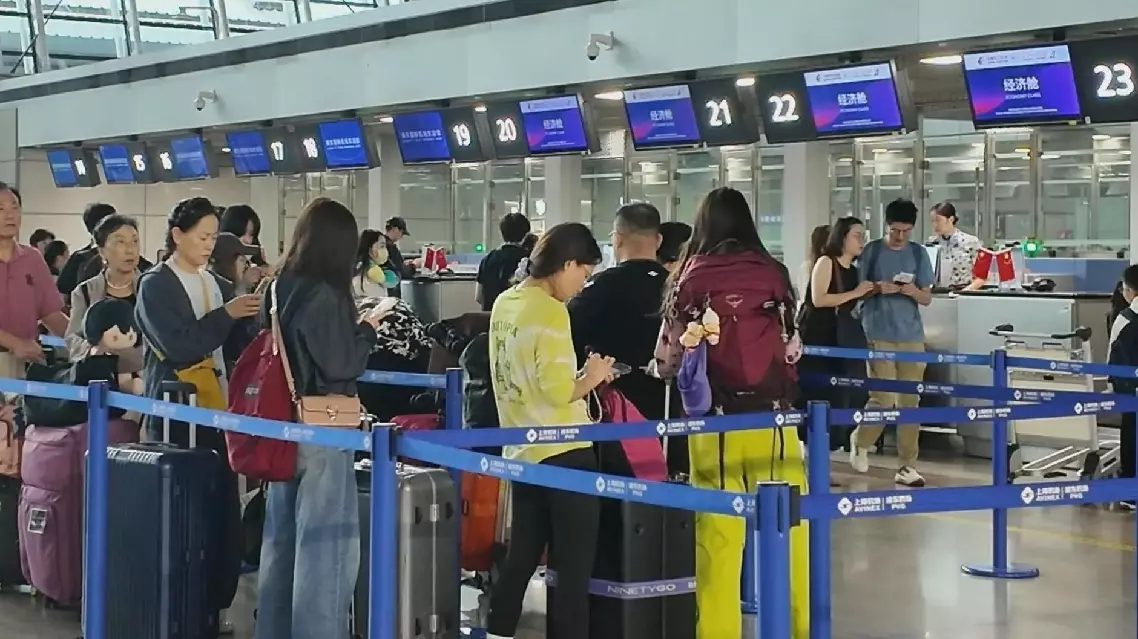
China recorded more than 15.46 million cross-border trips during the week-long National Day holiday, as international travel has continued to rebound and visa-free policies have helped drive inbound tourism, official data released on Thursday showed.
According to the National Immigration Administration, border inspection authorities across the country handled a total of 15.462 million inbound and outbound passenger crossings by Chinese and foreign travelers during the holiday, averaging 2.209 million trips per day. The figure was 6.7 percent higher than that in the same period of last year.
Foreign nationals made 682,000 inbound trips during the holiday, up 5.4 percent year on year. Of these, 505,000 entered under visa-free policies, an increase of 9.2 percent from a year earlier.
Major cities, including Shanghai, Guangzhou and Chengdu, witnessed busy cross-border passenger flows.
At the Mohan Railway Port in southwest China's Yunnan Province, nearly 7,000 travelers from 31 countries and regions crossed the border during the holiday. Visa-free foreign travelers accounted for more than 58 percent of inbound passengers there.
In Chengdu City, southwest China's Sichuan Province, international visitors explored attractions such as the Chengdu Research Base of Giant Panda Breeding and Du Fu Thatched Cottage, sampled local cuisine and experienced traditional cultural activities.
As of October 7, Sichuan border inspection authorities had processed more than 141,000 inbound and outbound passenger trips and 840 flights during the holiday, with passenger traffic up 7.8 percent year on year.
Other parts of the country also saw strong travel and consumption activities. In south China's Hainan Province, the offshore duty-free market recorded sales of 855 million yuan (about 127 million U.S. dollars) from October 1 to 7. Nearly 700,000 items were sold, while the number of shopping trips reached 123,000, up 10.41 percent year on year.
In Guangzhou City, south China's Guangdong Province, where the 140th Canton Fair is approaching, ports also recorded heavy passenger flows.
The Guangzhou General Station of Immigration Inspection said its ports handled about 405,000 inbound and outbound traveler trips during the holiday, the highest National Day holiday figure in nearly five years.
"Many businesspeople arrived in Guangzhou ahead of schedule to visit factories and hold business negotiations, bringing a peak in inbound passenger flows at Pazhou Port. We have fully implemented the 16 measures introduced by the Guangzhou General Station of Immigration Inspection to provide services and support for the 140th Canton Fair. We've opened special lanes for Canton Fair businesspeople to ensure that travelers and overseas businesspeople can pass through border controls safely, conveniently and efficiently," said Xiao Yan, an inspection officer at Zhoutouzui Border Inspection Station.
China records 15.46 million cross-border trips during National Day holiday