Gaza's fishermen, once reliant on the sea as their primary source of livelihood, now face a deadly struggle for survival amid ongoing conflict and relentless restrictions.
Wearing little more than basic gear, Abdul Kanan, a local fisherman lives on fishing with his modest wooden boat. Amid current tension in the harsh winter, he knows the risks he faces but has no choice.
"Fishing is our only profession, something we've inherited from our ancestors. We risk our lives just to make ends meet," he said.
Kanan's boat, a traditional wooden vessel known as a "hasaka," is small and fragile, capable of venturing only a few hundred meters from shore. With the engines on most fishing boats destroyed in previous conflicts, these simple crafts have become the sole option for many fishermen. Winter's rough seas and strong winds even pose constant threats of capsizing.
Even more dangerous, however, are the ever-present Israeli naval patrols. Before the latest escalation in the Israeli-Palestinian conflict, fishermen in Gaza were limited to a narrow fishing zone capped at 20 nautical miles from shore. Now, the entire area is under an Israeli blockade, confining fishermen to shallow waters just a few hundred meters from the coast.
"In recent Israeli aggression towards Gaza, many fishermen have been arrested. We've lost so many young fishermen who were the backbone of their families. One time, while we were pulling in our nets, an Israeli gunboat suddenly appeared near us and opened fire at us. If it weren't for Allah's blessing, we might have died. We quickly drove our small boat to escape. Our boat was hit then. Water rushed in and the boat began to sink when we were trying to reach the seashore. We had to swim back. After the Israeli gunboat left, we towed the boat back," said the fisherman.
Hours at sea could only bring Kanan just a handful of small fish. Yet this is all his family of over a dozen people has to survive on.
According to Gaza's agriculture department, the ongoing conflict has led to a loss of approximately 4,600 tons of fish production in the past year alone, resulting in economic losses exceeding 20 million U.S. dollars.
The devastation has also sent fish prices skyrocketing. Once a staple for Gaza's residents, fish has become a luxury few can afford. The price of common fish varieties has climbed to 100 shekels per kilogram (27 U.S. dollars), while premium fish can cost as much as 200 shekels per kilogram (55 U.S. dollars).
For the majority of Gaza's population, already struggling with poverty, fish is now out of reach. Even fishermen like Abdul find themselves unable to afford the very product they risk their lives to catch.
"Before the conflict, fish prices were somewhat reasonable. But now, the attacks have led to reduced supply, thus prices have become outrageous. Most people can't afford fish anymore, not even us fishermen. Fish is as expensive as gold now," Kanan said.
The challenges go beyond rising fish prices. The cost of fishing equipment, particularly nets, has soared due to the blockade and lack of supplies. A fishing net is now ten times more expensive than it used to be.
"In the past, a small fishing net cost 200 shekels, and fishermen complained that it was too expensive. But due to the war, the price is 2,000 shekels now," said Kanan.
According to data, Gaza once had around 5,000 active fishermen. However, years of conflict, displacement, and economic hardship have forced the majority out of the trade.
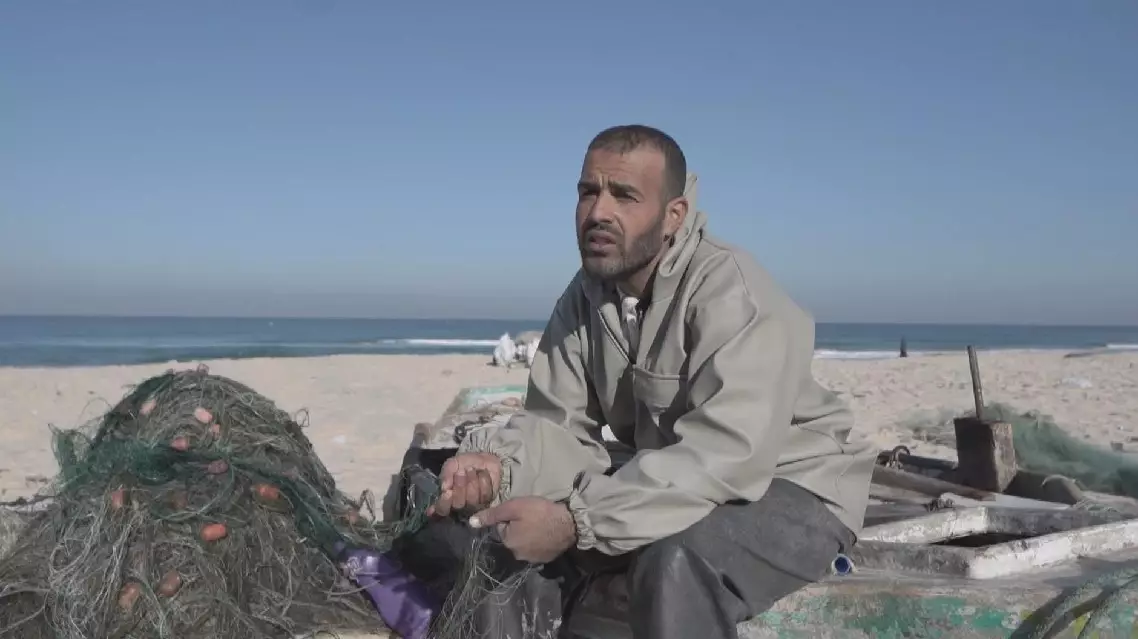
Fishermen in Gaza risk their lives in shrinking sea area