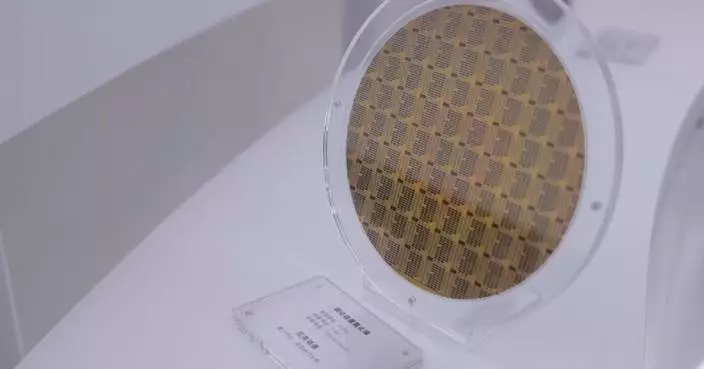
Yunnan Province, known as "Flower Kingdom" in southwest China, has made breakthroughs in its flower seed industry with self-grown varieties and smart agriculture.
The provincial capital Kunming claims favorable conditions for flower cultivation. Geographically positioned in low latitude and high altitude, plus sufficient sunshine even in winder, various new flower strains thrive in breeding greenhouses.
At the Flower Research Institute of the Yunnan Academy of Agricultural Sciences, researchers have developed a novel variety with rich fragrance.
"It has not been registered as a new variety as yet, but it's of very, very good phenotypic trait. Both its parents have strong fragrance, so is this variety. Many rose varieties in the market are actually not fragrant at all. So, we should pioneer a new track that is different from foreign breeding," said Cai Yanfei, a researcher at the institute.
China's homegrown flower varieties account less than a quarter of the market, which means merchants and consumers have to pay patent fees ranging from 3 to 12 percent of the price of flowers sold at market. And this is a bottleneck the institute has try to break.
Lisianthus or eustoma is one of the most popular flower varieties in the Chinese market, and its seeds used to be completely imported, at the cost of 6,400 yuan (about 877 U.S. dollars) per gram. Now, the institute has make breakthroughs in key breeding technologies to end this reliance.
"We adopted the efficient somatic embryogenesis approach to develop somatic embryos of lisianthus, from which we obtained lisianthus seedlings in large quantities. Thus the seedlings from our scaled production broke the monopoly of foreign seed industry on lisianthus seeds. We don't have to buy those expensive seeds any more," said Li Fan, another researcher at the institute.
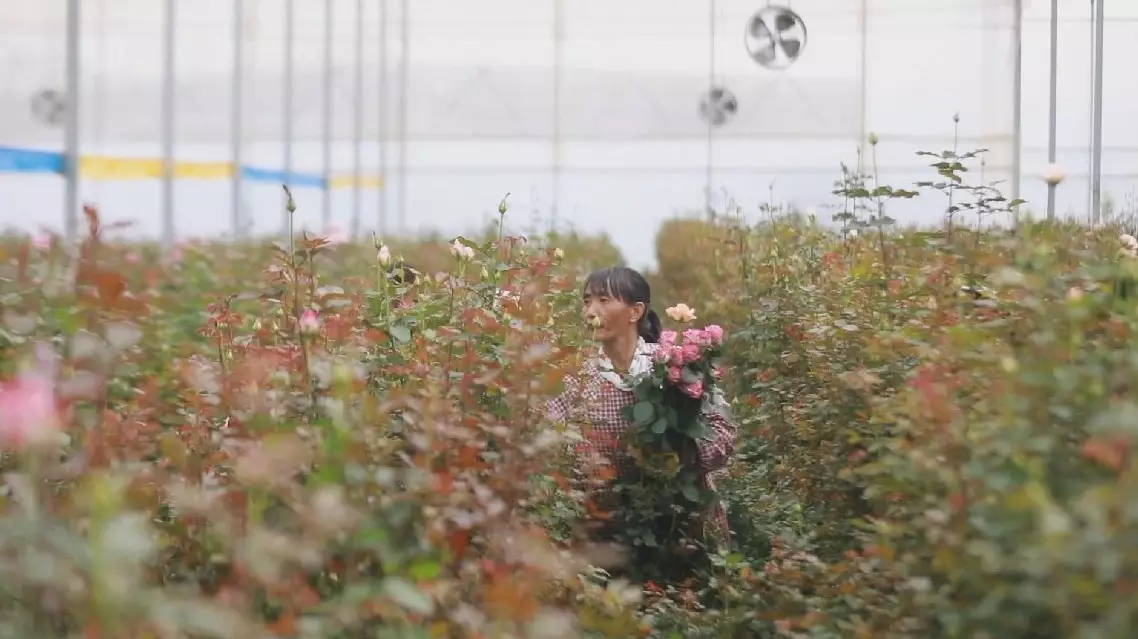
High-tech applications have also been introduced to the planting process, like smart greenhouses which automatically controls fans, skylights, and sunshades according to the light, temperature, and moisture required by the plants. The combination of standardized management, integrated water and fertilizer systems, and soilless cultivation modes has greatly shortened the planting cycle and increased yields, attracting more and more flower growers.
"Our intelligent greenhouses like this can harvest six or seven times a year, at a yield of 2.4 million to 2.7 million flower plants per hectare," said Sun Xiaoming, associate professor of the China Agricultural University.
There is also a standardized and intelligent processing and sorting system, where plants will be accurately classified by length and size before packaging. The flowers will then be placed in cold storage and transported to consumers through a full cold-chain logistics system.
The high-tech support has ensured higher quality and longer blooming period for these fresh cut flowers.
High-tech boosts Yunnan flower industry