Hohhot, capital of the Inner Mongolia Autonomous Region in north China, has been building itself into a child-friendly city since the Friendly Cities Initiative was written into the country's Outline of the 14th Five-Year Plan in 2021.
In Hohhot's Saihan District Experimental Kindergarten, all facilities are built based on a “one-meter-high viewing angle,” which is the angle of kids.
In addition, the school introduced innovative teaching modules that will be decided by students and teachers together, and have been inviting children to help distribute meal with carts and spoons that fit their size, and design their own safety signs, slogans, and mascots.
Outside the school, Hohhot also provides varied sites and venues for children to learn and play.
At the Laoniu children's discovery museum, children are welcomed to explore society and the world, while parents are also invited to learn how to guide and communicate with their kids.
"We are offering two leaflets, one for children and one for parents. We encourage parents to participate more to guide kids on how to play and experience. So, the discovery museum is not only to accompany kids to grow, but also expecting parents to learn," said Wang Kun, a teacher at the discovery museum.
These are all parts of the city's efforts to build a child-friendly city, and to better understand children's world and listen to their voices.
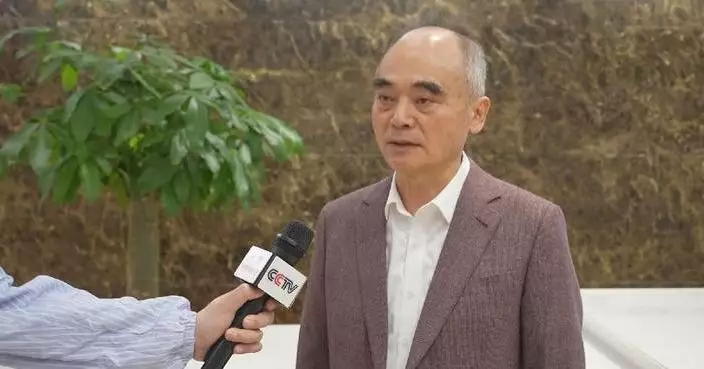
"We have established a mechanism that involves over 30 departments, aiming to make the city's decision-makers practice the child-friendly concept, and incorporate the concept into the daily work of all departments and all aspects of society. By upgrading medical and health care, education, children's rights protection services, and more, the government has been ensuring kids grow up in good health, confidence, and happiness," said Ider, director of the Hohhot Development and Reform Commission.
And this is only a part of the nation-wide endeavor to offer inclusive childcare service. And currently, China has over 100,000 childcare agencies, being able to enroll around 4.8 million children.
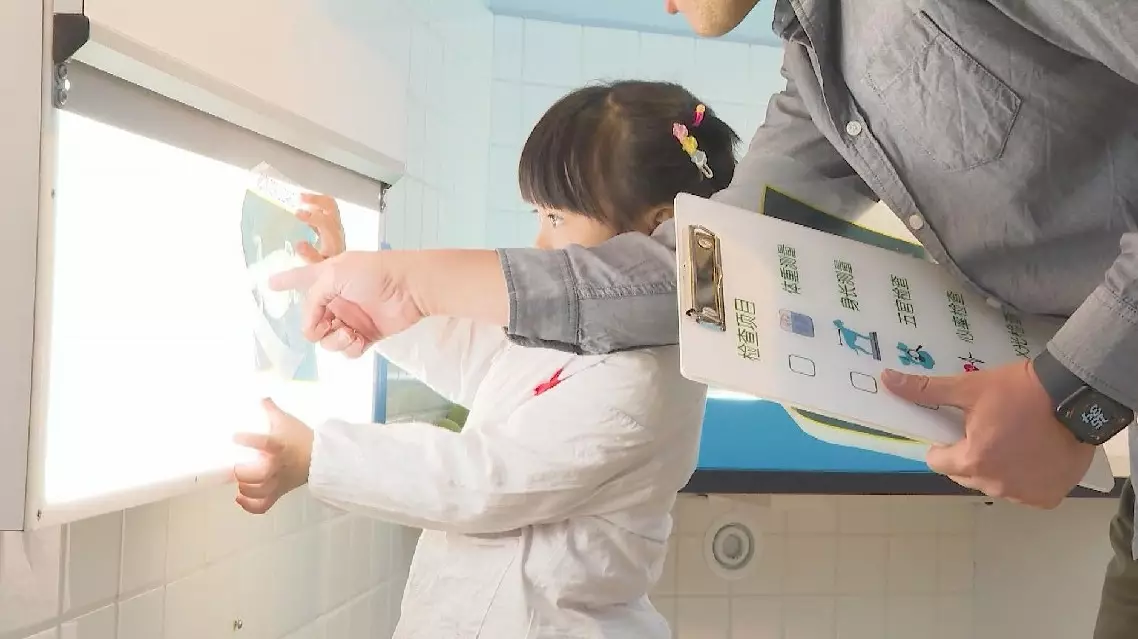
Hohhot builds child-friendly city with innovative learning spaces
Lebanon's Health Ministry said Saturday that Israeli strikes during the latest round of fighting have killed 2,020 people and wounded 6,436 others since hostilities escalated.
The ministry said the toll reflects cumulative casualties recorded across multiple regions amid continued Israeli airstrikes and cross-border exchanges of fire.
On Saturday, the Israel Defense Forces (IDF) said that Israeli forces engaged in close-range firefights with Hezbollah militants, striking multiple targets and killing several militants while seizing various weapons. In the past 24 hours, the IDF targeted over 200 Hezbollah sites within Lebanon and continued to target Hezbollah rocket launchers to prevent attacks against Israel.
Additionally, the IDF's Home Front Command has tightened public safety guidelines, suspending or limiting educational activities in border communities, Upper Galilee, and Haifa Bay, while also restricting the size of gatherings in those areas.
Hezbollah, in its statement, claimed that its operations in southern Lebanon continued, attacking Israeli tanks and personnel. The group also targeted Israeli military infrastructure, soldiers, and vehicles in northern Israel.
The escalation followed renewed hostilities involving Hezbollah, which said it launched rockets from southern Lebanon toward Israel on March 2 for the first time since a ceasefire on Nov. 27, 2024. The exchange prompted Israel to expand its military campaign across Lebanon.
Lebanon has since been hit by sustained strikes in several areas, with fighting spreading beyond border regions into other parts of the country.
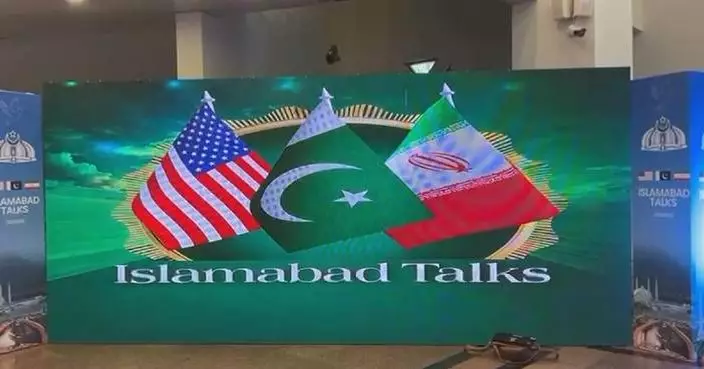
Iran and the United States agreed to a ceasefire on Wednesday. Israel said it would abide by the truce but argued the agreement does not apply to Lebanon. That assertion was rejected by Iran and by mediator Pakistan.
Israeli Prime Minister Benjamin Netanyahu said Saturday that the disarmament of Hezbollah is a prerequisite for any ceasefire agreement with Lebanon.
In a video statement, he said Lebanon had approached Israel several times over the past month seeking to begin direct talks following Israeli military actions.
"I approved this, subject to two conditions: we want to achieve the disarmament of Hezbollah, and we want a real peace agreement that will last for generations," Netanyahu said.
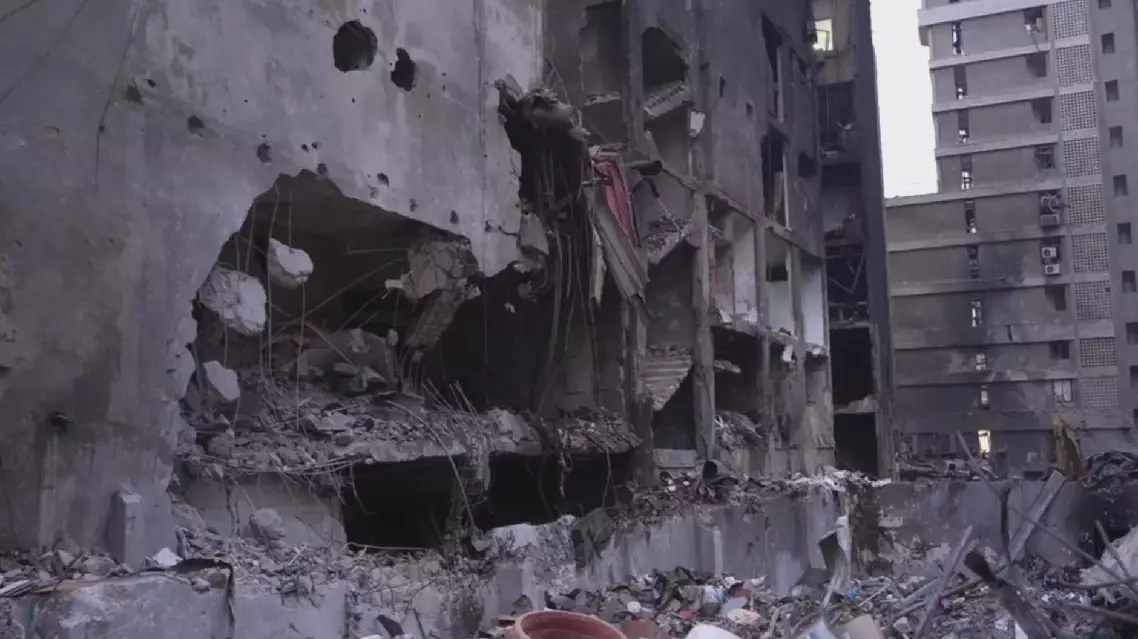
Death toll from Israeli attacks in Lebanon reaches 2,020