BLACKSBURG, Va. & MOUNTAIN VIEW, Calif.--(BUSINESS WIRE)--Jan 2, 2025--
Aeva ® (NYSE: AEVA), a leader in next-generation sensing and perception systems, and Torc, an independent subsidiary of Daimler Truck and a pioneer in commercializing self-driving vehicle technology, today announced an expansion of their collaboration to advance the development of a new safety architecture for truck applications – enabling autonomous trucks to make safer, more intelligent decisions.
This press release features multimedia. View the full release here: https://www.businesswire.com/news/home/20250102222120/en/
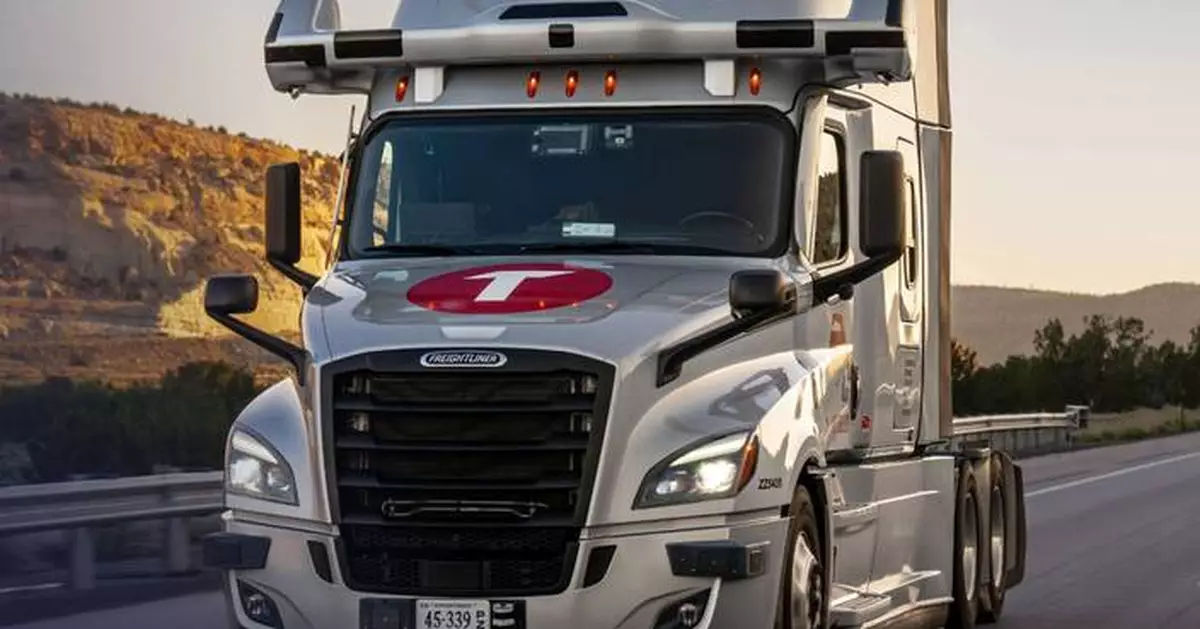
Under the expanded collaboration, Torc and Aeva will work together on technology advancements in service of L4 autonomous trucking to benefit the development of Torc’s Virtual Driver vehicle software. The companies will share 4D LiDAR sensing data and share a Freightliner Cascadia vehicle platform for use in long-range sensing applications. The data captured will support deeper collaboration between global engineering teams at both companies.
“Aeva is pioneering the next generation of 4D LiDAR technology and we’re excited to enter a new phase of our collaboration to continue to position us as industry leaders in autonomous driving technology for production deployment at scale,” commented Peter Vaughan Schmidt, Torc CEO.
The collaboration builds on the production agreement signed last year when Daimler Truck selected Aeva as its supplier of long and ultra-long range LiDAR for its series production autonomous commercial vehicle program. The multi-year production agreement is targeting commercializing Daimler Truck autonomous trucks by 2027.
“Torc Robotics is a leader in commercializing autonomous truck technology and this expansion of our collaboration is a testament to the capabilities of our talented team and the strength of our production partnership with Torc and Daimler Truck,” said Soroush Salehian, Co-Founder and CEO at Aeva. “Now our global teams will work even closer together with joint sharing of sensing data from Aeva sensors on North America’s top trucking platform. We look forward to advancing our multi-year production collaboration to commercialize safe autonomous trucks on the road.”
About Torc Robotics
Torc Robotics, headquartered in Blacksburg, Virginia, is an independent subsidiary of Daimler Truck AG, a global leader and pioneer in trucking. Founded in 2005 at the birth of the self-driving vehicle revolution, Torc has nearly 20 years of experience in pioneering safety-critical, self-driving applications. Torc offers a complete self-driving vehicle software and integration solution and is currently focusing on commercializing autonomous trucks for long-haul applications in the U.S. In addition to its Blacksburg headquarters and engineering offices in Austin, Texas, and Montreal, Canada, Torc has a fleet operations facility in the Dallas-Fort Worth area in Texas, to support the company’s productization and commercialization efforts, as well as a presence in Ann Arbor, MI, to take advantage of the autonomous and automotive talent base in that region. Torc’s purpose is driving the future of freight with autonomous technology. As the world’s leading autonomous trucking solution, we empower exceptional employees, deliver a focused, hub-to-hub autonomous truck product, and provide our customers with the safest, most reliable, and cost-efficient solution to the market.
About Aeva Technologies, Inc. (NYSE: AEVA)
Aeva’s mission is to bring the next wave of perception to a broad range of applications from automated driving to industrial robotics, consumer electronics, consumer health, security and beyond. Aeva is transforming autonomy with its groundbreaking sensing and perception technology that integrates all key LiDAR components onto a silicon photonics chip in a compact module. Aeva 4D LiDAR sensors uniquely detect instant velocity in addition to 3D position, allowing autonomous devices like vehicles and robots to make more intelligent and safe decisions. For more information, visit www.aeva.com, or connect with us on X or LinkedIn.
Aeva, the Aeva logo, Aeva 4D LiDAR, Aeries, Aeva Ultra Resolution, 4D Perception, and 4D Localization are trademarks/registered trademarks of Aeva, Inc. All rights reserved. Third-party trademarks are the property of their respective owners.
Forward-looking statements
This press release contains certain forward-looking statements within the meaning of the federal securities laws. Forward-looking statements generally are identified by the words “believe,” “project,” “expect,” “anticipate,” “estimate,” “intend,” “strategy,” “future,” “opportunity,” “plan,” “may,” “should,” “will,” “would,” “will be,” “will continue,” “will likely result,” and similar expressions. These forward-looking statements include, but are not limited to expectations about our product features, performance and our relationship with Torc and Daimler Truck. Forward-looking statements are predictions, projections and other statements about future events that are based on current expectations and assumptions and, as a result, are subject to risks and uncertainties. Many factors could cause actual future events to differ materially from the forward-looking statements in this press release, including, but not limited to: (i) the fact that Aeva is an early stage company with a history of operating losses and may never achieve profitability, (ii) Aeva’s limited operating history, (iii) the ability to implement business plans, forecasts, and other expectations and to identify and realize additional opportunities, (iv) the ability for Aeva to have its products selected for inclusion in OEM products, (v) the fact that Aeva is operating in an emerging market and there can be no assurance that LiDAR sensors will achieve commercial success in sufficient volume in the automotive or other markets (vi) ability to commercialize and market acceptance of autonomous vehicles, (vii) whether the OEMs continue pursuing their autonomous vehicle programs, and (viii) other material risks and other important factors that could affect our financial results. Please refer to our filings with the SEC, including our most recent Form 10-Q and Form 10-K. These filings identify and address other important risks and uncertainties that could cause actual events and results to differ materially from those contained in the forward-looking statements. Forward-looking statements speak only as of the date they are made. Readers are cautioned not to put undue reliance on forward-looking statements, and Aeva assumes no obligation and does not intend to update or revise these forward-looking statements, whether as a result of new information, future events, or otherwise. Aeva does not give any assurance that it will achieve its expectations.
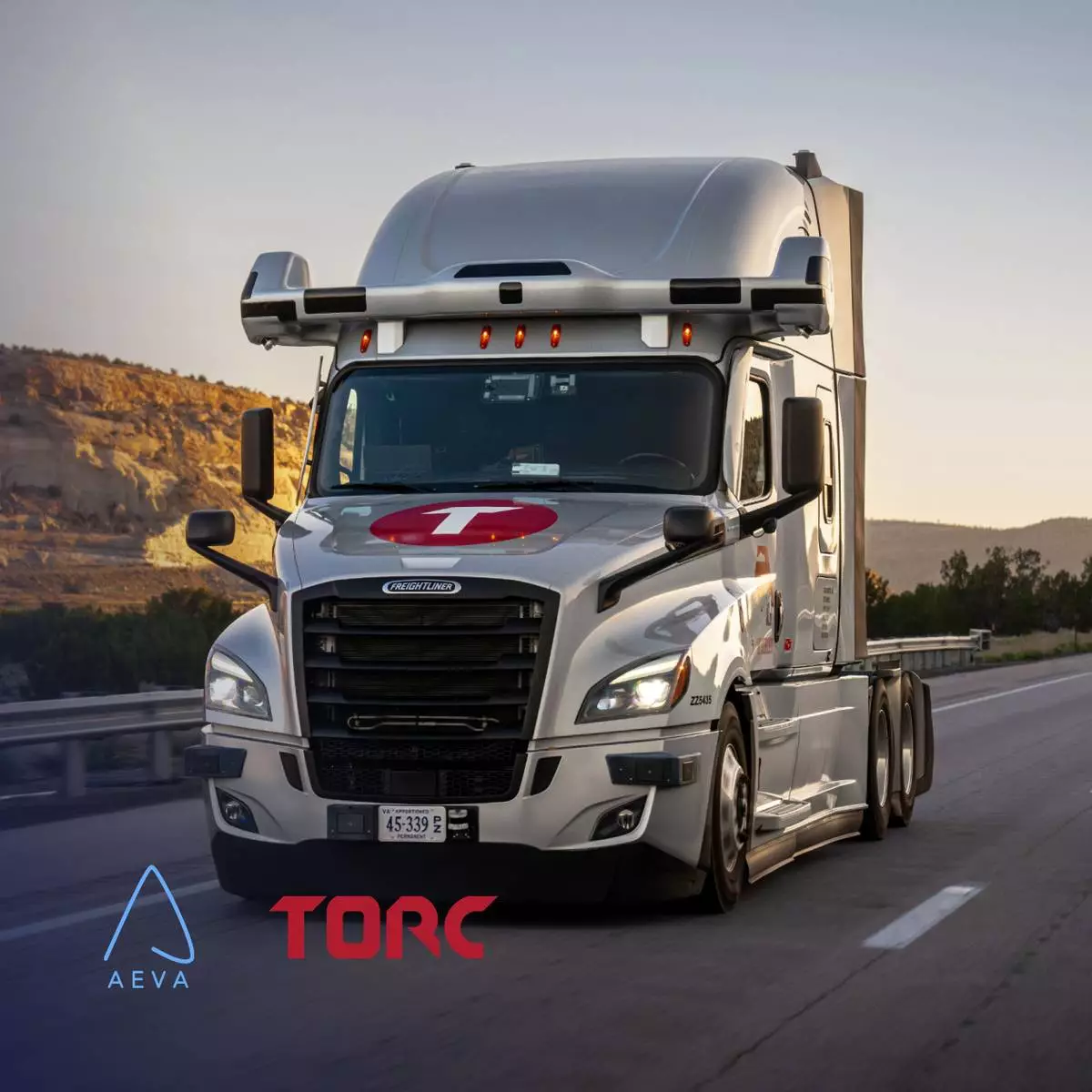
(Photo: Torc Robotics)