The Research Center on Building a Community with a Shared Future for Mankind was officially inaugurated in Beijing on Thursday, representing a major step forward in the journey towards developing sustainable solutions for global challenges.
Chinese Foreign Minister Wang Yi, also a member of the Political Bureau of the Communist Party of China (CPC) Central Committee, unveiled the center at the China Foreign Affairs University (CFAU), underscoring its profound significance for the modern era and its lasting impact on the world.
Speaking at the unveiling ceremony, Wang said that building a community with a shared future for mankind is a major original idea of Xi Jinping, general secretary of the CPC Central Committee, and the core concept of Xi Jinping Thought on Diplomacy.
It is China's answer to the question of "what kind of world to build and how to build it," and has considerable theoretical value, great significance for the times and far-reaching global influence, he said.
The vision of a community with a shared future for mankind demonstrates the founding mission of the CPC, carries forward the fine traditions of Chinese culture, demonstrates the power of scientific theories, and expounds on China's stance in the face of changes unseen in a century, he noted.
"Building a community with a shared future for mankind reflects our Party's inherent internationalist sentiments. It organically combines the fundamental interests of the Chinese people with those of people around the world and closely links China's future with that of the world," Wang said.
Wang also noted the progress made in turning this vision into reality.
"We are pleased to see that the concept of building a community with a shared future for mankind has evolved from an initiative into consensus, from a vision into practice, driving profound and positive changes in the world," he said.
China has made a five-point proposal for building a global community for a shared future, namely partnerships, security environment, development, inter-civilization exchanges, and ecosystem.
The initiative has already taken shape through concrete efforts such as the Belt and Road cooperation, said Gao Fei, vice president of the CFAU.
"We are advancing the building of a community with a shared future for mankind in a pragmatic way. For instance, the Belt and Road Initiative is an important practical platform for this vision. From many aspects, we can see that a community with a shared future for mankind is a conceptual guide for conducting major-country diplomacy with Chinese characteristics," Gao said.
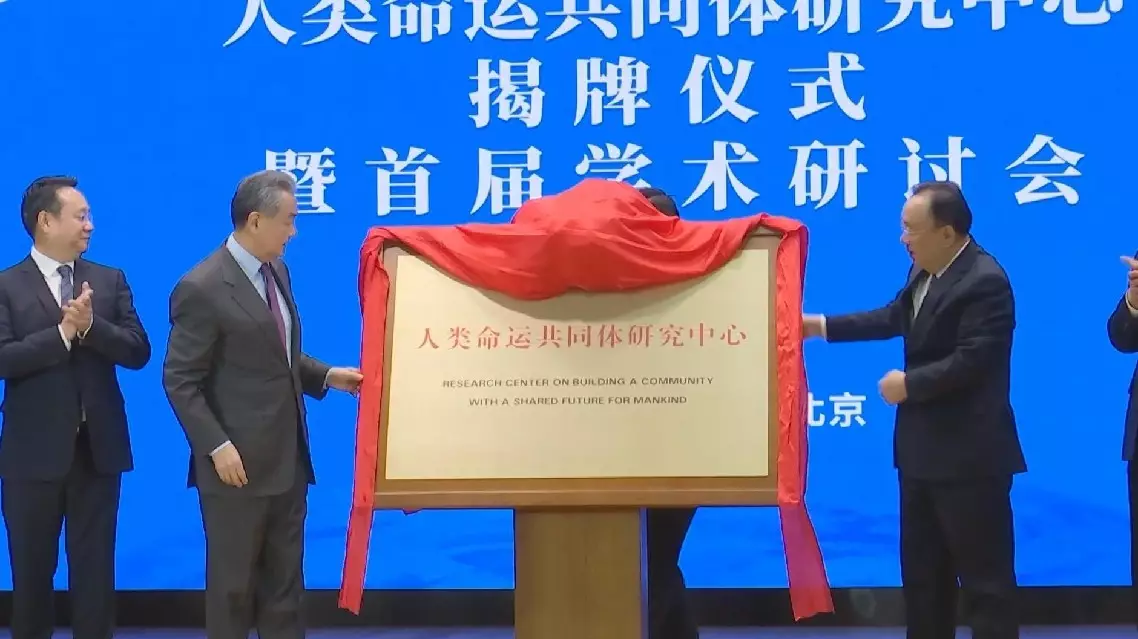
Research center on building community with shared future for mankind inaugurated in Beijing