High-speed maglev trains are expected to further boost inter-regional connectivity in China.
These trains can reach an astounding 600 kilometers per hour, with the acceleration process taking just over three minutes, said Fu Shanqiang, a senior maglev engineer with CRRC Qingdao Sifang Co., Ltd.
"We've been pursuing speed to enhance travel efficiency. In principle, wheel-on-rail trains, if they are to exceed 400 kilometers per hour, face constraints. The high-speed maglev takes another approach to bypass these constraints, allowing for faster speeds," said Fu.
"In fact, the focus now is on planning a route for actual high-speed testing. It is suitable for rapid commuting within city clusters like Beijing-Tianjin-Hebei, and it can reduce travel time between Beijing and Xiong'an to just 20 minutes. It effectively transforms city clusters into a single city. Another scenario is the fast connection between city clusters. For fast-developing, city-level economic circles, such as Beijing-Tianjin-Hebei, the Yangtze River Delta, the Greater Bay Area, and Chengdu-Chongqing, using high-speed maglev trains as links can be a powerful driving force and hugely convenient," said Fu.
Adding his perspective on China's high-speed maglev technology, Warwick Powell, an adjunct professor at Queensland University of Technology, said, "China is a big country territorially, but it's the population scale that changes that story. Because of scale, we are able to achieve cost economies. It's all about innovatively finding new ways to do things better, quicker, cheaper. Particularly as it moves into this informationalized phase, the manufacturing capacity of China is bringing to the world an ability to access the tools of digital economics in ways that have never been possible before."
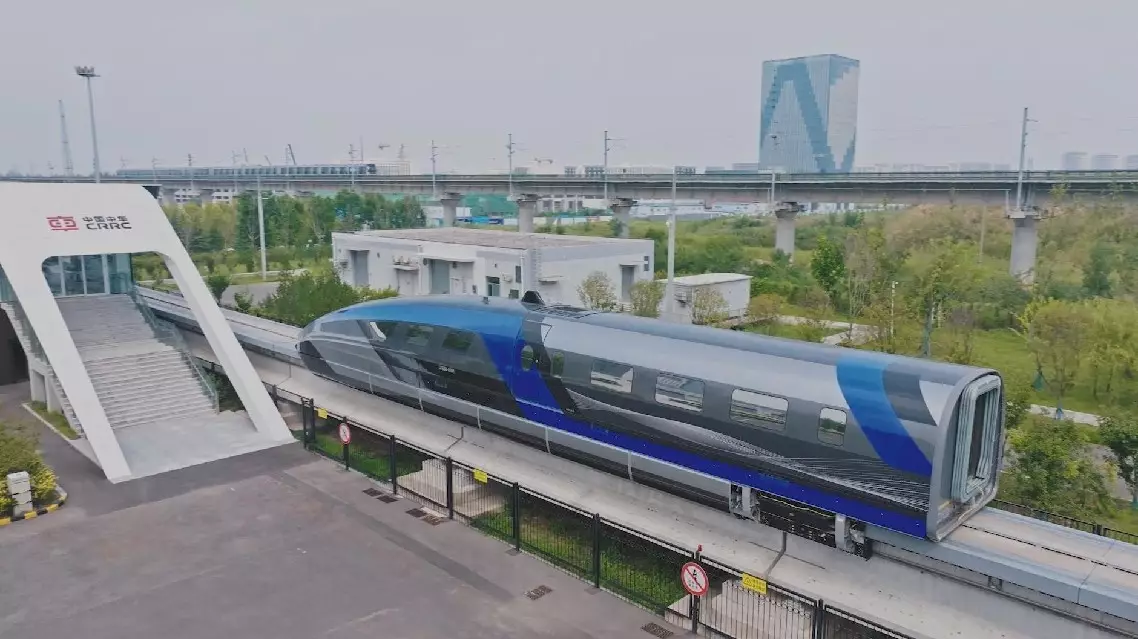
Maglev trains to boost inter-regional connectivity in China: engineer
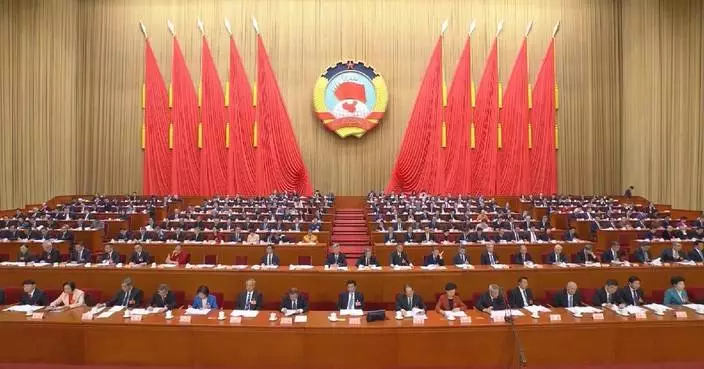
The National People's Congress (NPC) Financial and Economic Affairs Committee held a plenary meeting on Sunday to review the draft outline of the 15th Five-Year Plan (2026-2030) for national economic and social development, as well as the reports and drafts on budgets and economic and social development plans at the ongoing fourth session of the 14th NPC in Beijing.
The meeting passed three reports on the committee's review results and submitted them to the presidium of the fourth session of the 14th NPC.
The committee agreed that the goals and tasks outlined in the 14th Five-Year Plan (2021-2025) were successfully completed. The draft outline of the 15th Five-Year Plan submitted by the State Council is in line with the goals and requirements set forth in the Recommendations of the Central Committee of the Communist Party of China (CPC) for Formulating the 15th Five-Year Plan for National Economic and Social Development. Its major policy orientations align with the Party's basic theory, basic line and basic policy. Its main objectives, key tasks and major projects are in line with China's national conditions and stage of development, conform to the law of economic and social development, and are consistent with the country's medium- and long-term development strategic goals. Overall, it is feasible.
The committee suggested the fourth session of the 14th NPC approve the draft outline of the 15th Five-Year Plan.
The committee agreed that the implementation of the 2025 plan for national economic and social development was generally good. The 2026 plan proposed by the State Council is in line with the guiding principles from the 20th National Congress of the CPC and the plenary sessions of the 20th CPC Central Committee, conforms to the guidelines of Central Economic Work Conference and aligns with the goals of the outline of the 15th Five-Year Plan. Its main objectives, key tasks, and major projects are in accordance with the status quo of economic and social development in China. The 2026 plan is therefore feasible on the whole.
The committee suggested the fourth session of the 14th NPC approve the Report on the Implementation of the Plan for National Economic and Social Development in 2025 and the Draft Plan for National Economic and Social Development in 2026, and approve the draft plan for national economic and social development in 2026.
The committee also agreed that the execution of budgets for 2025 was good in general. The reports and drafts on central and local budgets for 2026, proposed by the State Council, conform to the guiding principles from the CPC’s 20th National Congress and the plenary sessions of the 20th CPC Central Committee, align with the guidelines of Central Economic Work Conference, and are compatible with the expected targets for annual economic and social development and the overall requirements for macro-control. Main revenue and expenditure policies are basically coordinated and matched. A careful analysis has been conducted on existing difficulties and challenges, and corresponding arrangements have been made to ensure the work is carried out effectively, which complies with the provisions of the Budget Law. Therefore, the draft budgets for 2026 are feasible.
The committee suggested the fourth session of the 14th NPC approve the Report on the Implementation of the Central and Local Budgets in 2025 and the Draft Central and Local Budgets in 2026, approve the draft central budget for 2026, and also approve the general debt ceiling and special debt ceiling for local governments for 2026.
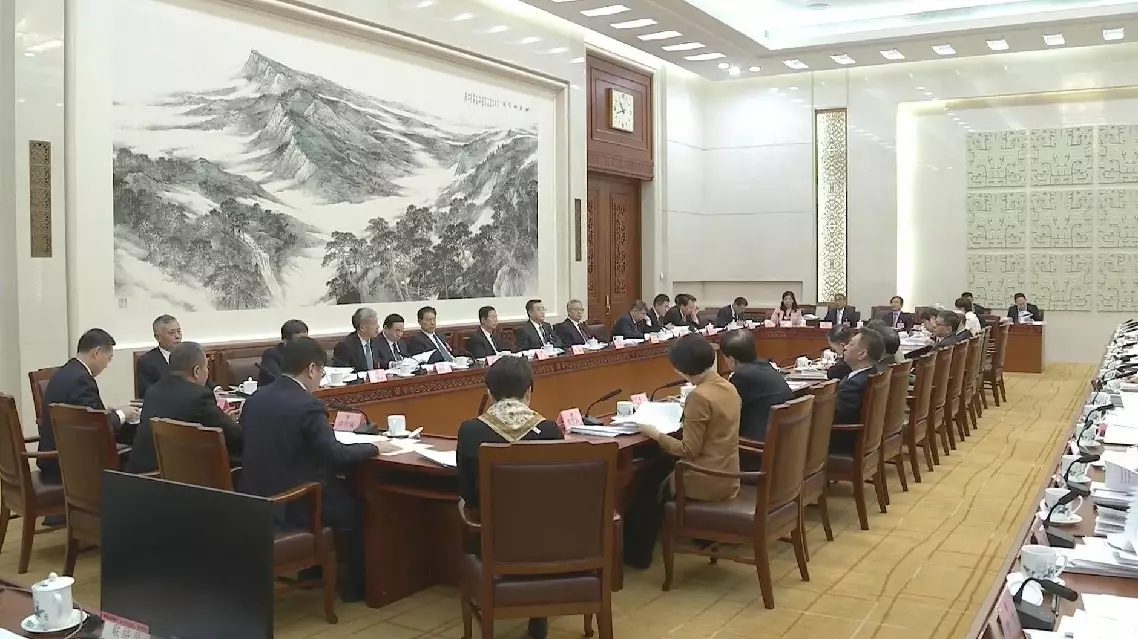
NPC committee reviews draft outline of 15th Five-Year Plan, reports, drafts on budgets, economic, social development plans