Skip to Content Facebook Feature Image

President of Republic of Congo meets Chinese FM to strengthen bilateral ties

China

China

China

President of Republic of Congo meets Chinese FM to strengthen bilateral ties

2025-01-09 00:35 Last Updated At:15:57

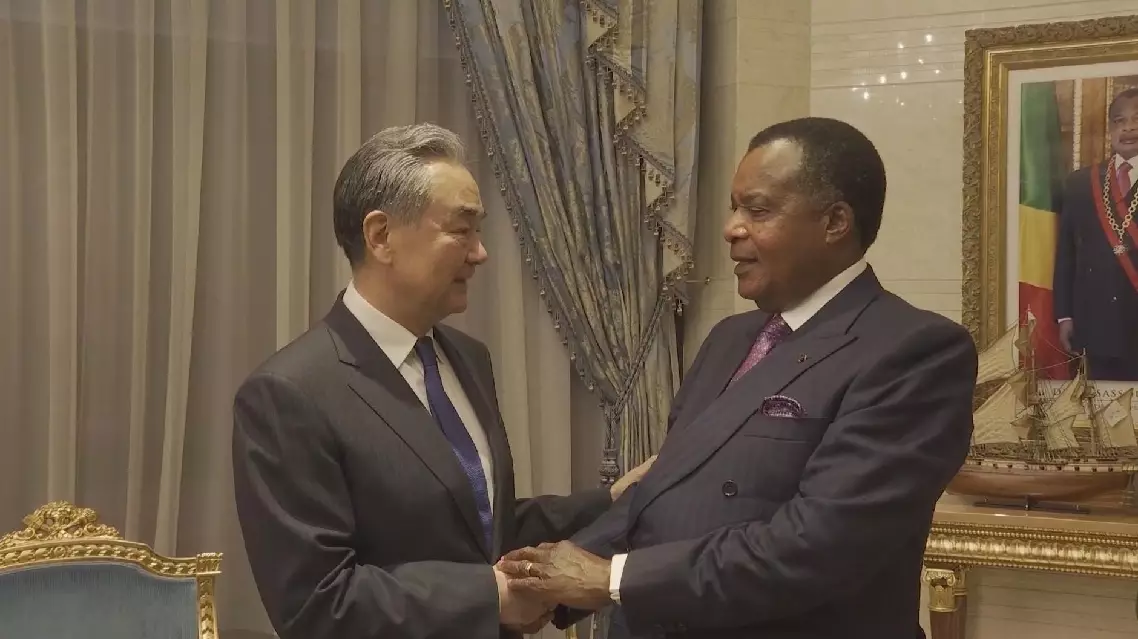
President of the Republic of the Congo Denis Sassou Nguesso met with Chinese Foreign Minister Wang Yi in Brazzaville on Tuesday, with both sides pledging to advance bilateral ties and China-Africa cooperation.

Sassou conveyed his New Year greetings and best wishes to Chinese President Xi Jinping through Wang, also a member of the Political Bureau of the Communist Party of China Central Committee.

Recalling that Xi chose Africa for his first overseas trip as Chinese president in 2013, during which he made a historic visit to the Republic of the Congo, Sassou said the visit remains vivid in his memory.

Noting that Africa is playing an increasingly important role in global affairs, Sassou expressed hope that China's emphasis on Africa will lead to greater attention on and more support for the continent on a global scale.

The Chinese president proposed 10 partnership action plans at the Summit of the Forum on China-Africa Cooperation (FOCAC) held in Beijing in 2024, which cover all areas of China-Africa cooperation, focus on tackling Africa's pressing challenges, and meet Africa's needs, Sassou said.

Infrastructure, power, agriculture and industrialization are critical issues the Republic of the Congo and other African countries need to solve in order to achieve development, he added.

Noting that this year marks the start of implementing the outcomes of the FOCAC Beijing Summit, Sassou said the Republic of the Congo, as the FOCAC's co-chair, will spare no effort in advancing the 10 partnership action plans and strive for greater progress in China-Africa cooperation.

For his part, Wang conveyed Xi's cordial greetings and New Year wishes to Sassou.

Noting that Sassou is a renowned African politician and one of the African leaders who have visited China the most and met with Xi the most, Wang said the deep friendship between the two leaders serves as a vital political guarantee for China-Congo and China-Africa relations.

The Chinese foreign minister's tradition of starting the year with a visit to Africa is a testament to China's unwavering solidarity with African nations, Wang said.

Calling the Republic of the Congo a staunch friend and important partner of China, Wang praised the country's vibrant development under Sassou's leadership. China will remain the country's most reliable friend and partner during its development and revitalization journey, he said.

The Republic of the Congo's role as the FOCAC's co-chair reflects Africa's confidence in the country, Wang said.

As the best platform for deepening China-Africa cooperation and achieving common development, the FOCAC has been leading global cooperation with Africa, Wang said, noting that China is willing to work closely with the Republic of the Congo to comprehensively implement the outcomes of the FOCAC Beijing Summit, support Africa's development and jointly pursue modernization.

These efforts will also enhance the Republic of the Congo's development and elevate its global standing, he added.

On the same day, Wang also held talks with Congolese Prime Minister Anatole Collinet Makosso.
President of Republic of Congo meets Chinese FM to strengthen bilateral ties
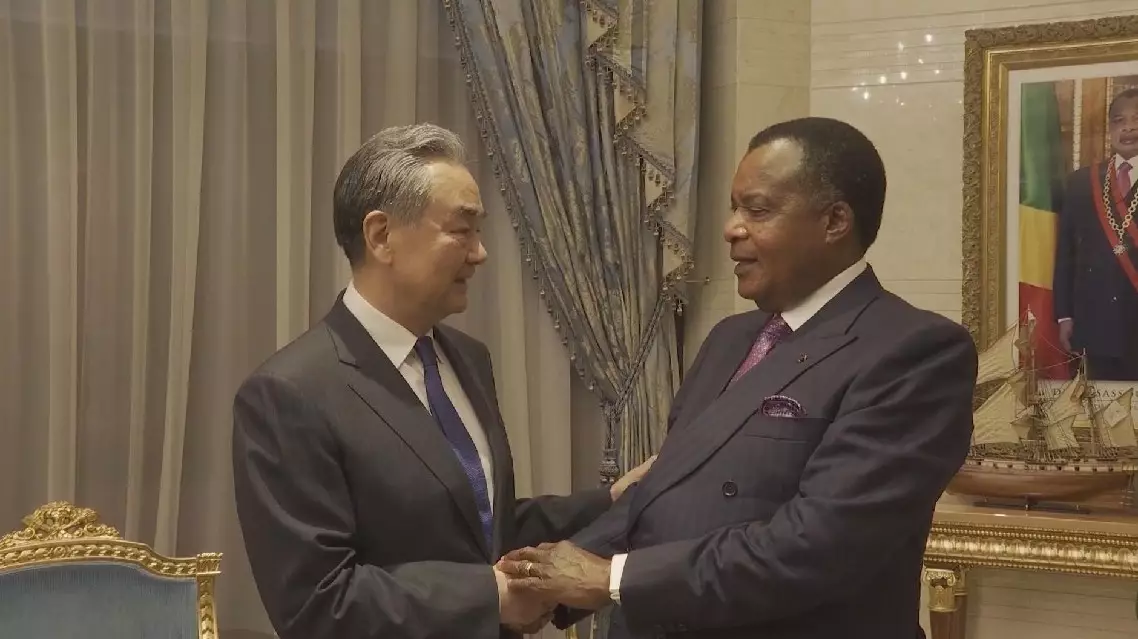
President of Republic of Congo meets Chinese FM to strengthen bilateral ties
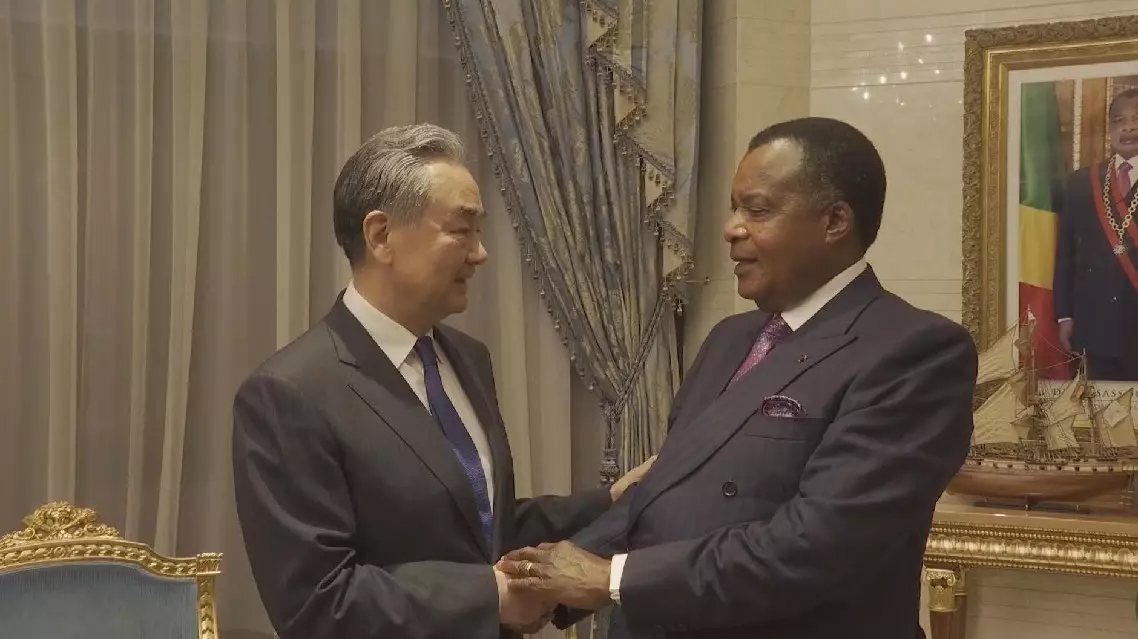
President of Republic of Congo meets Chinese FM to strengthen bilateral ties
President of Republic of Congo meets Chinese FM to strengthen bilateral ties
President of Republic of Congo meets Chinese FM to strengthen bilateral ties
President of Republic of Congo meets Chinese FM to strengthen bilateral ties
Hezbollah leader Naim Qassem on Monday rejected direct talks with Israel and vowed continued resistance, just a day before Lebanon and Israel are due to hold their first direct negotiations in decades in Washington with U.S. officials participating.

His declaration came as Israel continued strikes across Lebanon on Monday. The Israel Defense Forces (IDF) said in a statement on Monday evening that the Israeli air force struck about 150 Hezbollah targets in southern Lebanon in the past 24 hours and said it would continue striking Hezbollah targets.

Meanwhile, its 98th Division was expanding ground operations against Hezbollah in southern Lebanon, the IDF said.

Earlier in the day, the Israeli military said five rockets were fired from Lebanon into northern Israel, triggering air defense systems. State-funded radio network Israeli Army Radio reported that debris from an interception injured one person.

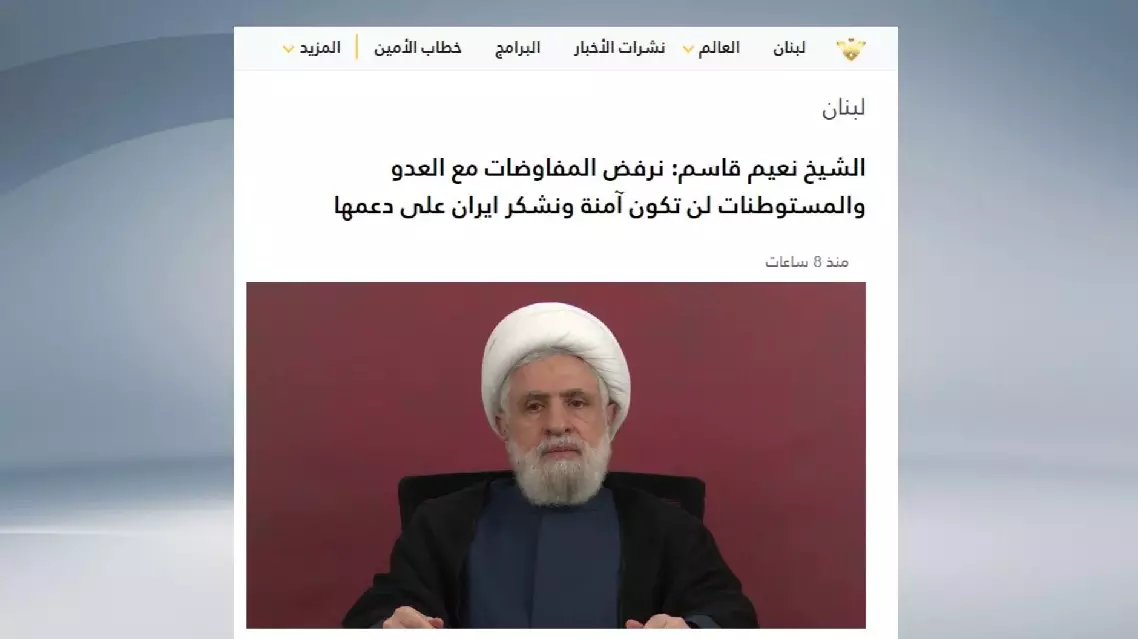
Ahead of talks schedule on Tuesday in Washington between Israel and Lebanon, Hezbollah leader Naim Qassem made a televised speech on al-Manar TV, saying that Hezbollah would not be disarmed and called on the Lebanese government to withdraw from the Washington talks.

Qassem said that Israel has been trying to weaken Lebanon to achieve its "Greater Israel" ambitions, and that U.S. efforts to bolster the Lebanese army to disarm Hezbollah and push the Lebanese army to fight its people were destined to fail.

He stated that the "U.S.-backed Israeli aggression" was against Lebanon as a whole, not just Hezbollah, and he urged the Lebanese government to its military and security forces to respond instead of exerting political pressure on the "resistance forces".

He asserted that national unity would be undermined by any forces within Lebanon that submit to the will of the United States.

Qassem also said that Hezbollah had shown patience over the past 15 months while Israel violated the ceasefire agreement, but that diplomatic efforts had proven futile.

He accused Israel of failing to uphold a November 2024 ceasefire agreement, alleging more than 10,000 violations. Hezbollah responded with a counter attack on March 2, aiming to force Israel to abide by the ceasefire and thwarting its "major aggressive plans," Qassem said.

He laid out five conditions to end the conflict: a complete halt to attacks by land, sea and air; immediate withdrawal from occupied Lebanese territory; the release of prisoners; the return of displaced people; and reconstruction with international support.

The Israeli strikes on Lebanon have killed 2,089 people and wounded 6,762 since March 2, the Lebanese health ministry said on Monday.

Hezbollah leader rejects Israel talks, vows continued resistance ahead of Washington negotiations as strikes continue

Hezbollah leader rejects Israel talks, vows continued resistance ahead of Washington negotiations as strikes continue

Recommended Articles