Skip to Content Facebook Feature Image

No more fact-checking for Meta. How will this change media — and the pursuit of truth?

ENT

No more fact-checking for Meta. How will this change media — and the pursuit of truth?
ENT

ENT

No more fact-checking for Meta. How will this change media — and the pursuit of truth?

2025-01-10 01:46 Last Updated At:01:50

“Everyone is entitled to his own opinion, but not his own facts,” the late New York Sen. Daniel Patrick Moynihan memorably wrote four decades ago.

That seems like a simpler time — especially when you consider Meta's decision to end a fact-checking program on social media apps Facebook, Instagram and Threads and what the ramifications might be for an industry built to bring clarity and to seek truth itself.

More Images
FILE - Facebook CEO Mark Zuckerberg makes the keynote address at F8, Facebook's developer conference, Tuesday, May 1, 2018, in San Jose, Calif. (AP Photo/Marcio Jose Sanchez, File)

FILE - Facebook CEO Mark Zuckerberg makes the keynote address at F8, Facebook's developer conference, Tuesday, May 1, 2018, in San Jose, Calif. (AP Photo/Marcio Jose Sanchez, File)

FILE - Attendees visit the Meta booth at the Game Developers Conference in San Francisco on March 22, 2023. (AP Photo/Jeff Chiu, File)
FILE - Attendees visit the Meta booth at the Game Developers Conference in San Francisco on March 22, 2023. (AP Photo/Jeff Chiu, File)

Mark Zuckerberg, chief executive officer of Meta, makes a point during an appearance at SIGGRAPH 2024, the premier conference on computer graphics and interactive techniques, Monday, July 29, 2024, in the Colorado Convention Center in downtown Denver. (AP Photo/David Zalubowski)
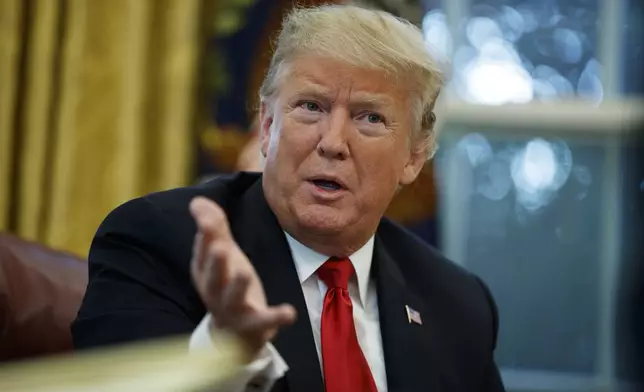
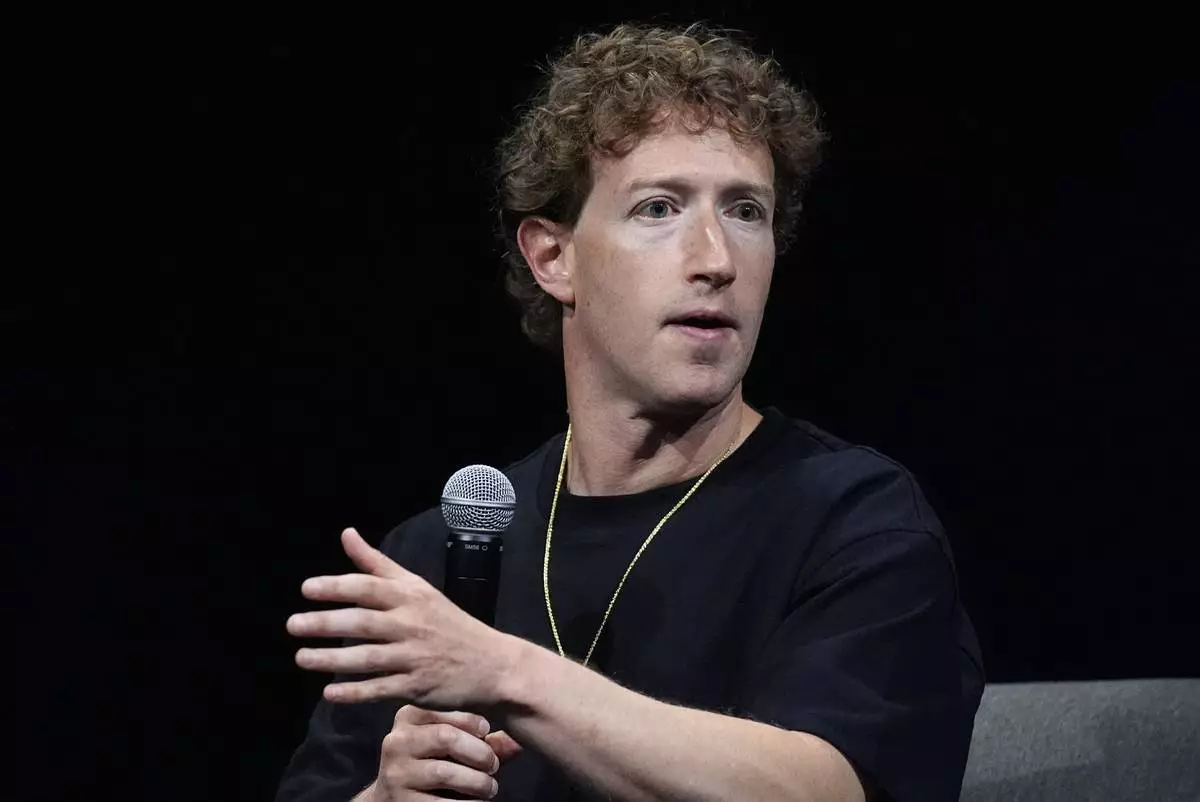
Mark Zuckerberg, chief executive officer of Meta, makes a point during an appearance at SIGGRAPH 2024, the premier conference on computer graphics and interactive techniques, Monday, July 29, 2024, in the Colorado Convention Center in downtown Denver. (AP Photo/David Zalubowski)

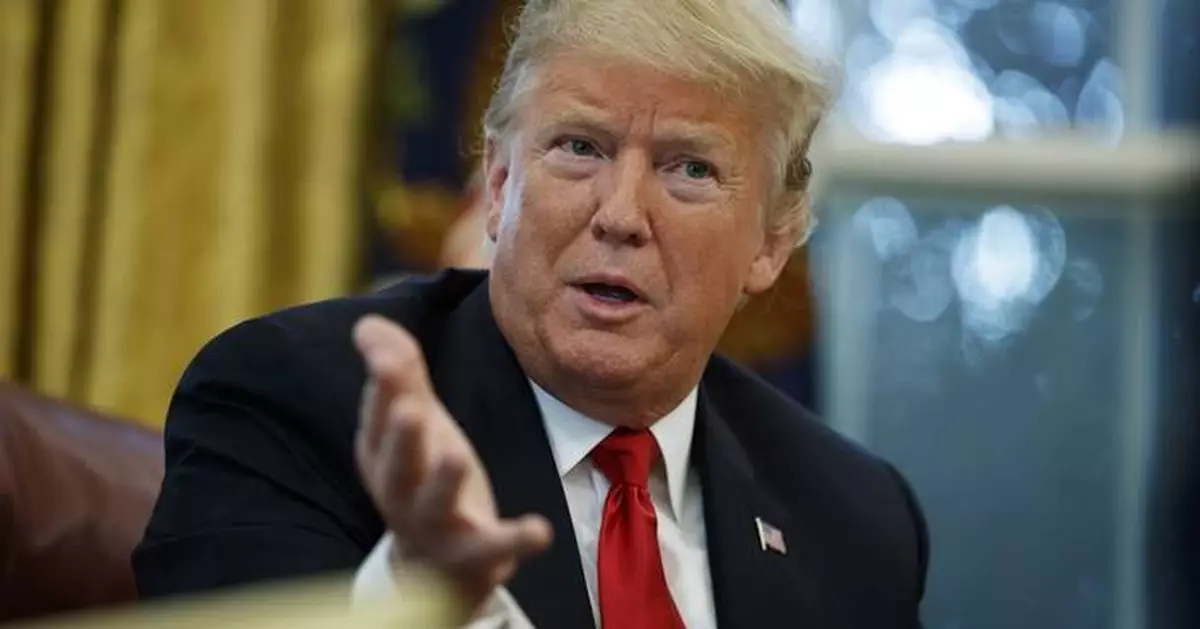
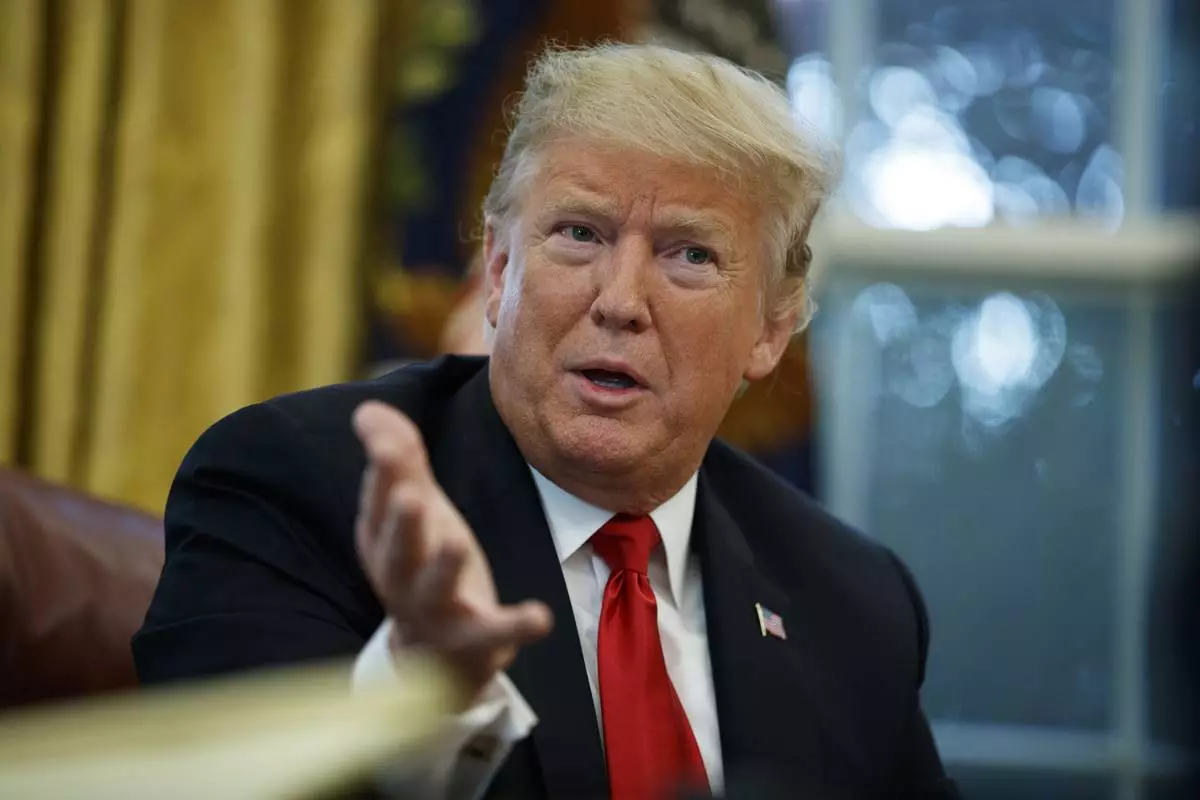
FILE - President Donald Trump speaks during an interview with The Associated Press in the Oval Office of the White House in Washington on Oct. 16, 2018. (AP Photo/Evan Vucci, File)

FILE - President Donald Trump speaks during an interview with The Associated Press in the Oval Office of the White House in Washington on Oct. 16, 2018. (AP Photo/Evan Vucci, File)

Meta founder Mark Zuckerberg's announcement this week was widely seen in news verification circles as a genuflection to president-elect Donald Trump, whose first term in office popularized the phrase “alternative facts.”

Meta is replacing its fact-checking with a “community notes” system reminiscent of X, where it depends on users to correct misinformation on its platforms. In a way, that hearkens back to “he said-she said” journalism, or the view of some political debate moderators that it should be the role of opponents, not journalists, to point out falsehoods. It also hints at something else: the notion that the loudest voices and the best-told stories can win the day.

The moment is a crossroads for the fact-checking industry, which will see its influence sharply curtailed when Trump takes office for his second term.

“In the short term, this is bad news for people who want to go on social media to find trustworthy and accurate information,” said Angie Drobnic Holan, director of the International Fact-Checking Network. Her organization started in 2015 with about 50 members and now has 170, some of whom face staff cuts and potential closure because of Meta's move.

“In the long term," she said, "I think it’s very uncertain what this will all mean.”

Fact-checking is an odd industry, particularly when you consider that it's a function of all journalism. The concept bubbled up about three decades ago in part to counter “he said-she said” stories and monitor claims in political ads. The organization FactCheck.org, whose primary aim was to help reporters, started in 2003 and the more public-facing PolitiFact four years later.

PolitiFact, started by then-Tampa Bay Times Washington bureau chief Bill Adair in 2007, won a Pulitzer Prize for its 2008 campaign coverage. It called out politicians for bending or breaking the truth in ways often difficult for reporters who were protective of the sources whose voices populated their stories.

By 2012, fact-checkers were under attack, primarily by Republicans convinced many were biased and researched voting records to try and prove many arbiters were Democrats, said Adair, now a Duke University professor. Trump, he said, “sped up a trend that had already begun.”

Some conservative suspicion of fact-checkers has been warranted because of mistakes that have been made, although there were some Republicans who uttered falsehoods and just didn’t like being called out for it, said Steve Hayes, CEO and editor of the center-right site The Dispatch.

“The people who practice fact-checking are in some ways saying, ’We are the arbiter of truth, period,” Hayes said. “And anytime you do this, it invites scrutiny on the work that you do.”

Labeling systems largely didn't help, either. Giving a misstatement the label of “pants on fire,” as some fact-checkers have, may be a catchy way of attracting attention but also fostered resentment.

Holan resists the view that fact-checkers have been biased in their work: “That attack line comes from those who feel they should be able to exaggerate and lie without rebuttal or contradiction."

GOP suspicion still quickly took root. Journalism's Poynter Institute, in a survey taken in 2019, found that 70% of Republicans thought the work of fact-checkers was one-sided. Roughly the same percentage of Democrats thought they were fair. Poynter hasn't asked the same question since. Yet last year, Poynter found that 52% of Americans say they generally find it difficult to determine whether what they're reading about elections is true or not.

The statistic illustrates a hunger to cut through rhetoric. To many, the shift in many opinions about the Jan. 6, 2021 Capitol insurrection is a recent reminder about what could happen if false narratives are given room to take root.

In a column Wednesday on the conservative watchdog site NewsBusters.org, Tim Graham wrote that during the first nine months of 2024, PolitiFact criticized Republican officials for delivering “mostly false” facts 88 times compared to 31 times for Democrats. To Graham, this proves that the idea the site is independent or nonpartisan is laughable.

But is that bias? Or is it checking facts?

Adair used to be reluctant to say what is now the title of his new book: “Beyond the Big Lie: The Epidemic of Political Lying, Why Republicans Do it More, and How it Could Burn Down Our Democracy.” He's not hesitant anymore.

“Trump is unmatched as a liar in American politics,” Adair said. “I'm not the first to say that. I think he has capitalized on the fact that there has been this pushback on fact-checkers, and showed other politicians that you can get away with lying, so go ahead and do that.”

Tension about fact-checking played out during the recent presidential campaign, when Trump's team was furious with ABC News for calling attention to false statements by the former president during his only debate with Democrat Kamala Harris.

Trump's second victory has changed the equation at Meta. Already, X has curtailed its independent fact-checking under owner Elon Musk, a Trump ally. The moves are significant because it removes fact-checking from venues where many users might not otherwise be exposed to it.

On its own, fact-checking “doesn't reach those exposed to misinformation,” said Kathleen Hall Jamieson of the University of Pennsylvania, who started FactCheck.org. “It tends to reach audiences that were already knowledgeable and wary.”

On social media, fact-checking also became part of the algorithms that drove information to people, or away from them. Material labeled as false would often be downgraded so it received less exposure. To Republicans who have criticized Big Tech, that amounted to censorship. Yet to Jamieson, successful fact-checking is not censorship — “it's the process of arguing."

Jamieson expressed some optimism that other smart social media users will step up to prevent the dangerous spread of falsehoods. But for fact-checking as it is today to continue to thrive and, even, exist as a journalistic endeavor, Adair said it will likely take influential Republican figures to publicly stand up for the importance of truth, and he praised Hayes' outlet The Dispatch as a conservative site that has done aggressive fact-checks.

NewsBuster columnist Graham, in an interview, had a more pointed piece of advice. “My remedy in all arguments about media trust," he said, “is that humility is required.”

David Bauder writes about media for the AP. Follow him at http://x.com/dbauder and https://bsky.app/profile/dbauder.bsky.social

FILE - Facebook CEO Mark Zuckerberg makes the keynote address at F8, Facebook's developer conference, Tuesday, May 1, 2018, in San Jose, Calif. (AP Photo/Marcio Jose Sanchez, File)
FILE - Facebook CEO Mark Zuckerberg makes the keynote address at F8, Facebook's developer conference, Tuesday, May 1, 2018, in San Jose, Calif. (AP Photo/Marcio Jose Sanchez, File)

FILE - Attendees visit the Meta booth at the Game Developers Conference in San Francisco on March 22, 2023. (AP Photo/Jeff Chiu, File)
FILE - Attendees visit the Meta booth at the Game Developers Conference in San Francisco on March 22, 2023. (AP Photo/Jeff Chiu, File)

Mark Zuckerberg, chief executive officer of Meta, makes a point during an appearance at SIGGRAPH 2024, the premier conference on computer graphics and interactive techniques, Monday, July 29, 2024, in the Colorado Convention Center in downtown Denver. (AP Photo/David Zalubowski)
Mark Zuckerberg, chief executive officer of Meta, makes a point during an appearance at SIGGRAPH 2024, the premier conference on computer graphics and interactive techniques, Monday, July 29, 2024, in the Colorado Convention Center in downtown Denver. (AP Photo/David Zalubowski)

FILE - President Donald Trump speaks during an interview with The Associated Press in the Oval Office of the White House in Washington on Oct. 16, 2018. (AP Photo/Evan Vucci, File)

FILE - President Donald Trump speaks during an interview with The Associated Press in the Oval Office of the White House in Washington on Oct. 16, 2018. (AP Photo/Evan Vucci, File)

SURIN, Thailand (AP) — Fighting raged Saturday morning along the border of Thailand and Cambodia, even after U.S. President Donald Trump, acting as a mediator, declared that he had won agreement from both countries for a new ceasefire.

Thai officials said they did not agree to a ceasefire. Cambodia has not commented directly on Trump’s claim, but its defense ministry said Thai jets carried out airstrikes Saturday morning.

Thai Foreign Minister Sihasak Phuangketkeow said Saturday that some of Trump's remarks didn't “reflect an accurate understanding of the situation.”

He said Trump’s characterization of a land mine explosion that wounded Thai soldiers as a “roadside accident” was inaccurate, and did not reflect Thailand's position that it was a deliberate act of aggression.

Sihasak said that Trump’s willingness to credit what may be “information from sources that deliberately distorted the facts” instead of believing Thailand hurt the feelings of the Thai people “because we consider ourselves — we are proud, in fact — to be the oldest treaty ally of the United States in the region.”

The latest large-scale fighting was set off by a skirmish on Dec. 7 that wounded two Thai soldiers and derailed a ceasefire promoted by Trump that ended five days of earlier combat in July over longstanding territorial disputes.

The July ceasefire was brokered by Malaysia and pushed through by pressure from Trump, who threatened to withhold trade privileges unless Thailand and Cambodia agreed. It was formalized in more detail in October at a regional meeting in Malaysia that Trump attended.

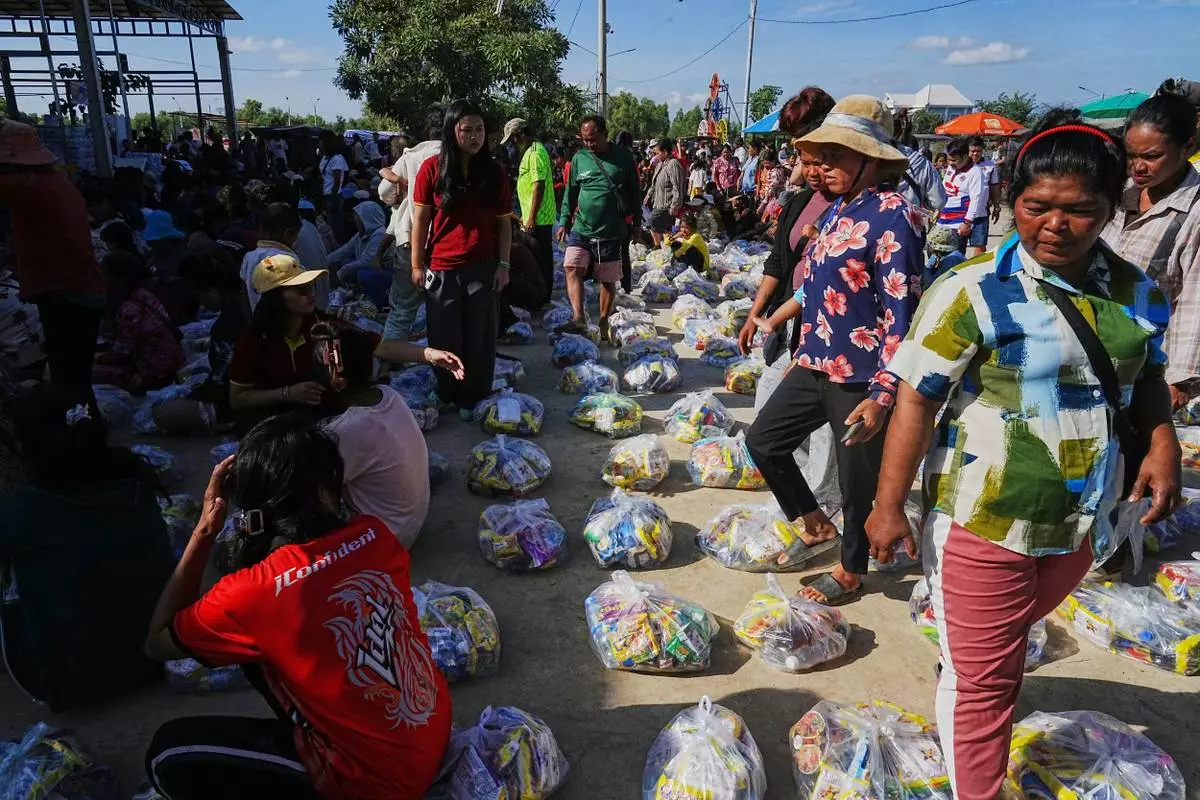
More than two dozen people on both sides of the border have officially been reported killed in this past week’s fighting, while more than half a million have been displaced.

The Thai military acknowledged 15 of its troops died during the fighting, and estimated earlier this week that there have been 165 fatalities among Cambodian soldiers. Cambodia has not announced military casualties, but has said at least 11 civilians have been killed and more than six dozen wounded.

Trump, after speaking to Thai Prime Minister Anutin Charnvirakul and Cambodian Prime Minister Hun Manet, announced on Friday an agreement to restart the ceasefire.

“They have agreed to CEASE all shooting effective this evening, and go back to the original Peace Accord made with me, and them, with the help of the Great Prime Minister of Malaysia, Anwar Ibrahim,” Trump wrote in his Truth Social post.

Trump’s claim came after midnight in Bangkok. Thai Prime Minister Anutin had, after his call with Trump, said he had explained Thailand’s reasons for fighting and said peace would depend on Cambodia ceasing its attacks first.

The Thai foreign ministry later explicitly disputed Trump’s claim that a ceasefire had been reached. Anutin's busy day on Friday included dissolving Parliament, so new elections could be held early next year.

Cambodian Prime Minister Hun Manet, in comments posted early Saturday morning, also made no mention of a ceasefire.

Hun Manet said he held phone conversations on Friday night with Trump, and a night earlier with Malaysia’s Prime Minister Anwar Ibrahim, and thanked both “for their continuous efforts to achieve a long-lasting peace between Cambodia and Thailand.”

“Cambodia is ready to cooperate in any way that is needed," Hun Manet wrote.

Anwar later posted on social media that he was urging the two sides to implement a ceasefire on Saturday night. Cambodia's prime minister, also posting online, endorsed the initiative, which included having Malaysia and the United States help monitor it. However, Thai Prime Minister Anutin denied that his country was even in negotiations over the proposal.

Thailand has been carrying out airstrikes on what it says are strictly military targets, while Cambodia has been firing thousands of medium-range BM-21 rockets that have caused havoc but relatively few casualties.

BM-21 rocket launchers can fire up to 40 rockets at a time with a range of 30-40 kilometers (19-25 miles). These rockets cannot be precisely targeted and have landed largely in areas from where most people have already been evacuated.

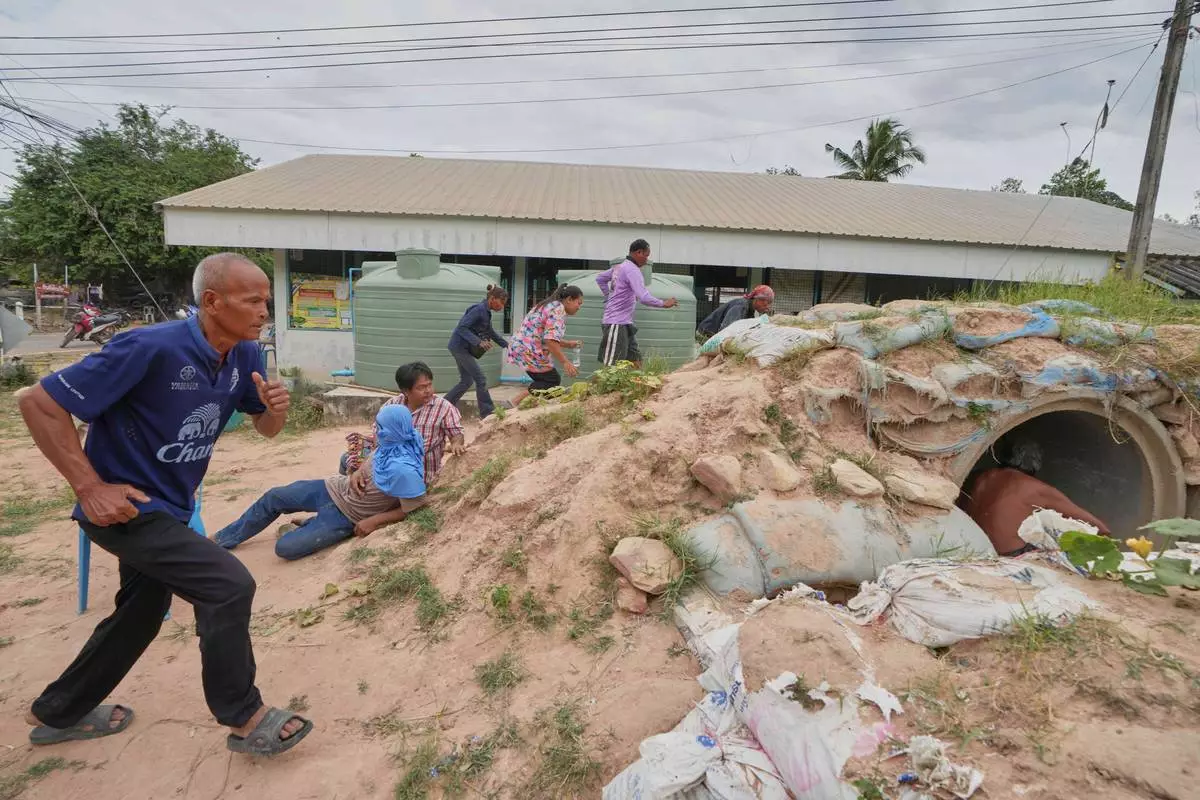
However, the Thai army announced Saturday that BM-21 rockets had hit a civilian area in Sisaket province, seriously injuring two civilians who had heard warning sirens and had been running toward a bunker for safety.

Thailand's navy was also reported by both sides' militaries to have joined the fighting on Saturday morning, with a warship in the Gulf of Thailand shelling Cambodia's southwestern province of Koh Kong. Each side said the other opened fire first.

——

Peck reported from Bangkok. Sopheng Cheang in Serei Saophoan, Cambodia, and Matthew Lee in Washington contributed to this report.

A man sits in a tent as he takes refuge in Banteay Menchey provincial town, Cambodia, Saturday, Dec. 13, 2025, after fleeing home following fighting between Thailand and Cambodia. (AP Photo/Heng Sinith)

A man sits in a tent as he takes refuge in Banteay Menchey provincial town, Cambodia, Saturday, Dec. 13, 2025, after fleeing home following fighting between Thailand and Cambodia. (AP Photo/Heng Sinith)

An evacuee cooks soup as she takes refuge in Banteay Menchey provincial town, Cambodia, Saturday, Dec. 13, 2025, after fleeing home following fighting between Thailand and Cambodia. (AP Photo/Heng Sinith)

An evacuee cooks soup as she takes refuge in Banteay Menchey provincial town, Cambodia, Saturday, Dec. 13, 2025, after fleeing home following fighting between Thailand and Cambodia. (AP Photo/Heng Sinith)

An evacuee tastes soup as she takes refuge in Banteay Menchey provincial town, Cambodia, Saturday, Dec. 13, 2025, after fleeing from home following fighting between Thailand and Cambodia. (AP Photo/Heng Sinith)

An evacuee tastes soup as she takes refuge in Banteay Menchey provincial town, Cambodia, Saturday, Dec. 13, 2025, after fleeing from home following fighting between Thailand and Cambodia. (AP Photo/Heng Sinith)

Evacuees cook food as they take refuge in Banteay Menchey provincial town, Cambodia, Saturday, Dec. 13, 2025, after fleeing homes following fighting between Thailand and Cambodia. (AP Photo/Heng Sinith)

Evacuees cook food as they take refuge in Banteay Menchey provincial town, Cambodia, Saturday, Dec. 13, 2025, after fleeing homes following fighting between Thailand and Cambodia. (AP Photo/Heng Sinith)

Children raise their hands while receiving donation from charity as they take refuge in Banteay Menchey provincial town, Cambodia, Saturday, Dec. 13, 2025, after fleeing homes following fighting between Thailand and Cambodia. (AP Photo/Heng Sinith)

Children raise their hands while receiving donation from charity as they take refuge in Banteay Menchey provincial town, Cambodia, Saturday, Dec. 13, 2025, after fleeing homes following fighting between Thailand and Cambodia. (AP Photo/Heng Sinith)

Evacuees wait to receive donation from local charity as they take refuge in Banteay Menchey provincial town, Cambodia, Saturday, Dec. 13, 2025, after fleeing homes following fighting between Thailand and Cambodia. (AP Photo/Heng Sinith)

Evacuees wait to receive donation from local charity as they take refuge in Banteay Menchey provincial town, Cambodia, Saturday, Dec. 13, 2025, after fleeing homes following fighting between Thailand and Cambodia. (AP Photo/Heng Sinith)

Village security volunteers and resident run into shelter while the blasts sounded too close in Buriram province, Thailand, Friday, Dec. 12, 2025, following renewed border conflict between Thailand and Cambodia. (AP Photo/Sakchai Lalit)

Village security volunteers and resident run into shelter while the blasts sounded too close in Buriram province, Thailand, Friday, Dec. 12, 2025, following renewed border conflict between Thailand and Cambodia. (AP Photo/Sakchai Lalit)

Recommended Articles