The mushrooming innovative products, new brands and patterns have turned out to highlight China's foreign trade last year, as the country aims to enhance its global competitiveness.
In 2024, China's foreign trade reached 43.85 trillion yuan (about 6.1 trillion U.S. dollars), according to data released by the General Administration of Customs (GAC).
More high-tech new products quickened their pace to go overseas, with exports of electric vehicles, three-dimensional (3D) printers, and industrial robots growing by 13.1 percent, 32.8 percent, and 45.2 percent respectively.
Chinese self-owned brands also increased their share of exports by 0.8 percentage points to 21.8 percent.
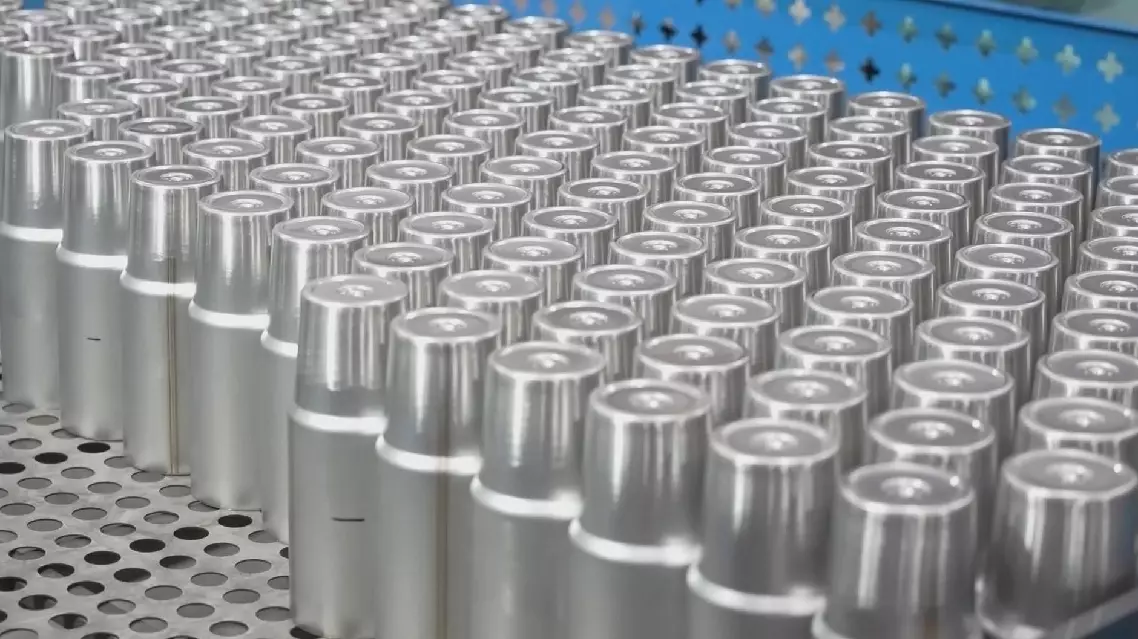
In Wuyi County of east China's Zhejiang Province, a major industrial base, a foreign trade enterprise exports various kinds of thermal cup products. Multiple full-automated production lines at full capacity to turn out products exported to over 30 destinations, including Europe and Australia.
"The braised beaker we are looking at is our new product. We have introduced into the field of thermal cups the concept of regimen, and it is very popular once it is launched," said Gu Lili, head of the thermal cup exporter.
The company currently holds two invention patents, 16 new model patents, and 32 design patents, demonstrating its innovative vitality and rapid product iteration.
To support such innovation efforts, Jinhua Customs under Hangzhou Customs has implemented a package of convenient customs clearance measures,
"We assist the exporters with customized services. We first categorize the high-end materials, advanced equipment and key parts they imported from overseas in advance, and then reserve inspection service for them, meanwhile guide them to efficiently use tax breaks for processing trade and equipment import, so that they can lower their cost. We've helped enterprises cut nearly 20 percent cost in various aspects including logistics in 2024." said Zhang Quanwei, chief of general section 4 of Jinhua Customs under Hangzhou Customs.
China's upgraded manufacturing capacity and its massive domestic market are the wellspring for the high-quality development of its foreign trade. The country's complete industrial system, sci-tech driven productivity, and iterative upgrades of "Made in China" have generated a steady stream of popular export products.
"Products like our washing machine equipped with AI-powered intelligent washing function can automatically detect the weight and type of fabric of clothes and select the optimal washing mode. And our smart food processor is installed with various recipes. You just put in the ingredients, press a button, and delicious dishes will be ready in a matter of minutes, so everyone can be a top chef. These intelligent home appliance products have injected new energy into the traditional home appliance industry, driving a 15.4 percent increase in our home appliance exports last year," said Wang Lingjun, Vice Minister of the General Administration of Customs.
China's innovative products drive overall export growth