Chinese consumers are buying up plentiful arrangements of flowers to decorate their homes for this year's Spring Festival beginning Jan 29, benefiting from smoother transportation from south China's Yunnan Province, the country's primary flower-growing region.
Flower sales ahead China's most important holiday have been rising since New Year in Yunnan's Dounan Flower market, the largest cut flowers market in Asia that supplies over 70 percent of demand in China. According to statistics from Kunming Flower Auction Center, around 3.7 million cut flowers are being sent every day from the market to all provinces around the country.
To facilitate transportation, Yunnan's first single-product sorting and delivery center, the Yunnan Dounan Cold Chain Distribution Center was put into use, adopting the latest technologies in the industry like smart recognition and auto sorting.
"In the past, the efficiency of human sorters was only half of our current level. Since December (last year), we have been receiving over 20,000 more orders every day, and the accuracy of auto sorting reached 99 percent," said Yang Hai, head of the flower express project for a delivery company in Yunnan.
Flowers from the Dounan market can now be delivered to nearly every corner of China in a short time. It only takes around 20 hours for Yunnan's flowers to reach major cities in southeast China's Guangdong Province, and 36 hours to Harbin City in the far north. Local flower businesses also add additional care to protect the flowers from the cold winter in northern cities.
"The flower arrived with insulation cotton and boxes to keep warm. The early sales for Spring Festival flowers have already started, and we have sent quite a lot of flowers out of the city. People from nearby counties have started their purchases for the festival, and customers in Harbin have also made a lot of bookings," said Xu Min, who runs a cut flower shop in a Harbin flower market.
Businesses across China have been inventing new methods to present their best flowers to customers.
In Beijing, dozens of self-service flower vendors have opened in major subway stations. Passengers can grab flowers they like on their way to the office or back home.
"I buy cut flowers from time to time and arrange them on my own or make bouquets," said a customer.
The vendors have gained popularity quickly for their convenience.
"Each of our shops receives 1,700 to 2,000 customers every day, with single purchases ranging around 24 yuan to 27 yuan (about 3.3 to 3.7 U.S. dollars)," said Yang Rui, the deputy general manager of the Beijing company that set up the flower shops.
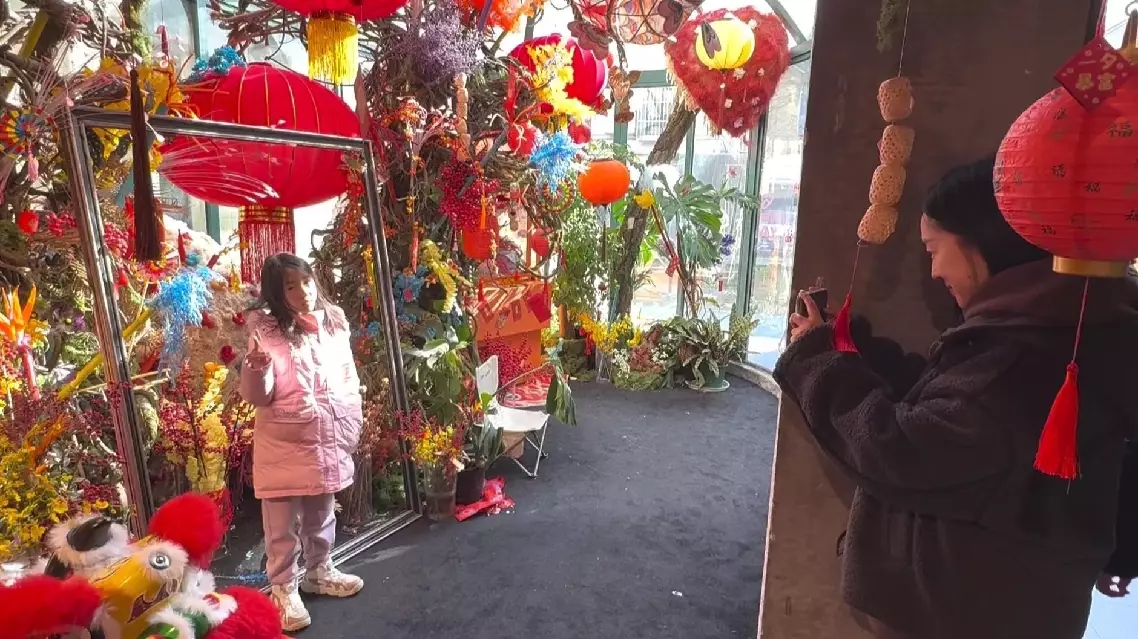
In Shanghai, a flower craft exhibition has attracted young people to visit and take pictures for social media with specially designed flower frames and rare flowers.
"I prefer to pick flowers I like at on-site activities and I enjoy the atmosphere. I can also buy rare species I had never seen at the Spring Festival flower market," said Zhou Yuan, a local resident.
China's flower capital speeds up nationwide delivery for Spring Festival