NEW YORK--(BUSINESS WIRE)--Jan 15, 2025--
Maki, the conversational AI agent transforming talent acquisition, has announced the successful closing of its $28.6 million Series A funding round. The round was led by Blossom Capital, with participation from DST Global and existing investors Frst, GFC, and Picus Capital.
This press release features multimedia. View the full release here: https://www.businesswire.com/news/home/20250115141347/en/
In 2024, Maki experienced over 300% growth, driven by large-scale contracts with Fortune 500 companies such as H&M, BNP Paribas, PwC, Deloitte, FIFA, Abercrombie, and Capgemini. These organizations rely on Maki to solve critical talent acquisition and management challenges, including streamlining workflows, enhancing candidate experience, accelerating time-to-hire, and reducing employee turnover. Maki’s agents have been rolled out in 50+ markets globally, delivering 80% automation of screening and interviewing processes, a 3x reduction in time-to-hire, and a 20% reduction in turnover, translating into millions of dollars in efficiency gains.
“ Our mission is to give human resources more-than-human powers, as we believe the future lies in a powerful mix of human ingenuity and AI-driven intelligence. Our agents don’t just assist—they do the work, enabling teams to focus on strategic priorities, unlock creativity, and drive meaningful organizational impact,” said Maxime Legardez, CEO of Maki.
The Series A funding will enable Maki to:
“The U.S. is the world’s most dynamic HR market and the most forward-thinking in adopting AI to drive efficiency and impact. By expanding to New York City, we’re doubling down on this opportunity to help enterprises redefine how they hire and manage talent,” Maxime Legardez explained.
“From the moment we met Max and the Maki team, we were impressed by their vision, the strength of the product, and the outstanding metrics they’ve achieved in such a short time,” said Ophelia Brown, Partner at Blossom Capital. “We believe Maki’s agents have the potential to enable large organizations to reach the next level of efficiency and decision-making, redefining how HR drives business success.”
Maki’s mission extends beyond automating HR tasks. With an AI-native architecture, Maki’s agents dynamically retrieve, orchestrate, and act on real-time data to enable seamless, data-driven decision-making. AI isn’t an enhancement; it’s the engine. The company aims to become the “AI tier of talent intelligence.” By centralizing workflows, adapting dynamically, and delivering real-time insights, Maki is transforming HR from a reactive function into a proactive, strategic force that unlocks organizations' full potential.
About Maki
Founded in 2022 by Maxime Legardez, Paul-Louis Caylar, and Benjamin Chino, Maki is building a conversational AI agent that liberates HR teams, advances organizations, and expands human potential. From sourcing and screening to interviewing and selection, Maki’s agents handle the entire journey autonomously and at scale.
Candidates experience fully immersive, AI-led interactions—through voice, video, or text—that adapt to their unique profiles. Organizations can customize every workflow to align with their goals, ensuring consistent, compliant, and bias-free hiring across industries and geographies.

From Left to Right: Paul Louis Caylar - COO, Maxime Legardez-Coquin - CEO, and Benjamin Chino - CPO (Photo: Business Wire)
Russia’s nuclear-capable Oreshnik missile system has entered active service in Belarus, Russia’s Defense Ministry said Tuesday, as the U.S. efforts to broker a deal to end the nearly four-year war in Ukraine have entered a pivotal stage.
The ministry released a video showing combat vehicles that are part of the mobile intermediate range ballistic missile system driving across a forest as part of combat training. The ministry’s announcement followed a statement from Belarusian President Alexander Lukashenko, who said earlier this month that the Oreshnik had arrived in the country. Lukashenko said that up to 10 such missile systems will be stationed in Belarus.
Russian President Vladimir Putin said earlier this month that the Oreshnik would enter combat duty before the year's end. He made the statement at a meeting with top Russian military officers, where he warned that Moscow will seek to extend its gains in Ukraine if Kyiv and its Western allies reject the Kremlin’s demands in peace talks.
The announcement comes at a critical time for Russia-Ukraine peace talks. U.S. President Donald Trump hosted Ukrainian President Volodymyr Zelenskyy at his Florida resort Sunday and insisted that Kyiv and Moscow were “closer than ever before” to a peace settlement.
However, Moscow and Kyiv remain deeply divided on key issues, including whose forces withdraw from where in Ukraine and the fate of Ukraine’s Russian-occupied Zaporizhzhia nuclear power plant, one of the 10 biggest in the world. Trump noted that the monthslong U.S.-led negotiations could still collapse.
Putin has sought to portray himself as negotiating from a position of strength as Ukrainian forces strain to keep back the bigger Russian army.
Russia first tested a conventionally armed version of the Oreshnik — Russian for hazelnut tree — to strike a Ukrainian factory in November 2024. Putin has bragged that Oreshnik’s multiple warheads plunge at speeds of up to Mach 10 and can’t be intercepted, and that several of them used in a conventional strike could be as devastating as a nuclear attack.
The Russian leader has warned the West that Russia could use the Oreshnik next against allies of Kyiv that allowed it to strike inside Russia with their longer-range missiles.
The Belarusian Defense Ministry said Tuesday that the Oreshnik has a range of up to 5,000 kilometers (3,100 miles).
Russian state media boasted that it would take the missile only 11 minutes to reach an air base in Poland and 17 minutes to reach NATO headquarters in Brussels. There’s no way to know whether it’s carrying a nuclear or a conventional warhead before it hits the target.
Intermediate-range missiles can fly between 500 to 5,500 kilometers (310 to 3,400 miles). Such weapons were banned under a Soviet-era treaty that Washington and Moscow abandoned in 2019.
Russia previously has deployed tactical nuclear weapons to the territory of its Belarus, whose territory it used to launch a full-scale invasion of Ukraine in February 2022. Lukashenko has said that his country has several dozen Russian tactical nuclear weapons.
While signing a security pact with Lukashenko in December 2024, Putin said that even with Russia controlling the Oreshniks, Moscow would allow Minsk to select the targets. He noted that if the missiles are used against targets closer to Belarus, they could carry a significantly heavier payload.
In 2024, the Kremlin released a revised nuclear doctrine, noting that any nation’s conventional attack on Russia that is supported by a nuclear power will be considered a joint attack on his country. The threat was clearly aimed at discouraging the West from allowing Ukraine to strike Russia with longer-range weapons and appears to significantly lower the threshold for the possible use of Russia’s nuclear arsenal.
The revised Russian doctrine also placed Belarus under the Russian nuclear umbrella.
Lukashenko has ruled the nation of 9.5 million with an iron fist for more than three decades. His government has been repeatedly sanctioned by the West for its crackdown on human rights and for allowing Moscow to use its territory for the invasion of Ukraine. Belarusian opposition leader Sviatlana Tsikhanouskaya has said that the deployment of Oreshnik to Belarus deepens the country’s military and political dependence on Russia.
Follow AP’s coverage of the war in Ukraine at https://apnews.com/hub/russia-ukraine
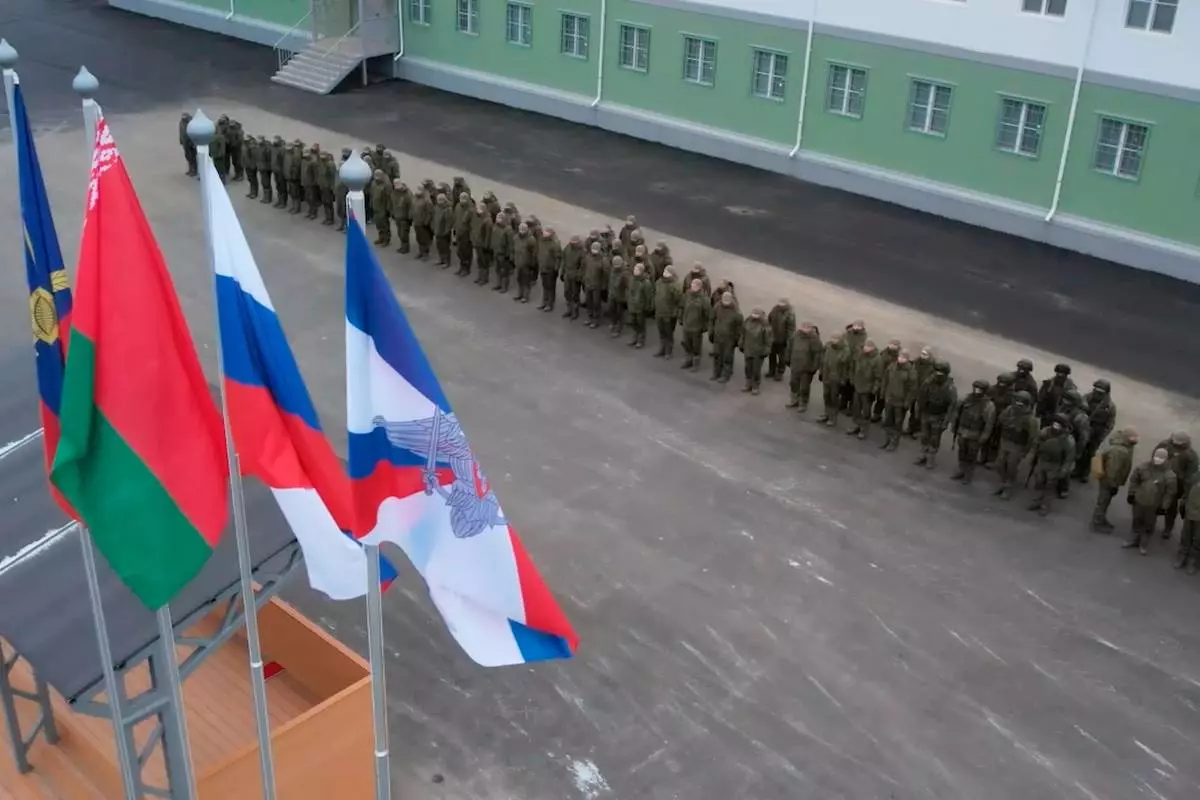
In this image made from video provided by Russian Defense Ministry Press Service on Monday, Dec. 29, 2025, Russian troops line up at a base in Belarus where the Oreshnik missile system was deployed in Belarus. (Russian Defense Ministry Press Service via AP)
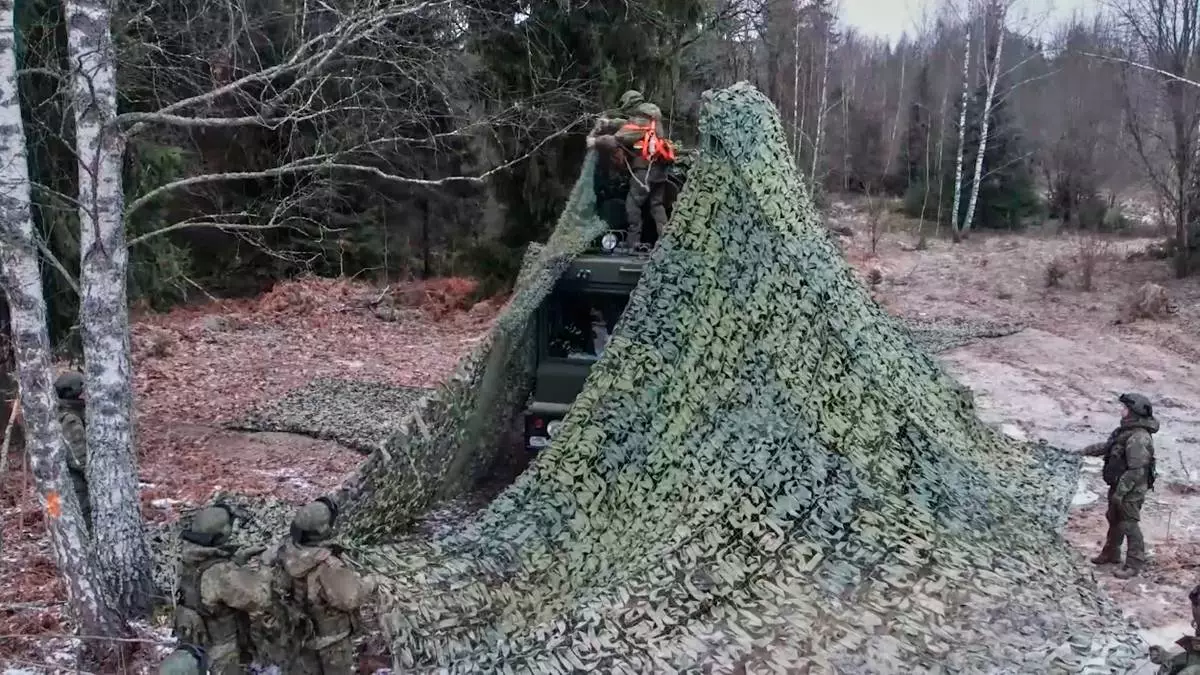
In this image made from video provided by Russian Defense Ministry Press Service on Monday, Dec. 29, 2025, Russian solders camouflage one of the trucks of the Russia's Oreshnik missile system with a net during training in an undisclosed location in Belarus. (Russian Defense Ministry Press Service via AP)
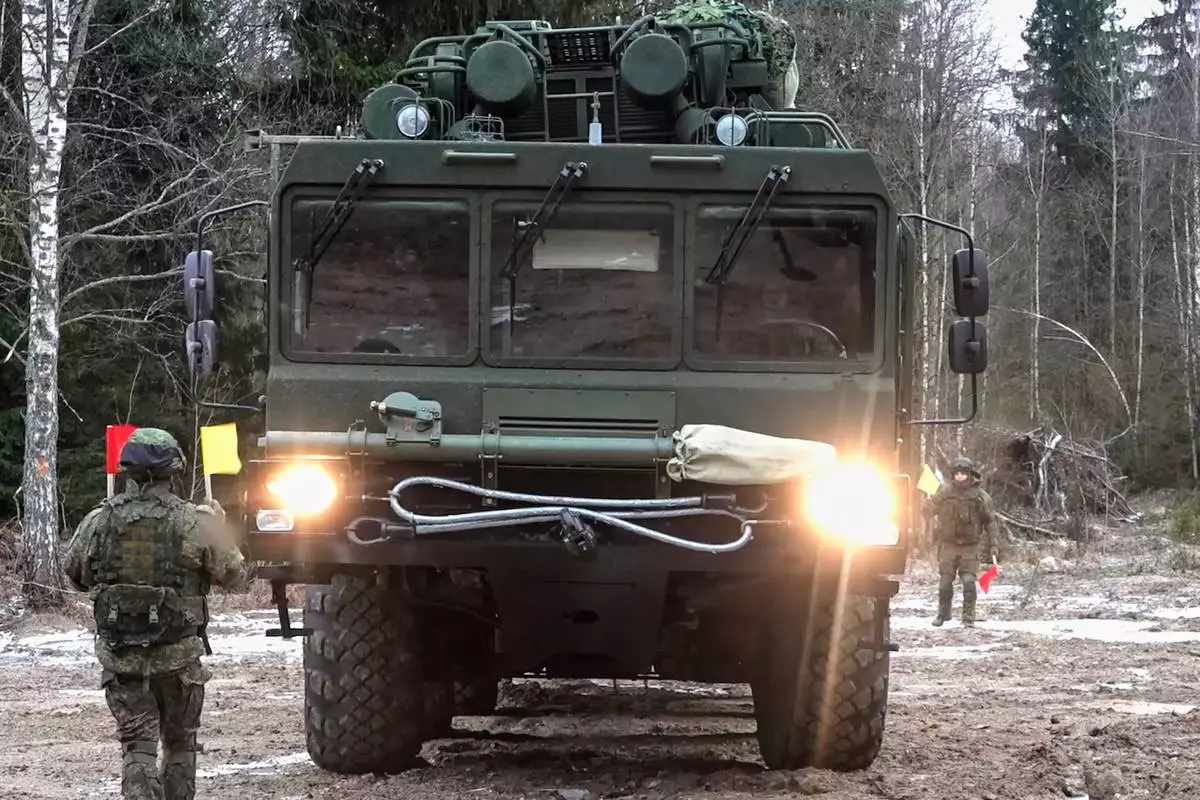
In this image made from video provided by Russian Defense Ministry Press Service on Monday, Dec. 29, 2025, A Russia's Oreshnik missile system is seen during a training in an undisclosed location in Belarus. (Russian Defense Ministry Press Service via AP)
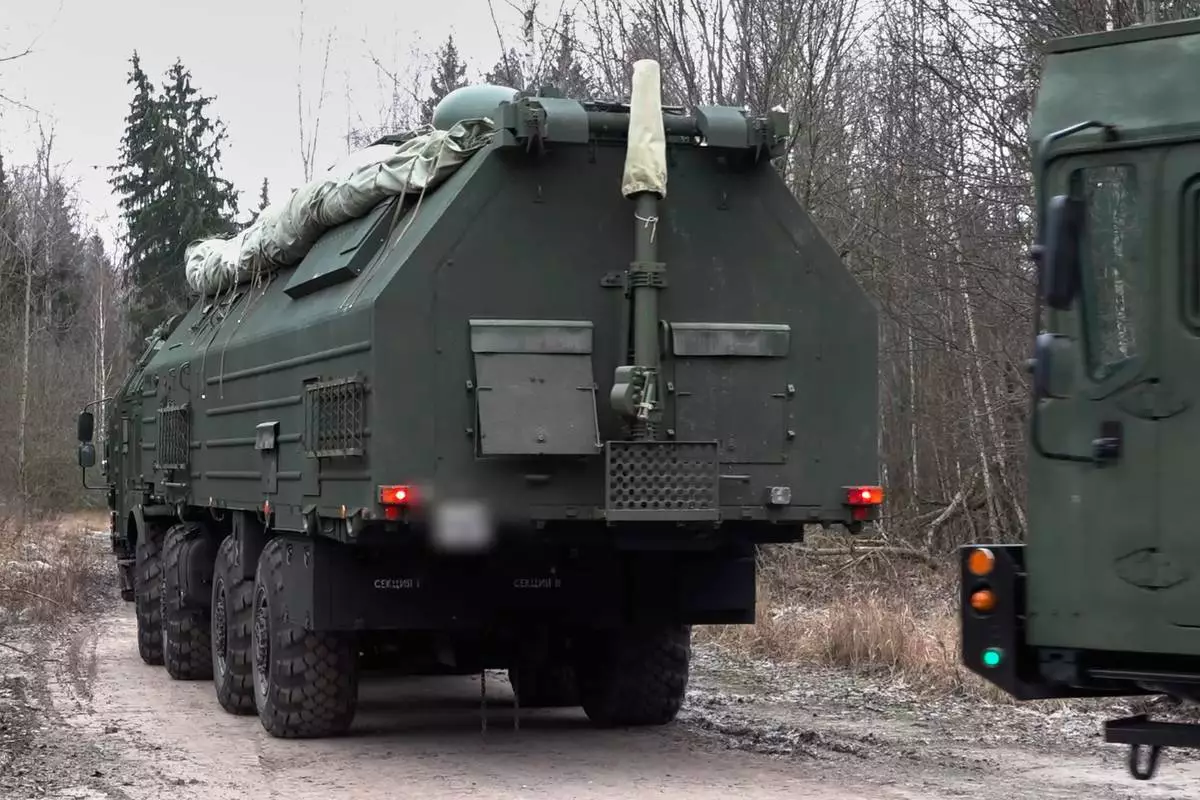
In this image made from video provided by Russian Defense Ministry Press Service on Monday, Dec. 29, 2025, A Russia's Oreshnik missile system is seen during a training in an undisclosed location in Belarus. (Russian Defense Ministry Press Service via AP)
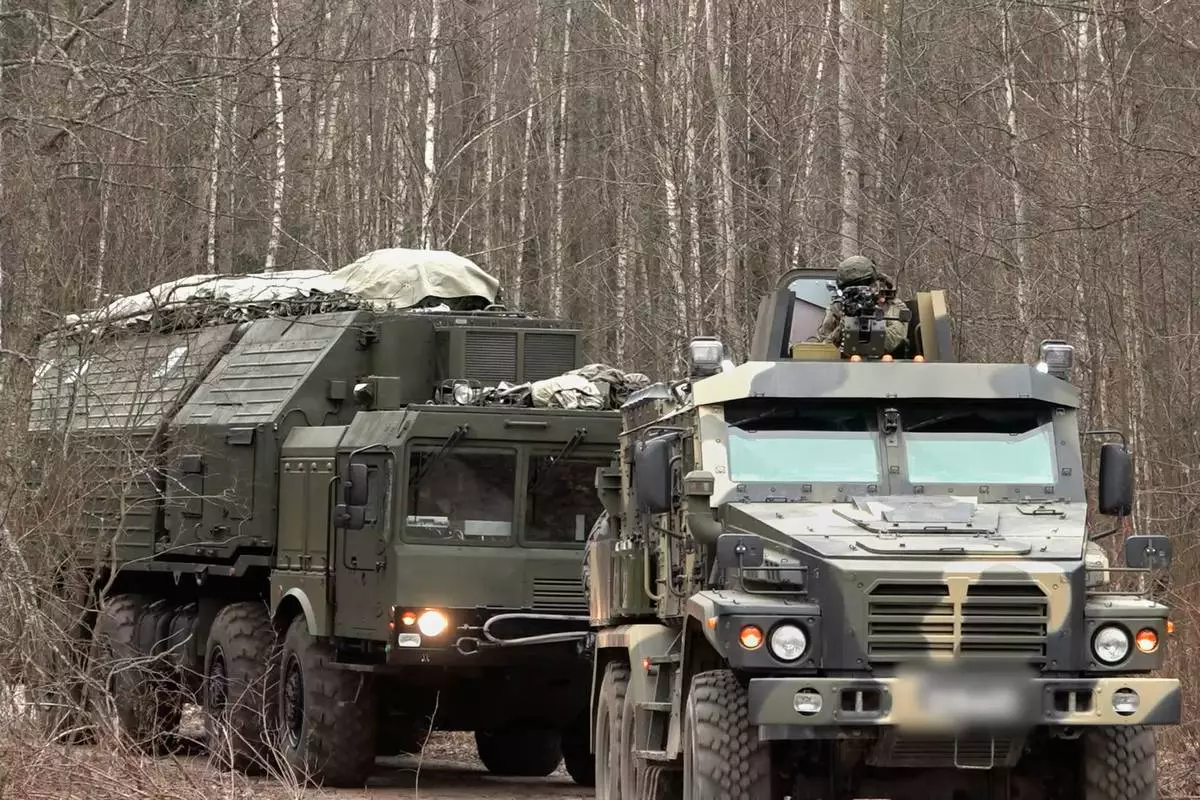
In this image made from video provided by Russian Defense Ministry Press Service on Monday, Dec. 29, 2025, A Russia's Oreshnik missile system is seen during a training in an undisclosed location in Belarus. (Russian Defense Ministry Press Service via AP)