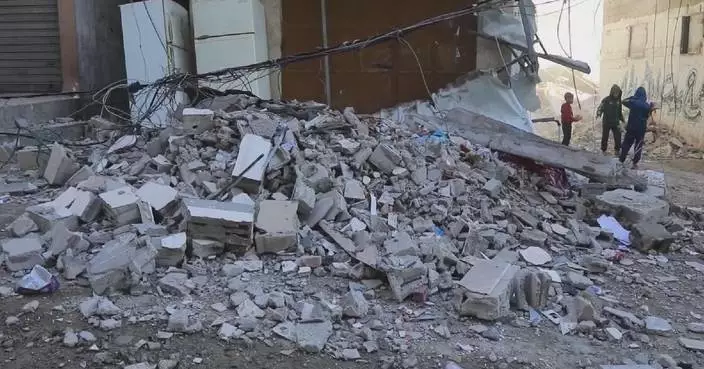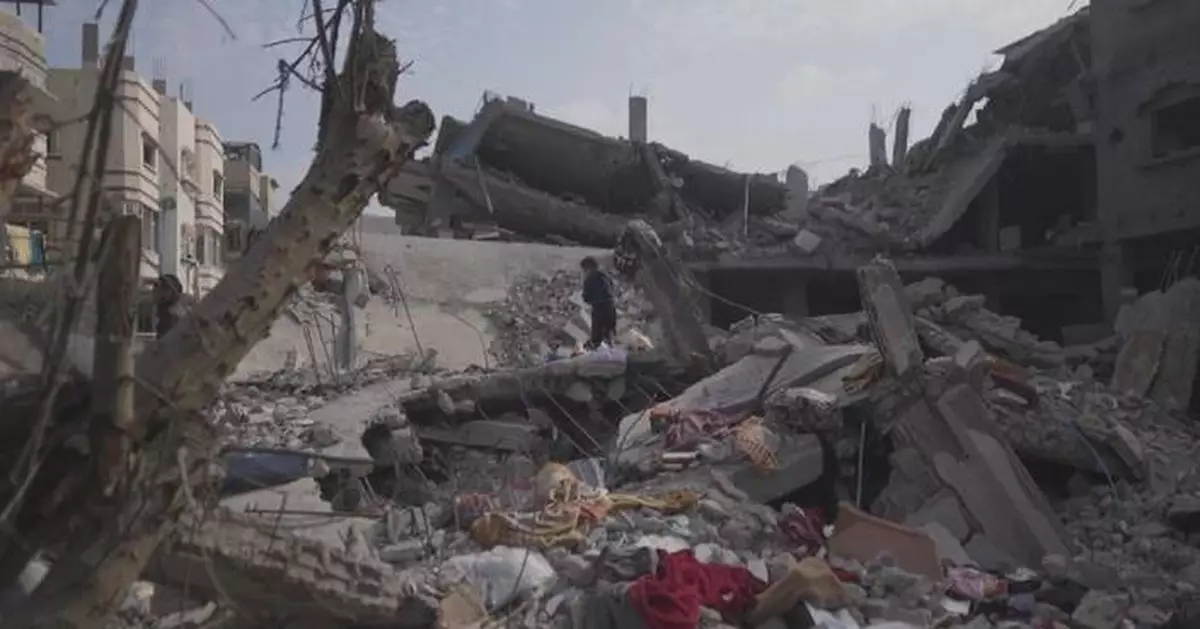
Israel bombed residential buildings in the Gaza Strip on Wednesday, after it agreed to a ceasefire deal with Hamas.
Osama Asama Ashi, a correspondent for China Media Group (CMG), was on-site following the attack that killed dozens and left homes decimated.
"I am in a residential area in the Sheikh Radwan neighborhood of Gaza City that was destroyed yesterday [Wednesday] by a missile. As we can see, a large number of buildings have been destroyed in this residential area where many displaced people were living. More than 25 people have been found dead from this rubble alone," Ashi reported.
Residents of the neighborhood said that Israeli projectiles have struck the area before.
"This building was bombed the day before yesterday (Tuesday) for the second time since the beginning of the new round of conflict. Yesterday, it was bombed again. The whole building has been completely destroyed. There is not even a room left," said Kamal Abu Abadla, a resident.
According to experts in the embattled enclave, Israel's continuous attacks on homes throughout the conflict are meant to take aim at the morale of residents.
"I think the Israeli army's goal is to destroy the momentary joy and calm of the Palestinian people even though that joy is broken. The Palestinian people, men and women, young and old, yearn for a ceasefire," said Dr. Ahmed Shehab, a law professor at the University of Palestine, located in Gaza.
Israel and Hamas have agreed on a Gaza ceasefire-for-hostages deal after intensive mediation by Qatar, Egypt, and the United States, Qatari Prime Minister and Foreign Minister Sheikh Mohammed bin Abdulrahman bin Jassim Al Thani said on Wednesday.
Although the parties have announced a ceasefire agreement, the Israeli government has not yet approved it. According to The Times of Israel late on Thursday, citing an Israeli diplomatic source, Israeli Prime Minister Benjamin Netanyahu insisted that all details of the ceasefire agreement be finalized before presenting it to the cabinet and government for approval. The report also reveals that Israel forced Hamas to drop demands related to the Philadelphi security corridor at the "last minute" in order to secure the ceasefire.
Earlier that day, Israel's Shas Party leader Aryeh Deri stated that the obstacles to reaching a ceasefire had been cleared and a meeting of the Security Cabinet would soon take place. Israeli media also reported that the Security Cabinet is set to vote on the ceasefire agreement on Friday, with the deal set to become official only if approved in the vote.
A total of 86 people were killed, including 23 children, and 258 have been wounded in Israeli airstrikes across the Gaza Strip since the ceasefire deal was reached, according to Mahmoud Basal, spokesperson for Gaza's Civil Defense on Thursday night.
The Israel Defense Forces on Thursday said it struck about 50 sites across the Gaza Strip over the past day.
The Hamas-run Gaza media office on Thursday called on the people in Gaza to remain cautious and vigilant and avoid possible areas targeted by the Israeli army.
Israel bombs residential buildings in Gaza after truce deal announced