An ongoing internet blackout is heightening tensions in Iran, where a lack of access to reliable information is adding to the turmoil sparked by weeks of widespread protests.
Protests have erupted in several Iranian cities since late December over the sharp fall in the national currency, the rial, and long-standing economic hardships. The reported death toll from the unrest on both sides of the security forces and civilians is mounting.
Since last week, Iran's capital, Tehran, and several other parts of the country have experienced internet blackout.
According to media reports, Iran's top cyberspace authority was cited Monday that access to the internet in the country will remain restricted until officials determine that full security has been restored.
Sepehr Saremi, a correspondent for the China Global Television Network (CGTN) based in Tehran, said the continued lack of internet access remained a significant challenge.
"The situation is still very complex and complicated. Though I have to say, in the past 72 hours, Tehran has been peaceful and quiet. But the main, the challenging issue, especially for reporters, for journalists, for correspondents, for so many businesses in Tehran, is that we have no access to the international internet. Even some internal messaging applications are not functioning," he said.
He said the media personnel had to go to a designated area, from where they were able to transmit their reports abroad for limited hours each day.
Saremi also reported that the international phone services were restored on Tuesday.
"Today, just a few hours ago, I found out that the international phone calls have been possible again, because in the past five or six days, no one has been able to make international phone calls," he said.
On Monday, Iranian authorities said that they had obtained evidence of U.S. and Israeli involvement in domestic "terrorist activities," including footage showing weapons being distributed to protesters.
U.S. President Donald Trump said on Sunday that Iranian officials had contacted the United States to propose negotiations, adding that "a meeting is being set up." He added that his administration is weighing "some very strong options," including potential military action against Iran, in response to Iran's crackdown on protesters.
On Tuesday, however, Trump said that he had cancelled "all meetings" with Iranian officials.
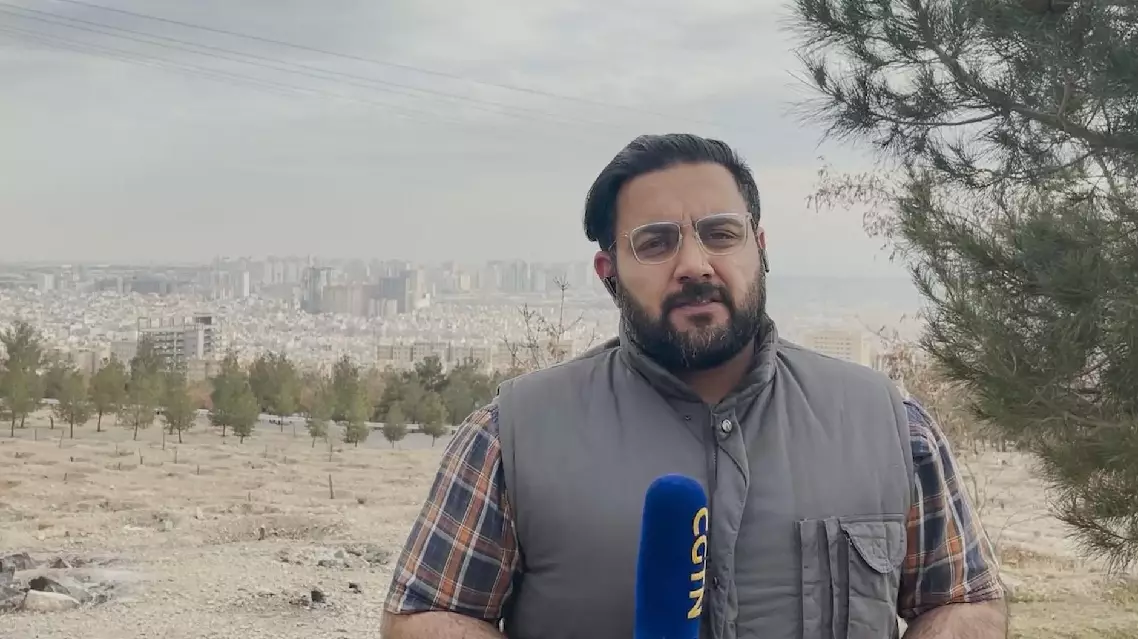
Internet blackout adds to Iran tensions: CGTN correspondent
China urges the United States to return to talks and immediately stop military actions, said Fu Cong, China's permanent representative to the United Nations, on Thursday.
The United States, as the rotating president of the UN Security Council for March, convened a Security Council meeting under the "non-proliferation" agenda item and pushed forward the work of the Security Council Sanctions Committee (1737 Committee) related to the Iran issue. China and Russia explicitly opposed this.
Speaking at the meeting, Fu said that the "snapback" sanctions mechanism for Iran has procedural and legal flaws and urged the United States and Israel to immediately cease military actions and refrain from attacking Iranian nuclear facilities that are under the safeguards of the International Atomic Energy Agency (IAEA), in order to prevent further escalation of the situation and the spillover of the conflict.
After the meeting commenced, Russia raised a procedural motion opposing the consideration of this matter under the "non-proliferation" agenda item, and China expressed support for the Russian motion.
However, the Security Council adopted the meeting agenda with 11 votes in favor, two against, and two abstentions. China and Russia voted against.
In his statement following the vote, Fu pointed out that the current situation surrounding the Iranian nuclear issue remains tense. The pressing priority to resolve the issue is to cease the conflict and prevent escalation and avoid the spread of the war across the entire Middle East region, he said.
"Resorting to force is not the right way to resolve international disputes. The national sovereignty, security, and territorial integrity of Iran must be respected. The United States and Israel should immediately cease military actions, refrain from attacking Iranian nuclear facilities that are under the safeguards of the International Atomic Energy Agency (IAEA), avoid further escalation of tensions and keep the conflict from spreading across the entire Middle East region. We urge the United States to change course immediately, return to diplomatic negotiations, make a clear commitment not to use force, engage in sincere dialogue with Iran, and work toward a solution that meets the expectations of the international community," said Fu.
In 2006, the UN Security Council adopted Resolution 1737, imposing nuclear-related sanctions on Iran and establishing a specialized committee.
After the Iran nuclear deal was reached in 2015, the related sanctions were suspended under Resolution 2231, and the committee subsequently ceased operations.
At the end of August 2025, France, Germany, and the United Kingdom unilaterally issued a notification, claiming to trigger the "snapback" mechanism of the Iran nuclear deal, advocating for the reinstatement of previously suspended UN sanctions on Iran.
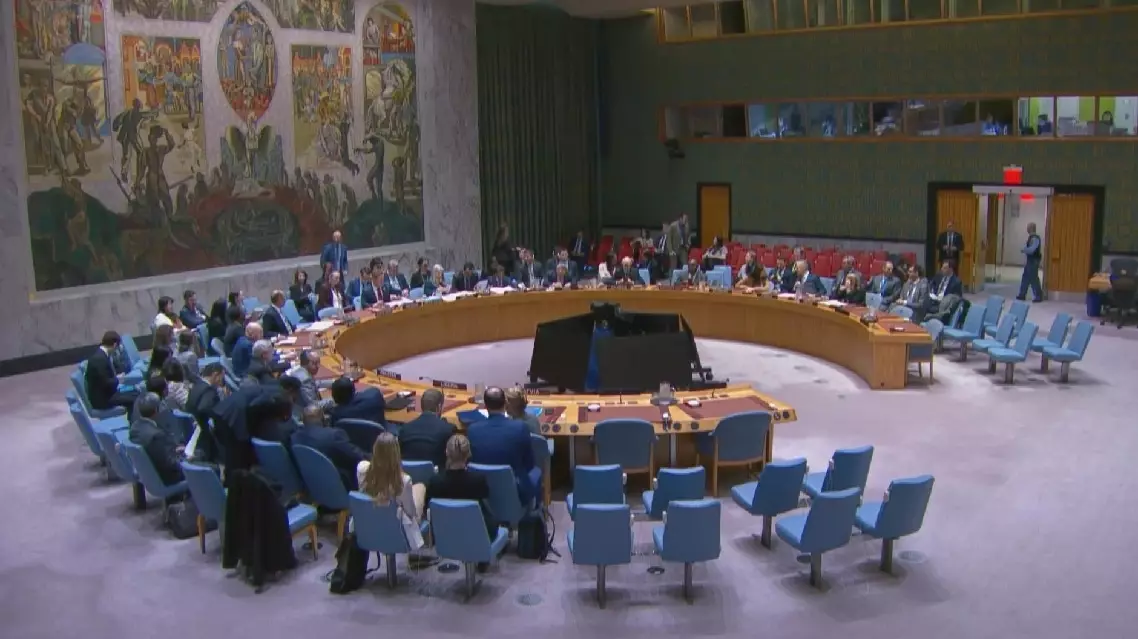
China urges US to return to talks, immediately stop military actions: envoy