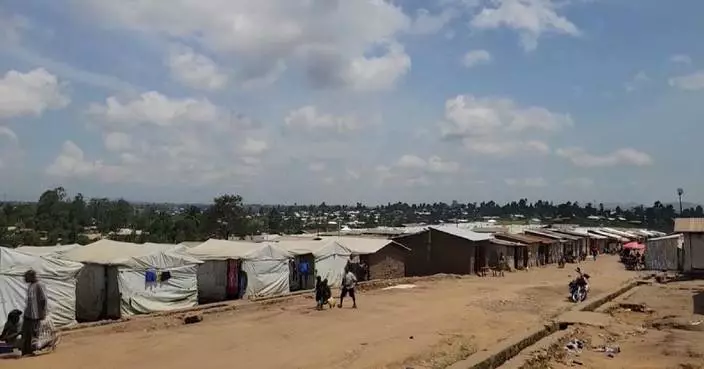
More than 4.1 million people have been internally displaced in Afghanistan, Iran, Lebanon and Pakistan since the beginning of the current military escalation in the Middle East, Stephane Dujarric, chief spokesman for the UN secretary-general said Thursday.
Additionally, some 117,000 people have sought refuge in another country, Dujarric told a daily briefing, citing figures from the Office of the United Nations High Commissioner for Refugees (UNHCR).
Dujarric said that, according to UN humanitarians, the Middle East region is home to some of the largest numbers of people in need of humanitarian assistance globally. The recent escalation risks deepening civilian suffering and causing further damage to already fragile civilian infrastructure, he said.
"Just on Iran alone, our colleagues at the UNHCR are telling us that between 600,000 and 1 million Iranian households are now temporarily displaced inside their country as a result of the ongoing conflict. This is a preliminary assessment and that adds up to about 3.2 million people. They say this figure is likely to continue to rise as hostilities persist, adding that, as you can imagine, it will just add another level of humanitarian needs," Dujarric said.
Government figures in Lebanon estimate that more than 816,000 people have registered themselves as displaced, including about 285,000 children, the spokesman said, adding that over 125,000 people are taking shelter in nearly 600 collective centers.
Also affected are refugee families hosted in Iran, most of whom are Afghans, Dujarric said.
The spokesman stressed that all the parties to the conflict must protect civilians, maintain humanitarian access and ensure that borders remain open to those seeking safety, in line with their international obligations.
"Once again, we urge the need for de-escalation. All parties must respect international humanitarian law, including the protection of civilians, humanitarian facilities, humanitarian workers and healthcare facilities. Humanitarian access must be safe, it must be unhindered and it must be sustained, so that we can reach people in need," he said.
The current crisis in the Middle East was triggered by the joint U.S.-Israeli military strikes on Iran that began on Feb 28 and Iran's subsequent retaliation across the region.
Over 4.1 mln people internally displaced in 4 countries since Mideast escalation began: UN