The Version 3.0 China-ASEAN Free Trade Area (FTA), expected to be signed in 2025, will strengthen cooperation in the region by reducing trade barriers and creating new opportunities in the digital and green economies, according to a Malaysian expert on industrial and trade policy.
City mayors from across China and ASEAN countries are currently gathering in Nanning, capital of south China's Guangxi Zhuang Autonomous Region, for a dialogue that opened on Thursday. A key topic is enhancing trade and investment, with a particular focus on Urban Openness and Cooperation.
According to Jaideep Singh, an analyst at the Institute of Strategic and International Studies in Malaysia, the digital economies that cities in the region increasingly depend on could profoundly benefit from the upgraded FTA. He outlined his expectations for the agreement in a recent online interview with China Global Television Network (CGTN).
"I think for ASEAN FTA 3.0 to be, first, effective; second, modern; and third, fit for purpose. It should aim to deepen not just liberalization, but more importantly, the ASEAN FTA 3.0 should try to promote cooperation between ASEAN member states and China in the digital economy. ASEAN FTA 3.0 should include provisions to promote things like paperless trading, invoicing, electronic certificates, etc," Singh said.
"But with regard to non-tariff measures, I think the ASEAN FTA should also redouble efforts to reduce non-tariff measures in the region. And I think, so far, the recent statements that have come out indicate that ASEAN FTA 3.0 will endeavor to reduce these non-tariff measures," he added.
The analyst also noted the upgrades will help the green economy grow, especially in emerging areas like the electric vehicle sector. This is also in line with the development plans of ASEAN countries, such as Malaysia.
"I think another area would be, for example, the green economy. The ASEAN FTA could potentially unlock new corridors of growth and new opportunities for growth in areas like renewable energy or electric vehicles, which would align with Malaysia's recent policy documents, like the New Industrial Master Plan 2030 and the national energy transition framework," he said.
China has been ASEAN's largest trading partner for 15 consecutive years, and 2025 marks the 15th anniversary of the China-ASEAN FTA.

Upgraded China-ASEAN FTA to reduce trade barriers, unlock new economy opportunities: expert
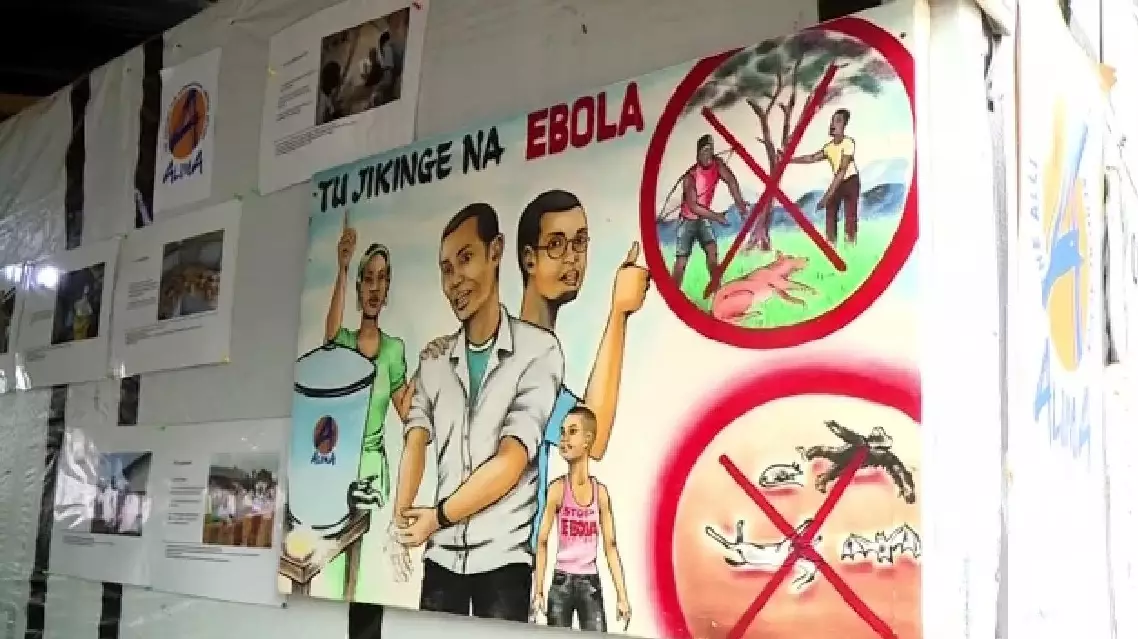
The World Health Organisation (WHO) on Sunday determined that the Ebola outbreak in the Democratic Republic of the Congo (DRC) and Uganda constitutes a "public health emergency of international concern."
The WHO said on social media platform X that the outbreak, caused by the Bundibugyo virus, does not meet the criteria of a pandemic emergency.
The designation aims to coordinate a stronger international response to end the outbreak. The global health body has sent experts and delivered medical supplies to curb the spread of the disease.
Racing against time to stop the spread of the Ebola virus, UN agencies are scaling up the delivery of medical supplies to Ituri province in the DRC following the confirmation of the infectious disease on Friday.
More than 240 suspected cases and 80 deaths have been reported in two mining towns so far.
The WHO has prompted global partners to aid the DRC government.
"This is a local challenge needing leadership on the frontlines and we are going to have it and we are going to support it but this local challenge can go global in an instant, and those are the stakes that we are all aware of, pushing a pandemic where it belongs and ending it," said David Stevenson, a representative of the World Food Program and country director for Nigeria.
The outbreak has been reported in Uganda. Authorities have also confirmed a case in the DRC capital Kinshasa. In both cases, patients are believed to have traveled from Ituri.
International health organizations have mobilized more than 600 kilograms of medical supplies to support the DRC government to treat Ebola patients and stop the spread of the contagious disease that has occurred in a region affected by conflict.
Officials fear that displacement of populations and cross-border trade may hinder response efforts.
"I think the main challenge we are going to face in Ituri is the population because the population there is very important and they go everywhere. So, you know that there are many traders there and people are going everywhere so this is the big issue we face there," Samuel Roger Kamba, health minister of the DRC.
Countries bordering the DRC are considered high risk. The WHO has urged them to enhance surveillance and report cases. Rwanda has closed its border with the DRC in the western province of Rubavu following the announcement.
The latest Ebola outbreak is the 17th in the DRC since 1976.
Scientists say the disease spreads through contact with the bodily fluids of infected people.
WHO declares Ebola outbreak in DR Congo, Uganda global public health emergency