China's bank wealth management market expanded and saw more investors in 2024, industry data showed on Friday.
By the end of 2024, the number of investors holding wealth management products in the banking market had risen to 125 million, up 9.88 percent year on year, the China Banking Wealth Management Registration and Depository Center said in a report.
The balance of wealth management products stood at 29.95 trillion yuan (about 4.17 trillion U.S. dollars) at the end of 2024 -- up 11.75 percent compared with the value at the beginning of last year, according to the report.
The center said 30,800 wealth management products were launched last year, raising a total of 67.31 trillion yuan (about 9.18 trillion U.S. dollars). Bank wealth management products, through investments in bonds, non-standard debts, unlisted equities and other assets, had supported the real economy with a capital scale of approximately 21 trillion yuan (about 2.87 trillion U.S. dollars) by the end of last year, the center added.
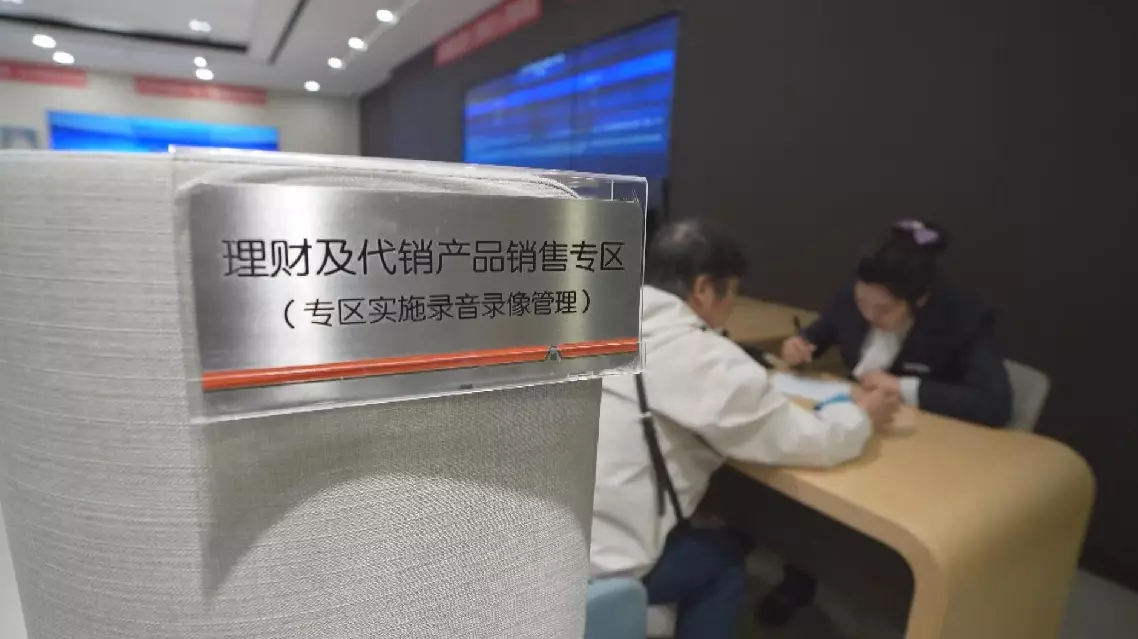
China's bank wealth management market expands in 2024
A full-chain open ecosystem for embodied intelligence has taken initial shape in Beijing, centered on a national-local jointly established innovation platform. The Beijing Humanoid Robot Innovation Center is working to break down technology barriers and data silos by open-sourcing key robotics frameworks and AI models.
After its "Tiangong Ultra" humanoid robot won the world's first humanoid robot half marathon in Beijing last year, the Beijing Humanoid Robot Innovation Center has accelerated efforts to open-source its core technologies, aiming to help the industry move faster toward real-world applications.
In the world's first humanoid robot half-marathon held in April 2025 in Beijing, Tiangong Ultra claimed championship by completing the 21.0975-kilometer race in 2 hours, 40 minutes and 42 seconds. Soon after, the center open-sourced its motion-control framework, followed by the release of multiple embodied AI models, including VLM, VLA and world models.
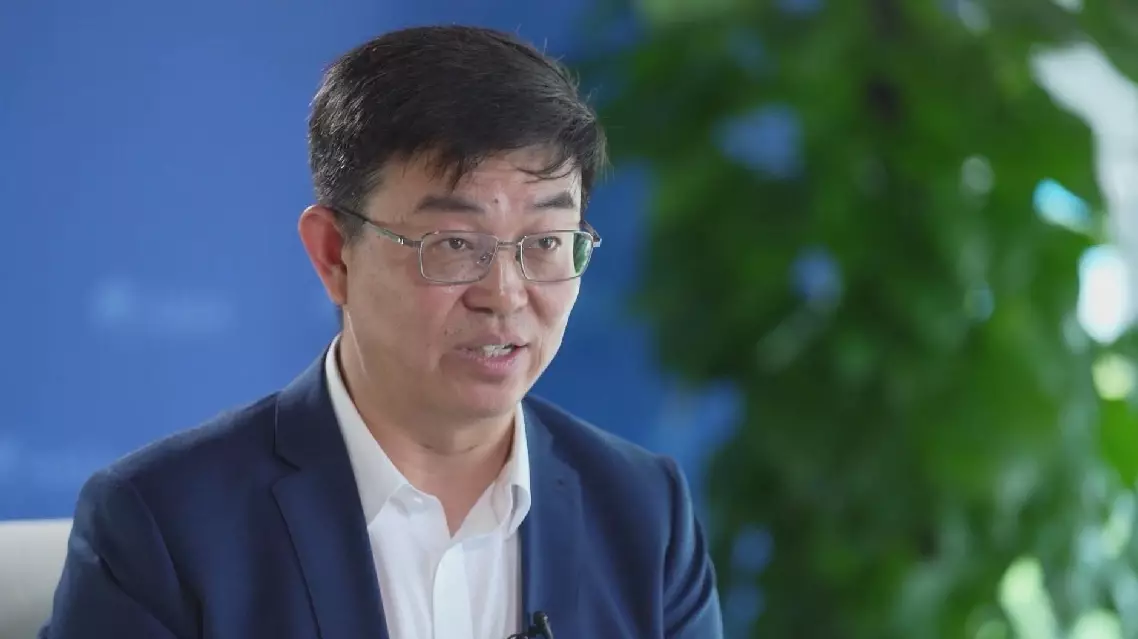
"First, our technology must be leading and earn everyone's recognition. Second, the technology really has to serve everyone well. Some companies do have good technology, they may do well on one specific aspect, but they don't open-source it, so others can not have access to it. But we are a fully open-source platform. Last year's marathon was a very good application scenario to test the stability and reliability of a robot's hardware. At that time, robots from three companies finished the race. Ours completed the whole race, and we were more than one hour ahead of the second place," said Xiong.
The results, he said, demonstrated that Tiangong's hardware platform and motion-control capabilities are among the industry's leading technologies.
Since the platform was made open-source, the center said its latest technologies have been downloaded more than 2 million times across China.
This year's humanoid robot half-marathon is scheduled for April 19, featuring a more demanding route including urban slopes, undulating roads and ecological sections inside parks.
The upgraded course is expected to pose greater challenges for robots' terrain adaptability and motion-control algorithms.
"This year, we have actually made all of our robots fully open-source and open. Now it is no longer just us that are using Tiangong technology to participate in the competition. Instead, more than 20 universities, research institutes and some enterprises in the industry are competing in the race by equipping the robots with their own algorithms. Some have even made modifications and improvements based on Tiangong, and then joined the competition. This is how the value of our platform is brought into play," said Xiong.
The center announced the launch of an ecosystem development plan for open-source embodied intelligence, which it described as the world's first full-chain ecosystem initiative centered on a national-local joint innovation platform.
The plan aims to break down technology barriers and data silos while linking upstream and downstream segments of the industrial chain.
"The current robots are still far from mature enough if they truly work in real-world situations, like on production lines, in some dangerous scenarios by replacing humans to do some specific work. We need to open-source all these technologies to the industries, so that everyone can use these technologies and improve rapidly, instead of engaging in low-level competition," said Xiong.
China now has more than 100 robotics companies, but many still focus mainly on building robot bodies, while capabilities such as motion performance, environmental perception, task planning and AI decision-making remain relatively weak, Xiong explained.
With open-source platforms and stronger foundational technologies, these companies could shift toward higher-value entry points in the market.
"We hope that the open-source technologies we release can serve as underlying technologies, so that they can innovate in vertical fields. For example, some may be in the power industry, some in the petrochemical industry, some in elderly care, and some in household services. Because the market is actually big enough, so everyone can use its own strengths, its understanding and insights into the industry to achieve better results in that vertical field, rather than doing repetitive work," Xiong noted.
Full-chain embodied AI ecosystem takes shape by leveraging national-local innovation platform