CJ's speech at Ceremonial Opening of Legal Year 2025
The following is issued on behalf of the Judiciary:
Click to Gallery
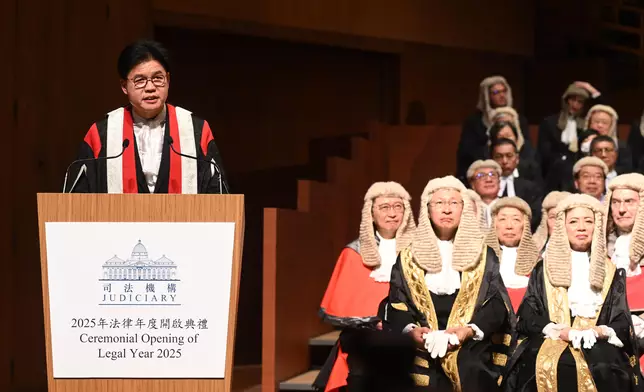
CJ's speech at Ceremonial Opening of Legal Year 2025 Source: HKSAR Government Press Releases
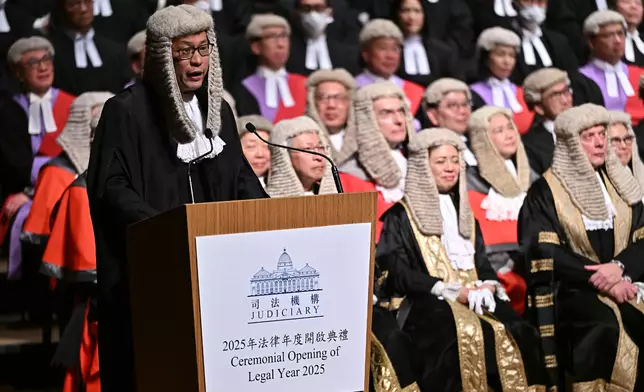
CJ's speech at Ceremonial Opening of Legal Year 2025 Source: HKSAR Government Press Releases
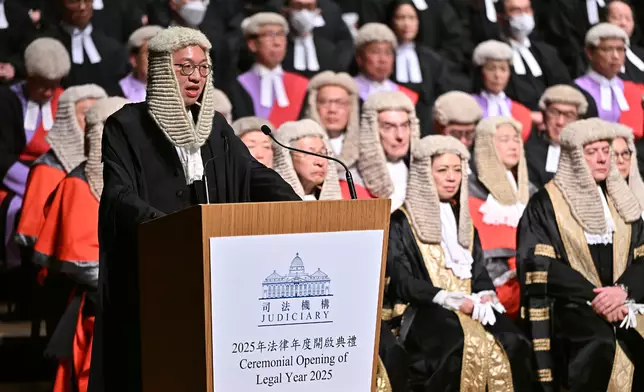
CJ's speech at Ceremonial Opening of Legal Year 2025 Source: HKSAR Government Press Releases
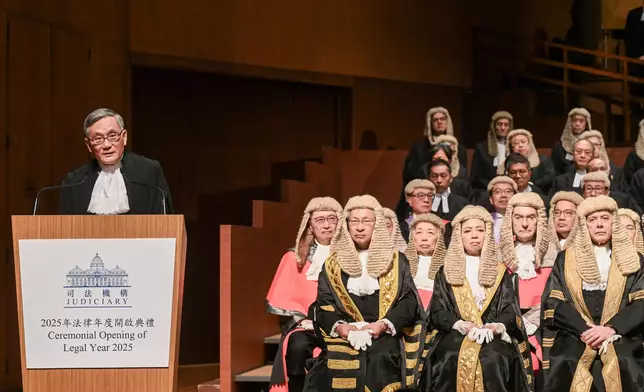
CJ's speech at Ceremonial Opening of Legal Year 2025 Source: HKSAR Government Press Releases
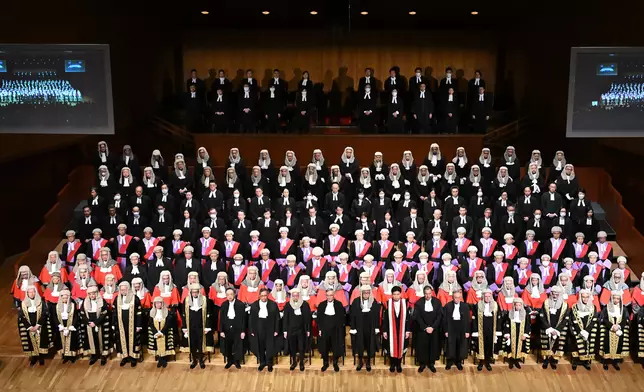
CJ's speech at Ceremonial Opening of Legal Year 2025 Source: HKSAR Government Press Releases
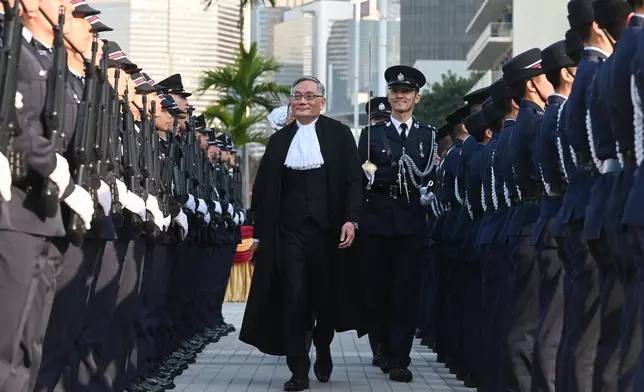
CJ's speech at Ceremonial Opening of Legal Year 2025 Source: HKSAR Government Press Releases
Following is the full text of the speech delivered by Chief Justice Andrew Cheung, Chief Justice of the Court of Final Appeal, at the Ceremonial Opening of the Legal Year 2025 today (January 20):
Secretary for Justice, Chairman of the Bar, President of the Law Society, Fellow Judges, Distinguished Guests, Ladies and Gentlemen,
On behalf of the Hong Kong Judiciary, I extend a very warm welcome to all of you to the Ceremonial Opening of the Legal Year. This important occasion reminds our community of the essential role of an independent judiciary to the administration of justice and the rule of law. It also provides us with an opportunity to reaffirm the values that have sustained our legal and judicial system through decades of change, and to look ahead to the challenges and opportunities that await us.
The rule of law is the foundation on which Hong Kong has built its reputation as an international financial hub, a safe and fair place to do business, and a city where the rights of the ordinary people are protected. It is an essential support of our "one country, two systems" framework, which guarantees that Hong Kong maintains its distinct legal system, separate from yet intrinsically linked to that in the Mainland. This is a unique arrangement that requires constant effort and determined commitment to sustain, with the Hong Kong Judiciary playing a key role in its success by upholding the rule of law.
Far from being an abstract concept, the rule of law is very much a practical principle that depends on the integrity of our judicial institutions and the daily work of the legal profession. It is not simply about laws being written, but about laws being applied fairly, consistently, and independently. Indeed, Hong Kong's legal and judicial system has earned its international recognition not just because of the quality of its laws, but also for the quality of the courts and the legal professionals who serve them.
Lying at the heart of the rule of law in Hong Kong is judicial independence. Article 85 of the Basic Law specifically guarantees that the judicial power shall be exercised independently, free from any interference. This is not a mere form of words, but a constitutional mandate that has always been and continues to be jealously upheld by our courts.
Indeed, judicial independence is most clearly demonstrated through the daily work of judges, who decide cases based on the law and evidence, without regard to extraneous considerations, whether political or personal, or public sentiment. Our system of law cannot command public confidence unless judges remain faithful to their commitment to do justice according to law. And despite the challenges of recent years, the Judiciary continues to discharge that duty with integrity and impartiality.
Under our common law system, the legal principles that guide and inform decisions are just as important as the decisions themselves. Like their counterparts in other mature common law jurisdictions, our courts operate on legal principles that are applied consistently, whether in cases concerning commercial disputes, family law, criminal prosecution, or matters of public law.
The introduction of the Hong Kong National Security Law, which is now complemented by local legislation enacted pursuant to Article 23 of the Basic Law, has brought with it cases that attract heightened attention, particularly because of their political sensitivity. Almost by definition, national security law is highly context-dependent and tailored to the specific needs of each society. Whilst the need to safeguard national security is universal, the specific content of such laws is largely shaped by a society's prevailing security considerations, its historical experiences, and the threats that it is facing. These background matters, which vary widely between societies, are essential to any fair assessment of national security laws. Hong Kong's laws are no different.
However, it is necessary to recognise that in our courts, the same principles of law apply in national security cases as in others. The presumption of innocence, the requirement that guilt be proved beyond reasonable doubt, and the right to a fair trial are all essential safeguards that remain firmly in place. Indeed, they are specifically affirmed under Article 5 of the National Security Law as well as section 2 of the Safeguarding National Security Ordinance. Our courts do not merely pay lip service to these fundamental principles. Judges at all levels are expected to, and indeed do, adhere to them in the adjudication of cases.
As mentioned, the rule of law in Hong Kong exists within a unique constitutional framework - the "one country, two systems" arrangement. Undoubtedly, this arrangement brings with it occasional complexities, which are perhaps inevitable in a design where two different legal and political traditions co-exist within a single sovereign state. Viewed in this light, the national security laws simply reflect the "one country" aspect of this framework. But it is the "two systems" part of the notion that entrusts the courts with the responsibility of applying these laws to safeguard national security in a manner consistent with Hong Kong's separate system under the Basic Law. The role of our courts is to address any difficulties with fidelity to the law and Hong Kong's common law tradition. The task is not without its challenges, but it is one that the Judiciary is well equipped to meet.
Admittedly, as in other jurisdictions, a tension often exists between protecting basic rights and safeguarding national security, both of which the Judiciary is firmly committed to upholding. The protection of basic rights is not a simplistic, one-dimensional issue; it often involves a delicate balancing act - between individual freedoms and collective security, between the rights of the person and the responsibilities of the state. Striking the right balance can be challenging, and outcomes in individual cases may be contentious at times. Nor is the interpretation or application of newly enacted statutory provisions always straightforward. However, it is one thing to disagree with a legal provision or a court decision in applying it, but entirely another to suggest that the justice system has been undermined by political expectations or societal atmosphere.
Judges, far from being designed to serve political ends, are bound by legal principles. Courts are not arbiters of public opinion, nor are they an extension of the prosecution authority; they are, above all, guardians of the law. Their decisions are reasoned, published, and subject to appeal. It is through this process that the rule of law is upheld.
Indeed, the courts remain accountable through the legal process itself. Not only are hearings conducted in the open, but decisions are also subject to appeal, and the appellate courts, including the Court of Final Appeal, continue to provide oversight and ensure that the law is applied fairly and consistently. This process of scrutiny is a fundamental aspect of judicial accountability. It ensures that legal arguments are fully tested, that errors can be corrected, and that the law is developed and applied in a principled and coherent manner. The right to appeal, along with the transparency of judicial reasoning, is a safeguard that reinforces public confidence in the administration of justice.
In Hong Kong, the courts' constitutional role in administering justice fairly and in accordance with law is greatly assisted by a strong and independent Bar that our community is fortunate to have. Barristers have a special role as defenders of the rights and interests of their clients. Whether representing clients in constitutional challenges, judicial reviews, national security matters or in more routine commercial disputes, barristers, along with their instructing solicitors, help ensure that the law is applied consistently and accurately. The two branches of the legal profession serve as a powerful counterbalance to any potential overreach, assisting the courts to administer justice fairly and impartially.
From a broader viewpoint, national security cases form but a small fraction of the work of the courts. The Judiciary is tasked with administering justice across a wide range of areas that are critical to the proper functioning of society and the economy.
To take the Court of Final Appeal as an example, in the past two years alone, it has adjudicated on cases of considerable significance across diverse areas of law. These include, for instance, anti-money laundering legislation, arbitration, equality claims involving same-sex relationships, insolvency, legal professional privilege in legal aid applications, and serious criminal matters such as murder and unlawful assemblies. The Court has also heard appeals concerning building management, jury directions in criminal trials, magistracy appeals, revenue legislation and trust law. This breadth of subject matter, which is even more evident at the High Court level, attests to the Judiciary's central role in dispensing justice across nearly all facets of societal activity.
But not only that. The jurisprudence of the Hong Kong courts continues to command high respect in other common law jurisdictions. In a recent judgment, the Judicial Committee of the Privy Council sitting in London referred to and discussed no fewer than six Hong Kong decisions from the past few years, including one from the Court of Final Appeal decided in 2023, when determining insolvency issues raised in an appeal before it.
This is mentioned not for reasons of self-promotion - after all, our courts regularly refer to overseas judgments - but to emphasise that Hong Kong is a sophisticated and vibrant common law jurisdiction, with the remit of its courts extending well beyond politically charged cases. The courts are engaged in the steady, day-to-day work of resolving disputes, protecting rights, and ensuring the proper functioning of Hong Kong as a highly developed modern city that over seven million people call home. Some of our court decisions no doubt have significant jurisprudential value, attracting attention and citation in common law courts abroad. But many decisions are more mundane, yet no less important, as they address the everyday legal concerns of ordinary people and businesses. To focus solely on high profile cases concerning national security or public order, and to draw sweeping conclusions about the state of the rule of law or judicial independence in Hong Kong from such a narrow perspective, is to misunderstand the full scope of the Judiciary's role and work. It is also to overlook the fact that the rule of law in Hong Kong continues to operate robustly across a wide spectrum of legal areas, touching upon the daily lives and activities of individuals, businesses and investors, both international and local.
This brings me to the recent departures of some of our overseas non-permanent judges from the Court of Final Appeal, a development which, understandably, has caused concerns in some quarters.
The historical rationale for the presence of overseas judges in our highest court is clear. In the 1990s, Hong Kong lacked senior judges with experience at the final appellate level. This posed a challenge for filling the judicial positions to be created following the establishment of the Court of Final Appeal in 1997 to replace the Privy Council in London as Hong Kong's ultimate appeal court. The appointment of distinguished overseas jurists as part-time, non-permanent judges to our highest court therefore addressed the inevitable shortfall and served the further purpose of instilling confidence in Hong Kong's judicial system in the post-1997 era.
Over the years, the contributions of these overseas judges to the work of the Court and to the upholding of the rule of law have been immense, and have been rightly recognised. During this same period, through the efforts of many, the Court of Final Appeal has firmly established itself as a prominent final appellate court within the common law world.
Now that more than 27 years have passed since July 1, 1997, Hong Kong has undoubtedly developed and nurtured sufficient legal and judicial talent to fill the highest judicial offices even in their entirety. Nonetheless, the system of overseas non-permanent judges remains of considerable value. Not only do our judges continue to benefit from the wisdom of these eminent jurists from abroad, but their presence also naturally enhances international confidence in our legal system.
It is against this backdrop that the retirements of long-serving overseas judges, due to age and other personal reasons, as well as the early departures of a handful of foreign judges on account of political or other considerations, must be understood.
In this regard, the effect of the escalating geopolitical tensions in recent years cannot be ignored. Indeed, the orchestrated harassment and pressures to which some of our overseas judges have recently been subjected are as deplorable as they are indicative of how politicised the office of an overseas non-permanent judge on the Court has now become. And it is this broader context, reflective of the underlying geopolitical tensions, that must inform an impartial observer's understanding of the current situation.
The presence of overseas judges has long stood as a symbol of Hong Kong's commitment to legal excellence and judicial independence. It is unfortunate that a few of these judges have felt unable to continue their service. They are, of course, entitled to their views, and their decisions ought to be respected. However, their premature departures do not mean a weakening of the quality or independence of the Judiciary. It is true that, given the current geopolitical headwinds, recruiting overseas judges with the right stature and experience may be less straightforward than it once was. After all, overseas judges are appointed to our highest court on account of their acknowledged eminence and legal expertise, not merely to sustain the system of overseas judges for its own sake. Still, the Court of Final Appeal continues to include both highly esteemed overseas and local non-permanent judges, and their continued participation, alongside their full-time colleagues, speaks to the enduring strength and resilience of the Court.
However, far more important than all of this, the Judiciary is broader than any individuals. Judges come and go. But our system is built on legal principles, judicial precedents, and a robust structure that will continue to function. The presence or absence of individual judges, whilst important in its own right, will not undermine the integrity of the system. Our judges are well trained, experienced and capable of upholding the law, as they consistently demonstrate.
This brings me back to our legal profession. The Hong Kong Bar Association, which recently marked its 75th anniversary, together with the solicitors' branch of the profession, has long been a staunch defender of the rule of law. The Judiciary has consistently recognised the importance of replenishing its ranks with talented, experienced, and principled practitioners from private practice. Many of Hong Kong's finest judges have come from the senior ranks of the Bar, bringing with them extensive experience in litigation and a strong understanding not only of the law but also of our common law tradition and values. The many ways in which the Bar has contributed to the rule of law have been widely acknowledged. And rightly so. However, perhaps at no other time in its long history has the Bar's support for the rule of law - specifically through its senior members stepping up to serve on the Bench - been more urgently needed than now. For the Judiciary must continue to be infused with the expertise and dedication of those who have spent years in private practice, ensuring that the courts remain strong, independent, and trusted by both the legal profession and the public.
At the same time, it is only right to point out that the Judiciary has a capable pool of talent from within. Many of our judges have risen through the ranks with years of experience in handling complex legal issues. They have demonstrated their competence and their commitment to upholding the rule of law. Indeed, the Judiciary's internal strength plays an essential role in maintaining continuity, stability and confidence in our legal system. This internal talent, together with continued efforts to attract suitable appointments from the legal profession, will ensure that the Hong Kong Judiciary remains equipped, both in terms of quality and capacity, to meet the challenges ahead.
In recent years, Hong Kong has faced significant challenges, whether politically, socially or economically. These challenges have tested the resilience of our legal system and the strengths of our institutions. But the Judiciary has stood firm, continuing to uphold the rule of law and ensuring that legal processes remain transparent, fair and independent. It is in these times of uncertainty that the Judiciary's role becomes even more critical. The Judiciary will continue to adapt to the evolving demands of our society, embrace new technologies, address novel issues and ensure that it remains relevant and effective in an increasingly complex and inter-connected world.
It only remains for me to wish you and your families good health and much happiness in 2025. The Chinese New Year being just days away, I also wish everyone here a very blessed Chinese New Year. Thank you.
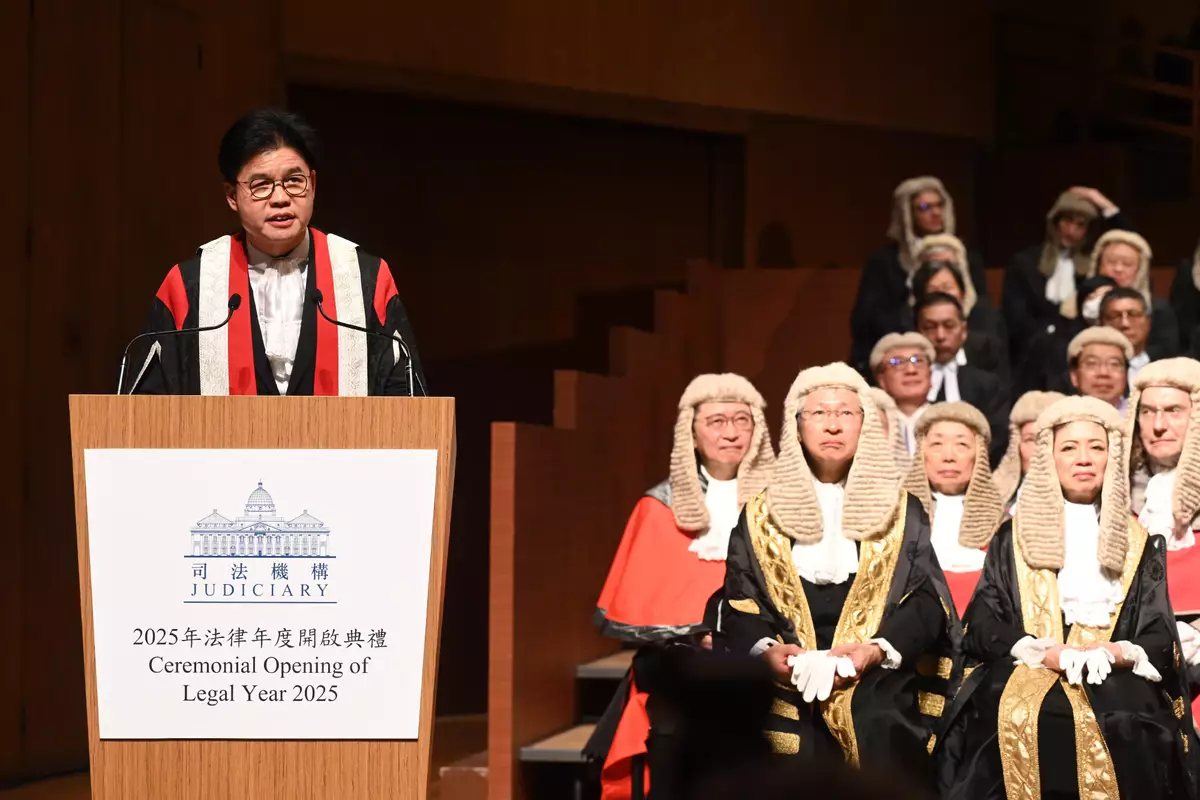
CJ's speech at Ceremonial Opening of Legal Year 2025 Source: HKSAR Government Press Releases
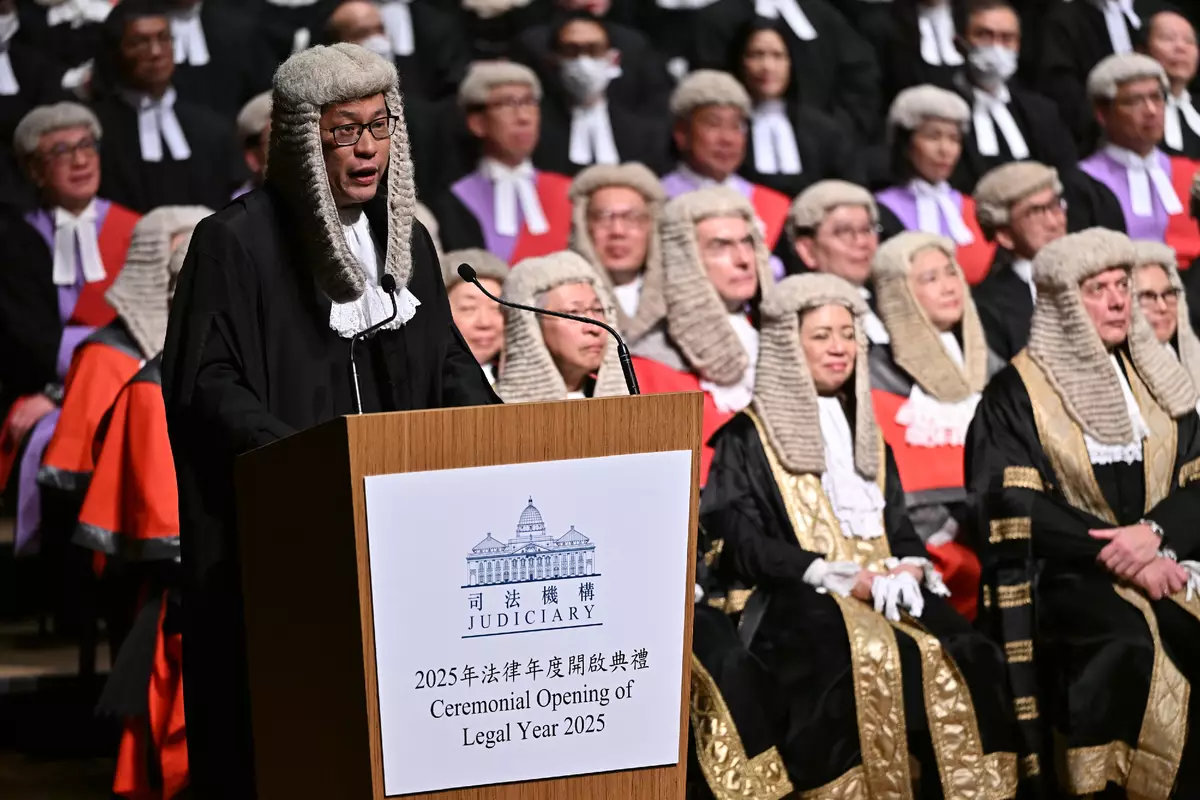
CJ's speech at Ceremonial Opening of Legal Year 2025 Source: HKSAR Government Press Releases
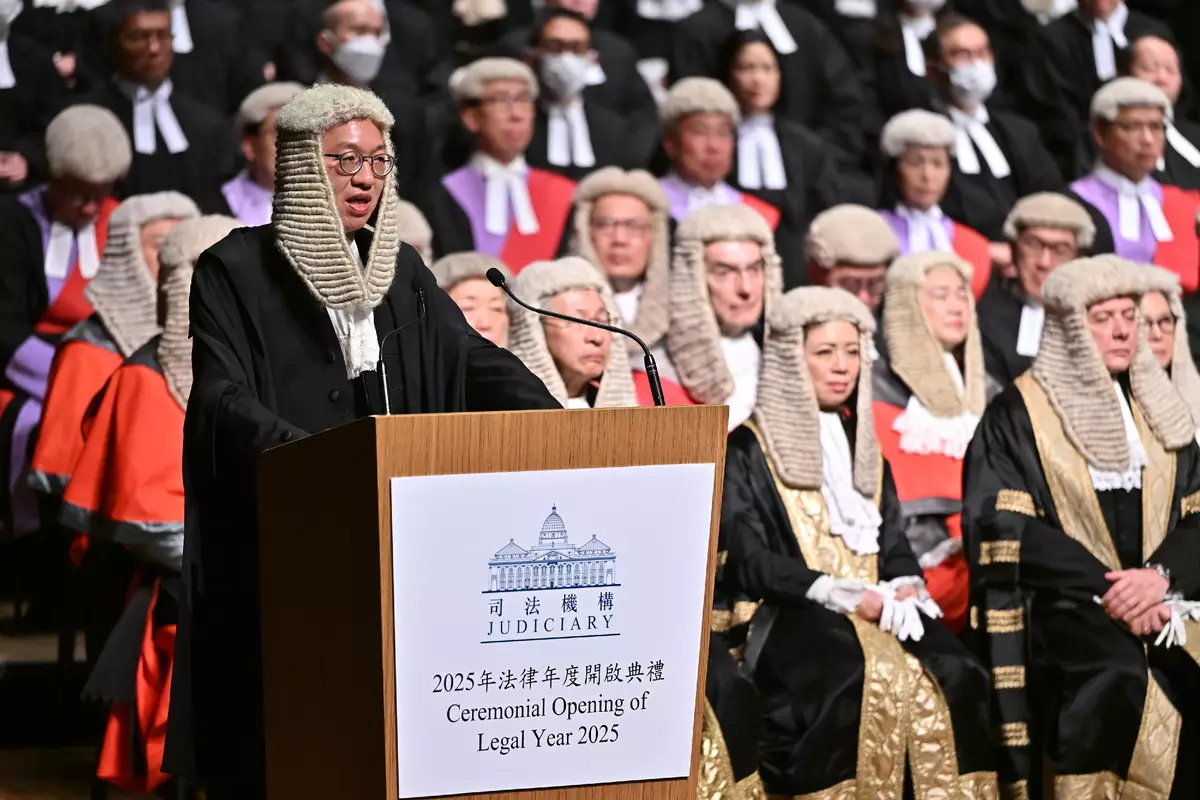
CJ's speech at Ceremonial Opening of Legal Year 2025 Source: HKSAR Government Press Releases
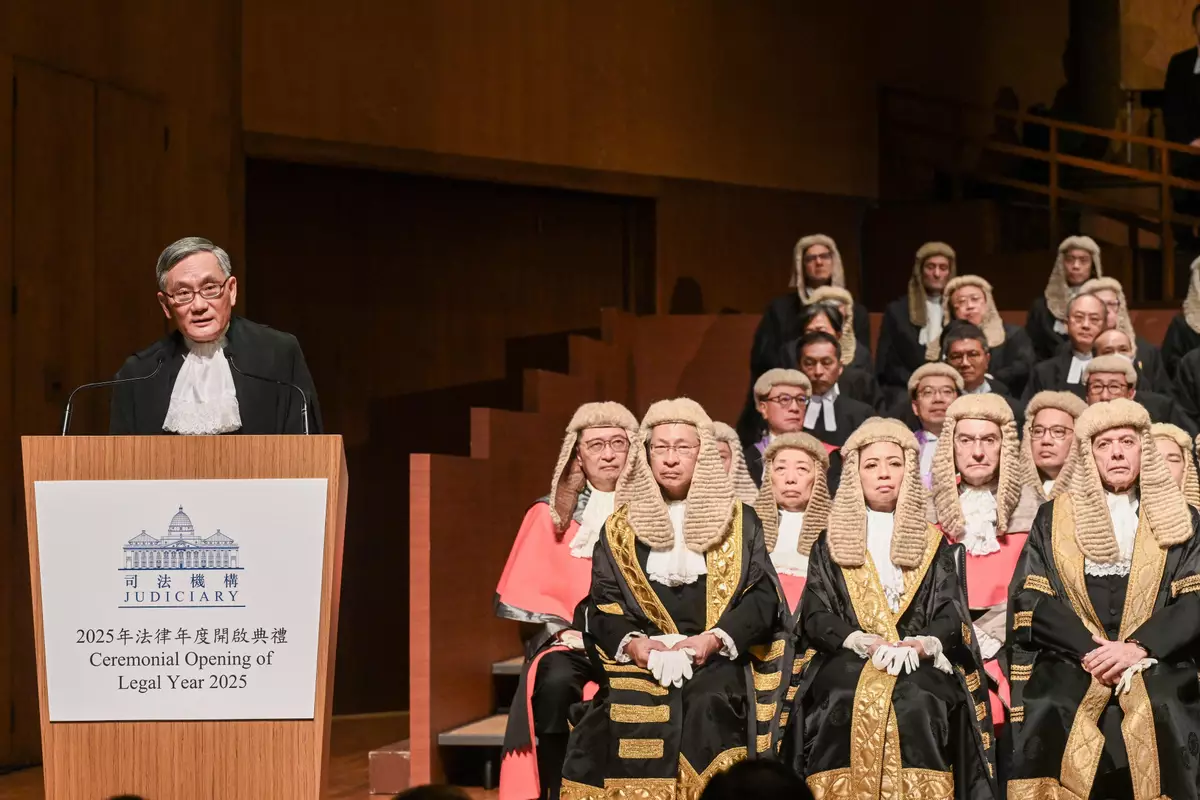
CJ's speech at Ceremonial Opening of Legal Year 2025 Source: HKSAR Government Press Releases
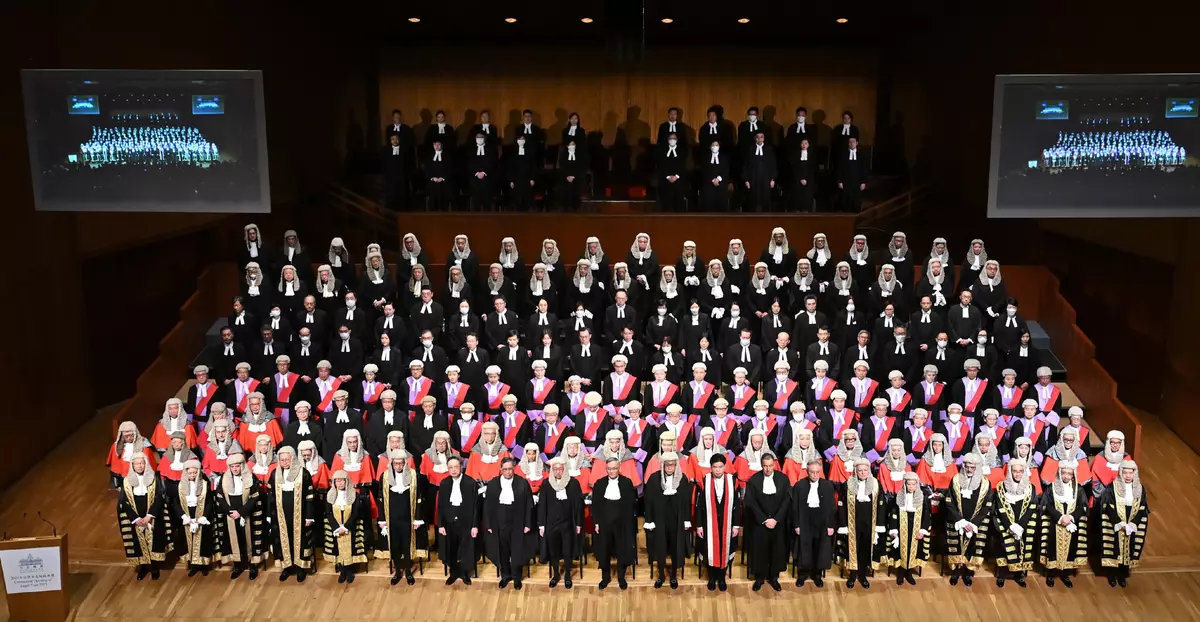
CJ's speech at Ceremonial Opening of Legal Year 2025 Source: HKSAR Government Press Releases
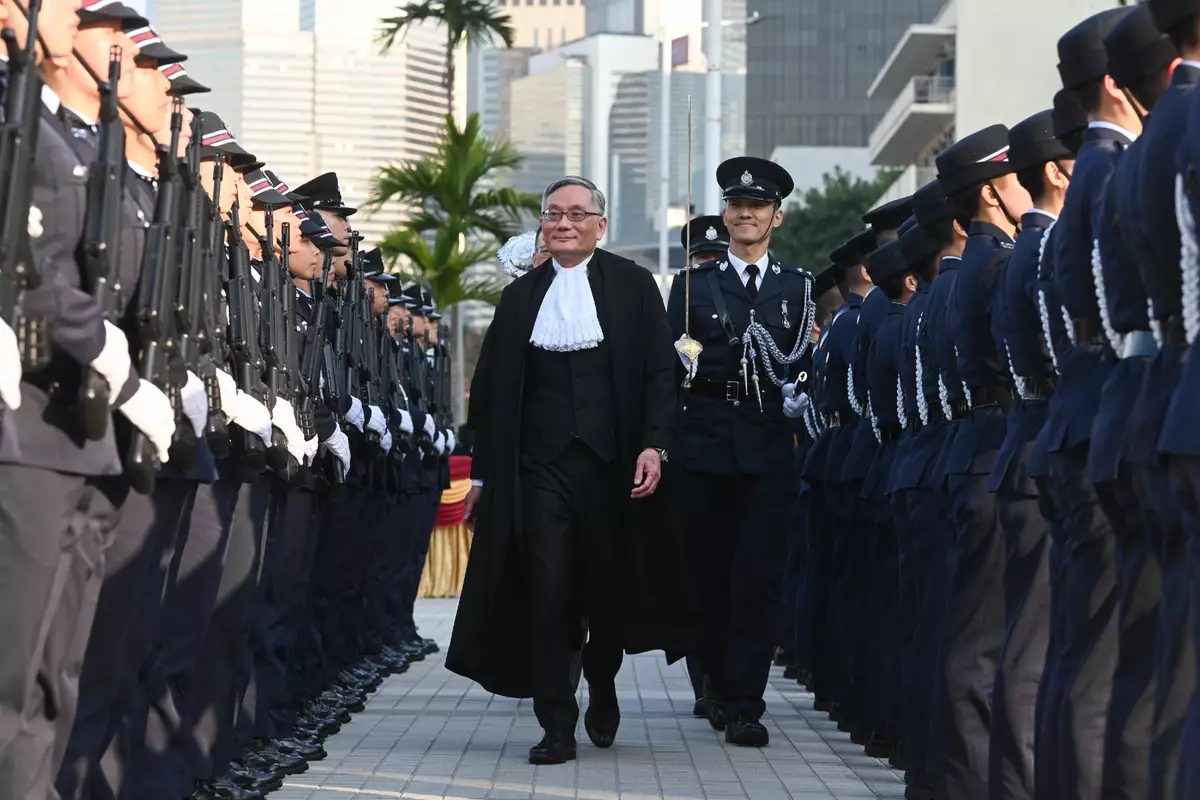
CJ's speech at Ceremonial Opening of Legal Year 2025 Source: HKSAR Government Press Releases