The world is moving towards a more multipolar order with the emergence of the Global South but despite fierce competition among nations, there is still room for collaboration as countries share many common interests, according to the president of the World Economic Forum (WEF).
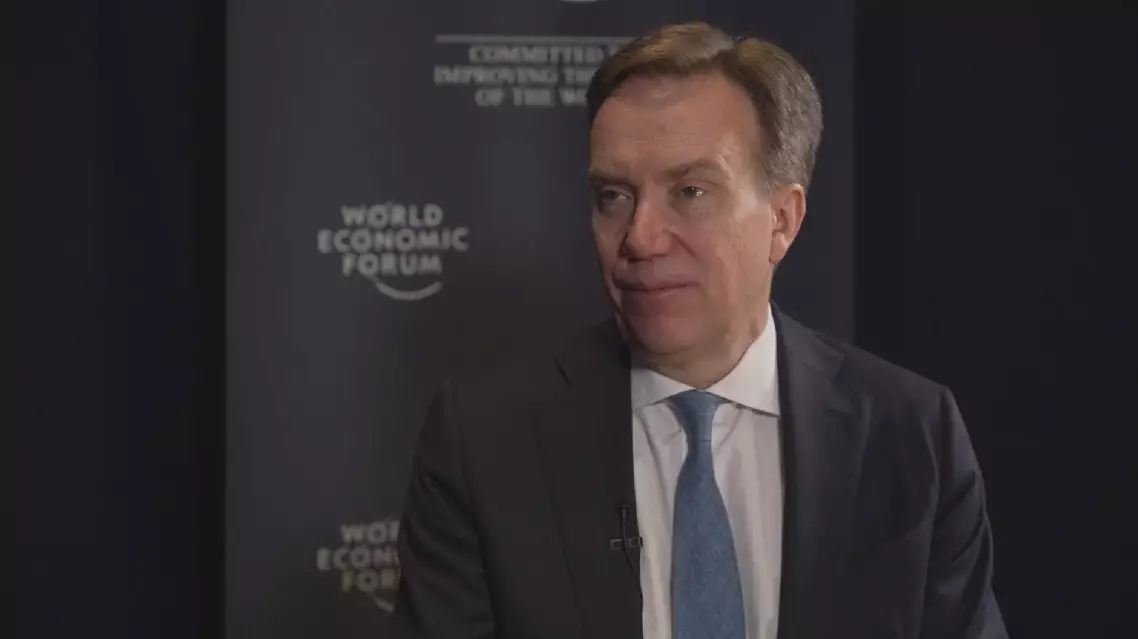
Speaking on the sidelines of the 2025 World Economic Forum (WEF) Annual Meeting, which commenced in Davos, Switzerland on Monday, WEF President and CEO Borge Brende told the China Global Television Network (CGTN) that cooperation and competition among countries can still coexist, even as the traditional world order undergoes a period of change.
"I think we have to be 'realpolitikal' in the sense that in the world order that we had post-Cold War for the last more than 30 years, it was more of a win-win thinking -- what is good for you is good for us. We are now moving into a new world order that is more multipolar, but also is more about each country's self-interest," he said.
While noting the world's top two economies of China and the United States continue to be the main economic forces, Brende said that the rise of developing countries means there is a greater need for all nations to cooperate as they each aspire to their development goals.
"China and the U.S. is still almost 50 percent of the global economy together. The U.S. probably has more than 45 percent of the overall military power and capacity in the world. But we're moving more into a multipolar world because there's a lot of emerging economies. You have the Global South, too. But we will also need, in that new world order, to collaborate because there are areas of so much common interest," he said.
As U.S. President Donald Trump was sworn in to start his second term in office on Monday, Brende acknowledged there will be competition across a number of fields, especially in new technologies, but said that the recent call between Chinese President Xi Jinping and Trump -- during which Xi stressed the two sides share common interests and have broad space for cooperation -- shows that both countries recognize the importance of working together.
"There are areas where countries will compete fiercely. I think on the new technologies, you will see strong competition between China and the U.S. as the two leading powers on the technology side, on artificial intelligence, on the Internet of Things, also when it comes to digital trade. But even in a situation with strong competition that I think will be there -- because both of these countries know that the country on top of the new technologies will probably be the most prosperous country also -- even in such a situation, I think what we saw with the call between President Trump and President Xi Jinping is that they both realize that there are common interests," said Brende.
The five-day WEF Annual Meeting in Davos is themed "Collaboration for the Intelligent Age,"and is bringing together nearly 3,000 participants from various regions and industries, with a call for greater cooperation amid global uncertainty.
Cooperation, competition can coexist in new multipolar world: WEF President