Skip to Content Facebook Feature Image

China, US should respect each other, pursue peaceful coexistence, win-win cooperation: spokesman

China

China, US should respect each other, pursue peaceful coexistence, win-win cooperation: spokesman
China

China

China, US should respect each other, pursue peaceful coexistence, win-win cooperation: spokesman

2026-03-04 13:46 Last Updated At:16:47

As two major countries, China and the United States should respect each other, and pursue peaceful coexistence and win-win cooperation, a Chinese spokesman said on Wednesday.

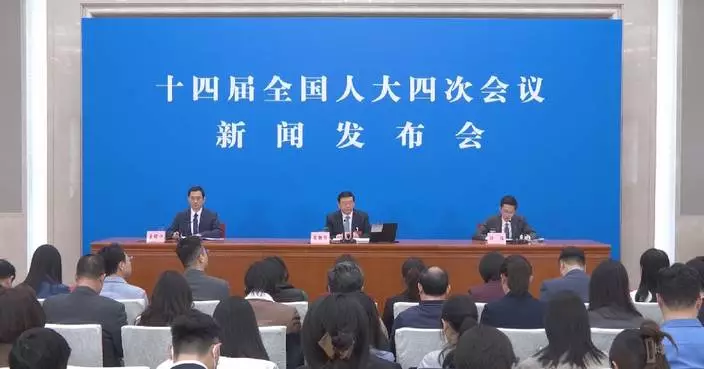
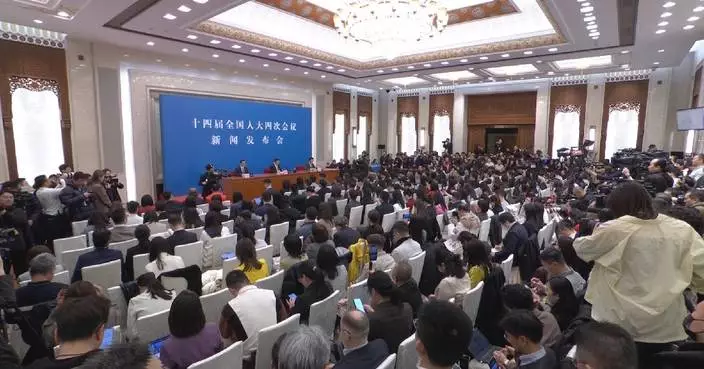
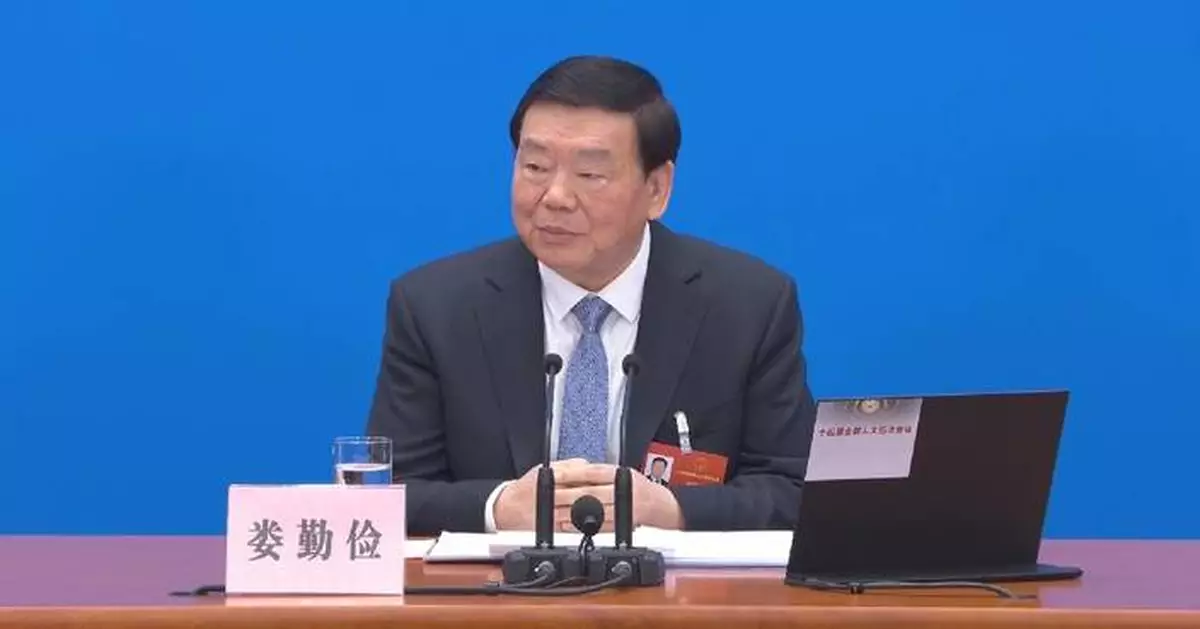
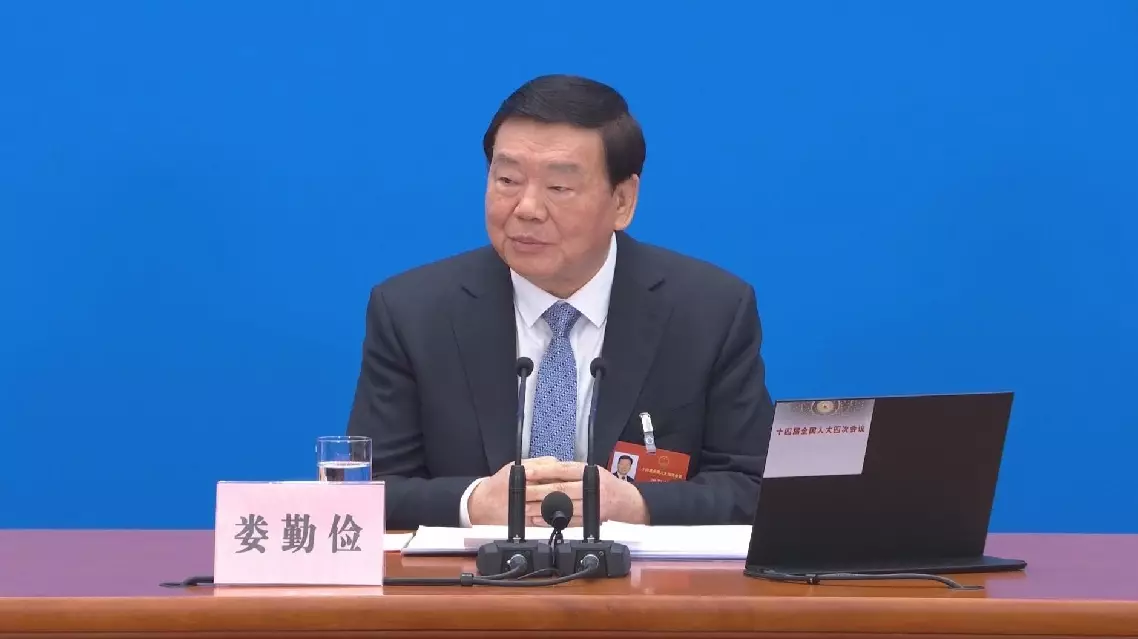
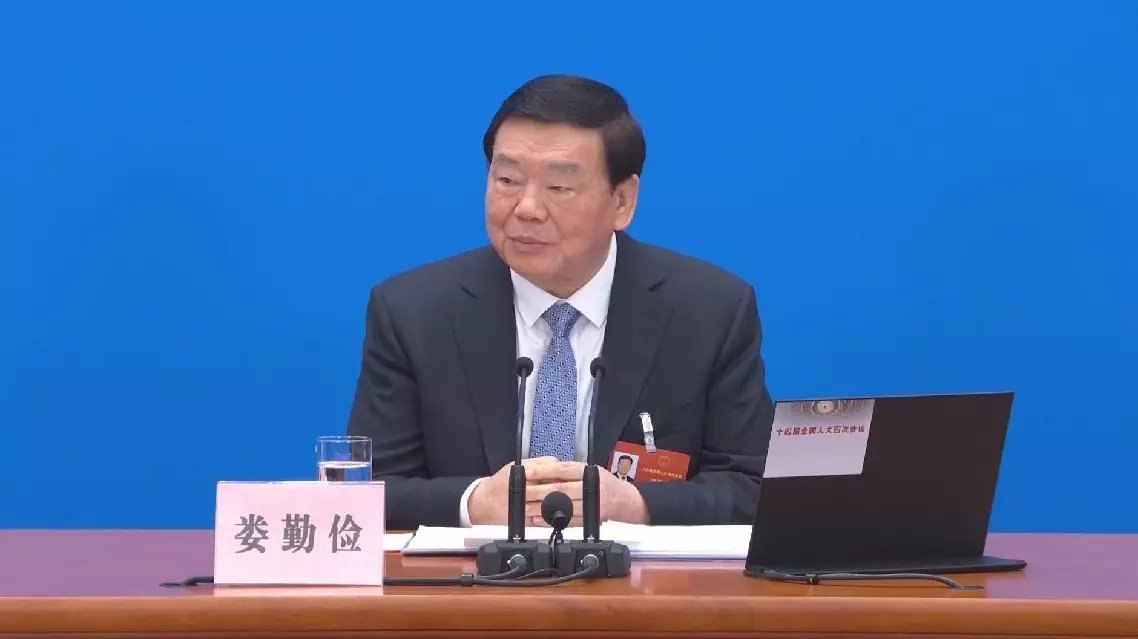
Lou Qinjian, spokesman for the fourth session of the 14th National People's Congress (NPC), made the remarks at a press conference held one day ahead of the opening of the annual session of the NPC, the country's supreme organ of state power.

"China always believes that as two major countries of the world, China and the United States should respect each other, coexist in peace, and pursue win-win cooperation. President Xi Jinping pointed out that the two countries should be partners and friends. This is what history has taught us and what reality needs. Mutual achievement and common prosperity between China and the United States is a visible and tangible prospect," Lou said.

Lou said that China and the United States can steadily advance their relations, if both countries honor the important consensus reached between the two heads of state in line with equality, respect, and reciprocity.

"The head-of-state diplomacy plays an irreplaceable role of providing strategic guidance. Since last year, President Xi and President Trump have maintained regular communication, steering the cause for the giant ship of China-U.S. relations and injecting impetus for its steady sail forward. The bilateral relations have generally maintained a steady and positive trajectory, which is welcomed by the two countries and the broader international community," Lou said.

"Facts have shown that China and the United States both stand to gain from cooperation and lose from confrontation. As long as the two sides faithfully implement important common understandings between the two heads of state, act in the spirit of equality, respect and mutual benefit, work to lengthen the list of cooperation and shorten the list of problems, the relationship will be able to move forward steadily," Lou continued.

China is willing to work with the United States to strengthen communication to create broader space for bilateral cooperation. Meanwhile, China will firmly safeguard its sovereignty, security, and development interests, said Lou.

"China is ready to strengthen communication with the United States at all levels and through various channels and create more space for cooperation. At the same time, China has its own principles and red lines, and will, as always, resolutely defend its sovereignty, security and development interests," said Lou.

Lou also expressed the hope that the U.S. Congress will view China and China's development in an objective and rational way, and do more things conducive to bilateral relations.

"Last year, the NPC invited a U.S. House of Representatives delegation to China, maintained dialogue with U.S. senators, and sent an NPC youth delegation to the United States. A common sentiment among the U.S. Congress members was that to meet is better than to look away, and to talk is better than to cut off. The NPC is ready to maintain contact with the U.S. Congress and contribute to the steady and sound development of China-U.S. relations from the perspective of legislative bodies. We hope that the U.S. Congress will view China and China's development in an objective and rational way, and do more things conducive to bilateral relations and friendship between our peoples," Lou said.
China, US should respect each other, pursue peaceful coexistence, win-win cooperation: spokesman
China, US should respect each other, pursue peaceful coexistence, win-win cooperation: spokesman
China, US should respect each other, pursue peaceful coexistence, win-win cooperation: spokesman

China, US should respect each other, pursue peaceful coexistence, win-win cooperation: spokesman

China's Large High Altitude Air Shower Observatory (LHAASO), a high-altitude cosmic ray observatory in Sichuan Province, is pushing the boundaries of astrophysics by bringing humanity closer to answering the century-long question of the origins of ultra-high-energy cosmic rays.

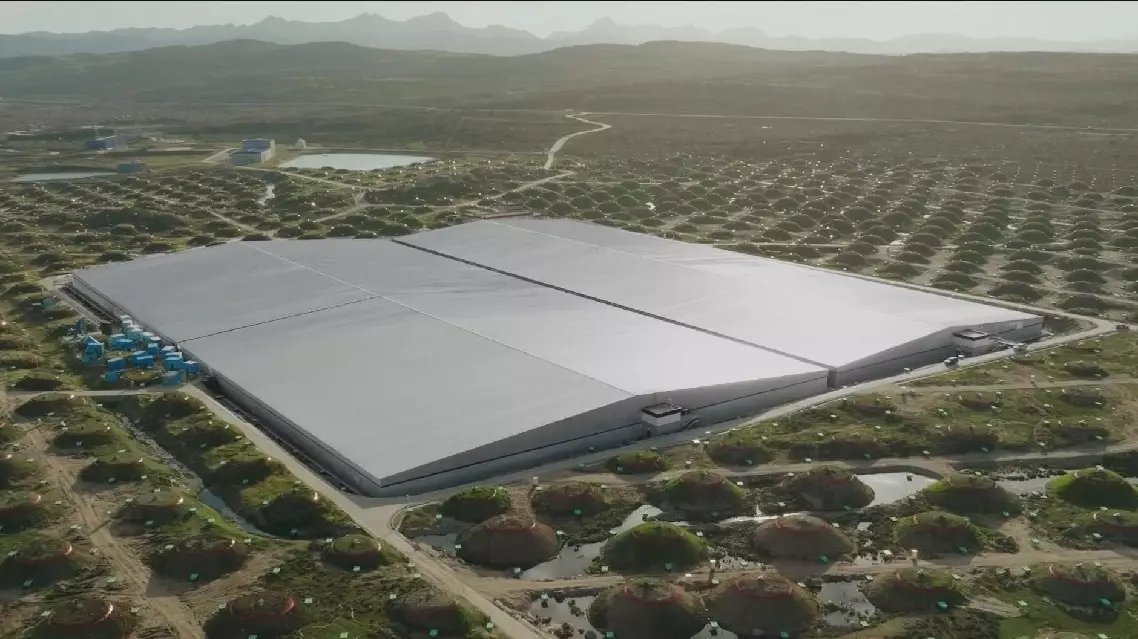
Completed in 2021, LHAASO sprawls across an area the size of 190 football fields. It is the world’s highest-altitude, largest-scale, and most sensitive observatory for detecting cosmic ray particles as they enter Earth’s atmosphere.

The project traces back two decades, when physicist Cao Zhen envisioned China taking a decisive role in this frontier of science.

"Each particle has the energy much higher than what we can produce on Earth. We don't know where it was produced. This is the fascinating question that has bothered people for 100 years already. First of all, (we) go to the high altitude -- the higher [you go], the less the influence from the atmosphere. And then we decided to build such a large-scale experiment: the larger, you get more cosmic rays," said Cao Zhen, chief scientist at LHAASO and a researcher at the Institute of High Energy Physics under the Chinese Academy of Sciences (CAS).

LHAASO functions as a giant set of "eyes" -- detectors that track cosmic ray particles invisible to the human eye. At its core lies a warehouse the size of 2.5 National Aquatic Centers, housing the world's most sensitive gamma-ray telescope.

Surrounding it are raised mounds -- muon detectors engineered to absorb photons and electrons while allowing only highly penetrating muons to pass through. Scattered among them, 18 blue, container-shaped telescopes complete the vast array.

Despite the thin atmosphere at an altitude of over 4,400 meters, China completed the construction of LHAASO in under five years, showcasing a remarkable feat of human endurance.

"Some of our detectors work perfectly fine in the lab, but they might malfunction when installed here because of the high-altitude environment. During the day, with the sun, the humidity is only about 20 to 30 percent, but at night it rises rapidly, reaching 100 percent. In addition, the detectors are also affected by temperature, wind, and extreme weather," said Wang Yudong, a researcher at the Institute of High Energy Physics.

The effort quickly began to yield results. In 2020, even before the observatory was fully completed, scientists using LHAASO's partial array identified 12 ultra-high-energy gamma-ray sources. Two years later, in October 2022, the facility captured an extraordinary event: a millennial gamma-ray burst, a dazzling "cosmic firework" triggered by the collapse of a massive star some two billion years ago.

LHAASO is but one of 77 mega-science infrastructures now operating across China. Over the past five years, these facilities have propelled the country to the forefront of high-impact publications and patent applications, unraveling cosmic mysteries, advancing core technologies, and driving industrial progress along the way.

China's LHAASO edges closer to solving cosmic ray mystery

China's LHAASO edges closer to solving cosmic ray mystery

Recommended Articles