Skip to Content Facebook Feature Image

Neighboring countries remain top priority in China's diplomatic agenda: spokesman

China

Neighboring countries remain top priority in China's diplomatic agenda: spokesman
China

China

Neighboring countries remain top priority in China's diplomatic agenda: spokesman

2026-03-04 14:36 Last Updated At:16:37

China always makes neighboring countries a top priority in its diplomatic agenda, and remains committed to promoting peace, stability and prosperity across the region, a spokesman said on Wednesday.

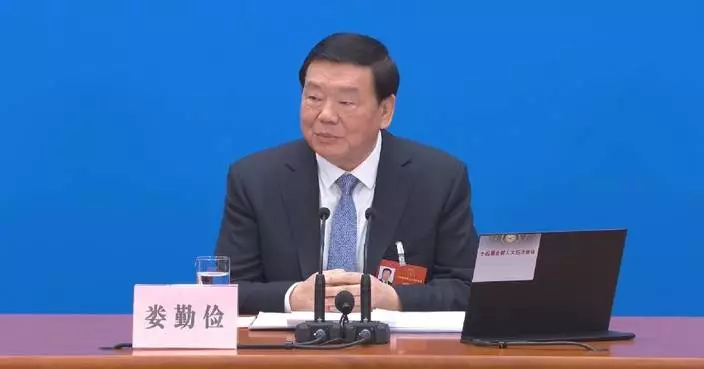
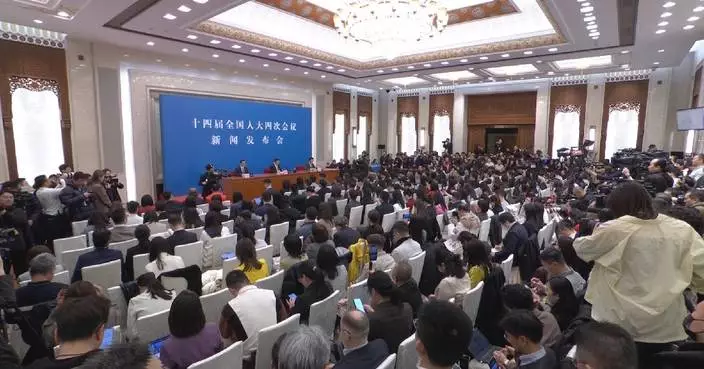
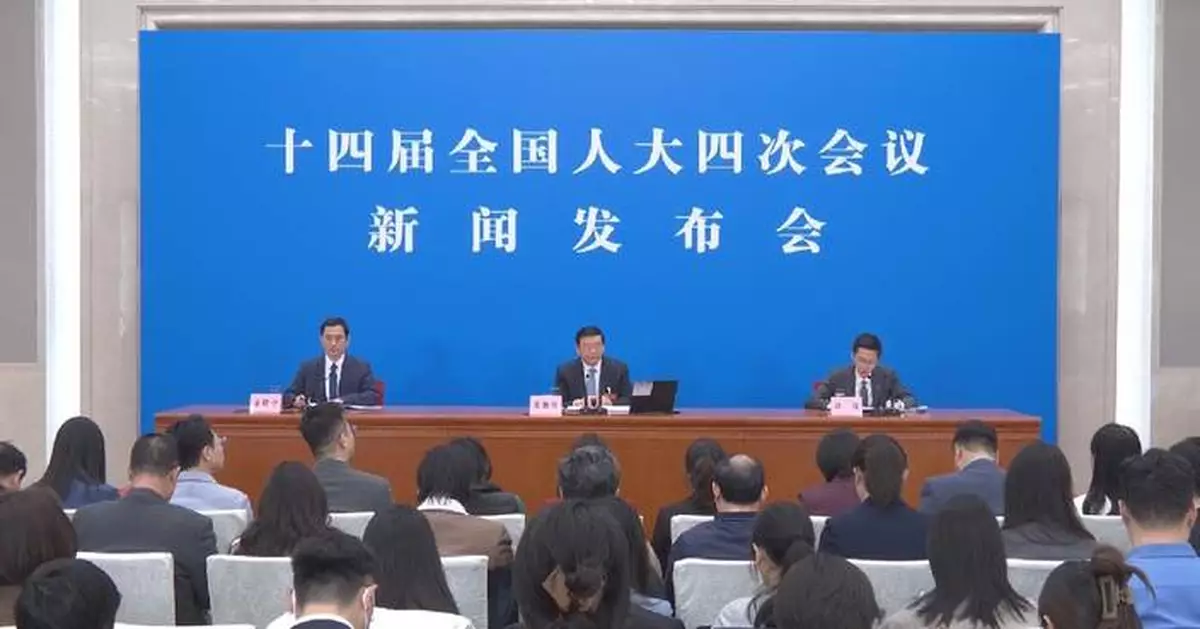
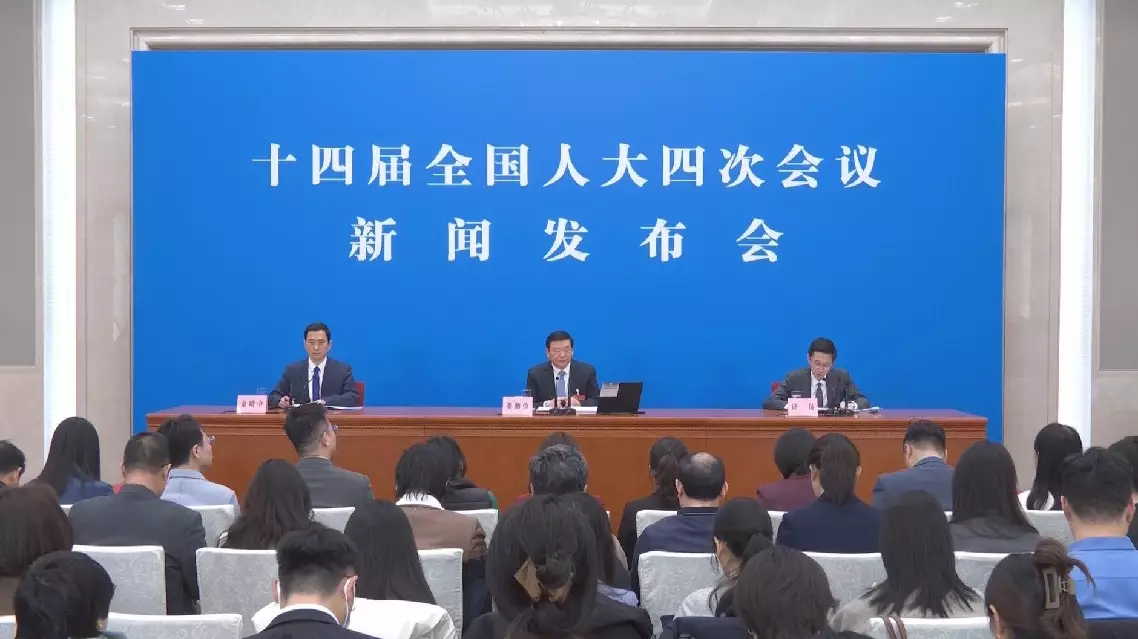
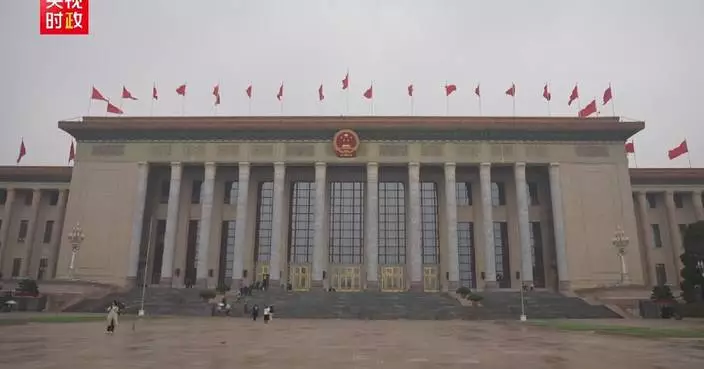
Lou Qinjian, spokesperson for the fourth session of the 14th National People's Congress (NPC), made the remarks at a press conference held one day ahead of the opening of the annual session of the NPC, the country's national legislature.

Lou told the press that how any major country interacts its neighbors is a reflection of its overall world view, its outlook of the international order, and its values, and highlighted the efforts China has taken to strengthen regional ties and exchanges at all levels. "China always places its neighborhood in a primary position in its diplomatic agenda, and always works to promote regional peace, stability and prosperity. President Xi Jinping has paid visits to almost all neighboring countries, and China's home ground diplomacy and important overseas visits last year were all focused on its neighbors. As you can see, under the strategic guidance of head-of-state diplomacy, China has injected strong impetus into regional stability and development by working with its neighboring countries to consolidate strategic mutual trust, deepen cooperation in all dimensions, and strengthen exchanges across various sectors," he said.

Lou stressed that the Taiwan question is China's internal affair and brooks no external interference.

"Safeguarding national sovereignty, security and development interests is the ultimate goal of all foreign engagements. The Taiwan question is China's internal affair and is at the core of China's core interests. China firmly opposes the Japanese leader's erroneous remarks on Taiwan. The Chinese people will never allow any external forces to interfere in China's internal affairs, and will resolutely safeguard China's sovereignty, unity and territorial integrity," he said.

The NPC will continue to strengthen exchange and cooperation with the respective legislature bodies of neighboring countries at the bilateral and multilateral levels and help achieve mutual reinforcement and complementarity between Chinese modernization and the development of neighboring countries, said Lou.

"Currently, stability, governance and shared development remain the prevailing aspirations of the region, and the trend toward integrated regional development cannot be reversed. We will fully implement the principles of the Central Conference on Work related to Neighboring Countries [held in April 2025]; focus on building a community with a shared future with neighboring countries; stay committed to building an amicable, secure and prosperous neighborhood, the principles of amity, sincerity, mutual benefit and inclusiveness, and the vision of a shared future; and join hands with neighboring countries to build a peaceful, safe and secure, prosperous, beautiful and amicable home," he said.

Lou was speaking at a press conference shortly before the beginning of the "two sessions", a major event in China's political calendar, which refers to the annual meetings of the NPC, the country's highest organ of state power, and the National Committee of the Chinese People's Political Consultative Conference (CPPCC), the top political advisory body.

The meetings have gathered thousands of national lawmakers and political advisors from across the country to the Chinese capital.
Neighboring countries remain top priority in China's diplomatic agenda: spokesman
Neighboring countries remain top priority in China's diplomatic agenda: spokesman

China's Large High Altitude Air Shower Observatory (LHAASO), a high-altitude cosmic ray observatory in Sichuan Province, is pushing the boundaries of astrophysics by bringing humanity closer to answering the century-long question of the origins of ultra-high-energy cosmic rays.

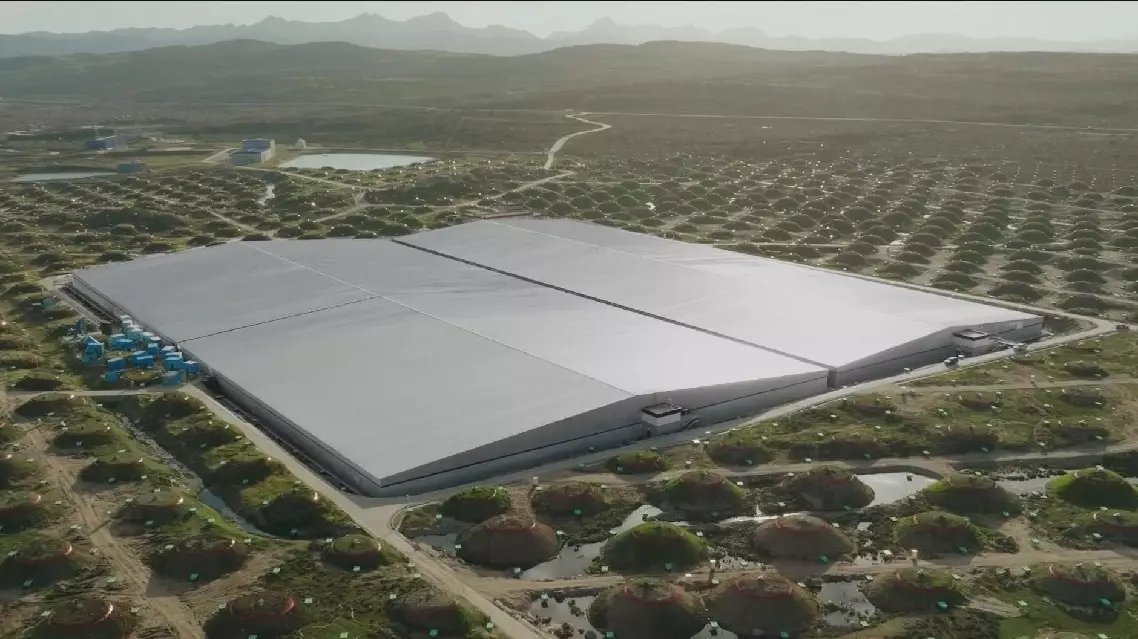
Completed in 2021, LHAASO sprawls across an area the size of 190 football fields. It is the world’s highest-altitude, largest-scale, and most sensitive observatory for detecting cosmic ray particles as they enter Earth’s atmosphere.

The project traces back two decades, when physicist Cao Zhen envisioned China taking a decisive role in this frontier of science.

"Each particle has the energy much higher than what we can produce on Earth. We don't know where it was produced. This is the fascinating question that has bothered people for 100 years already. First of all, (we) go to the high altitude -- the higher [you go], the less the influence from the atmosphere. And then we decided to build such a large-scale experiment: the larger, you get more cosmic rays," said Cao Zhen, chief scientist at LHAASO and a researcher at the Institute of High Energy Physics under the Chinese Academy of Sciences (CAS).

LHAASO functions as a giant set of "eyes" -- detectors that track cosmic ray particles invisible to the human eye. At its core lies a warehouse the size of 2.5 National Aquatic Centers, housing the world's most sensitive gamma-ray telescope.

Surrounding it are raised mounds -- muon detectors engineered to absorb photons and electrons while allowing only highly penetrating muons to pass through. Scattered among them, 18 blue, container-shaped telescopes complete the vast array.

Despite the thin atmosphere at an altitude of over 4,400 meters, China completed the construction of LHAASO in under five years, showcasing a remarkable feat of human endurance.

"Some of our detectors work perfectly fine in the lab, but they might malfunction when installed here because of the high-altitude environment. During the day, with the sun, the humidity is only about 20 to 30 percent, but at night it rises rapidly, reaching 100 percent. In addition, the detectors are also affected by temperature, wind, and extreme weather," said Wang Yudong, a researcher at the Institute of High Energy Physics.

The effort quickly began to yield results. In 2020, even before the observatory was fully completed, scientists using LHAASO's partial array identified 12 ultra-high-energy gamma-ray sources. Two years later, in October 2022, the facility captured an extraordinary event: a millennial gamma-ray burst, a dazzling "cosmic firework" triggered by the collapse of a massive star some two billion years ago.

LHAASO is but one of 77 mega-science infrastructures now operating across China. Over the past five years, these facilities have propelled the country to the forefront of high-impact publications and patent applications, unraveling cosmic mysteries, advancing core technologies, and driving industrial progress along the way.

China's LHAASO edges closer to solving cosmic ray mystery

China's LHAASO edges closer to solving cosmic ray mystery

Recommended Articles