JAKARTA, Indonesia (AP) — The South Korean government will reduce subsidies for biomass energy after rising domestic and international criticism of its link to deforestation. Environmental activists generally applauded the reforms but criticized loopholes and slow timelines for phasing out the subsidies.
“While not without caveats, (the) decision by the South Korean government demonstrates that large-scale biomass power has no place in a renewable energy future,” Hansae Song, program lead at South Korea-based nongovernmental organization Solutions for Our Climate, said in an email to The Associated Press.
Click to Gallery

Workers load sacks of wood pellets onto barges at a port in Pohuwato, Gorontalo province, Indonesia, Tuesday, Oct. 22, 2024. (AP Photo/Yegar Sahaduta Mangiri)
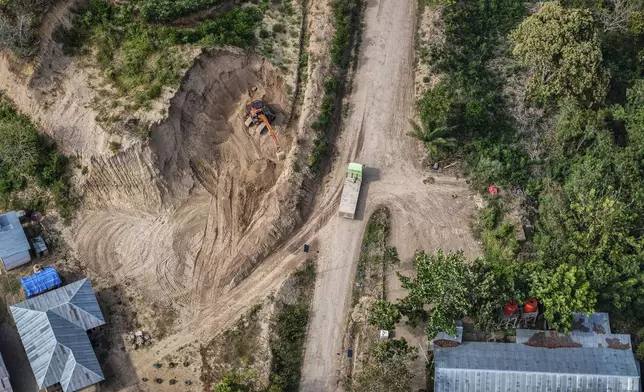
A machine operates near a road leading to the area of wood pellet production companies in Pohuwato, Gorontalo province, Indonesia, Tuesday, Oct. 22, 2024. (AP Photo/Yegar Sahaduta Mangiri)
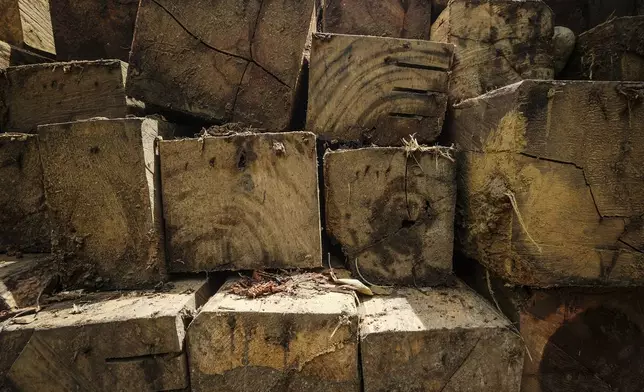
Logs sit on the back of a truck parked on the side of a road leading to the area of several wood pellet production companies in Pohuwato, Gorontalo province, Indonesia, Tuesday, Oct. 22, 2024. (AP Photo/Yegar Sahaduta Mangiri)
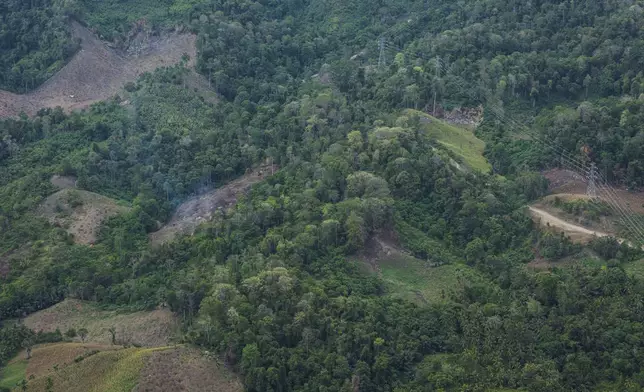
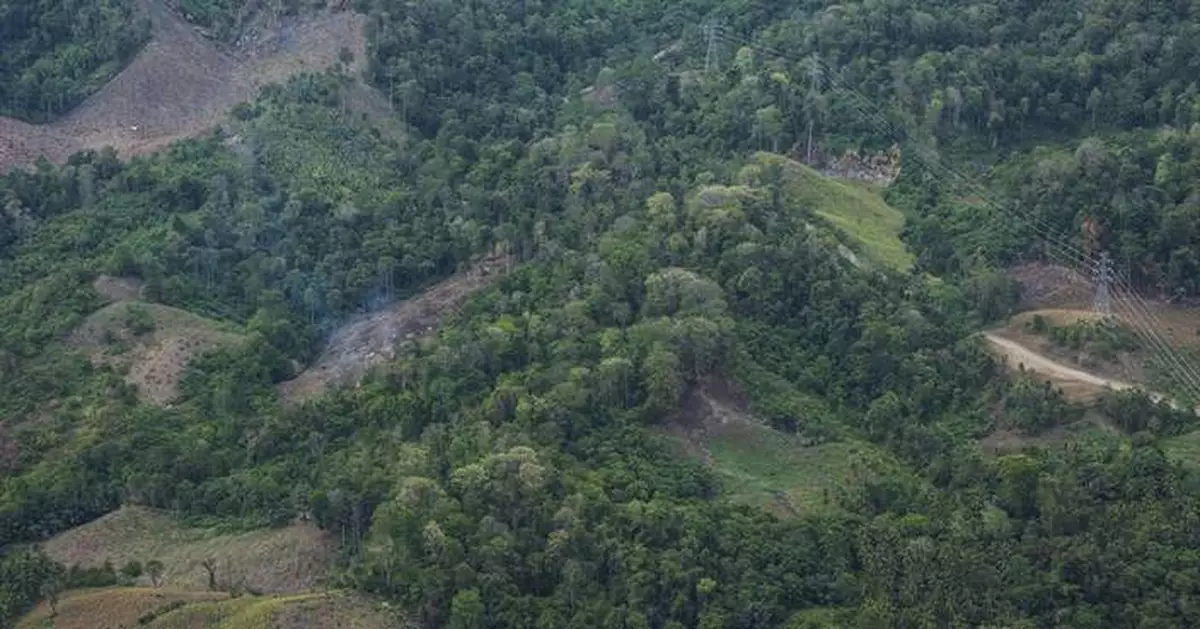
Deforestation is visible near the areas of several wood pellet production companies in Pohuwato, Gorontalo province, Indonesia, Tuesday, Oct. 22, 2024. (AP Photo/Yegar Sahaduta Mangiri)
Biomass power, predominantly generated by burning wood, is growing globally as countries accelerate their transition to use cleaner energy — even though many scientists and environmentalists see it as problematic. In South Korea, it's the second-largest source of renewable energy.
South Korea has subsidized biomass energy with millions of dollars for more than a decade via their renewable energy certificates program. In a single recent year the government gave approximately $688 million to support power plants using biomass, according to a press release from South Korea’s Ministry of Trade, Industry and Energy.
Faced with limited domestic forest resources, South Korea’s biomass power industry has structured its business model around importing large volumes of wood pellets at lower prices from forest-rich nations. In 2023, imports accounted for 82% of the country’s wood pellet demand, making South Korea the world’s third-largest importer of biomass fuels, after the United Kingdom and Japan. An AP report found that biomass imported from Indonesia was linked to deforestation of natural, intact forest.
“As the (biomass) market expanded, various issues emerged,” the Ministry of Trade, Industry and Energy said in their press release. “Criticisms regarding forest degradation and carbon emissions associated with biomass power generation persist."
Under the revised policy, South Korea will not support any new biomass power plants. Subsidies for six existing state-owned plants co-firing coal and biomass will end this year, while the value of renewable energy certificates for three state-owned dedicated biomass plants will be phased down by 2027. At privately owned plants, subsidies for co-fired biomass from six plants will be phased out over the next decade, while subsidy weightings will be reduced for 12 dedicated biomass plants over the next 15 years.
But environmental activists are critical of loopholes in the new policy.
Domestically produced wood pellets and chips will still have the same level of support as before, including those co-fired with coal — which experts say could pose a threat to South Korea’s forests. Power plants under construction or in planning with approved business permits are exempt from the new policy and subject to the phased reduction timelines for existing facilities.
State-owned co-firing facilities — which will lose their renewable energy certificates — currently account for only 10% of South Korea’s biomass power fleet, while the phase-out of most private co-firing will take over a decade to complete under the new policy, said Solutions for Our Climate.
“This extends the life of thermal power plants — many with emissions per unit of energy higher than coal — beyond the Paris Agreement-aligned coal phase-out deadlines,” Song wrote in an email to AP.
The South Korean Ministry of Trade, Industry and Energy, Korea Forest Service and Ministry of Environment did not respond to requests for comment from AP.
Experts said South Korea's policy change could signal a shift in how countries consider and incorporate biomass as part of their own energy transitions.
“There has been a positive shift in terms of discourse around biomass subsidies,” said Claire Squire, a research associate at the University of Maryland School of Public Policy Center for Global Sustainability. “Cutting subsidies won’t necessarily fix everything, but potentially if they’re constructed differently than they have in the past, that might be an improvement.”
As countries accelerate their energy transitions, demand for biomass is growing: The use of bioenergy has increased an average of about 3% per year between 2010 and 2022, the International Energy Agency said.
Experts including the IEA say it’s important for that demand to happen in a sustainable way, such as using waste and crop residue rather than converting forest land to grow bioenergy crops. Deforestation contributes to erosion, damages biodiverse areas, threatens wildlife and humans who rely on the forest and intensifies disasters from extreme weather.
Many scientists and environmentalists have rejected the use of biomass altogether. They say burning wood-based biomass can emit more carbon than coal and tree-cutting greatly reduces forests’ ability to remove carbon from the atmosphere. Critics also say that using biomass to co-fire, instead of transitioning directly to clean energy, simply prolongs the use of coal.
The Associated Press’ climate and environmental coverage receives financial support from multiple private foundations. AP is solely responsible for all content. Find AP’s standards for working with philanthropies, a list of supporters and funded coverage areas at AP.org.

Workers load sacks of wood pellets onto barges at a port in Pohuwato, Gorontalo province, Indonesia, Tuesday, Oct. 22, 2024. (AP Photo/Yegar Sahaduta Mangiri)
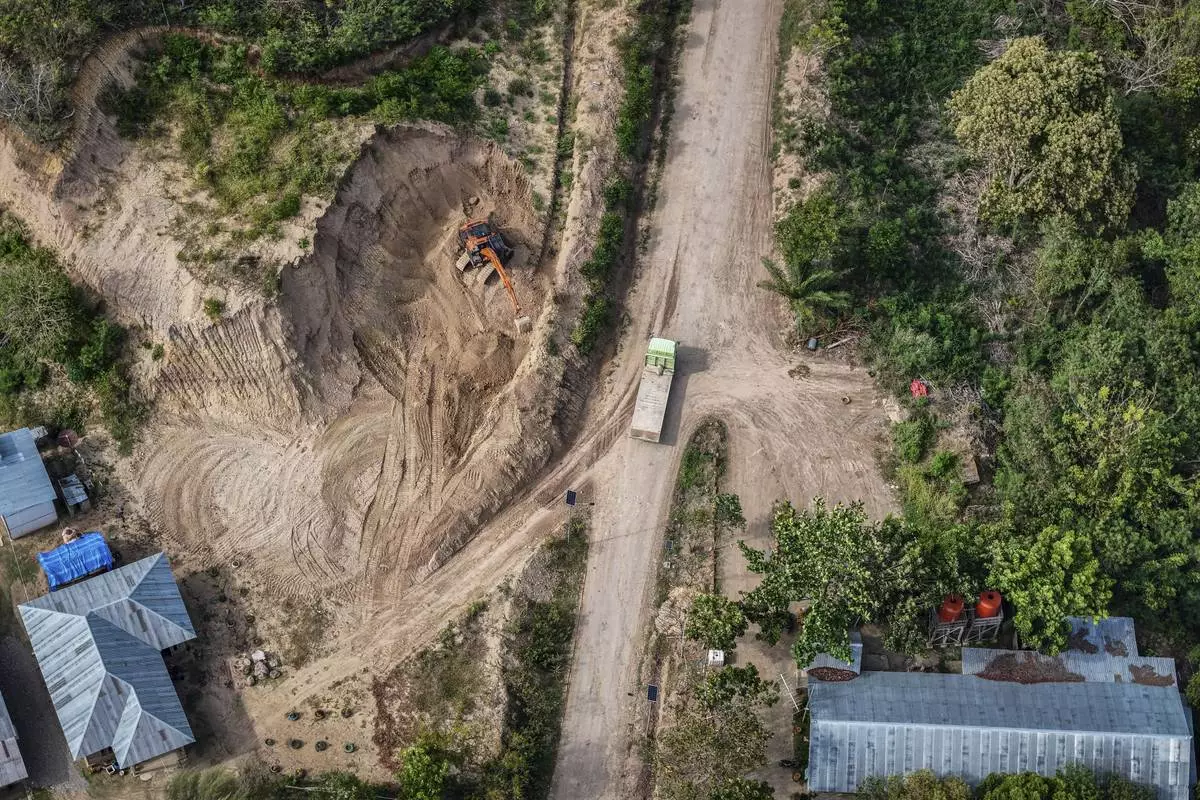
A machine operates near a road leading to the area of wood pellet production companies in Pohuwato, Gorontalo province, Indonesia, Tuesday, Oct. 22, 2024. (AP Photo/Yegar Sahaduta Mangiri)
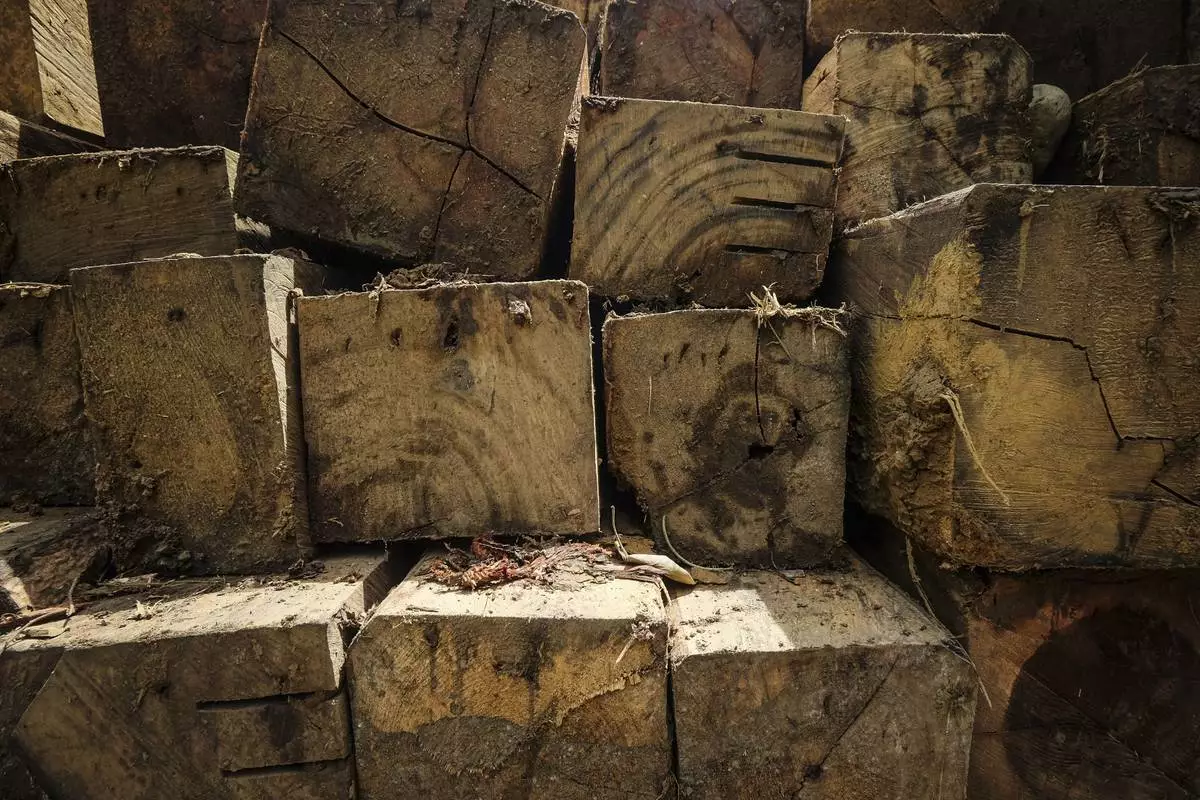
Logs sit on the back of a truck parked on the side of a road leading to the area of several wood pellet production companies in Pohuwato, Gorontalo province, Indonesia, Tuesday, Oct. 22, 2024. (AP Photo/Yegar Sahaduta Mangiri)
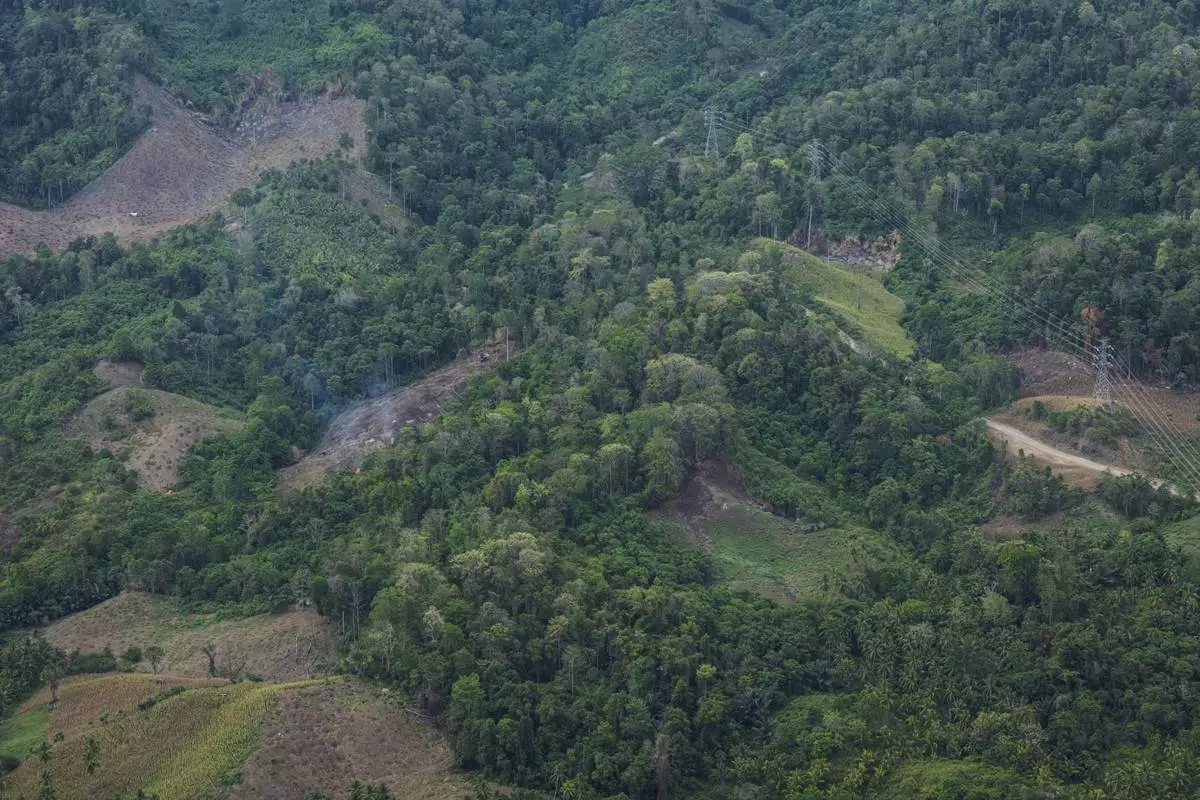
Deforestation is visible near the areas of several wood pellet production companies in Pohuwato, Gorontalo province, Indonesia, Tuesday, Oct. 22, 2024. (AP Photo/Yegar Sahaduta Mangiri)