Skip to Content Facebook Feature Image

Trump awards the Medal of Honor to 3 US soldiers in a White House ceremony

News

Trump awards the Medal of Honor to 3 US soldiers in a White House ceremony
News

News

Trump awards the Medal of Honor to 3 US soldiers in a White House ceremony

2026-03-03 07:51 Last Updated At:08:01

WASHINGTON (AP) — President Donald Trump awarded the Medal of Honor to three U.S. Army soldiers at the White House on Monday, celebrating heroes of old wars as he defended his launch of a new one.

Retired Command Sgt. Maj. Terry P. Richardson was recognized for actions during the Vietnam War that were credited with saving the lives of 85 other service members.

More Images
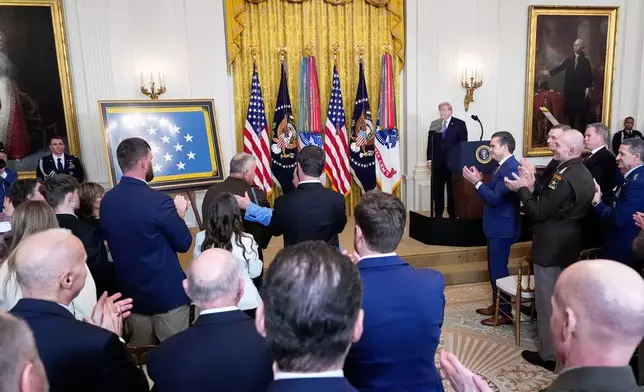
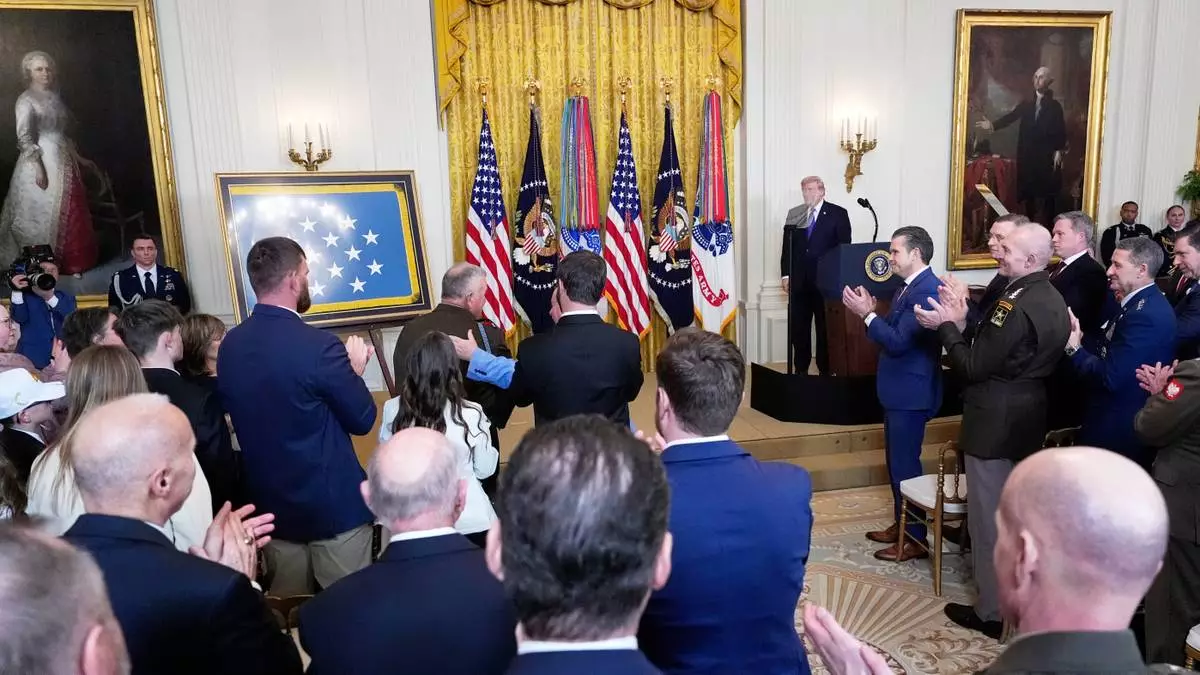
President Donald Trump looks on during a standing ovation for Sergeant Major Terry P. Richardson, U.S. Army (retired), center with hand on his back, during a Medal of Honor ceremony in the East Room of the White House, Monday, March 2, 2026, in Washington. (AP Photo/Alex Brandon)
President Donald Trump looks on during a standing ovation for Sergeant Major Terry P. Richardson, U.S. Army (retired), center with hand on his back, during a Medal of Honor ceremony in the East Room of the White House, Monday, March 2, 2026, in Washington. (AP Photo/Alex Brandon)
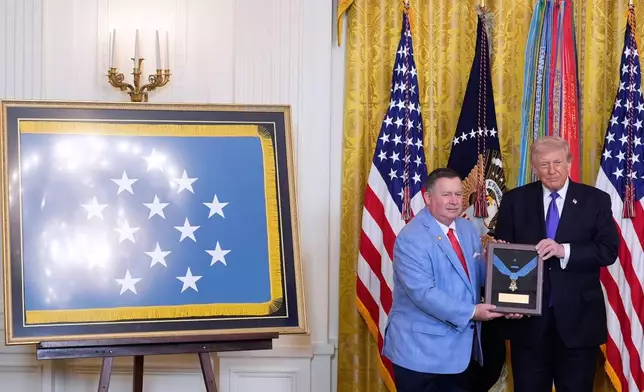
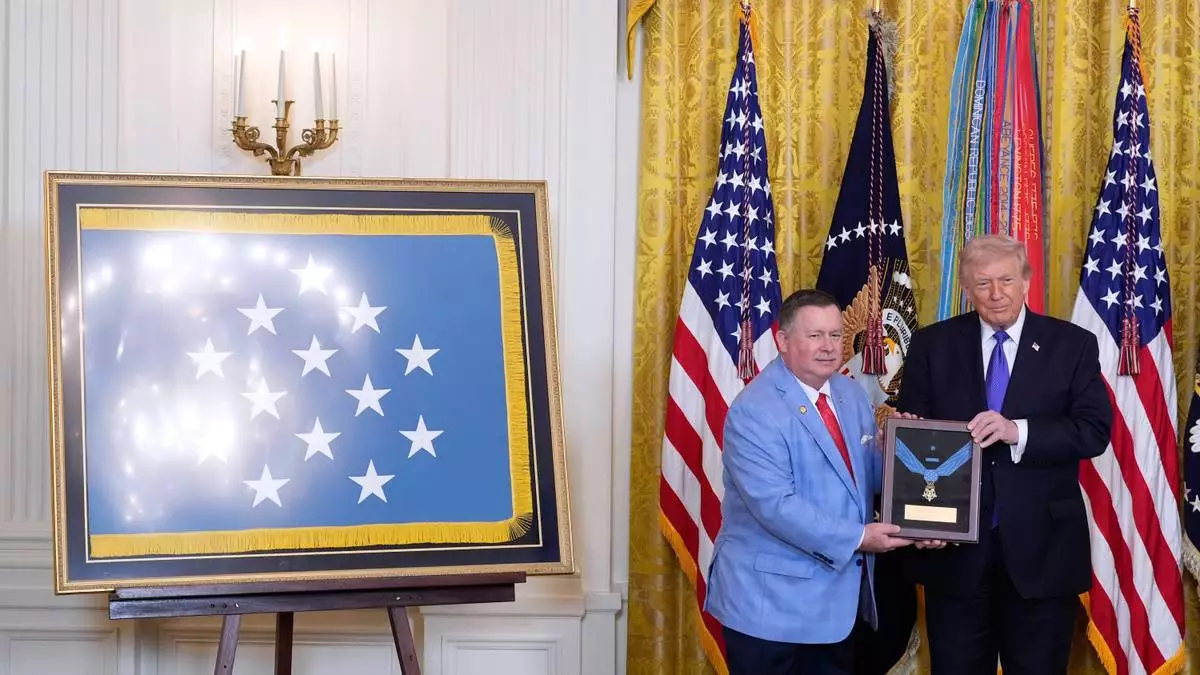
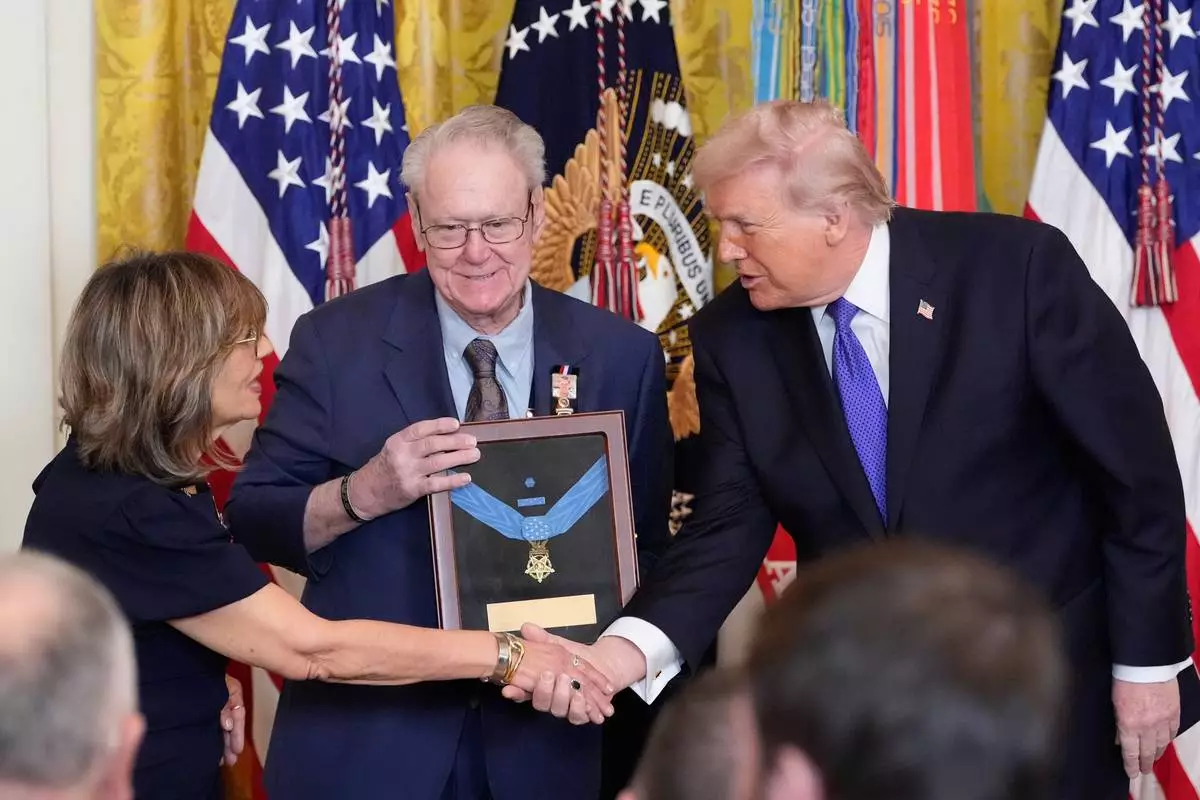
Chris Edmonds, left, son of Master Sergeant Roderick Edmonds, with President Donald Trump, is presented the Medal of Honor on behalf of his father, during a ceremony in the East Room of the White House, Monday, March 2, 2026, in Washington. (AP Photo/Alex Brandon)

Chris Edmonds, left, son of Master Sergeant Roderick Edmonds, with President Donald Trump, is presented the Medal of Honor on behalf of his father, during a ceremony in the East Room of the White House, Monday, March 2, 2026, in Washington. (AP Photo/Alex Brandon)

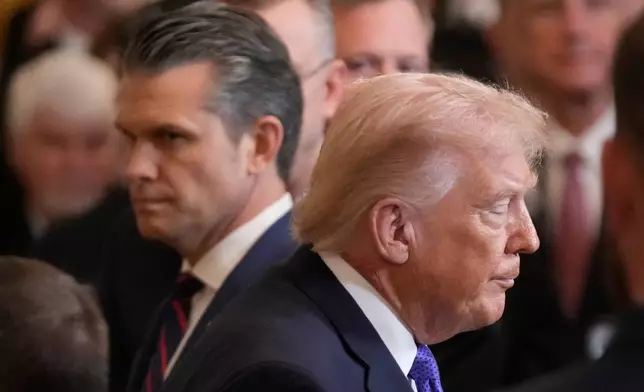
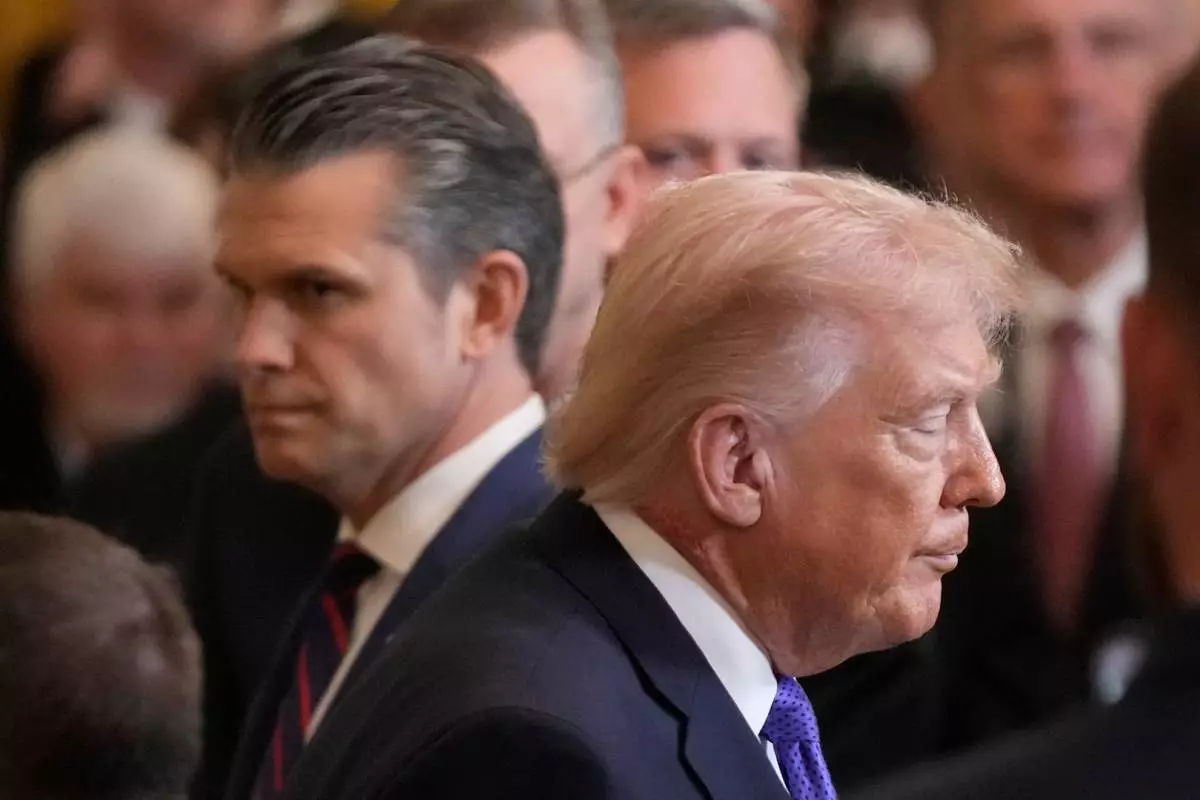
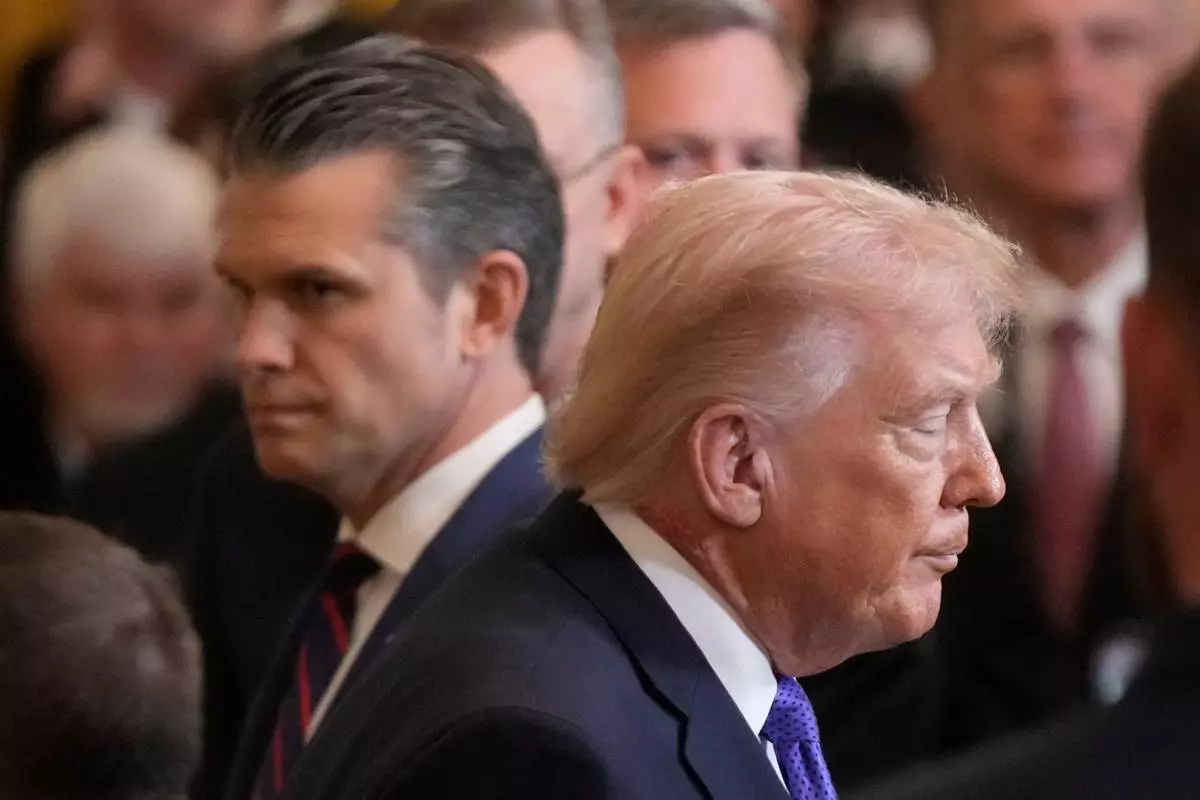
President Donald Trump walks past Defense Secretary Pete Hegseth as he exist the East Room of the White House following the Medal of Honor ceremony, Monday, March 2, 2026, in Washington. (AP Photo/Mark Schiefelbein)
President Donald Trump walks past Defense Secretary Pete Hegseth as he exist the East Room of the White House following the Medal of Honor ceremony, Monday, March 2, 2026, in Washington. (AP Photo/Mark Schiefelbein)

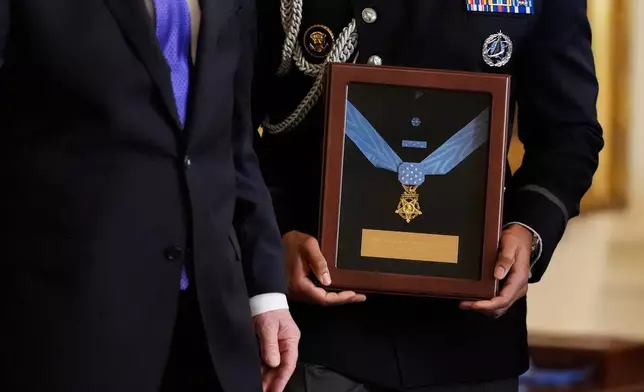
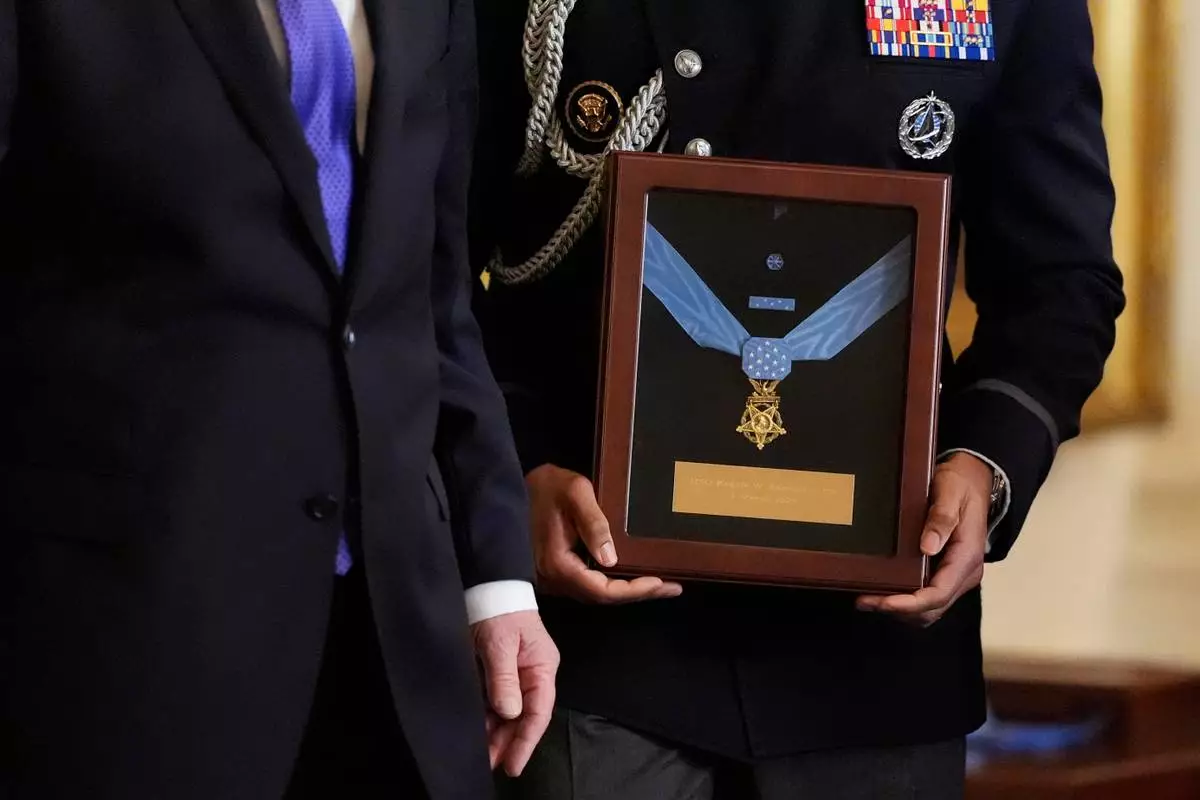
Military aide holds the Medal of Honor for Master Sergeant Roderick Edmonds, to be presented posthumous to his son Chris Edmonds, in a ceremony in the East Wing of the White House in Washington, Monday, March 2, 2026. (AP Photo/Mark Schiefelbein)
Military aide holds the Medal of Honor for Master Sergeant Roderick Edmonds, to be presented posthumous to his son Chris Edmonds, in a ceremony in the East Wing of the White House in Washington, Monday, March 2, 2026. (AP Photo/Mark Schiefelbein)

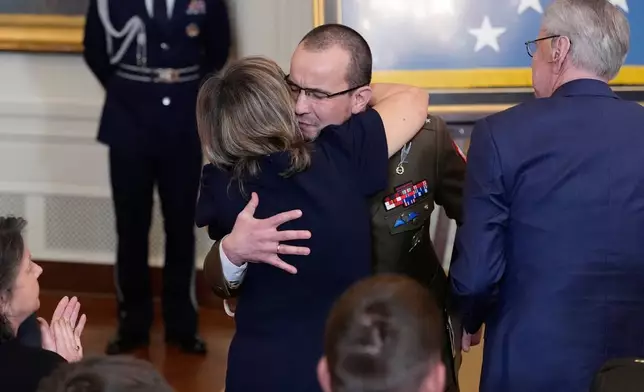
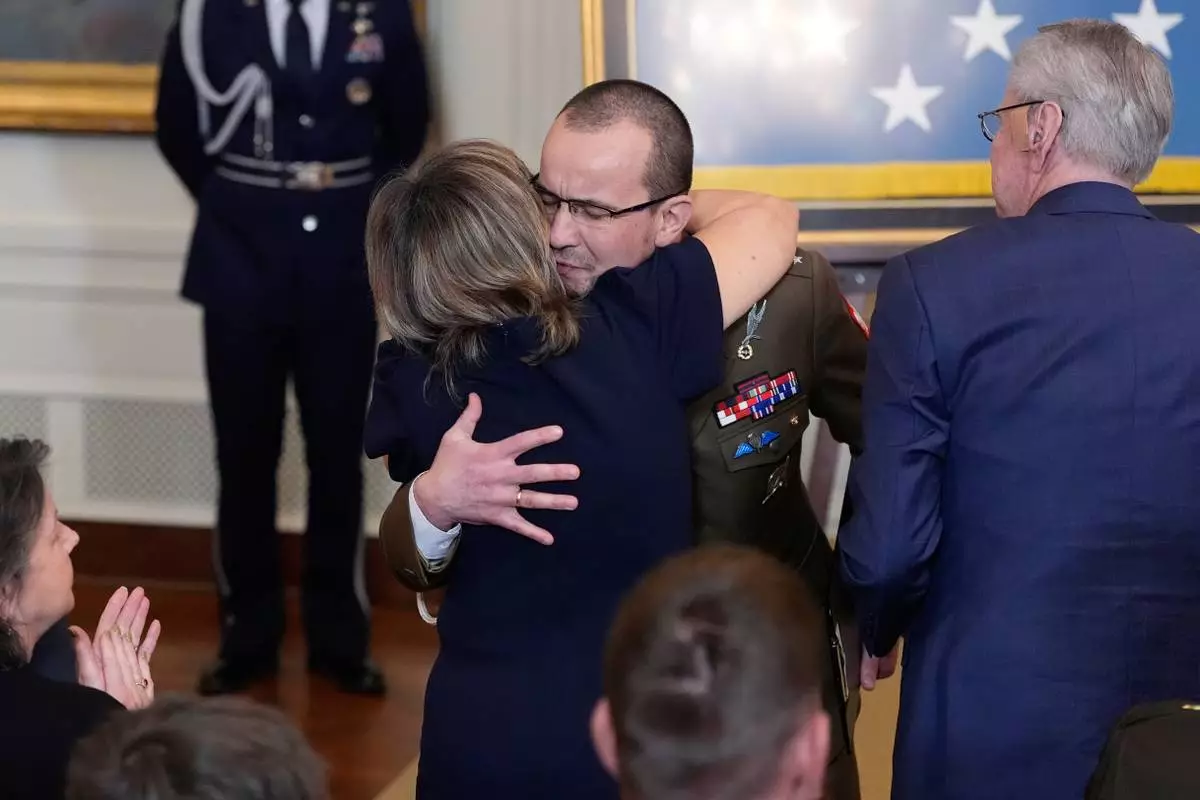
Polish Army Lt. Karol Cierpica, who was saved by Medal of Honor recipient Staff Sergeant Michael Ollis, embraces Ollis' parents Robert and Linda Ollis during a Medal of Honor ceremony at the White House, Monday, March 2, 2026, in Washington. (AP Photo/Alex Brandon)
Polish Army Lt. Karol Cierpica, who was saved by Medal of Honor recipient Staff Sergeant Michael Ollis, embraces Ollis' parents Robert and Linda Ollis during a Medal of Honor ceremony at the White House, Monday, March 2, 2026, in Washington. (AP Photo/Alex Brandon)

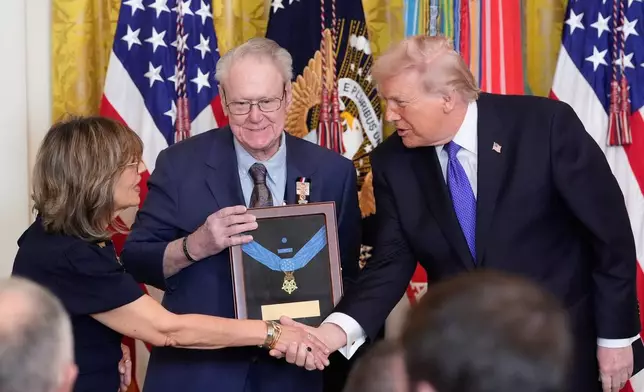
President Donald Trump posthumously presents the Medal Honor to Robert and Linda Ollis, parents of Staff Sergeant Michael Ollis, during a ceremony in the East Room of the White House, Monday, March 2, 2026, in Washington. (AP Photo/Alex Brandon)
President Donald Trump posthumously presents the Medal Honor to Robert and Linda Ollis, parents of Staff Sergeant Michael Ollis, during a ceremony in the East Room of the White House, Monday, March 2, 2026, in Washington. (AP Photo/Alex Brandon)

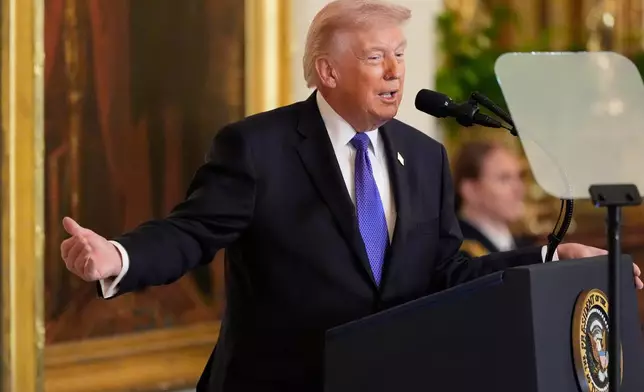
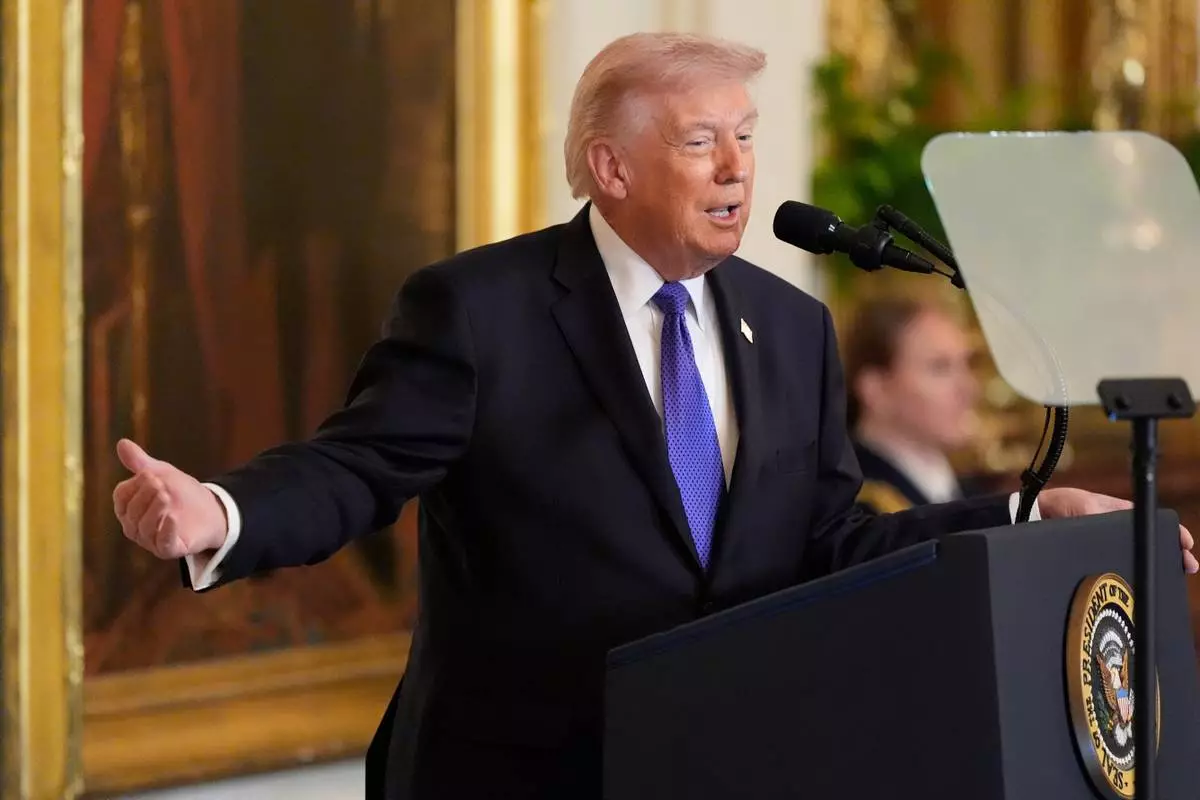
President Donald Trump speaks about the new ballroom construction before a Medal of Honor ceremony in the East Room of the White House, Monday, March 2, 2026, in Washington.(AP Photo/Mark Schiefelbein)
President Donald Trump speaks about the new ballroom construction before a Medal of Honor ceremony in the East Room of the White House, Monday, March 2, 2026, in Washington.(AP Photo/Mark Schiefelbein)

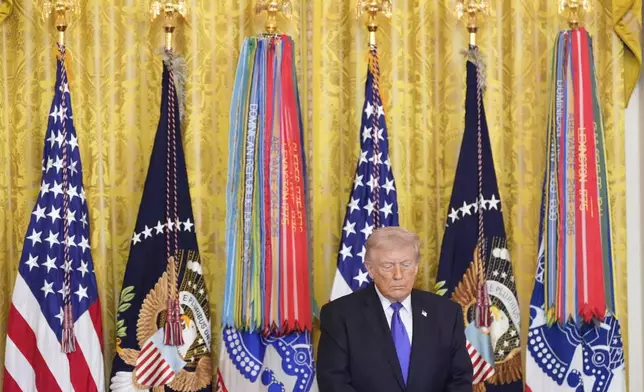
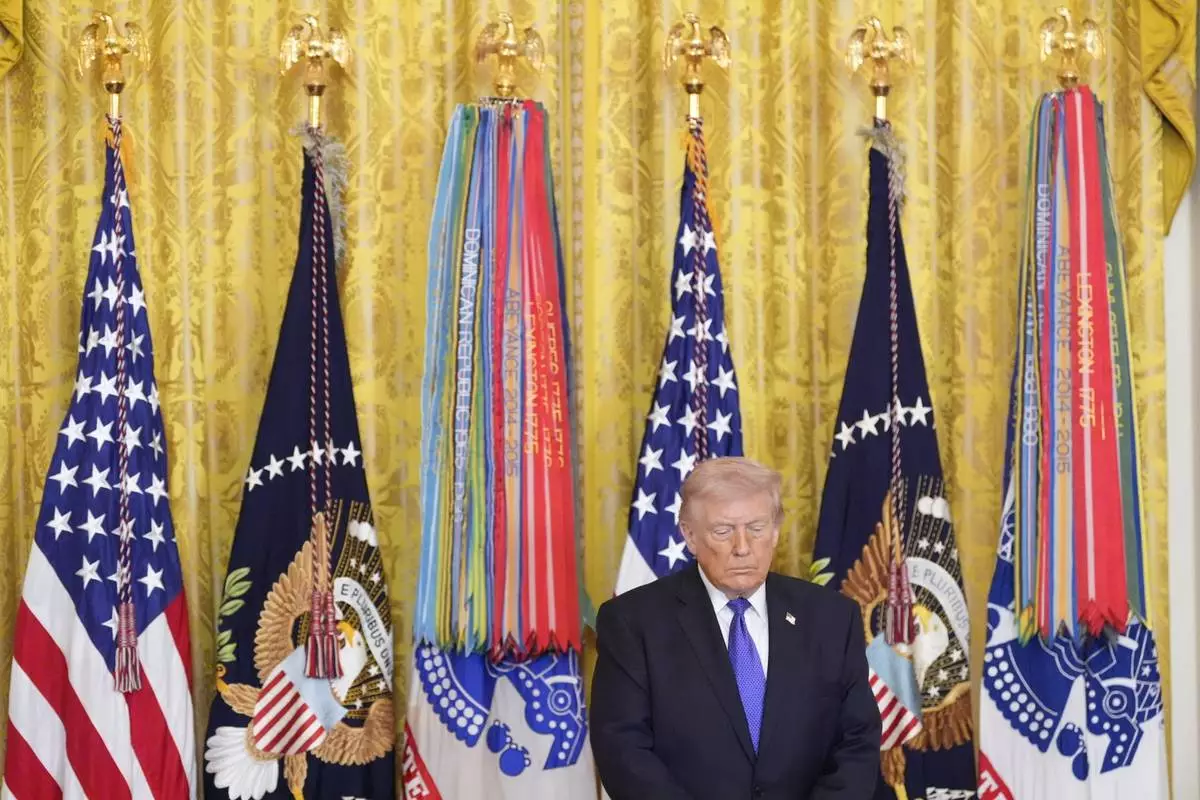
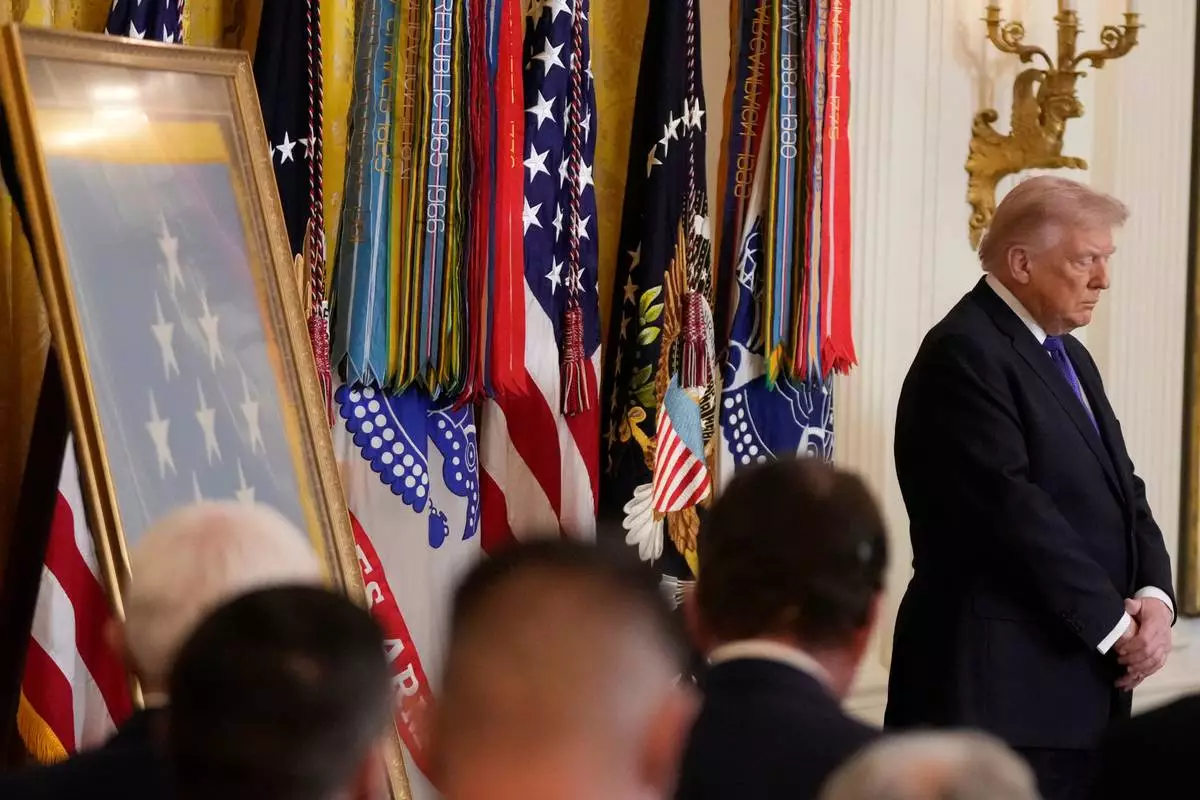
President Donald Trump stands during a prayer before a Medal of Honor ceremony in the East Room of the White House, Monday, March 2, 2026, in Washington. (AP Photo/Alex Brandon)
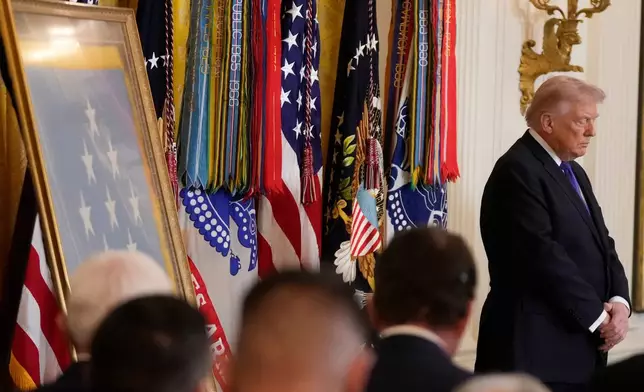
President Donald Trump stands during a prayer before a Medal of Honor ceremony in the East Room of the White House, Monday, March 2, 2026, in Washington. (AP Photo/Alex Brandon)

President Donald Trump stands during a prayer before a Medal of Honor ceremony in the East Room of the White House, Monday, March 2, 2026, in Washington. (AP Photo/Mark Schiefelbein)
President Donald Trump stands during a prayer before a Medal of Honor ceremony in the East Room of the White House, Monday, March 2, 2026, in Washington. (AP Photo/Mark Schiefelbein)

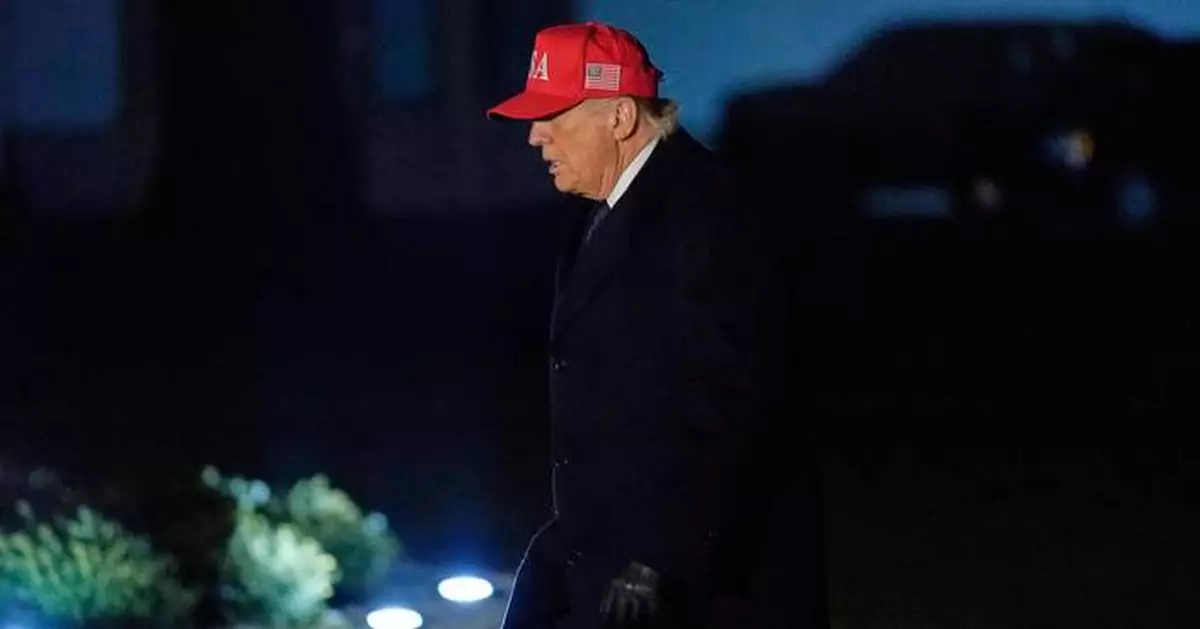
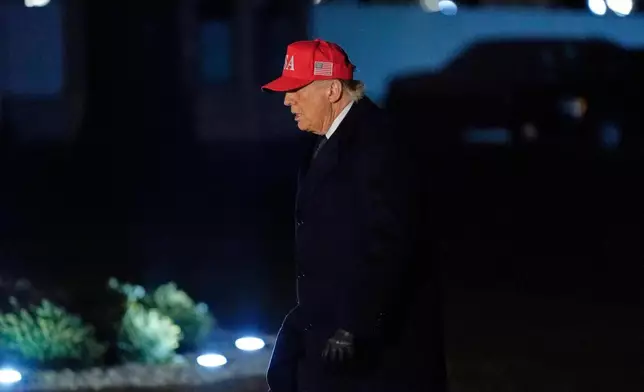
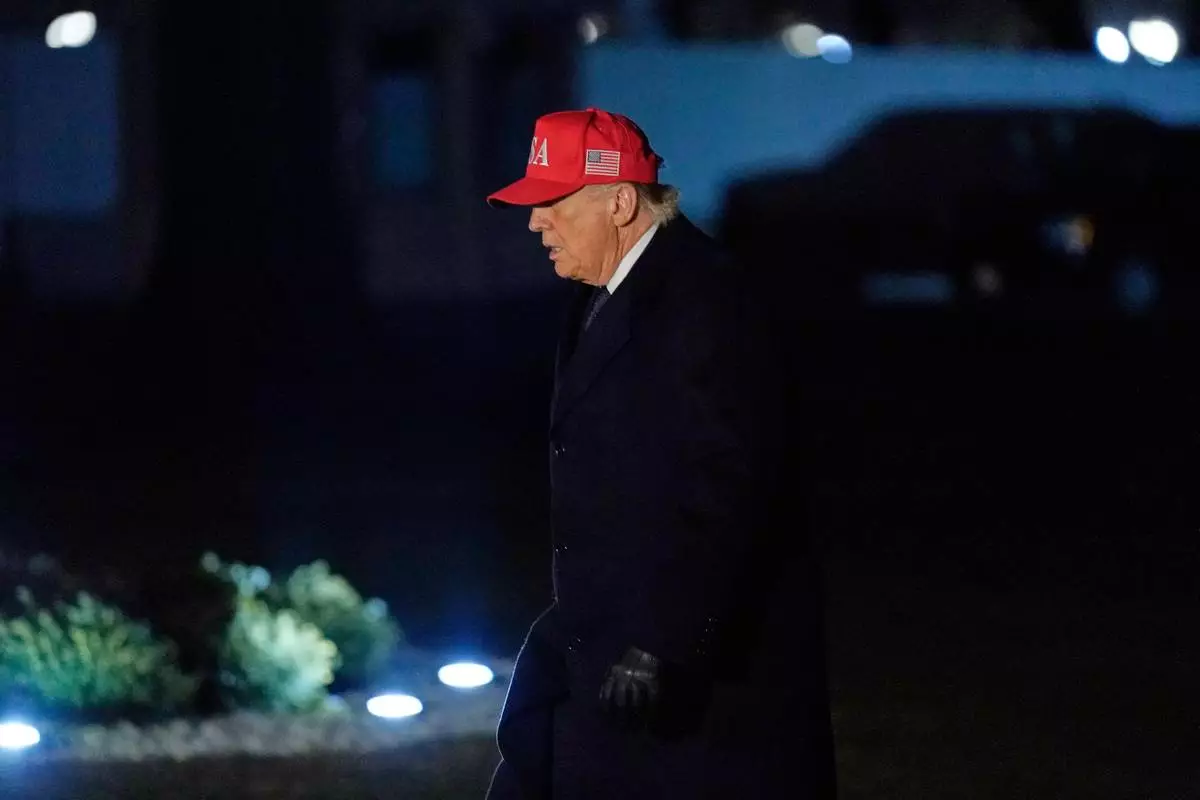
President Donald Trump walks from Marine One after arriving on the South Lawn of the White House, Sunday, March 1, 2026, in Washington. (AP Photo/Jose Luis Magana)

President Donald Trump walks from Marine One after arriving on the South Lawn of the White House, Sunday, March 1, 2026, in Washington. (AP Photo/Jose Luis Magana)

Staff Sgt. Michael H. Ollis, who was killed in action in Afghanistan in 2013, was recognized for saving a Polish Army officer's life.

Master Sgt. Roderick W. Edmonds, who died in 1985, was recognized for his leadership and resistance as a prisoner of war in Germany during World War II.

“There’s no ceremony that can be more important than this,” Trump said to begin the East Room ceremony that included the recipients’ family members and the man Ollis shielded from enemy fire.

“Bravery is amazing,” Trump said. “You never really know who’s brave and who’s not until they’re tested.”

The Republican president also used the ceremony to talk about his fledgling war in Iran, his immigration crackdown, expansion of the White House and curtains that he chose at the executive mansion.

“I picked those drapes in my first term. I always liked gold,” he said.

When noting Polish government officials there to recognize Ollis, Trump ventured into an aside on his endorsements in Poland's elections.

On Iran, Trump said preemptive action was necessary to block Tehran from rebuilding its nuclear program and becoming “an intolerable threat to the Middle East but also to the American people.”

The Medal of Honor is awarded by U.S. presidents, in the name of Congress, for combat service that goes beyond the call of duty and risks one's life.

On Sept. 14, 1968, Richardson was a staff sergeant on a reconnaissance mission as a platoon leader in the vicinity of Loc Ninh, part of the Republic of Vietnam.

According to his citation, Richardson, a native of Cass City, Michigan, came under fire from the North Vietnamese Army, including heavy machine gun fire as he rescued three wounded soldiers. After the rescues, he led his unit to its intended destination, a hilltop identified as a place to direct airstrikes. He found the location to be part of an enemy camp but remained for at least seven hours, directing strikes even after being wounded by a sniper.

Enemy forces eventually fled. Richardson, when found by other U.S. forces, declined medical evaluation so he could remain with his troops.

“His gallant and selfless actions ... spared the lives of 85 fellow soldiers,” the White House said.

Trump praised Richardson, who attended with some members of his unit, as a “brave man” and described him as “central casting.”

“You feel like fighting? I think we could take him today,” Trump said, joking with Defense Secretary Pete Hegseth.

As a staff sergeant at Forward Operating Base Ghazni, Ollis was a skilled infantryman who led soldiers during an attack on the base by enemy combatants on Aug. 28, 2013.

Ollis, 24 at the time, first directed soldiers to a bunker before returning to the building where they had been to check for any more endangered people, according to his citation. The New York City native came upon a Coalition Forces officer Lt. Karol Cierpica of Poland. They moved toward combatants who breached the base perimeter and joined other coalition forces.

During fighting, one enemy combatant confronted Ollis and Cierpica.

“With complete disregard for his own safety, he positioned himself between the insurgent and the Coalition Forces Officer, who had been wounded and unable to walk,” his commendation reads. “Staff Sergeant Ollis fired on the insurgent and incapacitated him, but as he approached the insurgent, the latter’s suicide vest was detonated, mortally wounding him.”

Called to the podium by Trump, Cierpica at times grew emotional as he paid tribute.

“A soldier is not something you are from time to time. It is who you are forever,” Cierpica said, later adding, “I am deeply moved, happy and grateful to God.”

Cierpica named his son, Michael, after Ollis, and he addressed members of Ollis' family by name, calling them “my second family from Staten Island” and the U.S. his “second homeland.”

A master sergeant, Edmonds was the ranking non-commissioned officer among American prisoners of war at a German camp in early 1945.

According to the commendation, the Germans announced on Jan. 26, 1945, that “only Jewish-American prisoners would fall out for roll call the following morning, at the threat of execution.”

Edmonds, who enlisted from Knoxville, Tennessee, determined that allowing that segregation would result in the torture or death of 200 Jewish American POWs. He directed officers to have all 1,200 American troops present themselves for roll call.

With a German commandant enraged, Edmonds stood his ground and invoked prisoners' rights under international law.

“We are all Jews here,” Edmonds said in a quote that Trump recounted Monday.

The German officer relented and made no further efforts to identify the Jewish American soldiers.

“Really amazing, right? It's an amazing story,” Trump said.

Weeks later, as Allied forces advanced toward the camp, the Germans ordered POWs to prepare for evacuation. Edmonds prepared the POWs to assemble in formation and resist. German forces eventually retreated from the camp.

“Without regard for his own life Master Sergeant Edmonds gallantly led these prisoners in a relentless pursuit of opposition and resistance, forcing the Germans to abandon the camp leaving the 1,200 American prisoners behind,” the White House said.

Edmonds' son, Chris, first learned of the story when reading his father's journals after his death, then interviewing surviving veterans who also were POWs. Chris Edmonds spent years pushing for the official recognition and on Monday accepted the medal from Trump on his father's behalf.

Barrow reported from Atlanta.
President Donald Trump looks on during a standing ovation for Sergeant Major Terry P. Richardson, U.S. Army (retired), center with hand on his back, during a Medal of Honor ceremony in the East Room of the White House, Monday, March 2, 2026, in Washington. (AP Photo/Alex Brandon)
President Donald Trump looks on during a standing ovation for Sergeant Major Terry P. Richardson, U.S. Army (retired), center with hand on his back, during a Medal of Honor ceremony in the East Room of the White House, Monday, March 2, 2026, in Washington. (AP Photo/Alex Brandon)
Chris Edmonds, left, son of Master Sergeant Roderick Edmonds, with President Donald Trump, is presented the Medal of Honor on behalf of his father, during a ceremony in the East Room of the White House, Monday, March 2, 2026, in Washington. (AP Photo/Alex Brandon)

Chris Edmonds, left, son of Master Sergeant Roderick Edmonds, with President Donald Trump, is presented the Medal of Honor on behalf of his father, during a ceremony in the East Room of the White House, Monday, March 2, 2026, in Washington. (AP Photo/Alex Brandon)

President Donald Trump walks past Defense Secretary Pete Hegseth as he exist the East Room of the White House following the Medal of Honor ceremony, Monday, March 2, 2026, in Washington. (AP Photo/Mark Schiefelbein)
President Donald Trump walks past Defense Secretary Pete Hegseth as he exist the East Room of the White House following the Medal of Honor ceremony, Monday, March 2, 2026, in Washington. (AP Photo/Mark Schiefelbein)

Military aide holds the Medal of Honor for Master Sergeant Roderick Edmonds, to be presented posthumous to his son Chris Edmonds, in a ceremony in the East Wing of the White House in Washington, Monday, March 2, 2026. (AP Photo/Mark Schiefelbein)
Military aide holds the Medal of Honor for Master Sergeant Roderick Edmonds, to be presented posthumous to his son Chris Edmonds, in a ceremony in the East Wing of the White House in Washington, Monday, March 2, 2026. (AP Photo/Mark Schiefelbein)

Polish Army Lt. Karol Cierpica, who was saved by Medal of Honor recipient Staff Sergeant Michael Ollis, embraces Ollis' parents Robert and Linda Ollis during a Medal of Honor ceremony at the White House, Monday, March 2, 2026, in Washington. (AP Photo/Alex Brandon)
Polish Army Lt. Karol Cierpica, who was saved by Medal of Honor recipient Staff Sergeant Michael Ollis, embraces Ollis' parents Robert and Linda Ollis during a Medal of Honor ceremony at the White House, Monday, March 2, 2026, in Washington. (AP Photo/Alex Brandon)

President Donald Trump posthumously presents the Medal Honor to Robert and Linda Ollis, parents of Staff Sergeant Michael Ollis, during a ceremony in the East Room of the White House, Monday, March 2, 2026, in Washington. (AP Photo/Alex Brandon)
President Donald Trump posthumously presents the Medal Honor to Robert and Linda Ollis, parents of Staff Sergeant Michael Ollis, during a ceremony in the East Room of the White House, Monday, March 2, 2026, in Washington. (AP Photo/Alex Brandon)

President Donald Trump speaks about the new ballroom construction before a Medal of Honor ceremony in the East Room of the White House, Monday, March 2, 2026, in Washington.(AP Photo/Mark Schiefelbein)
President Donald Trump speaks about the new ballroom construction before a Medal of Honor ceremony in the East Room of the White House, Monday, March 2, 2026, in Washington.(AP Photo/Mark Schiefelbein)

President Donald Trump stands during a prayer before a Medal of Honor ceremony in the East Room of the White House, Monday, March 2, 2026, in Washington. (AP Photo/Alex Brandon)
President Donald Trump stands during a prayer before a Medal of Honor ceremony in the East Room of the White House, Monday, March 2, 2026, in Washington. (AP Photo/Alex Brandon)

President Donald Trump stands during a prayer before a Medal of Honor ceremony in the East Room of the White House, Monday, March 2, 2026, in Washington. (AP Photo/Mark Schiefelbein)
President Donald Trump stands during a prayer before a Medal of Honor ceremony in the East Room of the White House, Monday, March 2, 2026, in Washington. (AP Photo/Mark Schiefelbein)

President Donald Trump walks from Marine One after arriving on the South Lawn of the White House, Sunday, March 1, 2026, in Washington. (AP Photo/Jose Luis Magana)
President Donald Trump walks from Marine One after arriving on the South Lawn of the White House, Sunday, March 1, 2026, in Washington. (AP Photo/Jose Luis Magana)
WASHINGTON (AP) — Defense Secretary Pete Hegseth spoke Monday to widening concerns that the U.S.-Israeli strikes in Iran could spiral into a protracted regional conflict by declaring: “This is not Iraq. This is not endless," even as he warned that more American casualties are likely in the weeks ahead.

While the Trump administration has cited Iran’s nuclear ambitions as the chief concern to be addressed, officials increasingly are pointing to the threat from Iran’s ballistic missiles as a key reason to launch the attacks as well as an opportunity to take out the government’s leadership and the sense that negotiations around the nuclear program have stalled.

Trump said Monday that Iran’s conventional missile program “was growing rapidly and dramatically, and this posed a very clear, colossal threat to America and our forces stationed overseas.”

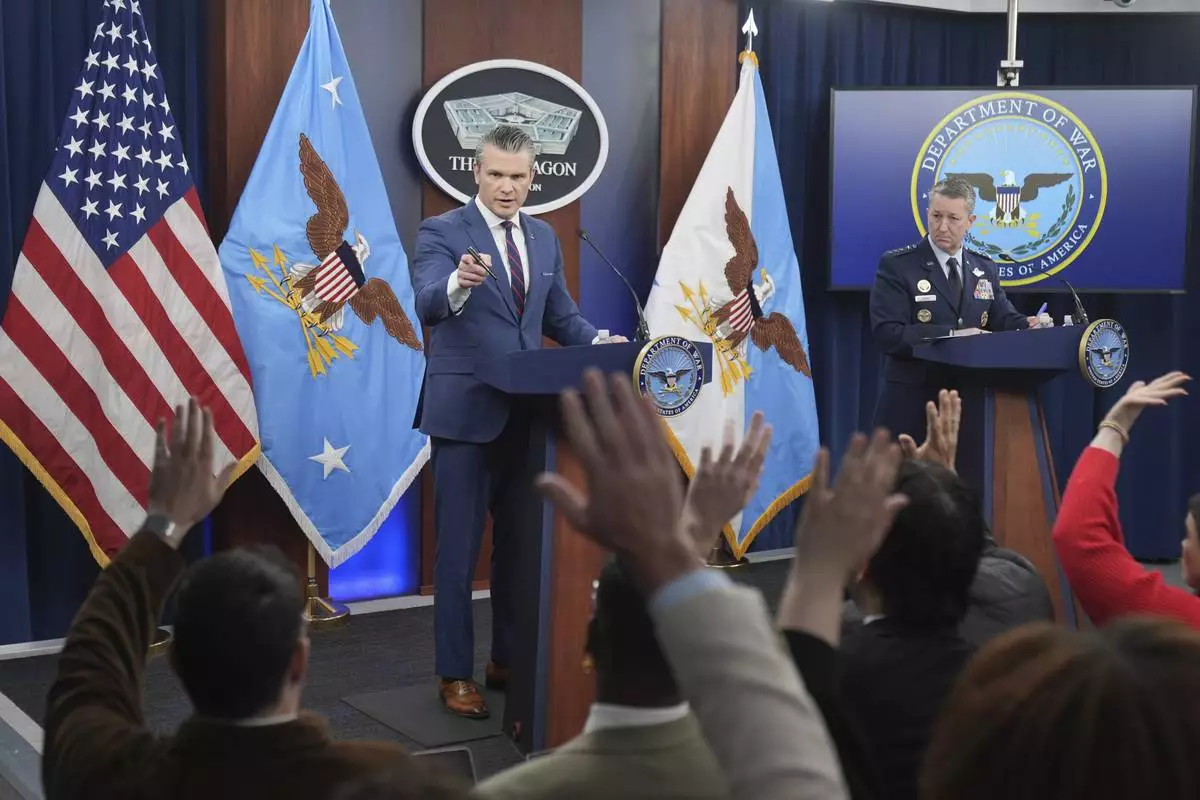
Hegseth said at a separate press conference with Gen. Dan Caine, chairman of the Joint Chiefs of Staff, that the operation had a “decisive mission” to eliminate the threat of Iranian ballistic missiles, destroy the country’s navy and ensure “no nukes.”

Trump, Hegseth and Caine have not suggested any exit plan or offered signs that the conflict would end anytime soon as the killing of Iranian Supreme Leader Ayatollah Ali Khamenei cast doubt on the future of the Islamic Republic and hurtled the region into broader instability. Caine said the biggest U.S. military buildup in the Middle East in decades would only grow because the commander in the region “will receive additional forces even today.”

“This is not a so-called regime-change war, but the regime sure did change, and the world is better off for it,” Hegseth said.

Trump, however, in video statements released after the strikes began, urged the Iranian people “to take back your country.”

The conflict has spilled into the wider region, with Iran and its allied armed groups launching missiles at Israel, Arab states and U.S. military targets in the Middle East.

Six American troops have been killed, with Trump, Hegseth and Caine predicting more casualties. All were Army soldiers and part of the same logistics unit in Kuwait, according to a U.S. official who was not authorized to comment publicly and spoke on condition of anonymity.

When asked about the six deaths Monday, Hegseth said an Iranian weapon made it past allied air defenses “and, in that particular case, happened to hit a tactical operations center that was fortified.”

Eighteen American service members also have been seriously wounded, said Capt. Tim Hawkins, a spokesman for U.S. Central Command.

The latest sign of the escalating upheaval came when, the U.S. military said, ally Kuwait “mistakenly shot down” three American fighter jets during a combat mission as Iranian aircraft, ballistic missiles and drones were attacking. U.S. Central Command said all six pilots ejected safely from the American F-15E Strike Eagles and were in stable condition.

Asked if there are boots on the ground now in Iran, Hegseth said, “No, but we’re not going to go into the exercise of what we will or will not do.”

He said it was “foolishness” to expect U.S. officials to say publicly “here’s exactly how far we’ll go.”

Trump told the New York Post on Monday that he wasn’t ruling out U.S. forces in Iran if “they were necessary.” He noted, “I don’t have the yips with respect to boots on the ground."

At the White House, Trump said the mission was expected to take four to five weeks but “we have the capability to go far longer than that.”

Secretary of State Marco Rubio told reporters at the Capitol that the U.S. “will do this as long as it takes to achieve" its objectives and warned that “the hardest hits are yet to come from the U.S. military."

Hegseth also dismissed questions about the time frame and said Trump had “latitude” to decide how long it would take. “Four weeks, two weeks, six weeks," he said. “It could move up. It could move back.”

In laying out a case for the strikes, Hegseth did not point to any imminent nuclear threat from Iran and said again that strikes by the U.S. and Israel last June “obliterated their nuclear program to rubble.”

Instead, Hegseth pointed to threats from other weaponry that justified the operation: “Iran was building powerful missiles and drones to create a conventional shield for their nuclear blackmail ambitions.”

He added, “Our bases, our people, our allies, all in their crosshairs. Iran had a conventional gun to our head as they tried to lie their way to a nuclear bomb.”

Hegseth said that during negotiations leading up to the attack, Iranian officials were “stalling" despite having “every chance to make a peaceful and sensible deal.”

He also justified the operation by describing Iran’s government as having started the conflict from its inception, declaring that for 47 years it has “waged a savage, one-sided war against America.”

In a private briefing Sunday, Trump administration officials told congressional staffers that U.S. intelligence did not suggest Iran was preparing to launch a preemptive strike against the U.S., three people familiar with the briefings said.

Trump, a Republican, had said the objective of the mission was to eliminate “imminent threats from the Iranian regime.” And senior Trump administration officials, who were not authorized to comment publicly and spoke on the condition of anonymity, told reporters Saturday that there were indicators that the Iranians could launch a preemptive attack.

As with the attack that dropped massive bunker-buster bombs on Iranian nuclear facilities last year, Caine said the military used B-2 stealth bombers in the new operation with a 37-hour round trip.

He said the penetrating bombs were dropped on Iranian underground facilities" but did not specify that they were nuclear facilities. Nuclear sites were not among the types of targets on a list released over the weekend by U.S. Central Command.

The administration says Israel and the U.S. have bombed Iranian missile sites and targeted its navy, claiming to have destroyed its headquarters and multiple warships.

Caine on Monday referenced the use of cyber technologies, saying the U.S. “effectively disrupted communications and sensor networks” that left “the adversary without the ability to coordinate or respond effectively.”

Without giving specifics, Caine said the military “delivered synchronized and layered effects designed to disrupt, degrade, deny and destroy Iran’s ability to conduct and sustained combat operations on the U.S. side.”

Caine said Trump gave the go-ahead order for the strikes at 3:38 p.m. EST on Friday. That meant the president gave the green light when he was aboard Air Force One heading to Texas with Republican Sens. Ted Cruz and John Cornyn and actor Dennis Quaid.

Associated Press writers Meg Kinnard in Charleston, S.C.; Bill Barrow in Atlanta; David Klepper, Ben Finley and Lisa Mascaro in Washington; and Farnoush Amiri in New York contributed to this report.

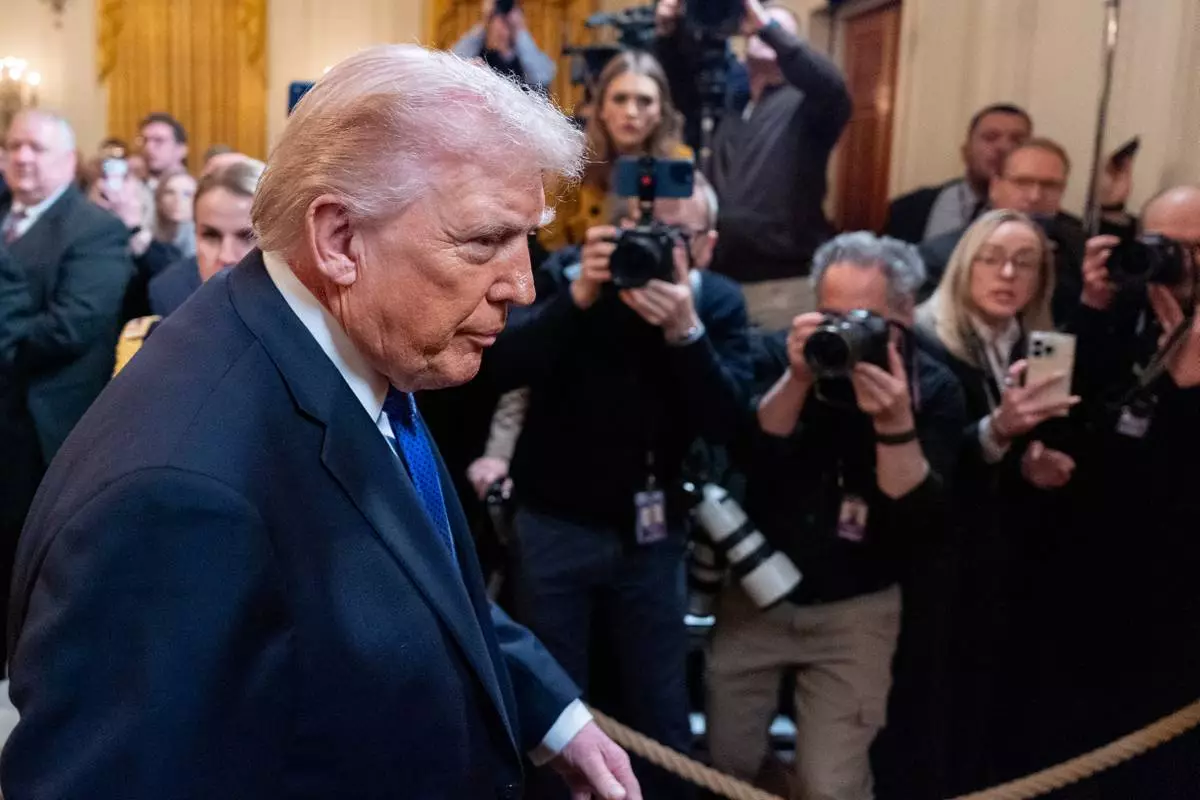
President Donald Trump departs after a Medal of Honor ceremony in the East Room of the White House, Monday, March 2, 2026, in Washington. (AP Photo/Alex Brandon)

President Donald Trump departs after a Medal of Honor ceremony in the East Room of the White House, Monday, March 2, 2026, in Washington. (AP Photo/Alex Brandon)

President Donald Trump walks past Defense Secretary Pete Hegseth as he exist the East Room of the White House following the Medal of Honor ceremony, Monday, March 2, 2026, in Washington. (AP Photo/Mark Schiefelbein)

President Donald Trump walks past Defense Secretary Pete Hegseth as he exist the East Room of the White House following the Medal of Honor ceremony, Monday, March 2, 2026, in Washington. (AP Photo/Mark Schiefelbein)

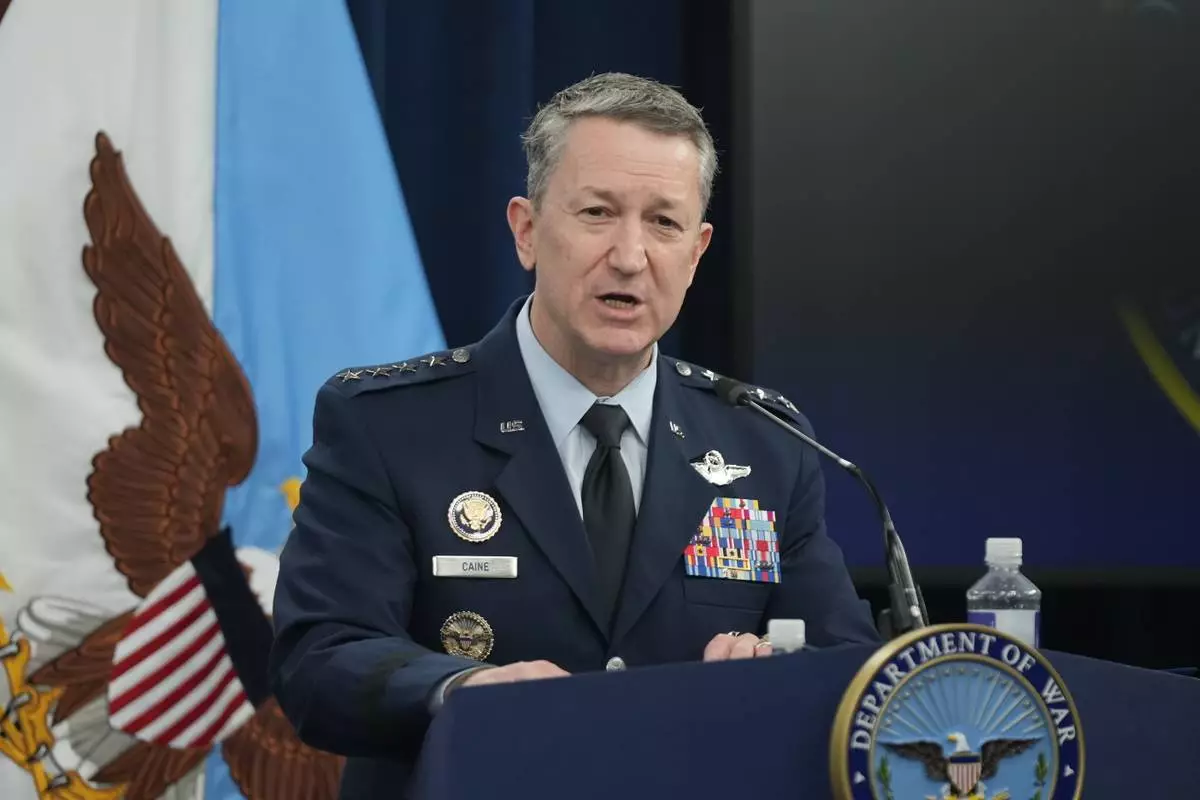
Chairman of the Joint Chiefs of Staff Gen. Dan Caine speak during a press briefing at the Pentagon, Monday, March 2, 2026, in Washington. (AP Photo/Mark Schiefelbein)

Chairman of the Joint Chiefs of Staff Gen. Dan Caine speak during a press briefing at the Pentagon, Monday, March 2, 2026, in Washington. (AP Photo/Mark Schiefelbein)

Defense Secretary Pete Hegseth and Chairman of the Joint Chiefs of Staff Gen. Dan Caine take questions during a press briefing at the Pentagon, Monday, March 2, 2026, in Washington. (AP Photo/Mark Schiefelbein)

Defense Secretary Pete Hegseth and Chairman of the Joint Chiefs of Staff Gen. Dan Caine take questions during a press briefing at the Pentagon, Monday, March 2, 2026, in Washington. (AP Photo/Mark Schiefelbein)

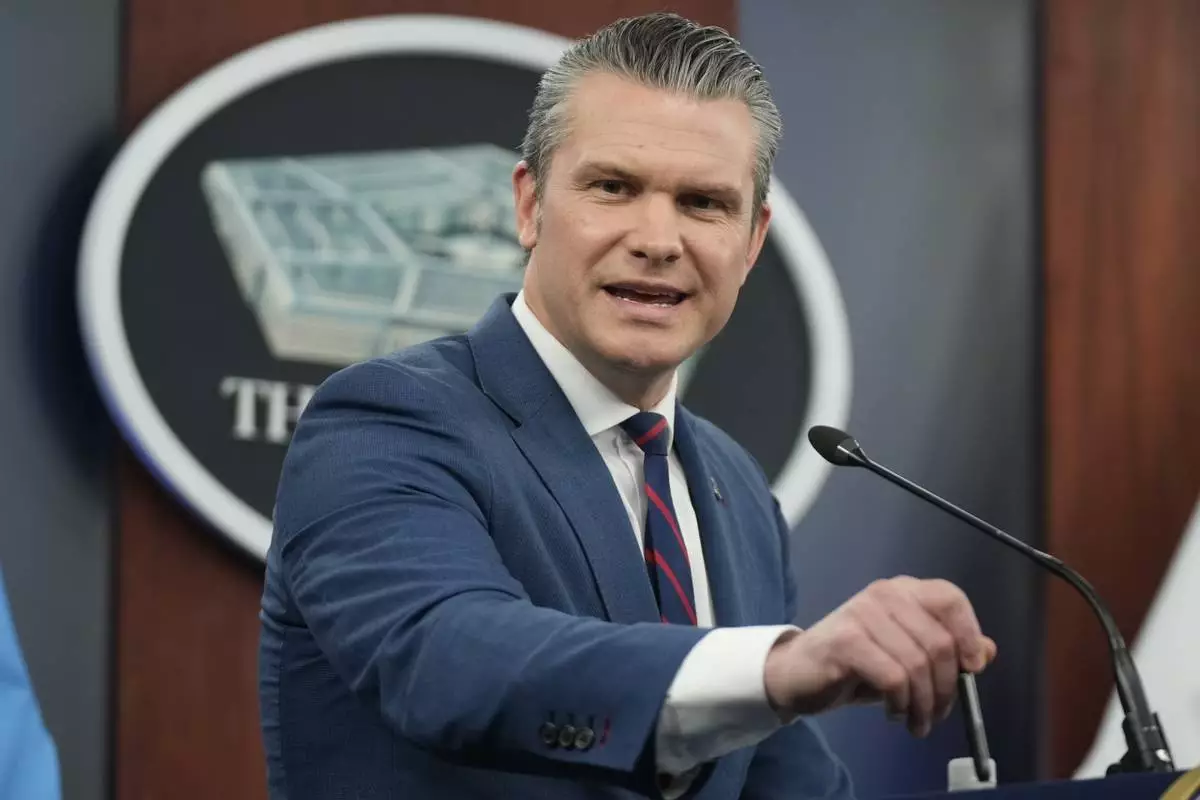
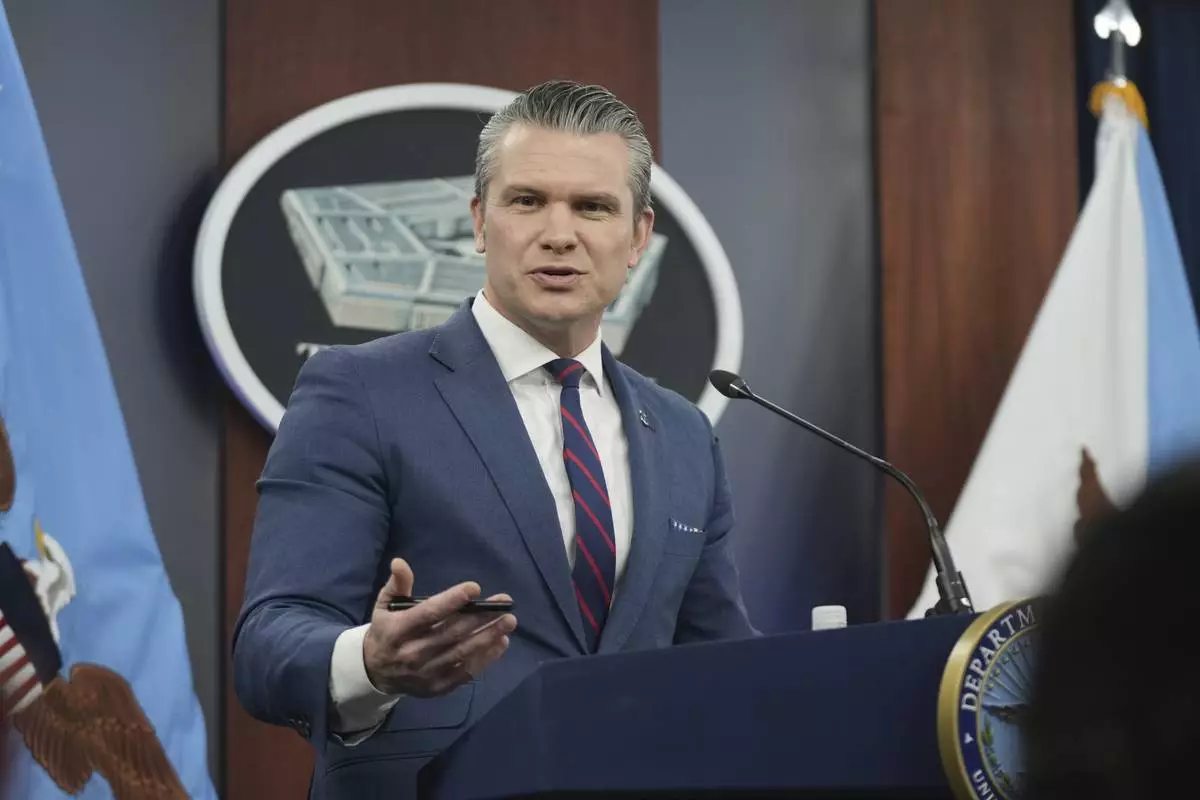
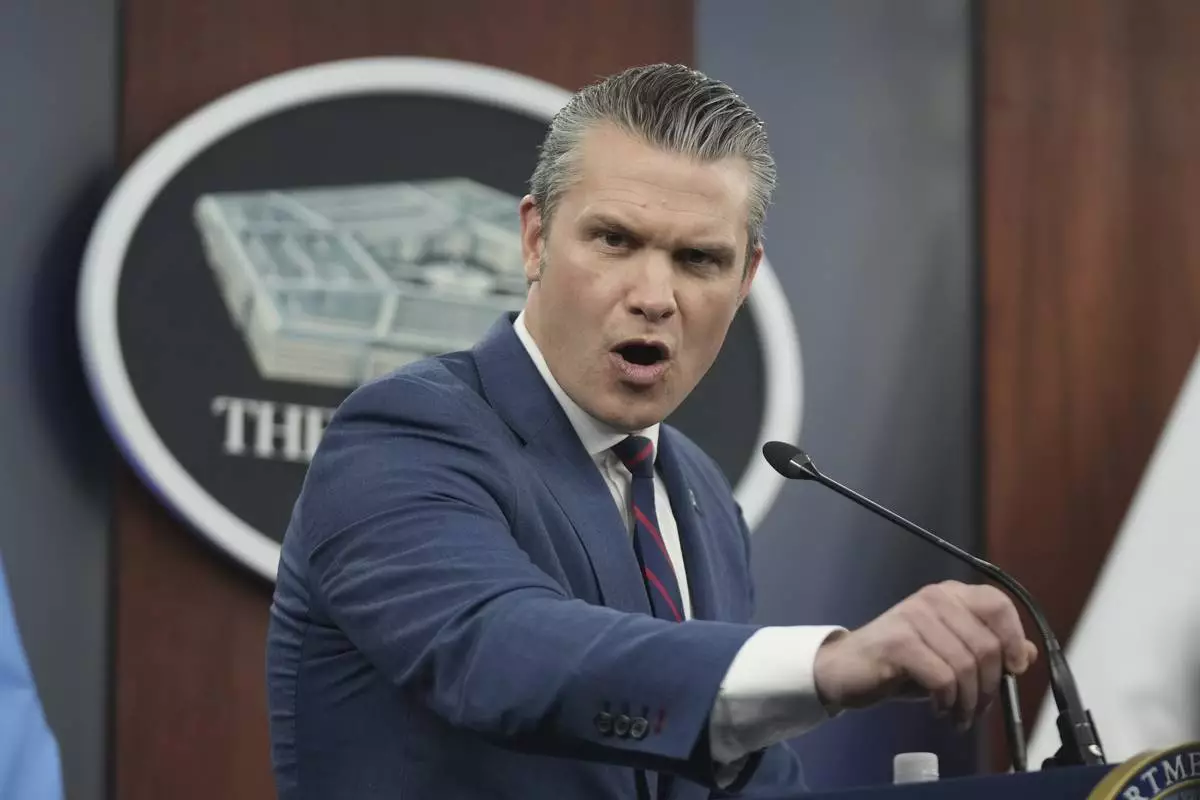
Defense Secretary Pete Hegseth speaks during a press briefing at the Pentagon, Monday, March 2, 2026, in Washington. (AP Photo/Mark Schiefelbein)

Defense Secretary Pete Hegseth speaks during a press briefing at the Pentagon, Monday, March 2, 2026, in Washington. (AP Photo/Mark Schiefelbein)

Defense Secretary Pete Hegseth speaks during a press briefing at the Pentagon, Monday, March 2, 2026, in Washington. (AP Photo/Mark Schiefelbein)

Defense Secretary Pete Hegseth speaks during a press briefing at the Pentagon, Monday, March 2, 2026, in Washington. (AP Photo/Mark Schiefelbein)

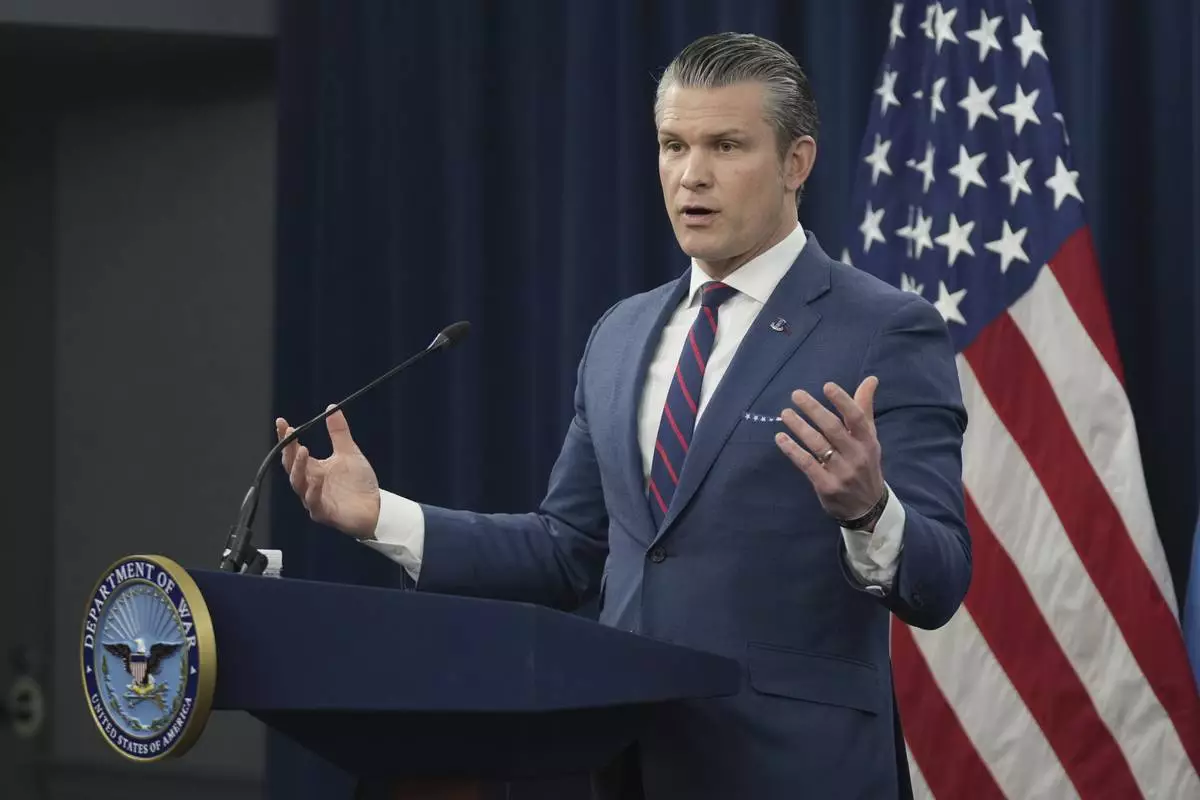
Defense Secretary Pete Hegseth speaks during a press briefing at the Pentagon, Monday, March 2, 2026, in Washington. (AP Photo/Mark Schiefelbein)

Defense Secretary Pete Hegseth speaks during a press briefing at the Pentagon, Monday, March 2, 2026, in Washington. (AP Photo/Mark Schiefelbein)

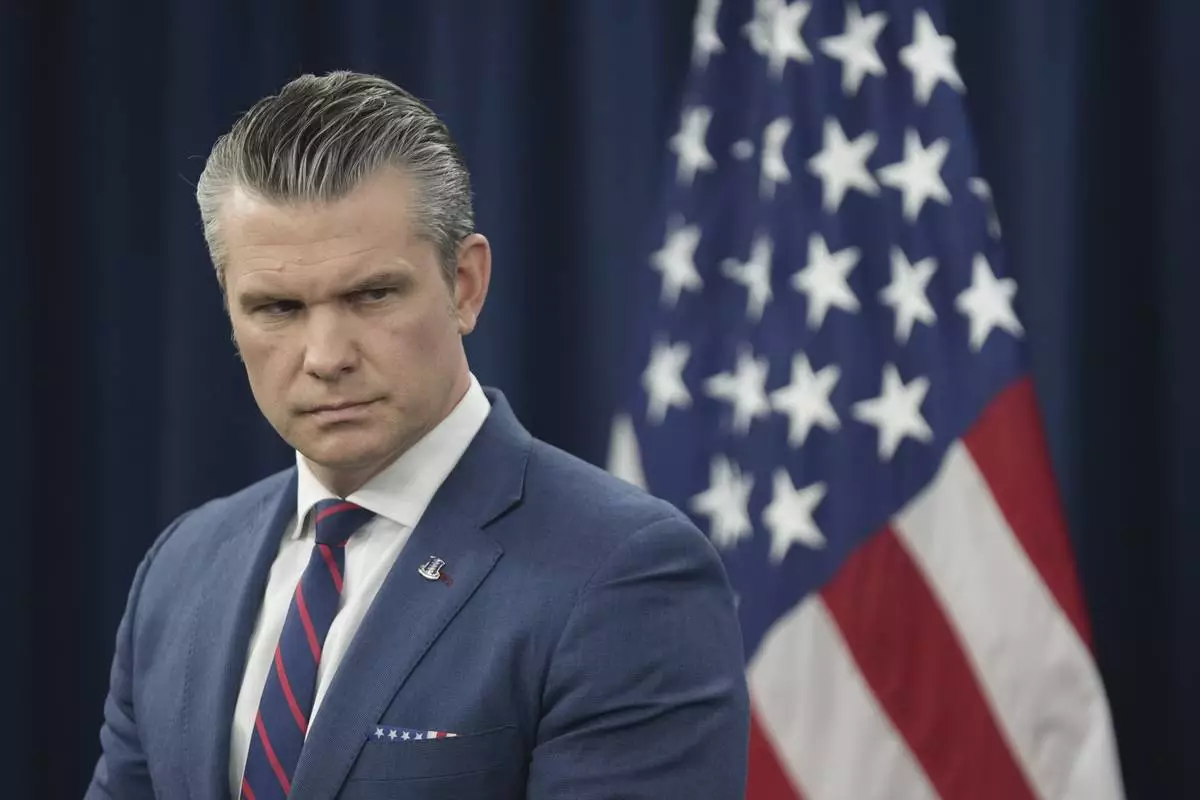
Defense Secretary Pete Hegseth listens during a press briefing at the Pentagon, Monday, March 2, 2026, in Washington. (AP Photo/Mark Schiefelbein)

Defense Secretary Pete Hegseth listens during a press briefing at the Pentagon, Monday, March 2, 2026, in Washington. (AP Photo/Mark Schiefelbein)

Defense Secretary Pete Hegseth speaks during a press briefing at the Pentagon, Monday, March 2, 2026, in Washington. (AP Photo/Mark Schiefelbein)

Defense Secretary Pete Hegseth speaks during a press briefing at the Pentagon, Monday, March 2, 2026, in Washington. (AP Photo/Mark Schiefelbein)

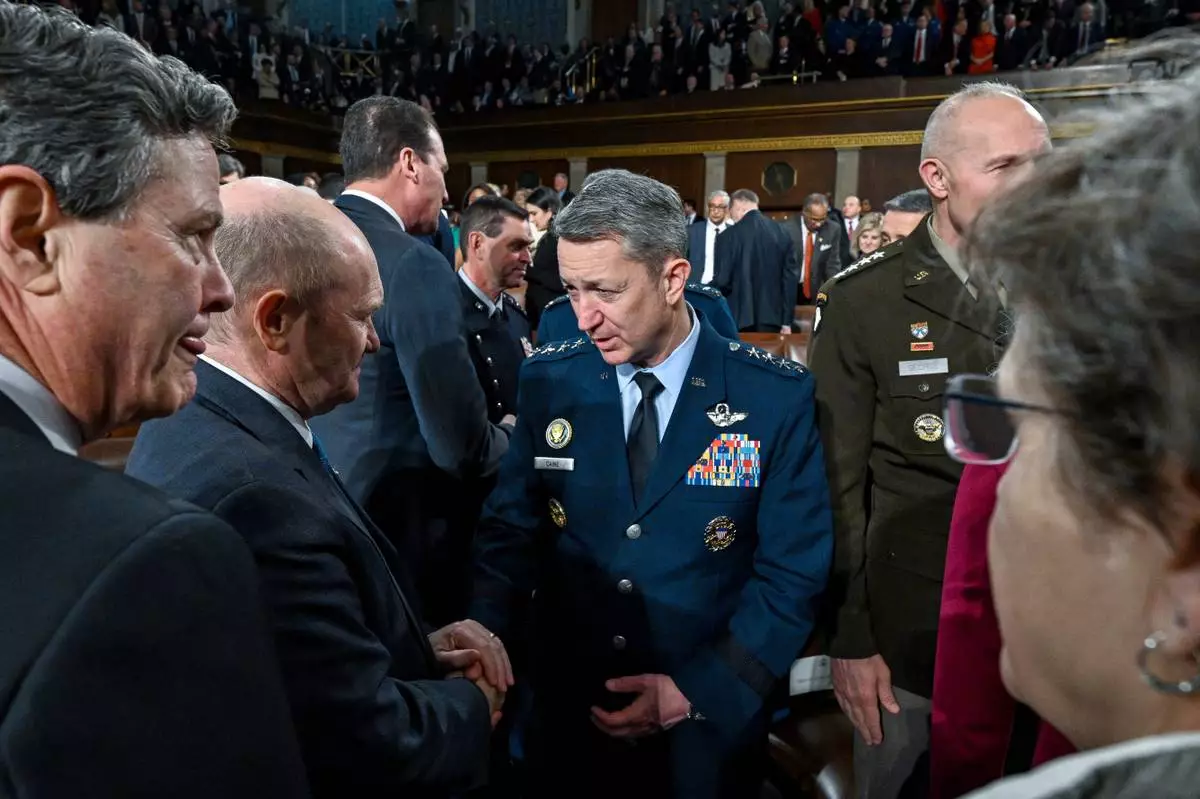
Gen. Dan Caine, chairman of the Joint Chiefs of Staff, greets Sen. Chris Coons, D-Del., before President Donald Trump delivers the State of the Union address to a joint session of Congress in the House chamber at the U.S. Capitol in Washington, Tuesday, Feb. 24, 2026. (Kenny Holston/The New York Times via AP, Pool)

Gen. Dan Caine, chairman of the Joint Chiefs of Staff, greets Sen. Chris Coons, D-Del., before President Donald Trump delivers the State of the Union address to a joint session of Congress in the House chamber at the U.S. Capitol in Washington, Tuesday, Feb. 24, 2026. (Kenny Holston/The New York Times via AP, Pool)

Recommended Articles