As people across China celebrate Little New Year, the festive season is in full swing, with households stocking up on Spring Festival goods and preparing traditional dishes.
Little New Year, or Xiaonian in Mandarin, typically falls a week before the Spring Festival. This year, it is celebrated on Wednesday in northern China and Thursday in the south.
The occasion is also known as the Festival of the Kitchen God, the deity who oversees the moral character of each household.
The Spring Festival, which marks the start of the Chinese Lunar New Year, is the biggest annual holiday in China, when people across the country return to their hometowns for Lunar New Year celebrations and family reunions. This year, the Chinese New Year's Day falls on Jan 29, ushering in a Year of the Snake.
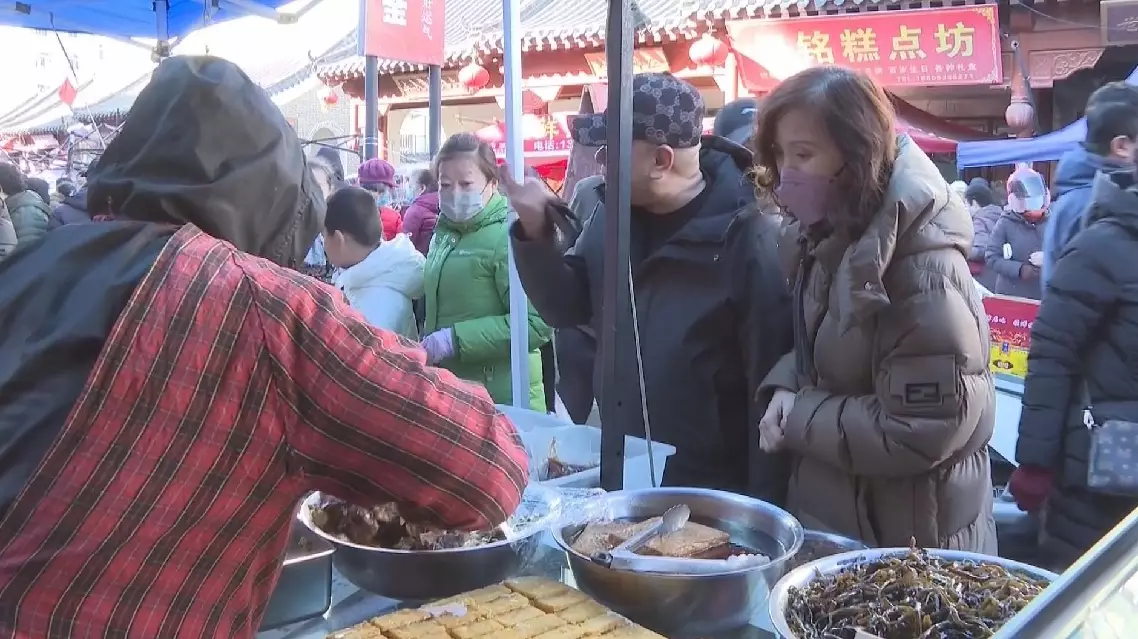
The festive atmosphere grows stronger as families across China prepare for the Spring Festival, with markets buzzing with activity as New Year's goods are bought and sold.
A centuries-old street, known as "Dajie" in Boshan district of Zibo City in east China's Shandong Province, has become a popular shopping destination for locals.
The street is famous for its diverse food offerings, particularly classic Shandong cuisine, one of China's eight great culinary traditions, which forms the foundation of northern Chinese cooking.
The street also draws people who are looking to purchase food ingredients and semi-prepared dishes for the New Year celebrations.
Aside from food, the street also offers a variety of ceramics and glassware as the region is renowned as the "Hometown of Chinese Colored Glaze," and this year, glass artworks featuring the Year of the Snake have become particularly popular with young people.
In Dongqinyang Village in Qinyang City of central China's Henan Province, locals continue the tradition of making roasted pastries known as "Kitchen God Pastries" during Little New Year. These pastries are believed to be offered to the Kitchen God in the hope that he will ascend to heaven to speak of their good deeds and return to earth to bring them good fortune for the coming year.
"The dough needs to be a bit softer, so the pastries turn out fluffy, soft, plump, and deliciously sweet," said Zhang Dafeng, a local resident.
The dough for these pastries is made from flour and yam, filled with locally grown red beans and brown sugar, often using eco-friendly fertilizers made from recycled kitchen waste.
The pastries, with their golden, crisp crust and soft, sweet interiors, are enjoyed by locals and often sent to family members far away, spreading the sweetness of the season.
Meanwhile, people in Jinghe County of northwest China's Xinjiang Uygur Autonomous Region are busy brewing traditional milk wine and making livestock-shaped pastries.
The milk wine-making process starts from boiling fermented milk, which is then stirred.
"After stirring the milk, we place the large bottomless pot on top. Once secured, we place a smaller pot inside to collect the milk wine. A third pot, about the same size as the mouth of the first one, is placed on the top layer, and then cold water is poured over it," explained a local resident.
It is crucial to seal the gaps between the pots with cloth to ensure the quality of the milk wine.
The result is a smooth, sweet milk wine with a low alcohol content, which offers a mellow,sour and sweet and fragrant flavor.
In addition to the milk wine, locals also prepare deep-fried pastries shaped like horses, cows, camels, sheep, and goats. These pastries symbolize the hope for the well-being of livestock in the coming year.
Xiaonian Festival marked across China with traditional foods, festivities